
We were lucky to catch up with Zhan Cheng recently and have shared our conversation below.
Alright, Zhan thanks for taking the time to share your stories and insights with us today. When you’ve been a professional in an industry for long enough, you’ll experience an industry-wide U-Turn, an instance where the consensus completely flips upside down or where the “best practices” completely change. If you’ve experienced such a U-Turn over the course of your professional career, we’d love to hear about it.
I have been a software engineer for around 5 years but have been in the NLP (Natural Language Processing) and language models (or for simplicity chatbot) industry for 8 years. The LLM (large language model) is now the most popular topic in this industry. The success of ChatGPT, which is based on LLM, has changed the future of many industries as we could not have imagined 8 years ago.
The success of LLM is a U-turn moment for the NLP industry. Before LLM was introduced and achieved tremendous success, most of the chatbots on the market were more like toys, actually very vulnerable toys. The “best practice” to solve the problem of generating a reasonable response with consideration of context, is still logical reasoning.
Many professors and researchers believe that the key to solving NLP problems is very different from CV (Computer Vision). About 7 years ago, deep learning had already achieved success in CV, but using it to create a good chatbot is still a headache. Most of the researchers, even after the transformer came out, believed the complexity of NLP is nothing like handling pixels like CV. A lot of researchers were struggling with defining a good logical reasoning framework to make chatbots more like humans, they believed what humans think their brains work will apply to NLP better than the deep learning black-box.
But not many of them thought about one fundamental question, isn’t it just the scale is not big enough? They only saw that the experiment result of using deep learning was not good enough, which only deepened their distrust of deep learning, kind of like the Self-fulfilling prophecy. The truth is that we need to change the mindset and see the key: the size of the model and the amount of data it is trained on wasn’t big enough.
Just like the introduction of the theory of relativity as well as this LLM U-turn in the NLP industry, many U-turns in human history are similar, it’s all about mindset changing, and avoiding falling into the Self-fulfilling prophecy trap. And I believe there are even more to come, for example, don’t assume humans won’t be taking over human effort in all kinds of tasks.

As always, we appreciate you sharing your insights and we’ve got a few more questions for you, but before we get to all of that can you take a minute to introduce yourself and give our readers some of your back background and context?
I think most of my jobs are related to how to use AI to help people have better experiences in their daily lives.
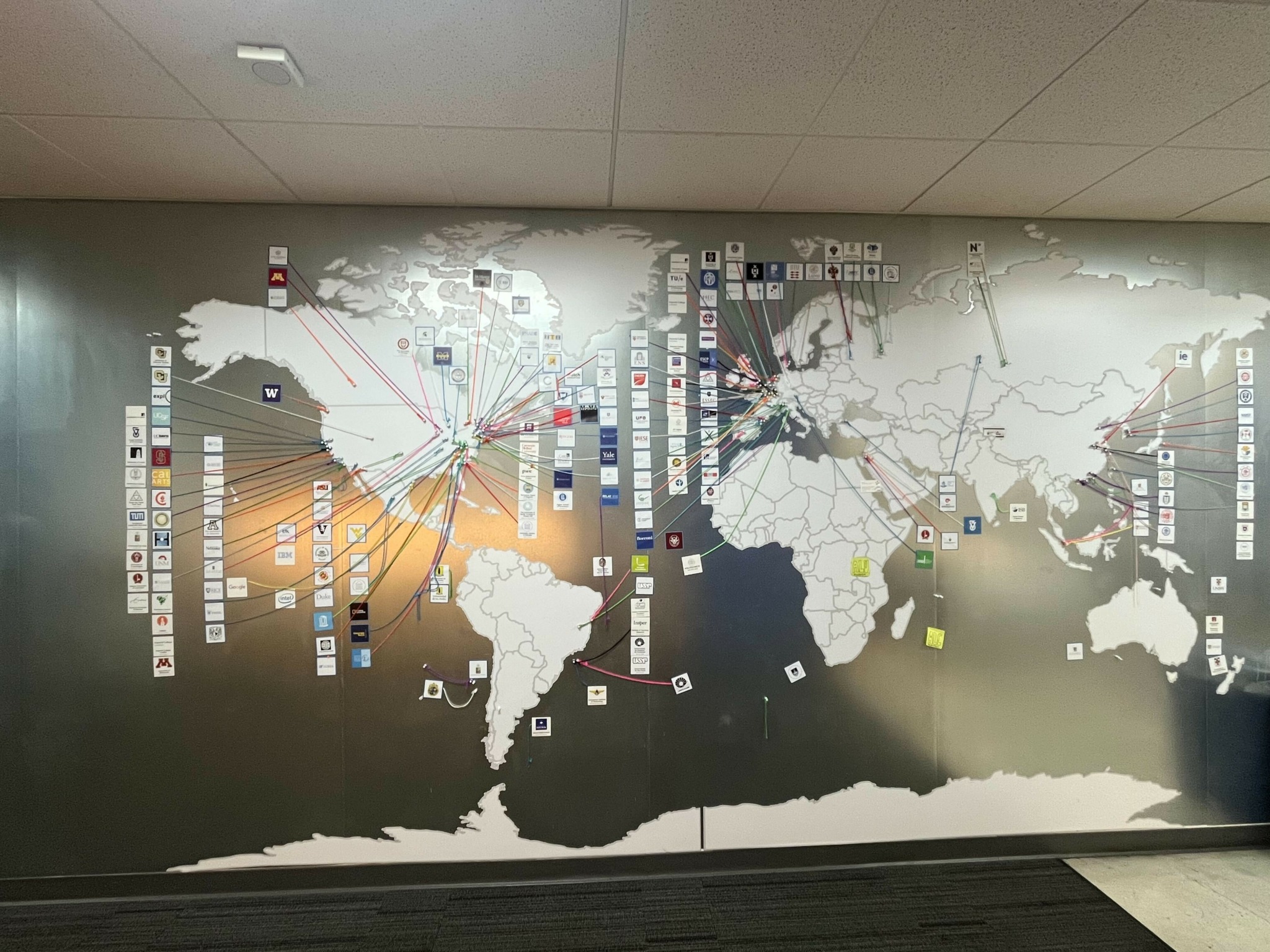
In 2014, I entered college with an enthusiasm to study physics. However, after the first year, I found out my enthusiasm kind of died. I’m a person who prefers accepting my change happily instead of holding on to something, so I started to search for new areas I’m interested. At that time, AI started becoming popular, and I found it very interesting. I switched my major to computer science and started learning coding. A year after that, I joined one of the labs to help improve the performance of a humanoid robot named Jia Jia (https://www.youtube.com/watch?v=lLcgmCPw_80) and then learned a lot about NLP. Then I did summer research in a company called RSVP.ai to work on an educational chatbot and then another summer intern at Tencent doing CV research.
After I went to the United States to pursue my Master’s Degree, I started to put more effort into searching for industry opportunities to create products that use AI to help people have better experiences in their daily lives. Two major products I have participated in developing are:
1. Amazon SageMaker Canvas (https://aws.amazon.com/sagemaker/canvas/), a no-code visual interface that empowers you to prepare data, build, and deploy highly accurate ML models, streamlining the end-to-end ML lifecycle in a unified environment. Data analysts, machine learning engineers, and engineers who are working on developing AI products should be interested in it.
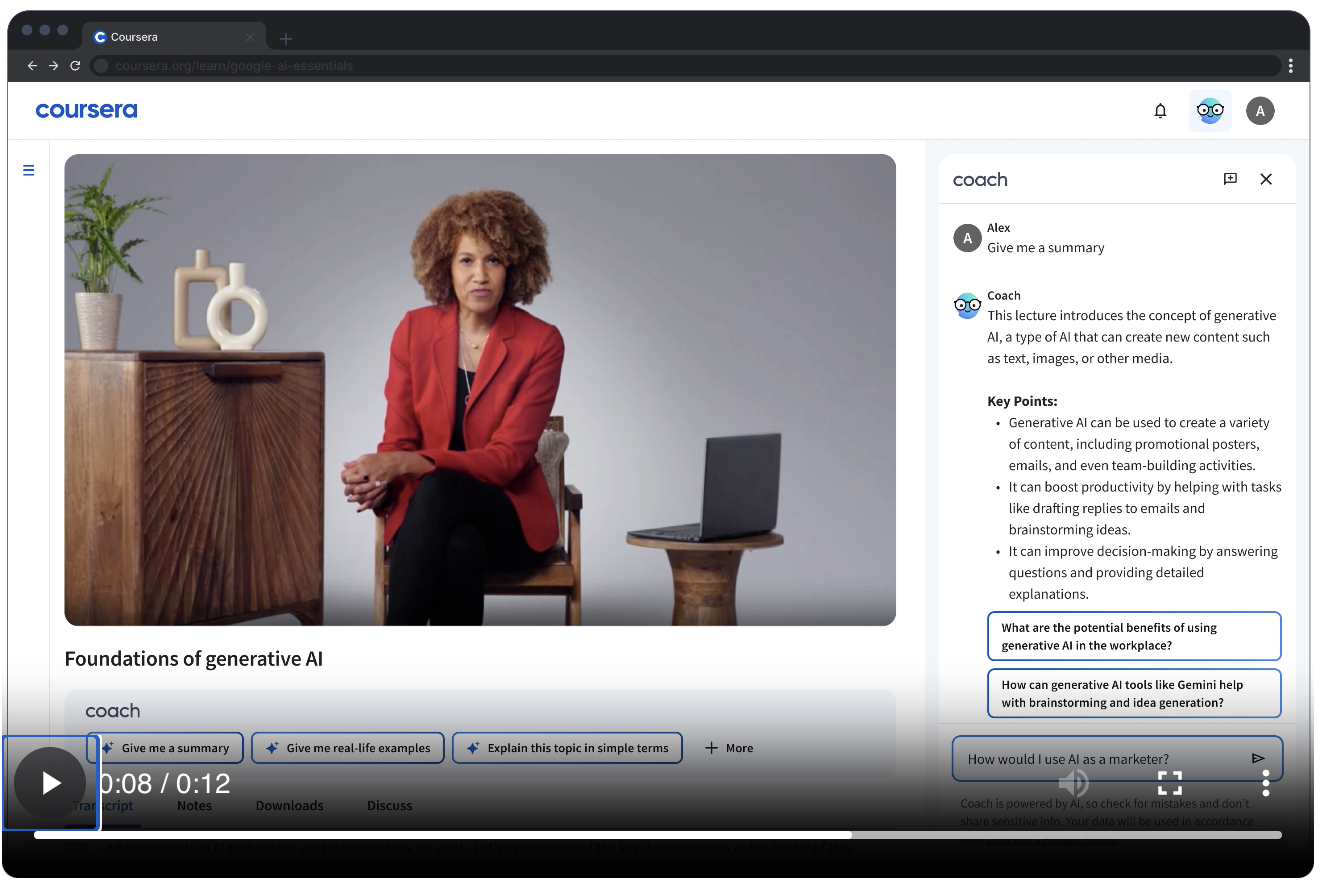
2. Coursera Coach (https://www.coursera.org/explore/coach), which helps you to master skills effectively with AI-powered guidance. If you are exploring online learning, and haven’t heard of Coursera and Coursera Coach, you should try.
Can you talk to us about how you funded your business?
I’m still putting together the initial capital I need to start your business, which may be already sufficient or far from sufficient depending on what kind of business I will start (maybe 3 to 5 years from now I will start my business). But I’d like to share what I did and possibly will do to get the initial capital.
First of all: saving! Saving, no matter how small each month, is very important. Setting a goal, and consistently putting a certain percentage of your salary into a savings/investment account. I prefer the Fidelity individual account, which can be used to invest in ETFs like SPY or QQQ, and the uninvested money will go to SPAXX, a safe market fund that has a pretty good yield.
Another thing I tried but wish I could have been more familiar with earlier: investing in properties that can generate positive cash flow. You can participate in another person’s small business if you are busy. Or you can buy some low HOA condos / multi-family properties in some areas with relatively high rent, alone or with your friend, and start generating positive cash flow for your daily expenses to make sure you have enough money to save and invest more.
Some other things I might try in the future:
1. Transfer your hobbies and learnings into income: with so many social media platforms nowadays, it’s worth it to try to transfer your hobbies and learnings (like gym, climbing, singing, culinary, etc.) into income by putting the process and learnings on the social media platforms.
2. Reach out to angel investors and Startup Incubators (like Y Combinator): maybe you’re worried about getting money, but many people on this planet are worried about how to spend their money, and how to put some percentage of their money into some other people’s business.
How’d you meet your business partner?
I haven’t started my own business yet. But I’d like to answer this question by imagining how I can meet my cofounder/business partner. It was probably during a dinner arranged by one of my friends, somehow I started to go into deep talk even though I only met some of the people for the first time.
And under that atmosphere, I expressed my interest and also what’s the valuable things to do as a business owner. Someone, or a few people, might notice they have similar interests and also agree on my goal (for example, one valuable thing I believe is to help build more communities that can be safe places for people today who can easily feel lonely and unsafe and lacks willingness and curiosity to learn). We exchanged contacts and started to take the first step ASAP.
I believe it’s all about taking the first step, believing in the goal and core values, and remaining consistent. Life will reward you in the long term, with the happiness and wealth you deserve.
Contact Info:
- Instagram: terry_zhancheng
- Linkedin: https://www.linkedin.com/in/zhancheng/