

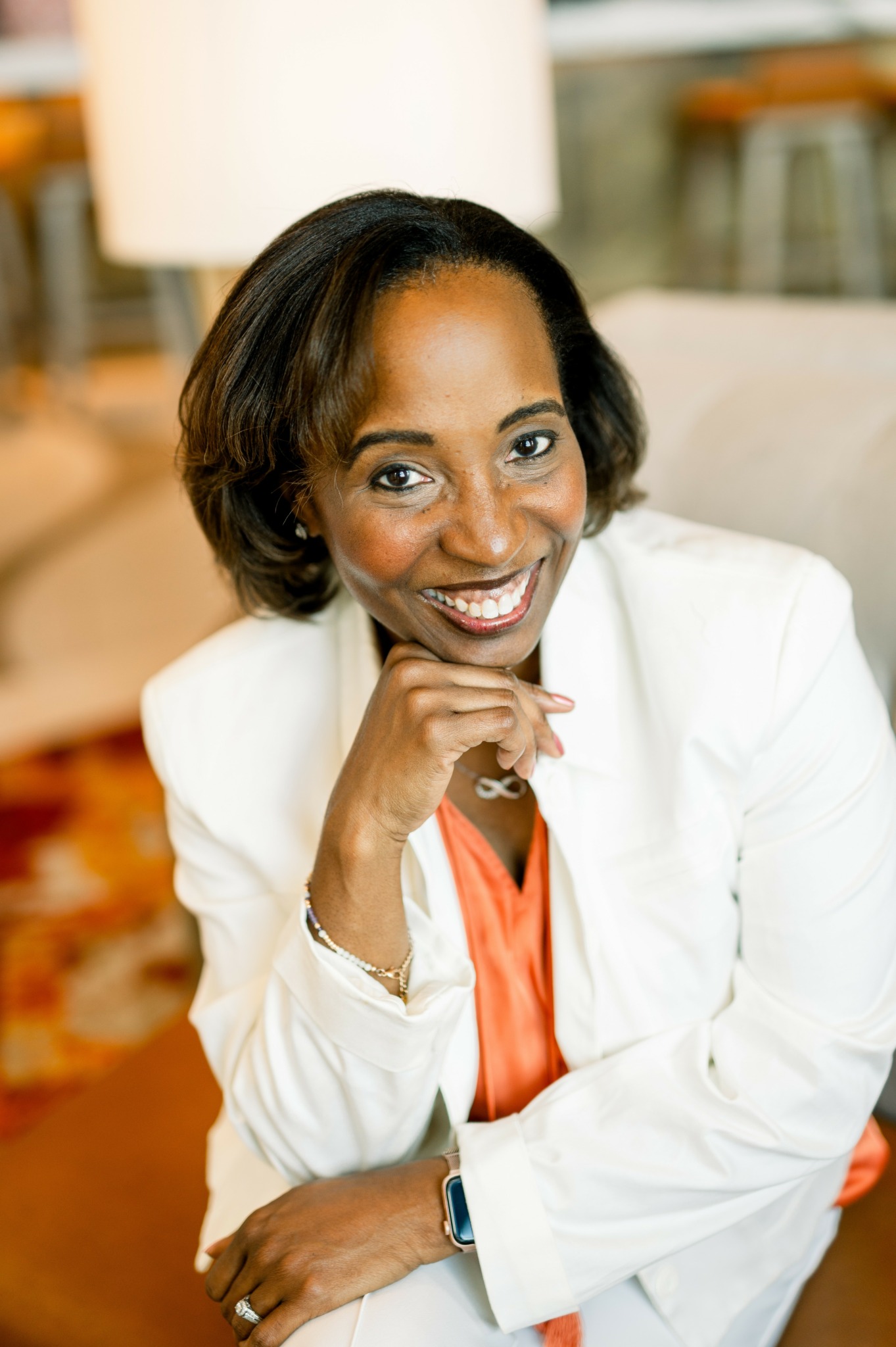

We were lucky to catch up with Yolanda Easton recently and have shared our conversation below.
Yolanda , looking forward to hearing all of your stories today. What was it like going from idea to execution? Can you share some of the backstory and some of the major steps or milestones?
I’ve always had a passion for teaching. Whether it’s helping someone learn a new recipe or guiding personal and professional growth, I love seeing people discover what they’re capable of. During my husband’s active-duty years, I noticed a significant gap in leadership and personal development opportunities for military spouses. As a veteran myself, I understand the importance of development and how it can transform lives. For years, my husband and I served military families by sharing practical leadership tools that helped them build stronger, more resilient homes and communities.
After my husband retired nearly four years ago, we found ourselves missing that sense of purpose. We reconnected with a mutual friend and began serving military spouses again, and it didn’t take long to realize the need was even greater than before. As I traveled and worked with spouses across different communities, I saw firsthand the challenges they faced and recognized that a few workshops here and there weren’t enough. What started as an observation quickly became a vision for something bigger.
I realized that creating lasting impact would require a dedicated team and a nonprofit structure that could grow and sustain the work. I began researching what it would take to launch a nonprofit and quickly learned that the process requires patience and persistence. In January 2025, the Military Family Institute was officially established, and by June we received our IRS determination letter recognizing us as a 501(c)(3) nonprofit organization. What began as an idea had become a reality.
Today, the Military Family Institute equips military spouses and families with leadership tools, community, and support designed specifically for their unique journey. Looking back, it’s amazing to think that just a few years ago this was only a thought. Now it’s a growing mission that continues to serve military families and strengthen the community we care so deeply about. Watching an idea evolve into an organization that impacts lives has been one of the most rewarding experiences of my life.

As always, we appreciate you sharing your insights and we’ve got a few more questions for you, but before we get to all of that can you take a minute to introduce yourself and give our readers some of your background and context?
I am a veteran, military spouse, leadership coach, and CEO of the Military Family Institute. Throughout my life, I’ve been passionate about helping people discover their potential and become the best version of themselves. My journey into this work began through my own military experiences, both in uniform and as a spouse. I saw firsthand the unique challenges military families face and realized that while service members often receive leadership development, spouses are frequently expected to navigate complex transitions, leadership responsibilities, and family challenges without the same level of support.
That realization led me to focus on developing military spouses and families. Through the Military Family Institute and our Military Spouse Academy, we provide leadership development, coaching, and practical tools that help military spouses build confidence, strengthen relationships, improve communication, and lead effectively in their homes and communities. We use proven leadership frameworks and development tools that are simple to understand but powerful enough to create lasting change.
What sets our work apart is that it is built by military families for military families. We don’t approach development from a theoretical perspective—we lived this life ourselves. We understand the realities of deployments, relocations, career interruptions, and the constant need to adapt. Our goal isn’t simply to help military spouses survive military life; it’s to help them thrive, grow as leaders, and recognize the tremendous value they bring to their families and communities.
What I’m most proud of is seeing people discover strengths they didn’t know they had. Whether it’s a spouse finding her voice as a leader, improving a relationship, building confidence during a transition, or stepping into a new opportunity, those moments remind me why this work matters. If there’s one thing I want people to know about me and the Military Family Institute, it’s that we believe healthy families are foundational to strong communities. When we invest in the growth of military spouses and families, the impact reaches far beyond the individual—it strengthens everyone around them.

Any advice for managing a team?
When it comes to managing a team, one of the biggest mistakes leaders make is assuming everyone needs the same kind of support and challenge. Many leaders naturally give what they personally need, rather than taking the time to understand what each individual team member needs.
The truth is, leading people well requires intentionality. It takes time to learn what motivates someone, what encourages them, and how they prefer to be challenged. One of the most powerful questions a leader can ask is, “How do you best like to be supported and challenged?”
I’ve found that when leaders make that investment, something important happens. Team members begin to feel seen, valued, and understood. They recognize that their leader genuinely cares about their growth and success, not just their performance.
High morale isn’t created by perks or incentives alone. It’s built through trust, connection, and consistent investment in people. When individuals feel valued and know their contribution matters, they become more engaged, more resilient, and more committed to the team. In fact, people will often stay in a role they don’t love because they believe in and trust the person leading them.
Be that leader. Take the time to know your people, support them well, and challenge them appropriately. When you do, high morale becomes the natural result of a healthy team culture.

We’d love to hear about how you met your business partner.
I met Mark, my business partner and cofounder of the Military Family Institute, in 2017. At the time, he was still serving on active duty, and I was already certified in another leadership program and teaching that curriculum within the military spouse community.
Around that same time, we both became involved with a new leadership development program. I fell in love with the tools and the impact they could have on military spouses and families. When Mark later offered me the opportunity to become certified, I didn’t hesitate to say yes.
From there, I began sharing what I was learning with the people in my own circles of influence. I wasn’t thinking about a future partnership; I was simply passionate about helping military spouses grow and thrive.
Fast forward six years. After my husband retired from the military, we reached out to Mark to see if there was any way we could support the work he was doing. His response surprised me. He told me that from the moment we met years earlier, he knew he wanted me to lead his military spouse programs one day.
That’s exactly what happened.
Today, I lead our spouse-focused initiatives, and together we’ve expanded that vision even further by launching the Military Family Institute, a nonprofit dedicated to equipping military spouses and families with the tools, support, and community they need to thrive. Looking back, it’s amazing to see how a single certification course evolved into a partnership, a shared mission, and an opportunity to serve military families on a much larger scale.
Contact Info:
- Website: https://www.militaryfamilyinstitute.org
- Instagram: https://www.instagram.com/militaryfamilyinstitute
- Facebook: https://www.facebook.com/militaryfamilyinstitute
- Linkedin: https://www.linkedin.com/showcase/militaryfamilyinstitute/
- Other: Donate @ https://www.zeffy.com/en-US/donation-form/test-180


