
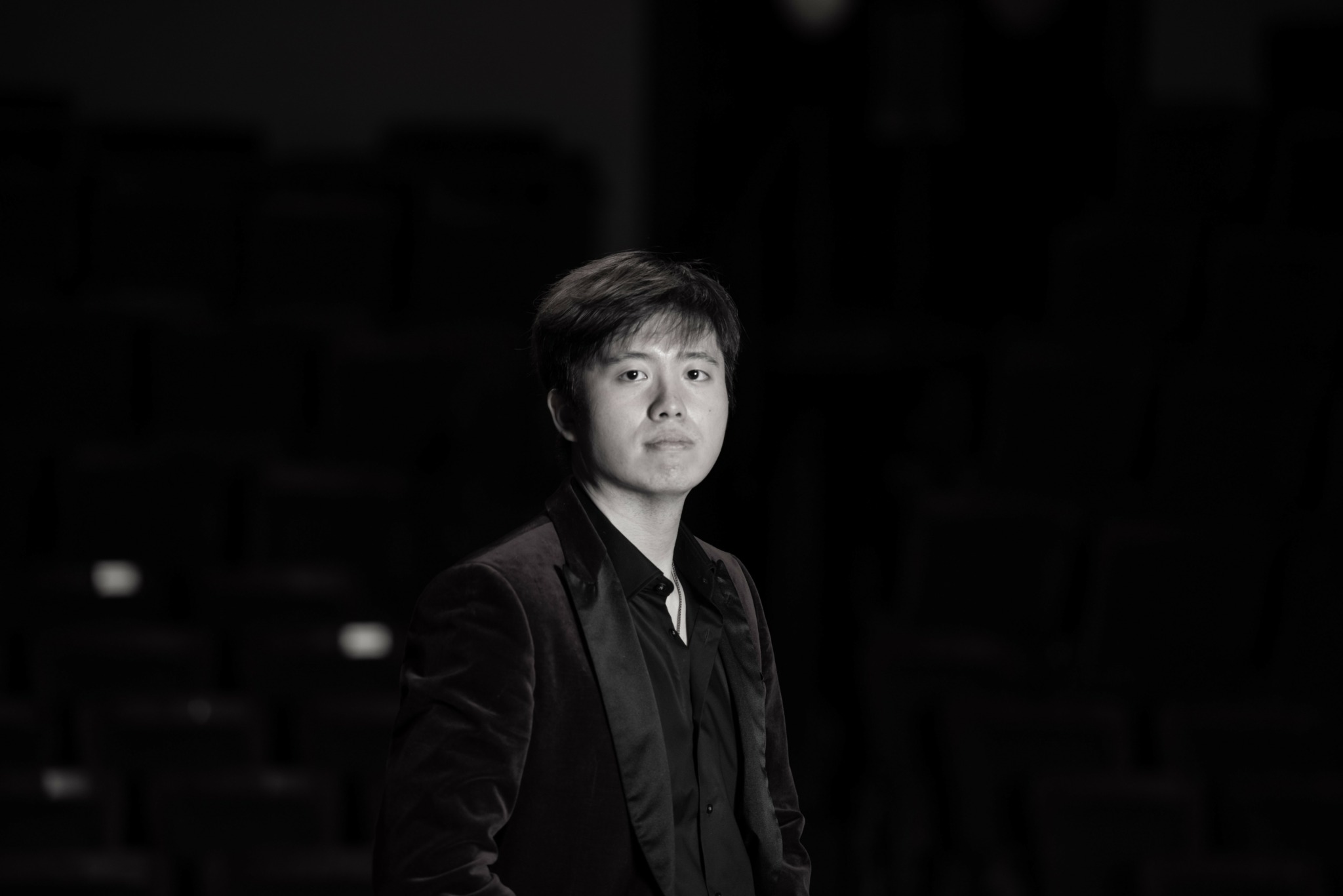
We were lucky to catch up with Yixuan Han recently and have shared our conversation below.
Hi Yixuan, thanks for joining us today. We’d love to hear about a project that you’ve worked on that’s meant a lot to you.
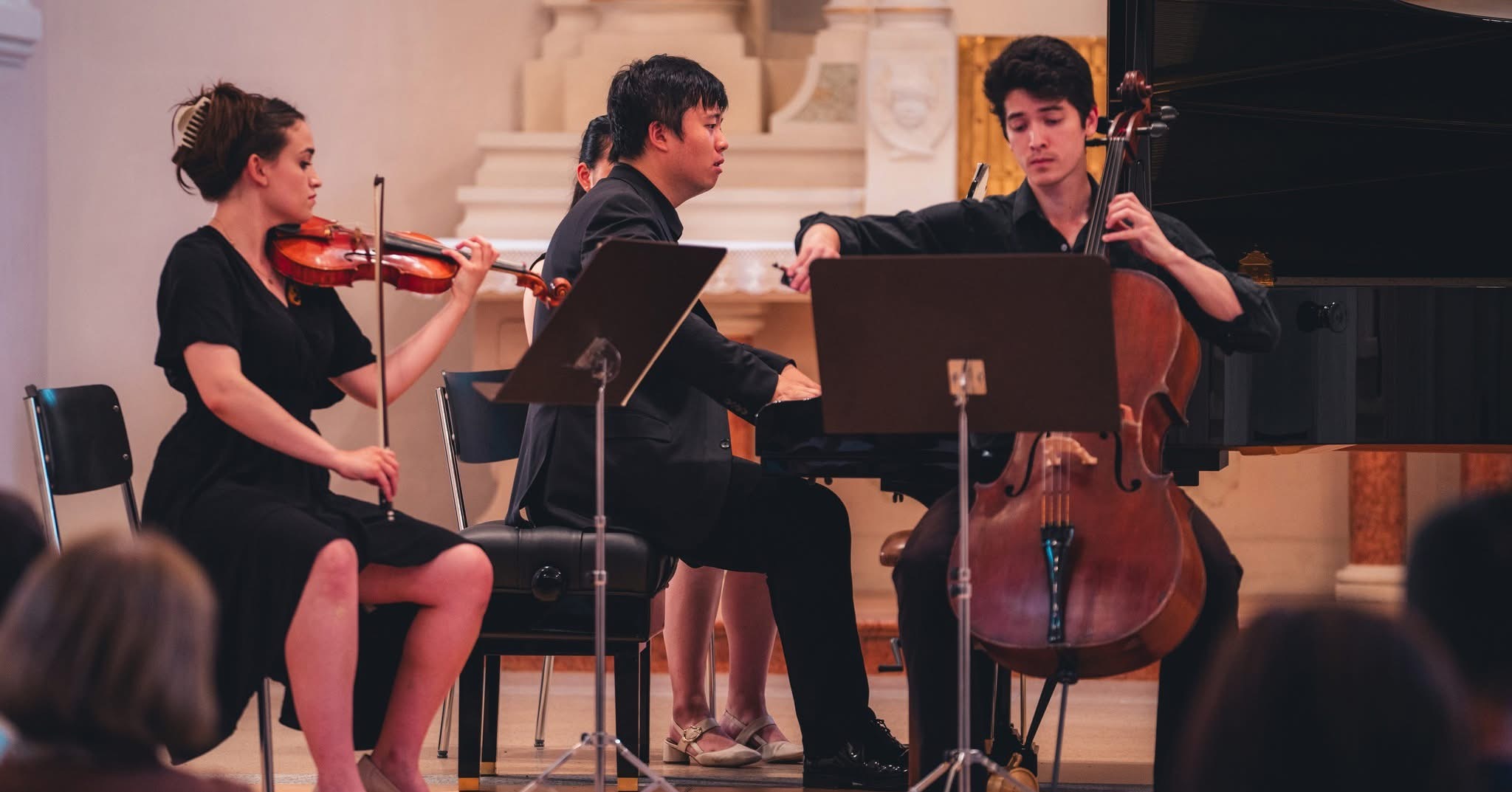
Starting in 2024, my friend Victoria Pan—who is a Charlotte native—and I launched the Music for Tomorrow chamber music series. Our goal is to inspire the next generation by providing greater access to classical music. Charlotte is not a city with a particularly strong classical music infrastructure; opportunities for high-level music education are limited, and internationally recognized classical musicians do not visit frequently. As alumni of the New England Conservatory, we wanted to help fill this gap by creating a concert series that brings more chamber music to the community.
We present at least one concert each semester, with Victoria and me serving as the core performers. Since last year and this year, we have already given four concerts and more is coming. At the same time, we also invite guest artists who are passionate about chamber music—especially those who have few opportunities to perform and share their artistry. The president of Chun University has kindly provided us with initial sponsorship, which has helped us build a stronger foundation for the series.
Looking ahead, we hope to continue developing Music for Tomorrow into one of the leading concert series in the region, eventually expanding it to include masterclasses, workshops, and additional educational programming for the Charlotte community.

Yixuan, love having you share your insights with us. Before we ask you more questions, maybe you can take a moment to introduce yourself to our readers who might have missed our earlier conversations?
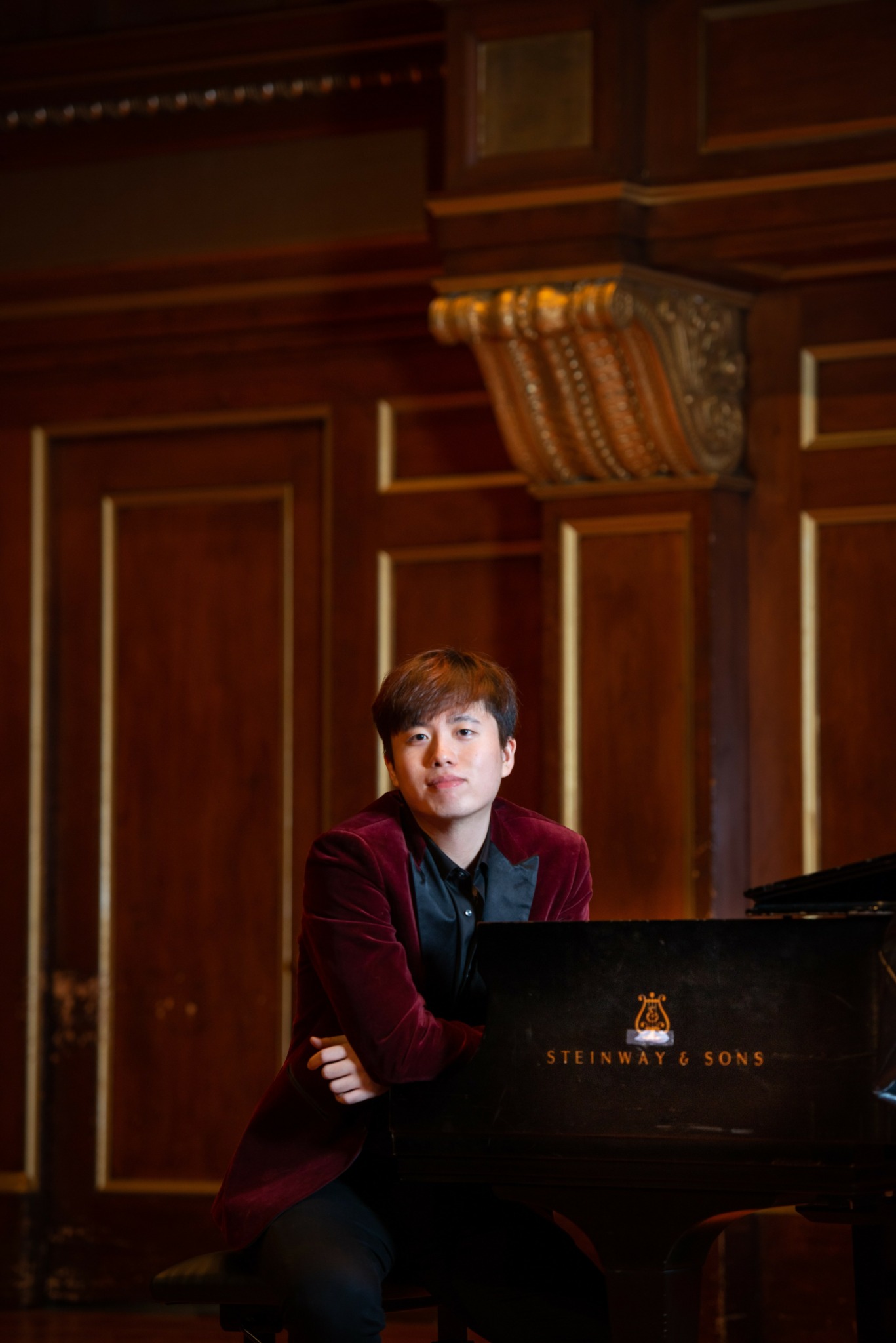
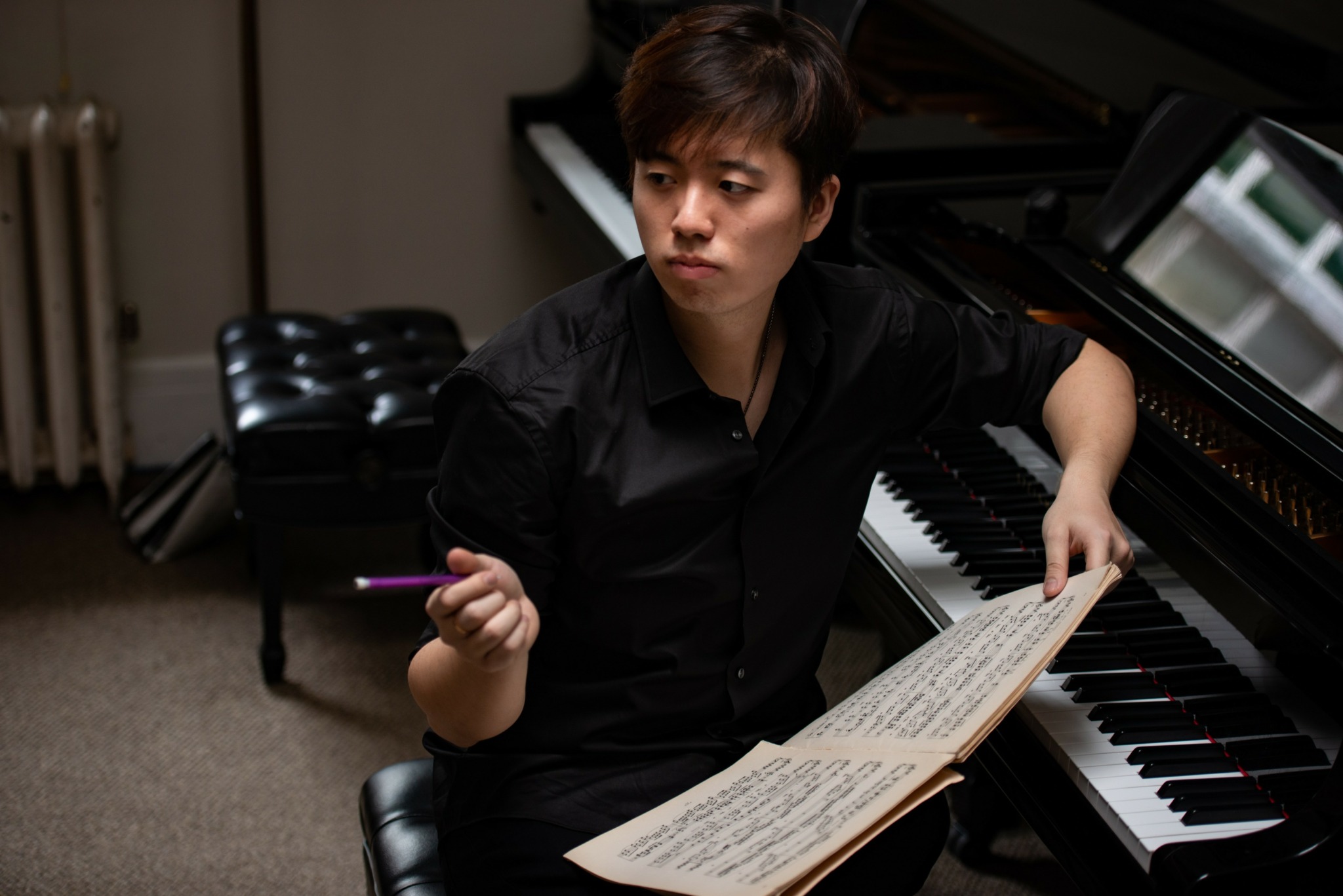
My name is Yixuan Fafa Han, and I was born in Anshan, Liaoning, a small city in northeastern China. Music has always been a central part of my life and my family heritage. My grandfather was a conductor, and although my father is a professor of fine arts and a painter by profession, he has always had a deep love for music. He learned piano from my grandfather, performed occasionally in small concerts and cafés, and filled our home with music. Even though he never became a concert pianist himself, he hoped that I might pursue the musical path he once dreamed of. When I was young, he shaped my earliest musical world—taking me to classical concerts, pop concerts, and performances of every genre. His passion for music profoundly influenced my childhood and instilled in me the belief that music is essential to life.
As I grew older, I was admitted to the Attached Middle and High School of the Shenyang Conservatory of Music, where I studied with Professor Danwen Wei, one of the earliest Chinese pianists to study in the United States. The journey was not always easy. During summers, my lessons were in Beijing, and my father would take an overnight train with me so I could make it to class the next morning. Even during the regular school year, the commute between my hometown and Shenyang—about an hour—was demanding, sometimes requiring two trips a week. But despite the challenges, I never felt the desire to give up. My father’s unwavering support, combined with my growing love for music, pushed me forward.
Eventually, my path brought me to the United States, where I earned my Bachelor of Music degree from the Oberlin Conservatory, my Master of Music degree from the New England Conservatory, and my Doctor of Musical Arts degree from the University of Michigan. Throughout these ten years of higher education, I trained with remarkable professors, yet I never considered myself the top student in any of these institutions. What shaped me instead were the difficulties I faced, the persistence I developed, and the faith I maintained in the musical journey itself. Many of my childhood peers eventually stopped pursuing music, whether because the path is extremely challenging or due to family circumstances. I was fortunate to continue, never losing the commitment I first discovered at age twelve.
Today, I serve as an adjunct professor at Chun University in Charlotte, North Carolina. My day-to-day work involves teaching students, giving solo and chamber music concerts, and contributing to the growth of the local musical community. One of the most meaningful projects in my career has been the Music for Tomorrow chamber music series, which I co-founded in 2024 with violinist Victoria Pan, a Charlotte native and fellow alumna of the New England Conservatory. Charlotte is not a city with a strong classical music infrastructure; high-level educational opportunities are limited, and internationally recognized musicians do not visit frequently. Victoria and I created Music for Tomorrow to help fill this gap and to inspire the next generation by providing greater access to classical music.
We present at least one concert each semester, with Victoria and me as the core performers. Since the series began, we have given four concerts, with more planned in the future. We also invite guest artists who are passionate about chamber music, especially those who rarely have opportunities to perform and share their artistry. The president of Chun University has generously offered initial sponsorship, giving the series a strong foundation and helping us envision a long-term future that includes masterclasses, workshops, and expanded educational programming for the Charlotte community.
Artistically, I am deeply connected to music written after 1900—repertoire that includes contemporary, impressionistic, and jazz-influenced elements. Although I trained extensively in the classical canon of Mozart, Haydn, and Beethoven, I feel that 20th- and 21st-century music speaks more directly to our present world. Many of the composers I champion lived not long ago, and their musical language resonates with the emotional experiences of modern listeners. I consider it a responsibility, as an artist living today, to bring attention to these voices and help audiences connect with music that reflects who we are now, what we feel, and how we experience life.
What I am most proud of is not being a full-time touring soloist—although I still perform solo repertoire and enjoy sharing exciting music with audiences—but rather the meaningful work I do every day: inspiring young students, collaborating with musicians from around the world, building community through chamber music, and continuing my artistic journey with purpose and integrity. My students often tell me that I am patient, kind, and effective in helping them grow. To me, being a musician is not only about how well one plays; it is about the kind of human being one becomes. The impact I have on students’ lives and the connections I make through music are among the things that fulfill me the most.
Looking to the future, my goal is to continue sharing music that truly touches the heart, to become further established in the Charlotte area, and to expand my reach beyond the region. I hope eventually to build my own music festival, invite more guest artists, and create more opportunities for meaningful concerts and artistic exchange. All of this comes from one simple place: a deep passion for art and the desire to share music that remains emotionally relevant and inspirational to modern audiences.

Any insights you can share with us about how you built up your social media presence?
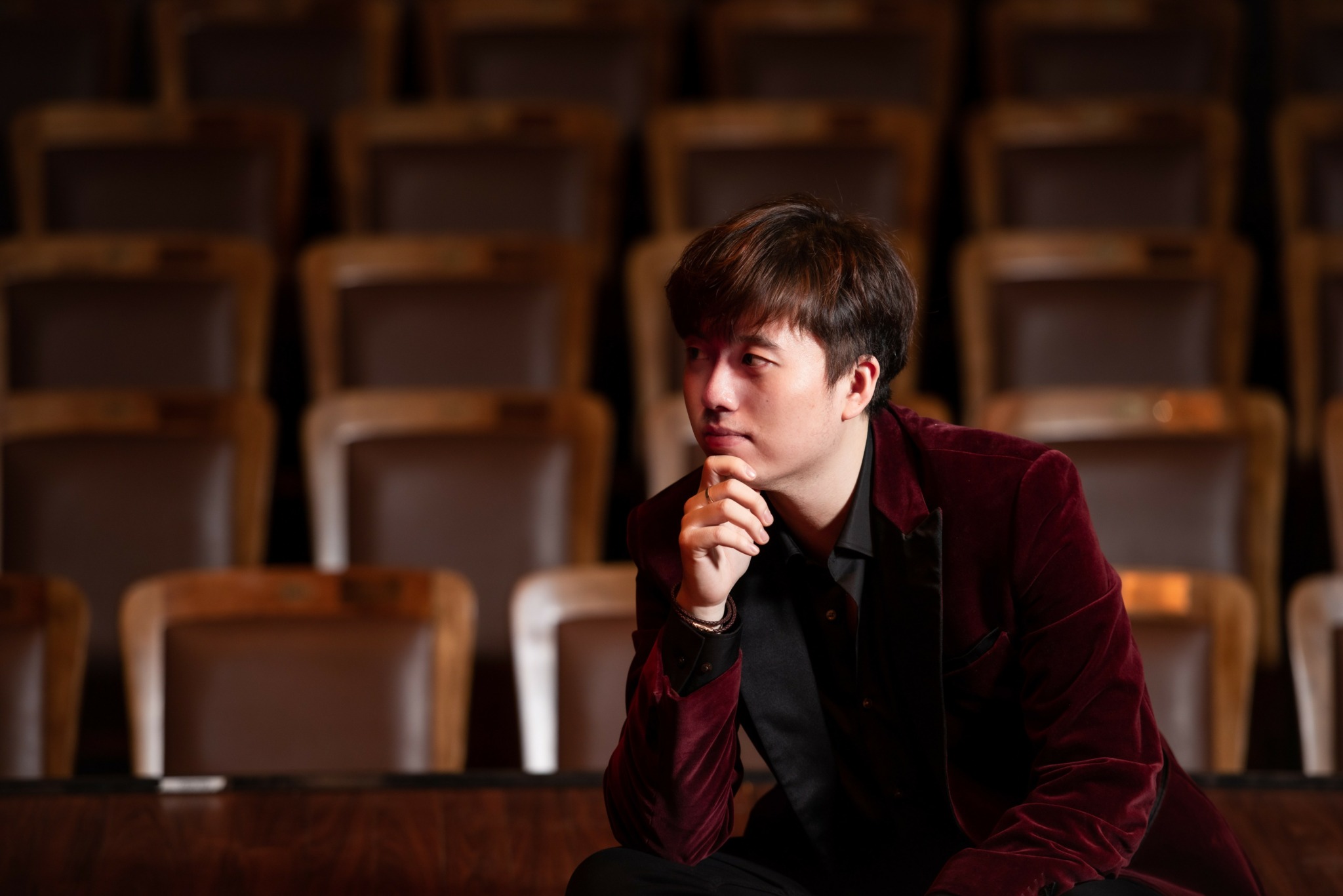
During my years at the New England Conservatory between 2019 and 2021, I spent a significant amount of time developing my social media presence. In China, there is a platform called Red Book (小红书), where people share moments from daily life, personal interests, and creative ideas. During the COVID period, I gained around 3,000 followers. It was a dark time for musicians—live performances disappeared for years, and all opportunities to connect with audiences vanished overnight. With so much isolation and so few musical outlets, social media became an essential way for me to stay connected with people.
On Red Book, I typically shared parts of my musical life: rehearsals with friends, non-classical pieces I enjoyed playing, and even the process of preparing for serious recording sessions, since live concerts were no longer happening. I also shared my thoughts about music in humorous and creative ways—I’ve always enjoyed being a bit of a comedian, turning musical ideas into funny commentary or lighthearted videos. That was when I gained the most attention online, and for a moment, I even imagined becoming an internet personality.
However, when I began my doctoral studies at the University of Michigan in late 2021—and as the world gradually returned to normal after COVID—my life shifted back toward in-person work. Not only did my schedule become much busier, but I also had more opportunities to connect with people face-to-face again. Naturally, my social media activity slowed down. I still post occasionally, but nowhere near as much as before.
If I were to offer advice to anyone who hopes to build a strong social media presence, I would say two things. First, be real—post what genuinely matters to you, regardless of whether everyone will like it. Some people will, and that authenticity is where your original motivation comes from. Second, find topics that resonate both with others and with yourself. During my social media peak, my most meaningful posts were the ones about the stories behind the music I played or the way I rehearsed with my chamber partners. These are experiences that both musicians and non-musicians can relate to, and people enjoy seeing something that reflects their own lives. When what you share speaks to others, your social media presence grows naturally.
Are there any books, videos, essays or other resources that have significantly impacted your management and entrepreneurial thinking and philosophy?
One of the most important figures in my life—someone who has consistently been a model for me—is Leonard Bernstein. I first encountered him through videos and documentaries, especially his famous concert series Young People’s Concerts. What I admire most about Bernstein is his extraordinary versatility: he was a brilliant conductor, a superb pianist, and an exceptional communicator. Whenever he spoke in public, he did so with complete confidence; you never saw fear or hesitation in his face. He was multilingual, charismatic, and endlessly curious. I own the full collection of his videos and have watched them many times.
To me, Bernstein represents a kind of musical “god,” yet he remained deeply connected to ordinary people—including those who were not professional musicians. His concerts for young audiences were not designed to create professionals, but to make music a natural and meaningful part of daily life. I find that vision fascinating. Many people outside the music world think classical music must be distant, elite, or unreachable—but Bernstein proved that it doesn’t have to be. He made music human.
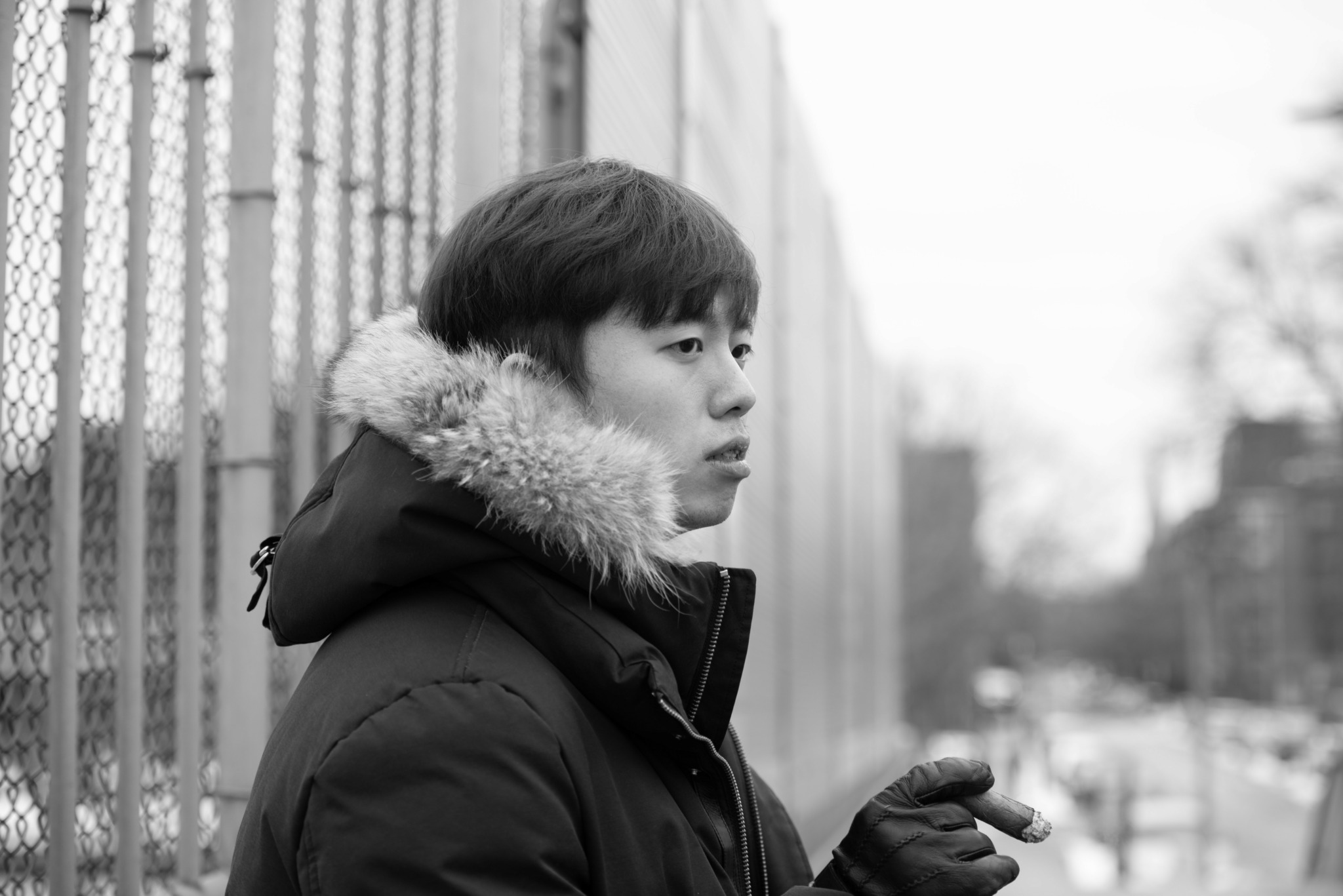
What I also find inspiring is that Bernstein was unapologetically himself. He smoked, he was dramatic, he had a powerful personality, and at times he could be demanding or intense with the musicians he worked with. Not everyone liked him—but many people loved him. And that complexity, that authenticity, is part of what made him a true artist. He connected with a broad audience not by being perfect, but by being real.
Contact Info:
- Website: https://www.yixuanhanpiano.com/
- Instagram: https://www.instagram.com/hanyixuanfafa/
- Other: https://www.xiaohongshu.com/user/profile/5b1b668d6b58b75a207eac13?xsec_token=AB4Ae1C4uRefQBsSFwpmKX_6A0ZJHyv6sOM5V57so5BlM%3D&xsec_source=pc_search