
We recently connected with Yiran Dai and have shared our conversation below.
Hi Yiran, thanks for joining us today. What’s been the most meaningful project you’ve worked on?
I met a jewelry designer during the summer of my first year in high school. Her unique taste and designs had a significant impact on me at a time when I had little appreciation for jewelry. I was very drawn to her work, so I stayed in touch with her. In my fourth year of college, I interned at her studio for four months, mainly responsible for product photography and some simple packaging design. Her products are quite niche, and she hasn’t established a brand yet, just a name called ISSUE JEWELRY. However, I knew she had plans to build her own brand.
I’ve always wanted to use my expertise to help her, but as a recent graduate, I didn’t feel confident in my ability to design a brand identity for her. It wasn’t until after I graduated from Pratt Institute that I approached her and said, “Now I feel ready to work with you. Let’s design a complete system for your brand.” She was happy to accept my proposal, and we worked together for two months, despite the 12-hour time difference.
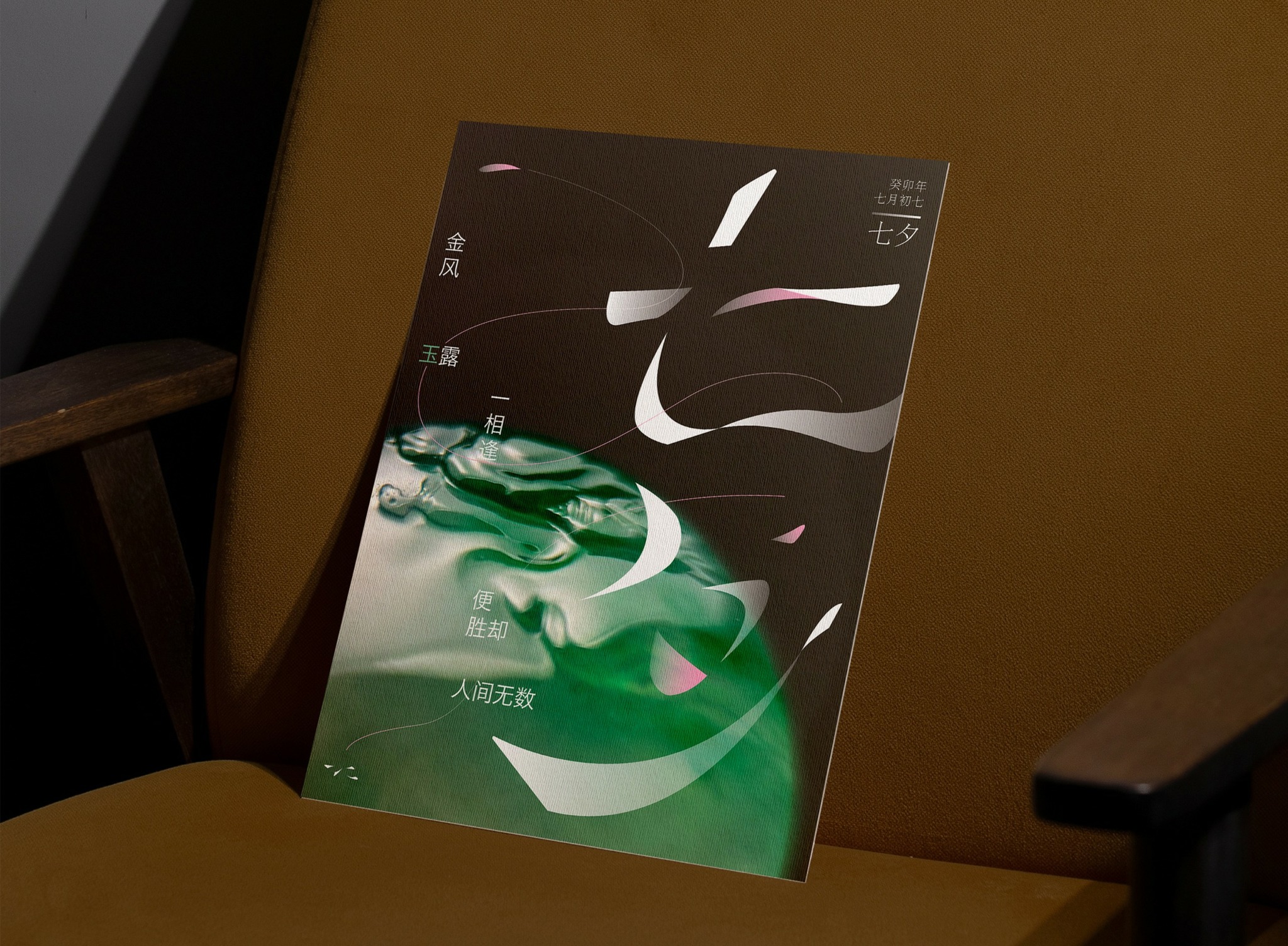
It was a challenge for me. First, during my two years of graduate study in the U.S., I hadn’t worked on any design projects involving Chinese characters. Her brand is deeply connected to Chinese culture, so I had to spend time researching design languages suitable for Chinese characters and then combine them with the latest branding knowledge I had learned. Fortunately, I had practiced calligraphy since childhood. For this project, I incorporated calligraphy, Chinese characters, and branding design knowledge. Now, she has stamped this logo on her latest jewelry designs, which gives me a great sense of accomplishment.
I even submitted this project to the 2024 TDC competition in the branding category. Although it didn’t win, it made it to the second round of evaluation. This project holds a special meaning for me because it was the first time I used my creativity to design a brand for another designer I knew and admired.
Yiran, love having you share your insights with us. Before we ask you more questions, maybe you can take a moment to introduce yourself to our readers who might have missed our earlier conversations?
I have loved drawing and calligraphy since I was a child, so I chose art as my major in high school. Before selecting my major in college, I had no idea what graphic design really was. I only knew that I wanted my future work to appear on store shelves—how cool would that be! With that goal in mind, I chose Visual Communication Design as my major in college. While studying in China, I realized I wanted to pursue further education in the United States for my graduate studies, which led me to Pratt Institute.
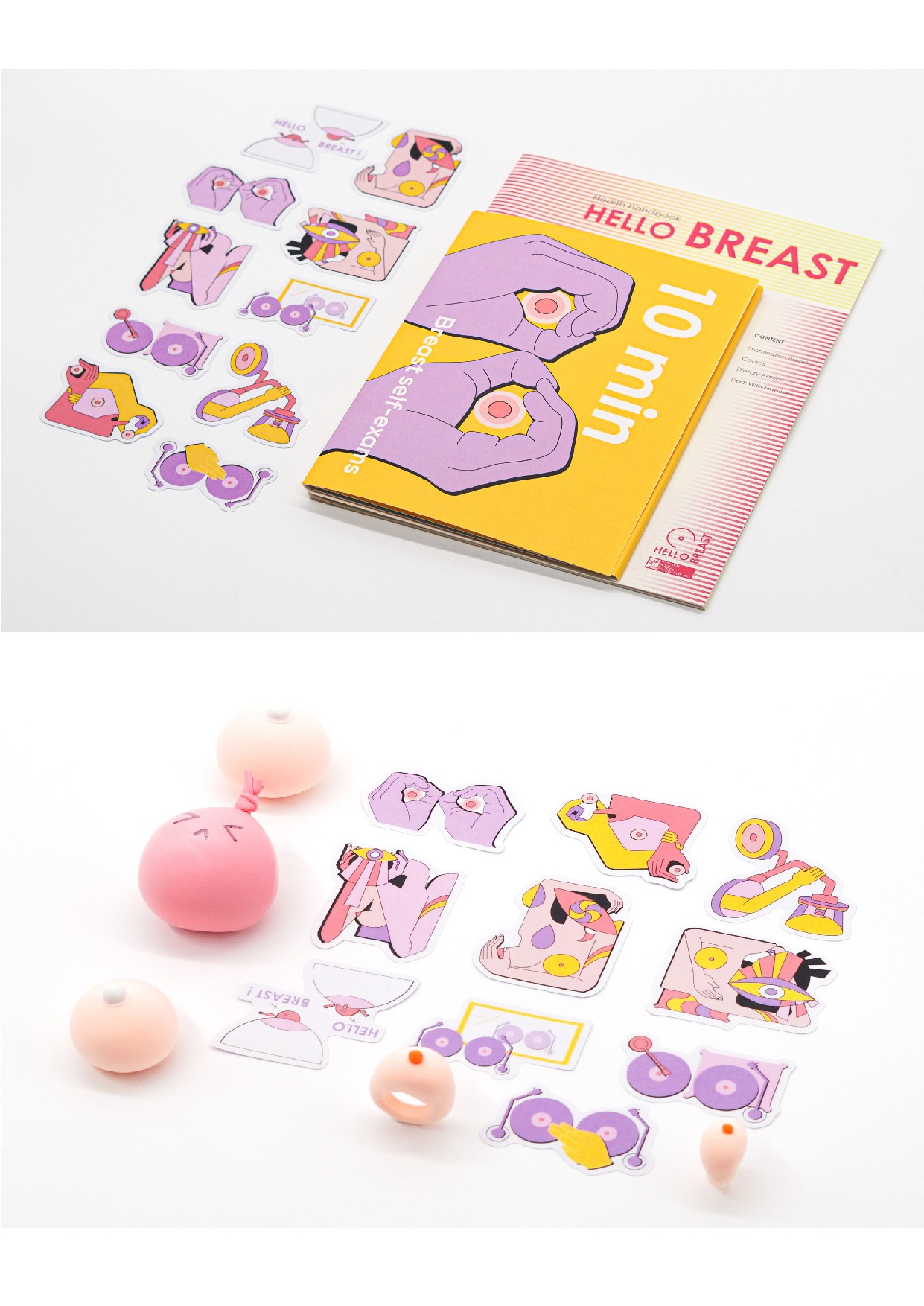
During my studies, I gained various work experiences: a sales associate at MAC and Estée Lauder counters, a tour guide for contemporary art exhibitions, an intern at a jewelry design studio, an illustrator, and a cover designer for a children’s book, among others. Currently, I am a full-time graphic designer at PS NEW YORK, a design studio. Our studio primarily focuses on branding and website design for real estate industry projects, as well as graphic design for cultural organizations and institutions. My work now includes both graphic design and project management, which requires me to communicate with clients, leadership, programmers, and vendors.
My experience has never been confined to a single role. This has given me the opportunity to interact with different people, work on diverse projects, and address various needs. At different stages of my education and career, there were times when I was determined to become a book designer, and other times when I thought I didn’t enjoy UI/UX design. But the reality is, I can do both, and I do them well.
In addition to serving well-known real estate clients in New York through my full-time job, I also take on freelance projects. These mainly include logo and website design, and my clients are very satisfied with my work. I always accept the client’s requirements first and then try to realize them. If the results are not ideal, I will offer my professional opinion, but I won’t force the client to take it. After all, design is a service industry. My goal is not to be a designer with a strong personal style, but to help clients communicate their message in the most beautiful and effective way possible.
Is there mission driving your creative journey?
What drives me to develop in the creative industry are two things: good design and money. I’ve seen a lot of poor design. By “poor,” I mean some are ugly, and some are not user-friendly. While I can’t take them down from billboards or storefronts, what I can do is create a design for another client that isn’t as bad. That way, there’s at least one less chance of a poor design appearing out there.
The other motivation is money. I love the sense of accomplishment that comes from both working and earning money. However, I find it hard to be passionate about industries that don’t interest me. The endless possibilities and vitality of the creative industry are what I enjoy. That’s why I choose to make money in an industry I love.
Do you think there is something that non-creatives might struggle to understand about your journey as a creative? Maybe you can shed some light?
Some clients struggle to understand design thinking and the designer’s workflow. In their view, elements such as the logomark, typography, and font in brand identity design are three separate components. I once encountered a situation where, after three rounds of proposals, the client approved the symbol, the font in the logo, and the supporting design elements in the brand identity system. However, the following week, they requested that we come up with a new symbol because their boss didn’t like the previously approved one. They also refused to pay additional fees, claiming that this work was out of scope. Their reasoning was that they had already narrowed down the work for us, confirming all the other elements, and now we only needed to redesign the symbol.
What they didn’t understand is that our brainstorming process isn’t conducted separately for each design component—it’s an integrated approach. So, we spent some time communicating with them, trying to help them understand this.
Contact Info:
- Website: https://yirandai.cargo.site/
- Instagram: jessieddesign
- Linkedin: https://linkedin.com/in/yirandaidesign