

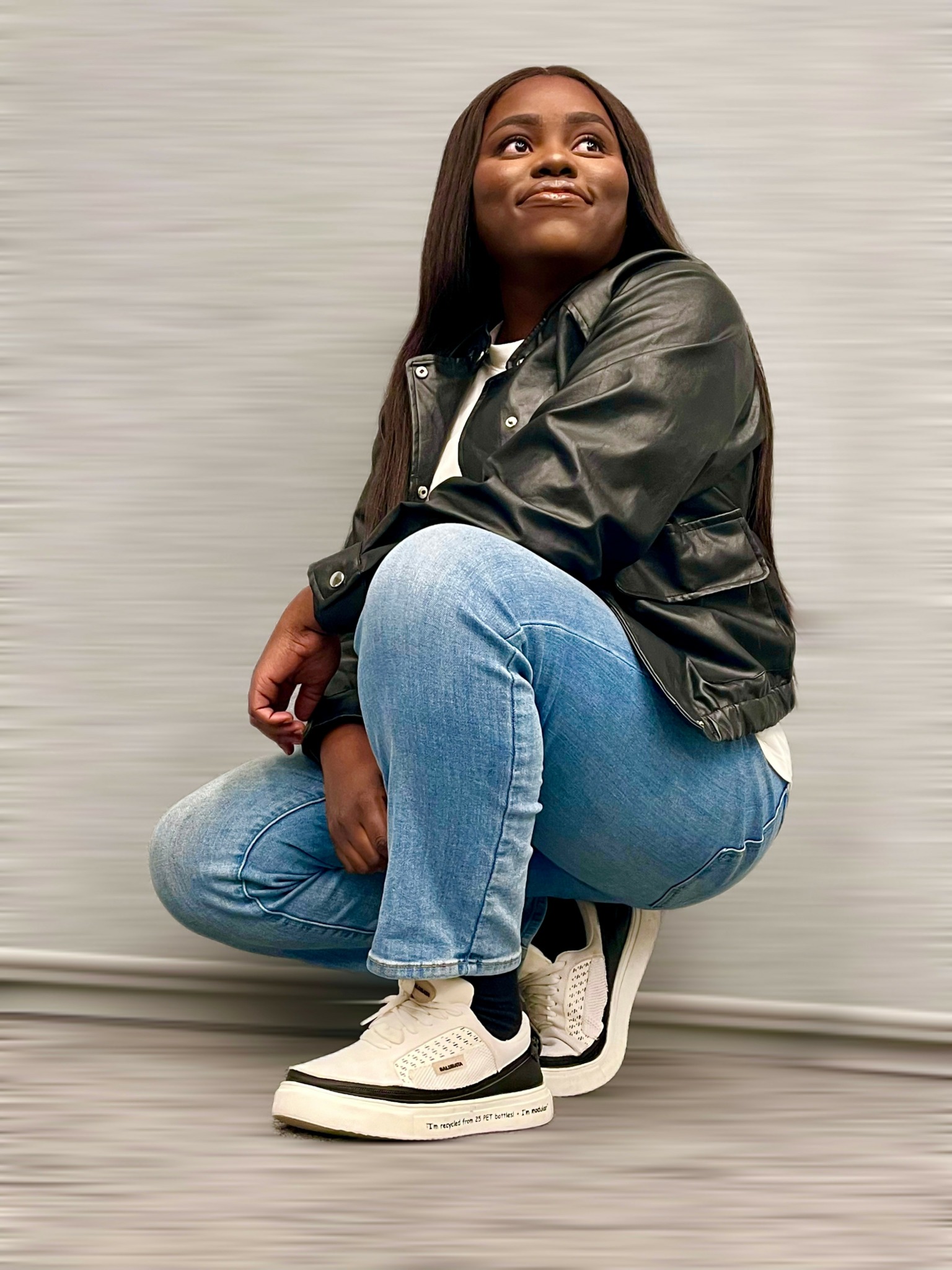

We’re excited to introduce you to the always interesting and insightful Yewande Akinse. We hope you’ll enjoy our conversation with Yewande below.
Alright, Yewande thanks for taking the time to share your stories and insights with us today. How did you come up with the idea for your business?
I grew up in Lagos, Nigeria, a vibrant city constantly humming with life, creativity, and contradiction. But beneath that energy was a quieter, more painful truth: the environment around us was growing increasingly fragile. My family and I experienced displacement more than once because of severe flooding. Each time the water rose, we weren’t just battling nature; we were confronting the consequences of improper waste management and plastic pollution that clogged our drainage systems and turned a preventable issue into a personal crisis.
Those moments stayed with me. They shaped my anger, my curiosity, and ultimately my resolve. I didn’t want to simply complain about the problem, I wanted to understand it and to change it. Over the years, as I studied environmental law and immersed myself in the arts and shoe design, the pieces began to come together. It dawned on me that the very material causing so much destruction in my community, plastic, could also be the foundation for something innovative, beautiful, and useful.
The turning point came when my team and I started asking a simple question: “What if plastic waste could be transformed at scale? What if we could turn one of the world’s biggest environmental problems into something people actually wanted?” Each year, humanity produces over 400 million tonnes of plastic waste, and 91% of it never gets recycled. That number haunted me. It signaled not just a crisis, but an opportunity, an untapped resource just waiting for a bold enough solution.
With that logic in mind, we started experimenting. We imagined shoes whose very existence helped clean the planet. We imagined a modular design with detachable uppers, products people would love, use, and personalize, without generating new waste. We imagined a global patent protecting an innovation that could scale across continents and industries. And little by little, imagination turned into prototypes, prototypes turned into a product line, and that product line became a mission-driven footwear brand called Salubata.
What excited me most wasn’t just the shoe itself, it was the possibility of building a circular system that empowered both people and the planet. By repurposing ocean-bound plastic into modular, customizable shoes and donating 5% of our profits to uplift women in underserved communities, we weren’t just solving a problem. We were rewriting the story of what waste could become and who could benefit from its transformation.
I knew this was a worthwhile endeavor because it united logic and purpose. It solved a global problem that few were tackling with real material innovation. It reimagined footwear in a way no one else had. And it allowed me to turn a painful childhood experience into a blueprint for impact, one shoe, one community, one recycled plastic bottle at a time.
Yewande, love having you share your insights with us. Before we ask you more questions, maybe you can take a moment to introduce yourself to our readers who might have missed our earlier conversations?
My name is Yewande Akinse, and I am the Cofounder and Chief of Operations at Salubata Inc. My path into this work has been anything but linear, shaped by lived experience, academic exploration, and an unshakeable commitment to creating impact. I hold three law degrees, and I am also the author of three books, including a recently published poetry collection for children. But at the heart of everything I do is one driving force: using creativity, innovation, and systems thinking to solve real problems that affect real people.
My journey into the sustainability and footwear innovation space began long before I had the language for it. I grew up in Lagos, Nigeria, where my family and I experienced repeated displacement due to flooding caused by plastic-clogged drainage systems and improper waste management. Those moments left a deep impression on me, they shaped my understanding of injustice, resilience, and the interconnectedness of environment and livelihood. Over time, my experiences cultivated a sense of responsibility because, if something harms your community, you either learn to live with it or you learn to change it. I chose the latter.
Although I built an academic career in law, my curiosity remained rooted in environmental systems, design, and social impact. That curiosity eventually led me, together with my team, to imagine a radical idea: “What if the very plastic polluting our oceans could be transformed into something functional, beautiful, and scalable, like shoes?”
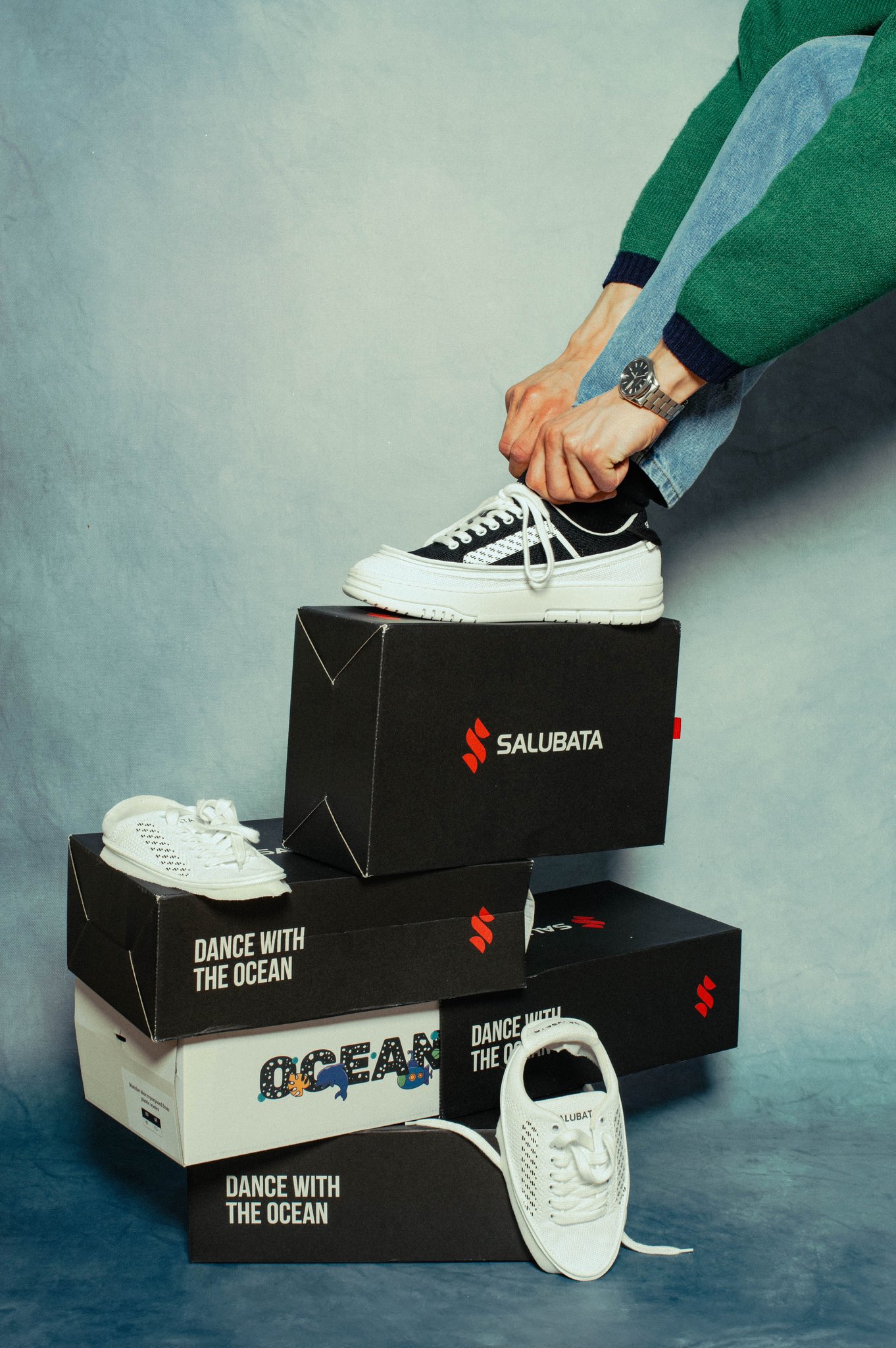
Today at Salubata, that idea has become our mission. We design modular shoes repurposed from recycled plastic waste, featuring detachable, customizable uppers and backed by a global patent. Our products fuse sustainability with style and functionality. But beyond the shoes themselves, we are building a circular ecosystem that redefines what waste can become.
We solve three core problems:
1. Plastic Pollution: By converting plastic waste into shoe components, we help reduce the 400+ million tonnes of plastic produced each year, 91% of which is never recycled.
2. Excessive Fashion Waste: Our modular design means customers can update their style without discarding entire shoes, dramatically reducing landfill contributions.
3. Economic Inequality: Through our commitment to donating a portion of profits, we uplift women in underserved communities, an impact that has already reached hundreds of women in Nigeria.
What sets us apart is more than our patented modular innovation, it’s the intersection of science, creativity, and purpose embedded in every product. We don’t see footwear as just fashion; we see it as a vehicle for environmental restoration, cultural storytelling, and economic empowerment.
I am most proud of how our work has grown into a global conversation about what sustainable innovation looks like in practice. I am proud that we are proving that African-born ideas can shape global markets. And I am proud that my childhood pain has been repurposed into possibility for others.
For potential clients, partners, and supporters, here’s what I hope you take away:
Salubata isn’t just a brand, it’s a movement. A movement toward cleaner oceans, fairer economies, and products that reflect not just who we are but what we stand for. And my work is guided by the belief that every challenge can be reshaped into something transformative when approached with courage, imagination, and intention.


How’d you meet your business partner?
Fela and I met as undergraduates at the University of Lagos, Nigeria, over 15 years ago. At the time, neither of us had any idea that our paths would one day merge into a shared mission that would impact communities, reshape sustainability narratives, and challenge global industries. What brought us together initially wasn’t business, it was curiosity, shared values, and long conversations about the problems we saw around us and the world we wanted to help build.
Back then, we were both navigating the usual chaos of university life, but even in that environment, certain qualities stood out. Fela had an engineer’s precision and an innovator’s mind, constantly thinking about how things worked and how they could work better. I was deeply drawn to systems, creativity, and the intersection of law, the arts, and social impact. Those early conversations revealed something important: we were both motivated by purpose, and we both felt a strong responsibility to address the environmental challenges affecting our community.
As the years passed, our friendship matured into mutual respect and a shared vision for using innovation to solve real-world problems. We both experienced, firsthand, how plastic waste and poor waste management affected everyday life in Lagos, from flooded neighborhoods to polluted waterways. Those experiences formed a common thread between us, a constant reminder that our work had to matter.
When the idea of turning plastic waste into modular, customizable shoes first surfaced, it felt like the most natural evolution of everything we had talked about for years. We didn’t come together because we wanted to start a company, we came together because we wanted to create meaningful change. The business was simply the vehicle.
Today, after more than a decade of knowing each other, our partnership is rooted in trust, complementary strengths, and a shared belief that innovation should always serve humanity and the planet. Our journey from university acquaintances to cofounders has been one of growth, resilience, and purpose, and it continues to be the foundation on which Salubata is built.


How did you put together the initial capital you needed to start your business?
Launching a business rooted in sustainability and innovation requires more than just passion, it requires real resources. In the early days of Salubata, my cofounder and I knew we had a powerful idea, but we also understood that transforming plastic waste into modular, customizable shoes would take capital, equipment, and time to refine our processes.
Our breakthrough came when we were selected by Orange Corners Nigeria, an incubator that supports young entrepreneurs with bold, impact-driven ideas. It was a transformative moment for us. Being chosen validated not only our concept but the urgency of the environmental problem we were trying to solve.
Through the program, we received a combination of grant funding and a low-interest loan, which together formed the foundation of our startup capital. For a young company tackling a material innovation challenge, this blend of support was exactly what we needed not only financially, but also in terms of mentorship, structure, and visibility.
We combined this funding with our personal savings, pooling together every resource we could. It wasn’t glamorous; it was scrappy, disciplined, and deeply intentional. But that early capital, both the financial investment and the belief others placed in us became the launchpad that allowed us to transform an idea into a living, breathing business.
The support from Orange Corners Nigeria gave us more than money. It gave us credibility, community, and the momentum to build prototypes, validate our materials, and establish the foundation for what would become a globally patented modular shoe brand made from recycled plastic waste.
Looking back, that initial funding phase is something I’m incredibly proud of. It reflects the resilience, resourcefulness, and conviction that built Salubata from the ground up and continues to sustain us as we scale.
Contact Info:
- Website: https://www.salubataofficial.com/
- Instagram: https://www.instagram.com/salubata/
- Facebook: https://www.facebook.com/salubataofficial
- Linkedin: https://www.linkedin.com/company/salubataofficial
- Twitter: https://x.com/SalubataX


Image Credits
First image of Yewande Akinse bending down in Salubata sneakers was taken by Nyleve Laurent
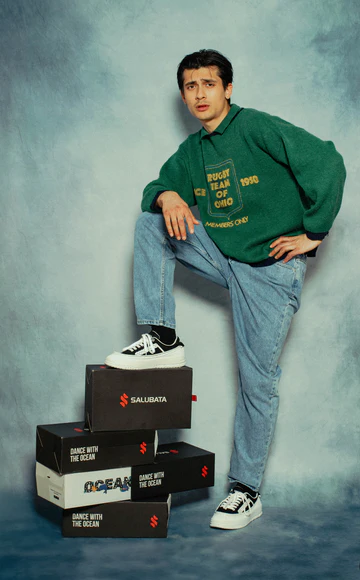
Images of white colored models in the studio and with the shoe box in the studio were all taken by Lolita Charlet
Images of black colored models outside and in the field were all taken by Lemaire Guillaume