

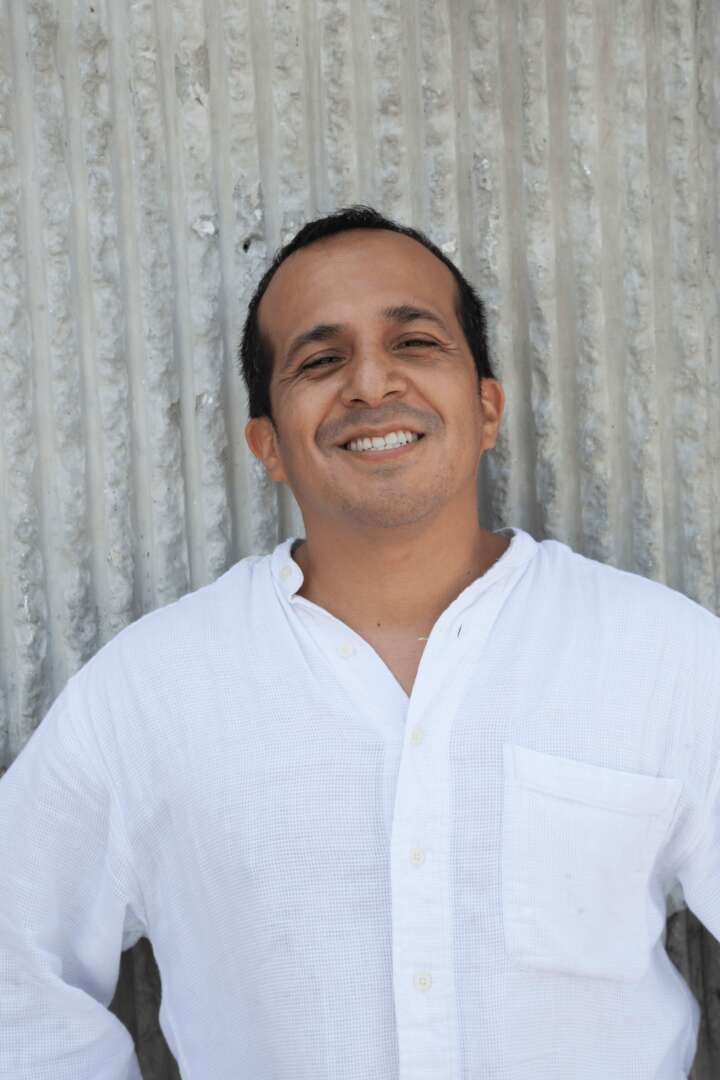

We’re excited to introduce you to the always interesting and insightful Will Luera. We hope you’ll enjoy our conversation with Will below.
Will, thanks for taking the time to share your stories with us today What’s been the most meaningful project you’ve worked on?
One of the most meaningful projects I’ve worked on is the creation and development of Healing Moments for Alzheimer’s. This project holds a special place in my heart due to its profound impact on individuals with dementia and their caregivers. Healing Moments for Alzheimer’s was born out of a desire to bring hope, joy, and support to people living with Alzheimer’s disease and other forms of dementia. The inspiration came from witnessing firsthand the struggles faced by those with dementia and their families. I was first introduced to this world by an Improv student of mine at ImprovBoston. Traditional approaches to care often focused on medical treatments, but there was a noticeable gap in emotional and social support. I believed that the principles of improvisation—being present, adapting to the moment, and connecting with others—could bring significant benefits to this community.
Together with Jade Angelica, I co-created Healing Moments. The project aimed to provide education, advocacy, and ministry through interactive workshops and training sessions. We integrated improvisational techniques to foster communication, reduce stress, and create meaningful connections between caregivers and individuals with dementia. This project is incredibly meaningful to me for several reasons. Seeing the immediate positive effects of our work on individuals with dementia and their caregivers has been deeply rewarding. Moments of genuine connection and joy, even in the midst of a challenging disease, reaffirmed the power of human interaction and empathy.
Merging improvisation with dementia care was an innovative approach that challenged conventional methods. It demonstrated the versatility and transformative power of improvisation beyond the stage, highlighting its potential in therapeutic settings. The project helped build a supportive community where caregivers and individuals with dementia felt understood and valued. It provided them with tools and strategies to navigate their daily lives with greater ease and positivity. Healing Moments has grown beyond our initial expectations, reaching more people and inspiring similar initiatives. I now work with different communities around the Sarasota area, year around. Knowing that our work has a lasting impact and continues to evolve is incredibly fulfilling.
Working on Healing Moments for Alzheimer’s has been a journey of learning, growth, and heartfelt connection. It stands as a testament to the power of creativity and empathy in making a real difference in people’s lives. This project not only transformed the lives of those it touched but also deeply influenced my approach to using improvisation in various contexts, reinforcing my commitment to meaningful and impactful work.
As always, we appreciate you sharing your insights and we’ve got a few more questions for you, but before we get to all of that can you take a minute to introduce yourself and give our readers some of your back background and context?
I’ve spent much of my life immersed in the world of improvisation and theater. Currently, I serve as the Director of Improvisation at Florida Studio Theatre, the Director of Big Bang Improv, the Artistic Director Emeritus of ImprovBoston, and the Simulation Coordinator for Real Academy. I also co-created Healing Moments for Alzheimer’s, a non-profit organization dedicated to providing education, advocacy, and ministry for persons with dementia and their caregivers.
My journey into the world of improvisation began in 1997 when I joined ImprovBoston. From there, I became a member of the Mainstage cast, TheatreSports cast, and helped to start the Boston franchise of Sitcom. In 1999, I left ImprovBoston to start my own improvisational theater company called Blue Screen. This venture allowed me to continue directing Sitcom while also developing and directing innovative shows like Secret Society and Dropkick Bandito. I rejoined ImprovBoston in 2000 as Artistic Director, where I directed the Mainstage cast and developed nationally renowned productions such as Sitcom, Secret Society, Blue Screen, and Quest.
My work involves teaching improvisation classes, directing shows, and performing at various festivals worldwide. I have taught improvisation for esteemed institutions like the United States State Department, Major League Baseball, Google, Thomson Reuters, MIT, Harvard University, Boston College, and more.
One of the core problems I aim to solve for my clients is the need for authentic and effective communication, whether it’s within a team, between caregivers and patients, or in performance settings. I use improvisational techniques to foster creativity, adaptability, and empathy. What sets me apart is my commitment to using improvisation beyond entertainment, applying its principles to areas such as education, healthcare, and corporate training.
I am most proud of the impact my work has had on diverse communities. Healing Moments for Alzheimer’s is a prime example of how improvisation can transform lives by enhancing communication and reducing stress for both individuals with dementia and their caregivers. My role at Real Academy, specializing in immersive simulation training for human helpers, further exemplifies my dedication to integrating improvisation into impactful training methodologies.
For potential clients, followers, and fans, I want you to know that my work is driven by a passion for connection and transformation. Whether through a performance, a workshop, or a training session, my goal is to create meaningful experiences that foster understanding and growth. I believe in the power of creativity and empathy to solve problems and bring people together, and I strive to embody these values in everything I do.
You can find more information about me at will-luera.com
Do you think there is something that non-creatives might struggle to understand about your journey as a creative? Maybe you can shed some light?
Non-creatives often struggle to understand the intangible nature of the work we do. Unlike traditional professions where the results are tangible and measurable, the value of creative work lies in its ability to transform thoughts, emotions, and behaviors. This lack of physical deliverables can make it challenging for others to see and appreciate the impact of creativity.
One of the key insights I can offer is that creativity is not just about producing art or entertainment—it’s about fostering connections, inspiring innovation, and solving problems in unique ways. For instance, in my work with improvisational theater and immersive training, the outcomes are often seen in the way people communicate better, think more openly, and collaborate more effectively. These changes might not be immediately visible, but they are profoundly impactful.
Creatives deliver something that goes beyond the tangible. We provide experiences and insights that can change the way individuals and organizations function on a daily basis. Creativity can spark new ideas, encourage empathy, and help people see the world from different perspectives. It’s about creating moments of connection and understanding that can lead to lasting change.
Another aspect non-creatives might struggle to grasp is the emotional investment involved in creative work. Being a creative often means putting a piece of yourself into your work, making it deeply personal and sometimes vulnerable. The process involves continuous learning, experimentation, and the willingness to take risks. This journey can be unpredictable and requires resilience and passion.
I hope this provides some insight into the journey of a creative. Our work might not always be something you can see or touch, but its value is in the way it enriches lives, inspires change, and brings people together. For those who may not fully understand, I encourage you to experience creative work firsthand—whether through a performance, a workshop, or simply by engaging with art—and see how it can transform your perspective. You never know how it might enlighten you or spark a change in your own life.
Let’s talk about resilience next – do you have a story you can share with us?
I’m proud to share that I grew up on the South Side of Chicago, an environment that presented its own unique challenges and opportunities. One particular story that illustrates my resilience involves my journey into the world of improvisation, which, despite growing up in Chicago – the birthplace of modern improvisation – I was introduced to later in life.
Growing up in the South Side, I didn’t have early exposure to theater or improvisation. It wasn’t until my college years at Boston College that I stumbled upon an improv audition. The spontaneity, creativity, and raw energy of the performers were unlike anything I had seen before. However, breaking into this world was no easy feat, especially since I was starting from scratch.
After college, I decided to pursue my newfound passion for improvisation. I joined ImprovBoston, where I started as a member of the Mainstage cast and the TheatreSports cast. Despite being relatively new to the scene, I immersed myself fully, taking every opportunity to learn and grow. I attended workshops, studied with some of the best in the field, and performed at every chance I got.
In 1999, I made a bold decision to leave ImprovBoston and start my own improvisational theater company called Blue Screen. This was a significant risk—leaving a stable position to venture into the unknown. But I was determined to create something unique and groundbreaking. With Blue Screen, I continued to direct the show Sitcom, but also developed and directed innovative productions like Secret Society and Dropkick Bandito. These projects pushed the boundaries of traditional improvisation and allowed me to explore new creative avenues.
The early days of Blue Screen were challenging. There were moments of doubt and financial uncertainty, but my passion for improvisation and belief in my vision kept me going. I networked tirelessly, marketed our shows, and built a dedicated team of performers who shared my enthusiasm. Slowly but surely, our hard work paid off, and Blue Screen began to gain recognition and acclaim.
Due to the work at Blue Screen, in 2000, I rejoined ImprovBoston as Artistic Director, where I had the opportunity to direct the Mainstage cast and develop nationally renowned productions. This experience further solidified my place in the improvisational theater world and opened doors to teaching and performing on a global scale. Eventually, this brought me to my position at Florida Studio Theatre in Sarasota, FL.
Looking back, my journey from the South Side of Chicago to becoming a successful improvisational artist and director is a testament to resilience. It wasn’t an easy path, but my passion, determination, and willingness to take risks helped me overcome the challenges. This story illustrates that no matter where you start or how late you begin, with perseverance and dedication, you can achieve your dreams and make a significant impact in your field.
Contact Info:
- Website: https://www.will-luera.com
- Instagram: @wluera
- Facebook: @will.luera.improv
- Linkedin: https://www.linkedin.com/in/wluera/
- Twitter: @wluera
- Youtube: @wluera
- Yelp: @wluera
- Soundcloud: @wluera