We caught up with the brilliant and insightful Victoria Maurer a few weeks ago and have shared our conversation below.
Victoria, looking forward to hearing all of your stories today. What do you think Corporate America gets wrong in your industry? Any stories or anecdotes that illustrate why this matters?
After spending 10 years in professional services at one of the largest Big 4 accounting firms in both the US and Australia, I’ve learned the thing that Corporate America gets wrong is well-being.
When I first moved to Sydney, Australia I was a manager and had spent 5 years in New York working on one of the largest global banking clients. I was just about burnt out when the opportunity to move to Sydney came up and I thought “When else will I get the chance to live in Australia?” and so, I decided to take the plunge. Looking back now it is easy to say that was the best decision I ever made. Moving overseas unlocked a different side of me, I finally was able to experience what it was like to enjoy my life. This was not because I had less work to do or fewer client commitments but because I was able to see a path where enjoying the journey is more important than the destination, which at the time was to make Partner at the firm.
I won’t say Corporate Australia has well-being all figured out but they are much further ahead culturally than Corporate America, based on my experience.
Throughout my time at the firm in both NY and Sydney, I was very involved in well-being. Whether that was creating and running well-being initiatives, setting an example for my juniors as to what balanced well-being looks like, while helping them develop a plan to achieve their own version of well-being, or more formally in my final year at the firm where I was working with a team that was focused on People Experience and how to improve well-being so that we could retain our talent. In each of these experiences, I learned that when corporates talk about well-being they are most interested in focusing on the initiatives that they hope can improve the well-being of the collective rather than investing in initiatives that improve the well-being of each individual. I know you’re probably thinking “…well, of course!” but give me a moment to explain why this differentiation is key.
I see three key reasons why well-being in corporations (or in any environment) should be focused on the individual, rather than the collective.
Firstly, because well-being is highly individual. So much so that even for the individual it changes on a very regular basis depending on their current mental or emotional state, as well as their current life focus both inside and outside of work. If we are not starting with the definition of what well-being means to that person, how can we even hope to help our people find well-being at all? A day off to volunteer or some extra money to spend on a gym membership may work well for one person but be useless for the next.
Secondly, because each person in the team contributes something different. They have different skills, energy levels, personality traits, and ways to add value. When we focus on a well-being strategy that supports those specific strengths (while also addressing the weaknesses) we create stronger people who can perform at a higher level in a way that feels good for them and creates more value for the collective.
Lastly, and maybe most importantly because when we raise the individual we ultimately raise the entire collective. When each person has the energetic capacity to handle their workload and the stressors of their lives they are more likely to perform at a higher level and feel good while doing it. They are able to adapt more quickly to complex situations and respond with poise, which then begins to create a cultural environment and others do the same..
So how do corporations achieve this? Simply put, they need to spend some more time exploring what really matters to each person and the way to do this effectively is to give the ownership of this task to the individuals themselves. After all it is their livelihood we are talking about! Leadership teams aren’t off the hook by giving the responsibility to their people, they are just now on the hook to make sure they are supporting their people in getting to the bottom of it. This could look like creating coaching relationships which are driven by the individual, not by a scripted path or blueprint of what success looks like on the corporations terms.
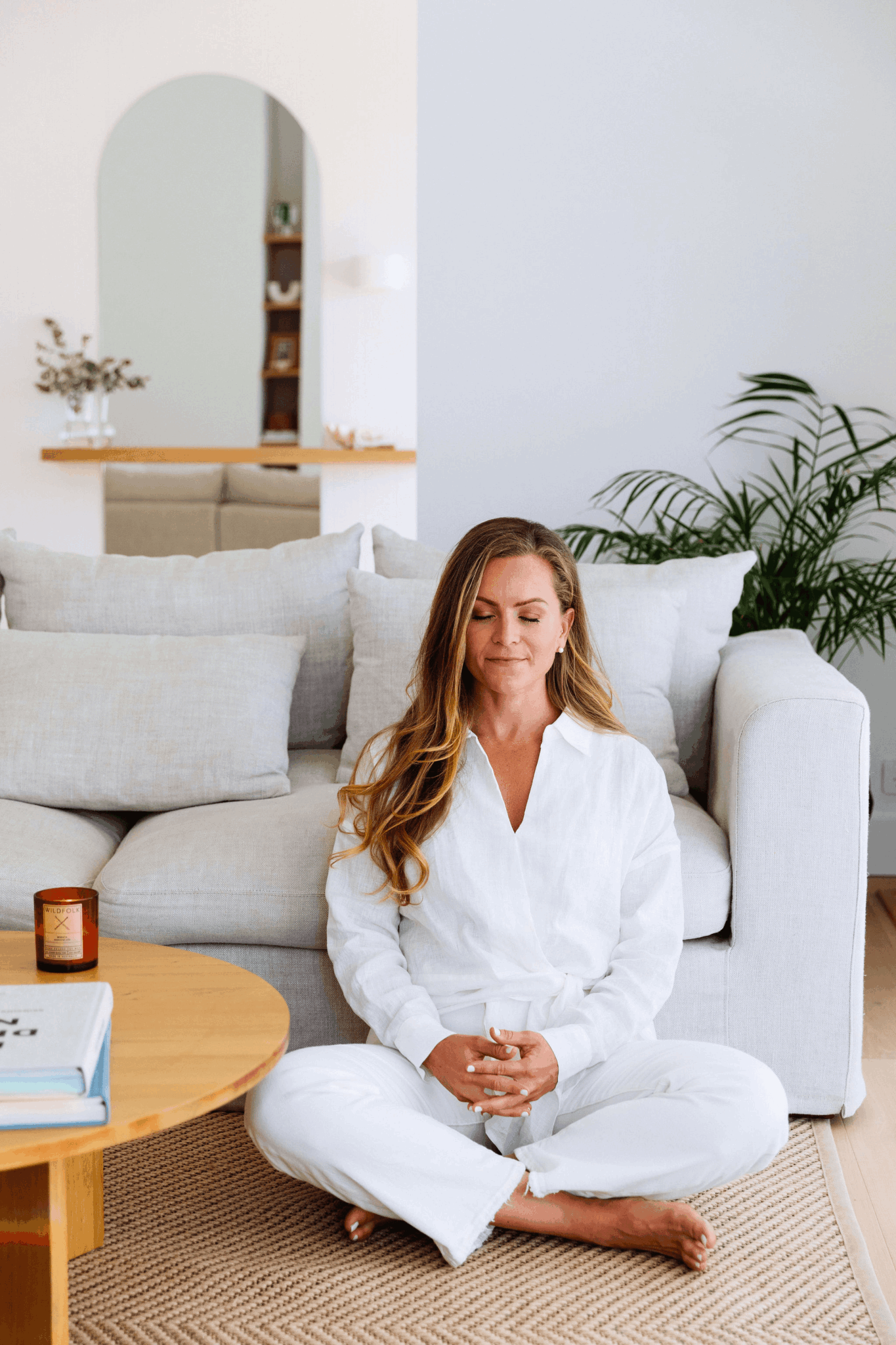
Victoria, love having you share your insights with us. Before we ask you more questions, maybe you can take a moment to introduce yourself to our readers who might have missed our earlier conversations?
As I mentioned I spent 10 years in professional services at PwC, 5 years in NYC and 5 years in Sydney. I was always passionate about health and wellness and made sure to keep up my fitness and eat as healthy as possible, even when I was doing 2-3am nights. Despite doing that though I didn’t really feel good. I was anxious and overworking because I was putting so much pressure on myself to deliver on everything that was on my plate and more. After about 7 years of that and 2 years into my move to Australia I started practicing Vedic meditation and this gave me the awareness I was lacking about how I actually wanted my life to look and feel. Once I started asking myself these bigger questions I got to know my True Self better and was then able to take actionable steps towards creating the lifestyle that feels aligned for me to live.
I decided to take some time off to study Neuro-linguistic Programming (NLP) and Holistic Health Coaching because I wanted some credentials to support the knowledge I felt I already had in these areas but these courses had a much bigger impact on me. I was always passionate about developing my teams at PwC and I realized quite quickly that this was what I wanted to spend my energy doing everyday.
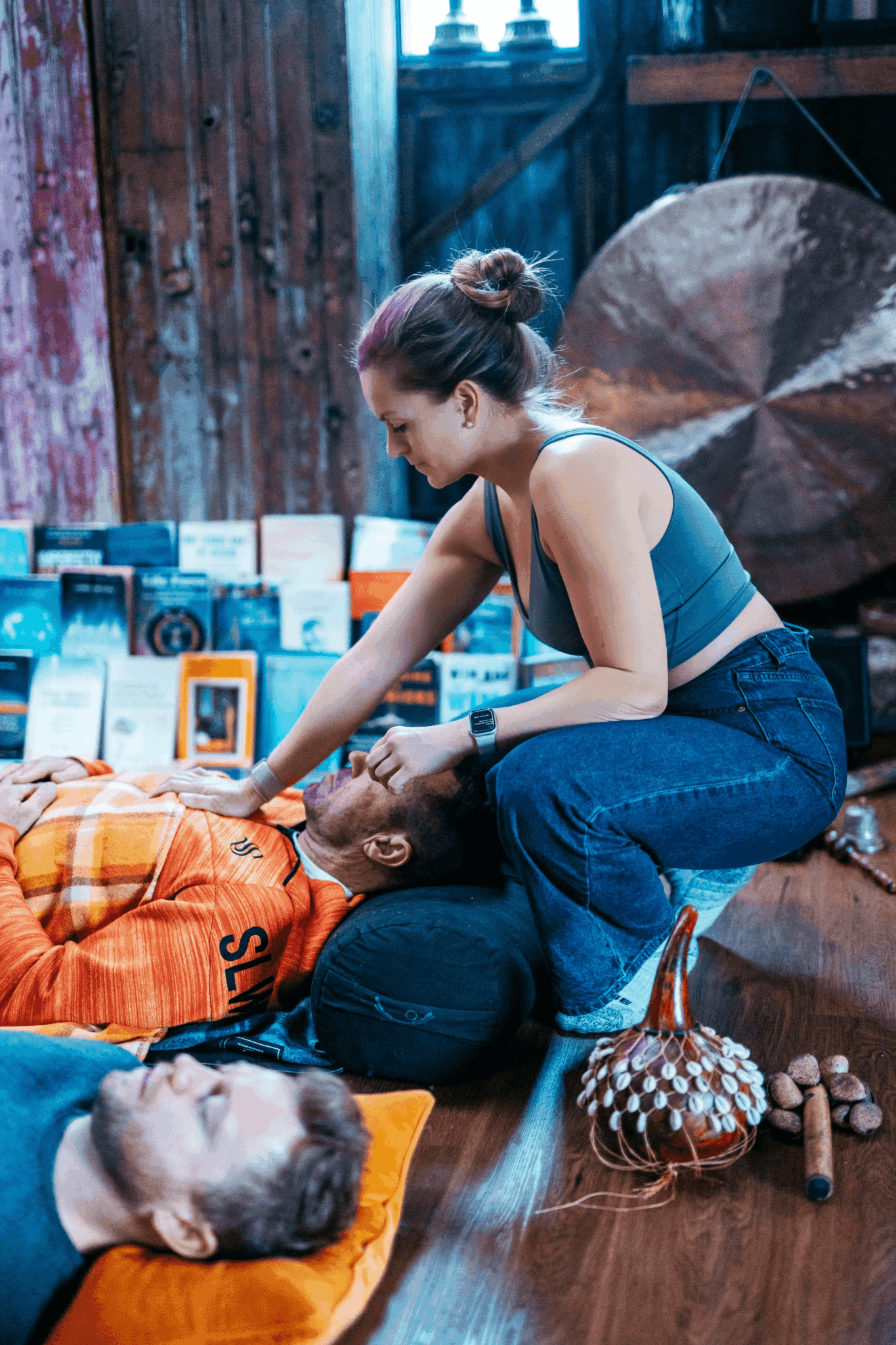
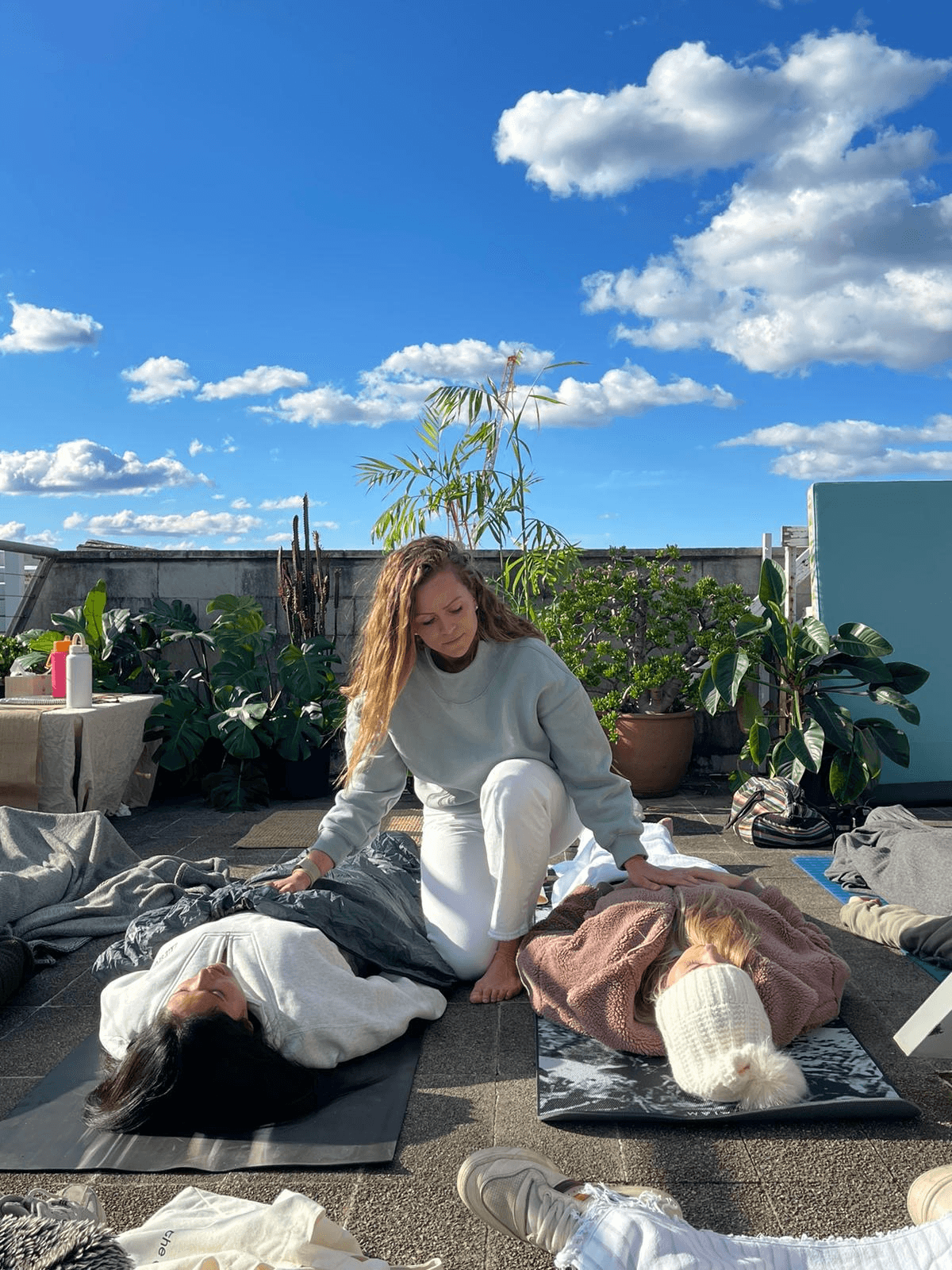
All of this is what led me to where I am today. As a Holistic Health and Mindset Coach and Master Breathwork instructor, I focus on helping ambitious corporate professionals find balanced well-being that creates the energy they need to thrive in their lifestyle.
My mantra is that you don’t have to quit your ambitious corporate career to have balance and well-being. Balance and well-being must be created by the individual, within the individual. Corporate America or corporate anything will take everything we give it, that’s the way it’s been designed. The sooner we realize that we hold the keys to our well-being in our choices and decisions the sooner we can make real change. At one time I found myself waiting for my company or my leaders to prioritize my well-being, until one day I realized they literally can’t! No matter how much they care or how well they want to see me do, they have no way of knowing what truly makes me FEEL WELL or what well-being truly means to me.
When I work with my individual and group coaching clients, the ultimate goal is to help them get in touch with the truest version of themselves by shedding the versions of themselves that have been created for them or by them as products of their environments. This sounds a lot simpler in theory than it is. Because we have been told for so long to be a certain way, we don’t know how to be who we truly are anymore. And so, in practice, this involves layers of work.
The first thing we do is get clear on where they are currently at and how they got there. Many of my clients are at different life stages but more often than not they are either on the brink of burnout or are craving more from their lives. In this detailed assessment, we find all the contributing factors both externally (work, food, exercise, lifestyle choices, relationships etc.) and internally (limiting beliefs, values, negative self-talk etc.). This is important because once the client understands how they have gotten to this place, it becomes simpler to see another path.
Next, we define their core values. It’s always surprising for my clients to learn how often they have adopted values that belong to their families or cultures that do not resonate with them. When we live in alignment with values that are not ours, we spend excess energy trying to bridge the gaps between the person deep down that we want to be and the person we are showing up as. I call this “the grind” because it feels like you are stuck between a rock and a hard place, trying to get out but unsure how.
Then we redefine their vision so that it allows for living in alignment with those values. The vision is very detailed and it creates the landscape for growth. As my clients lean into this new way of being lots of roadblocks, limiting beliefs and old patterns come to the surface and that is where the real work begins. We start answering complex questions like “Where does that belief come from?” “what is a new belief that can serve you better?” “is that reaction or trigger something you want in your life?” “What is it that you want?” These answers naturally evolve until they feel complete and resolved.
Growth for me and my clients doesn’t mean “stronger, fitter, faster, smarter” it means “how well do I know my Self, how much do I trust my Self and how often do I listen to my Self?” The more energy we spend on being the truest versions of ourselves the more energy we will have to BE the truest versions of ourselves and the rest falls into place.
I feel the most proud when I see my clients living their true purpose and feeling energized to create, sustain, and thrive in the lifestyle of their dreams. This is truly what it’s all about.
If you or someone you know could benefit from doing this work, please get in touch via my website thebalancedcorporate.com where I offer a Free discovery call.

We often hear about learning lessons – but just as important is unlearning lessons. Have you ever had to unlearn a lesson?
That hard work is the only way. I always thought that working hard was the best way to achieve success. Learning to be happy and to enjoy the process has been a game-changer for me. Working hard at something I didn’t want deep down never made me happy and was never going to, however, I couldn’t have known this at the time because I was lacking the awareness. I always thought, “Work hard now and enjoy life later” What a crazy idea!
I started practicing Vedic or Transcendental Meditation (mantra meditation) in January 2020, a practice I still have today. I attribute this practice to my ability to create space for the awareness I was lacking. In March 2020 during the first COVID lockdown in Australia, I was working until 2 am, this was not uncommon for me during a busy season period, however, something felt different. I wasn’t in the office surrounded by my colleagues feeling like “we’re in this together” and I realized quite quickly that this was not what I wanted anymore. I realized that it wasn’t making me happy. The promotions, performance ratings, and accolades that came with it didn’t actually matter to me. However, once I realized that was no longer making me happy, I had to ask myself “What does make me happy?” and to be honest I wasn’t truly sure.
At this moment I had to decide to either stay the course I had committed to so deeply (University education, professional accreditations, 10 years of experience, a network of people depending on me etc.) or start searching for other paths. I chose to pursue the journey in search of alternate paths. Since that time I have made many changes to my life and this was when I started my journey to discover what truly makes me happy. I realized hard work was never the answer, it was just a distraction from the pursuit of finding the real answer. The pursuit has not been super easy, sometimes it’s lonely, and often I have had doubts but overall, for me, it’s been worth it.

We’d love to hear a story of resilience from your journey.
Like you, I have many stories that demonstrate resilience. Resilience has become a buzzword, especially in the corporate world but I think it truly is a blessing and a curse and if it’s not balanced correctly it can become very dangerous. Rather than sharing a story, I’d love to explain why I feel this way about resilience and how I help my clients identify when they are being blessed or cursed by their resilience.
We become so resilient, not only able to tolerate high amounts of stress but THRIVE in it. The problem with this is that this thriving feeling is extremely addictive and so it becomes our benchmark operating level. So much so that when we are not extremely stressed, overwhelmed, or busy and things seem “easy” we don’t feel that we are doing enough (because we know we can handle more and therefore feel like we should in order to reach our full potential!) and that never feels nice.
On the flip side, our resilience has afforded us many opportunities. Our ability to “push through” when required has set us apart and helped us to gain great experience. Resilience is also a critical skill to have when things get hard and there is no other option (i.e. dealing with a crisis).
This is why resilience is a double-edged sword and why it’s important to remember that with light there is always darkness. So how can we become aware of this and find a healthy balance that works for us?
The first step is to create awareness around your resilience thresholds. The best way to do that is to take some time to ask yourself some questions about where you are currently.
In what areas of your life are you being resilient?
For how long have you been operating this way?
When can you take steps to find more balance in this area?
Are you comparing yourself to a previous version of yourself who was overworking and trying to maintain that pace and productivity?
Next, look at the things you are doing each day, each week: how many of those things give you energy and how many of those things take your energy? Is it balanced? If the energy takers are much higher than the energy providers, you need to shift as quickly as possible. Noting there will be times in your life when this is unavoidable, just make sure it’s not your normal. Do something, no matter how small it is, to give back to yourself- every little bit counts.
When someone asks you to do something, work-related or not, and you think to yourself “Well I’ve done more in the past, I can take this on too.” Instead of letting that narrative run through your mind, try to remind yourself “Just because I can, doesn’t mean I should.”
When you are in a situation where you either feel that you should be doing more or are unsure whether or not you should take on more, I recommend asking yourself a series of questions.
Do I need to do this now or can it wait? Can I outsource/delegate or be ok with not doing it?
Who am I doing this for?
What is the outcome I am looking for? Does it serve me?
Once you’ve answered these questions you can more easily decide if it makes sense for you to continue practicing resilience or look for ways to slow down and allow yourself to recover.
If you or someone you know could benefit from having a conversation about how to do this in practice, please get in touch via my website thebalancedcorporate.com where I offer a Free discovery call.
Contact Info:
- Website: https://thebalancedcorporate.com
- Instagram: @thebalancedcorporate
- Linkedin: https://www.linkedin.com/in/victoria-maurer-mba-cpa-iinhc-nlp-and-breathwork-coach-84b88434/