

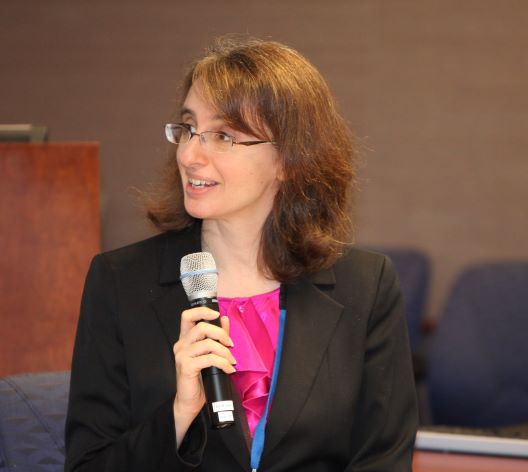

We caught up with the brilliant and insightful Vicki Flier Hudson a few weeks ago and have shared our conversation below.
Alright, Vicki thanks for taking the time to share your stories and insights with us today. Coming up with the idea is so exciting, but then comes the hard part – executing. Too often the media ignores the execution part and goes from idea to success, skipping over the nitty, gritty details of executing in the early days. We think that’s a disservice both to the entrepreneurs who built something amazing as well as the public who isn’t getting a realistic picture of what it takes to succeed. So, we’d really appreciate if you could open up about your execution story – how did you go from idea to execution?
I just celebrated my 22nd year in business. When I looked at the calendar and realized the date, I jumped back to 1998 and a rainstorm in Pokhara, Nepal. That’s where it all started.
Before that moment, I had been working for a medical diagnostics company after college. I loved speaking and writing, and my work there included both. But I was in my early twenties, and one day I looked around at my cubicle and the fluorescent lights above and thought: is this really all that life is about? I had been in school my whole life and now I was sitting at a desk.
Since childhood, I had wanted to travel to Asia. I grew up in Los Angeles surrounded by kids from all over the world. So, perhaps naively, I asked my boss for a leave of absence. She said no. Company policy. I gave it a few days of thought, walked back into the office, and told her I quit. A month later I was in Thailand. I stayed eight weeks, filling journal after journal with observations about culture and everything I was discovering about myself.
When I came home, the company rehired me. But a few months later the same calling returned. Go back to Asia. I asked for another leave of absence. They said no. I quit again, and this time went back to Thailand, then spent two months in India and six months in Nepal, living on next to nothing, doing volunteer work for room and board.
This pattern of work, quit, travel went on for years. Until that day in Nepal.
I was sitting in my room watching the downpour wash through the street outside my window. A spooked water buffalo dashed for cover and neighbors hurried indoors. The weather seemed to be inviting me to write, so I picked up my journal. Memories of everything I had learned flooded my mind. Every cross-cultural encounter, misunderstanding, and eye-opening discovery had changed me in ways I was still discovering.
Pen in hand, I scribbled an idea. What if I could teach people how to bridge cultural differences as a job?
That was the day my business was born.
Years would pass before it became reality, but that journal page stayed with me. In 2004, I finally decided it was time to leave my former company for good and make it real.
I started with a company name, then some rough sketches for a website. I began writing out programs I could offer to organizations working across global teams. Then I started making calls to places where I knew businesspeople gathered: corporate learning institutes at universities. I was certain nobody would call me back. But I reached out to Emory University’s Corporate Learning center and offered to teach a session called Working Effectively with Indian Colleagues. To my surprise, they said yes. I called other universities. Some said no, some said yes. But one was all it took to get started.
The rest is history. I went on to do cross-cultural coaching at some of the world’s most exciting companies and am now an executive coach for senior leaders. But I still think back to that rainy afternoon in Nepal. It reminds me that one seed, planted at the right moment, can grow into something you never could have imagined.

Awesome – so before we get into the rest of our questions, can you briefly introduce yourself to our readers.
I am an executive coach, professional speaker, and Chief Collaboration Officer of Highroad Global Services. I work with leaders and organizations across three interconnected areas: cross-cultural competence, high-impact communication and presentation skills, and conflict management. The through-line in all of it is helping people connect across difference and communicate in ways that actually land. My clients range from Fortune 500 companies like Procter and Gamble, The Coca-Cola Company, UPS, and The Home Depot, to nonprofits, professional associations, and global virtual teams navigating the complexity of working across cultures, time zones, and functions.
What sets my work apart is the depth of lived experience behind it. I have lived and worked in Belgium, Canada, China, France, Germany, India, Nepal, and Thailand. I am a registered mediator, a certified administrator of the Intercultural Development Inventory, and a trained coach through the Co-Active Training Institute. I am also a qualified moderator for Braver Angels, a nonprofit focused on bridging political divides. I bring all of that to every engagement, not as credentials on a wall, but as a genuine foundation for the work.
What I am most proud of is the transformation I witness in my clients. Leaders who were terrified to present now own a room. Teams that were stuck in cultural friction have built something stronger on the other side of it. Organizations that were talking past each other are now building real partnerships. That kind of change is what gives me joy.
What I most want people to know is that this is not just a job for me. Supporting senior leaders is a genuine passion. Leaders at the top can be the most isolated people in an organization, and yet they carry the greatest potential to set the course for everyone around them. I love bringing everything I have, my cross-cultural skills, my communication work, my conflict management experience, to help them find their voice, speak boldly, and believe in what they are capable of. When a leader steps into that, the whole organization feels it.

We often hear about learning lessons – but just as important is unlearning lessons. Have you ever had to unlearn a lesson?
I had to unlearn the belief that a full day means a busy day.
In every company I worked for, that expectation was evident. I remember a colleague whose boss told him he was not walking through the office with enough urgency. If I sat at my desk thinking, someone would notice. Their disapproval was in the air around me.
When I started my own business, I carried that same mentality with me. I felt I needed to work eight to five, take a set lunch break, and always be doing something. If I was not actively pursuing new clients, developing new ideas, or chasing a new certification, I felt guilty. At times it felt like I had never really left corporate life at all.
One day I shared this with my father, a retired senior executive. He said something I have never forgotten. “You are taking all of the risk in your own business. No health insurance, no steady paycheck. You had better take some of the benefits too.”
So I did. I discovered research showing that walks and longer vacations lead to more creativity, more productive workdays, and greater endurance over time. I also began to recognize how much courage it had taken to go out on my own and stay out on my own. Slowly, I gave myself permission to knock off early when my work was done. No one was expecting anything more of me.
These days I am very intentional about time off. I do not check email or my work phone. My assistant handles that and will alert me if something truly needs my attention. But most of the time her message is the same: “You had better stay unplugged!”

How about pivoting – can you share the story of a time you’ve had to pivot?
Honestly, I pivot about every two to three years, and most of the time I seek it out. I love change in my work. I am always looking for new ways to express my passion for communication, especially across difference.
That said, some pivots chose me.
When corporate training started moving online around 2008, I adapted and ended up facilitating hundreds of webinars for global teams. That same year, the recession hit and coaching budgets dried up quickly. So I went back to India and resumed my cross-cultural training work there.
Then COVID arrived. That was the most frightening pivot of all, because for the first time I genuinely did not know what would happen to my business. What I could not have anticipated was that leaders would need support more urgently than ever. I ended up coaching a series of senior leaders at a software company through one of the most destabilizing periods any of them had ever faced. It became some of the most meaningful work of my career.
Now I am coaching leaders at another software company on public speaking and storytelling. I’ve formed a partnership with Chat with Leaders Media to create People First Elevation Team. Every pivot has taken me somewhere I did not expect, and every time, the through-line has been the same: helping people find their voice and use it well.
Contact Info:
- Website: https://www.highoraders.com
- Linkedin: https://www.linkedin.com/in/vickiflierhudson/
- Other: Partnership website: www.peoplefirstelevation.com
My professional rock band’s website! www.thespiritofrushband.com


