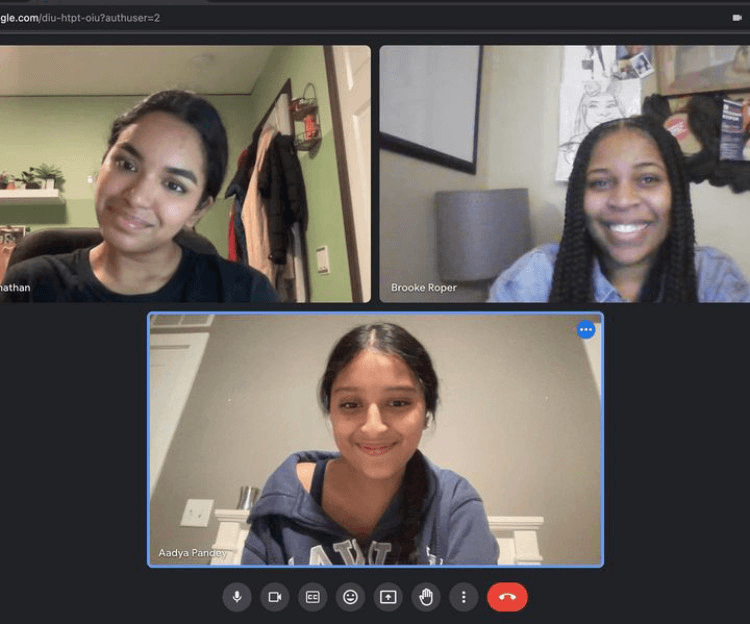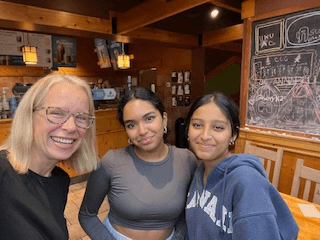

We’re excited to introduce you to the always interesting and insightful Vandana Ramanathan. We hope you’ll enjoy our conversation with Vandana below.
Vandana, looking forward to hearing all of your stories today. Let’s kick things off with your mission – what is it and what’s the story behind why it’s your mission?
As I grew up, I was able to feel the tangible stigma of mental health all around me. However, it wasn’t until I was older, involving myself in the political world, that I realized the vast underrepresentation of mental health within society and the political world, especially from a cultural lens. Being raised in suburban America as a second generation immigrant from India, I found extreme discomfort surrounding my roots, being integrated in two drastically different worlds. However, through my work in activism surrounding mental health, I realized how difficult it was for certain minority groups to receive adequate mental health care simply due to the stigma of it. After conducting further research, I recognized the pattern of stigma based barriers within specific minority groups. After looking into the shocking lack of research about this issue, this sparked the idea of creating an initiative for reducing the cultural based stigma of mental health within BIPOC youth and members of the LGBTQIA+ community. My nonprofit, co-founded alongside Aadya Pandey, is a journey that is far more than a simple awareness campaign. It is a journey to fight back against the long standing social stigma against mental health. Our work is accomplished through educational based advocacy, through collaborating with schools all over the country to implement and raise awareness about policies to empower student well being. In a place where many different cultures, lifestyles, and perspectives come together, it is essential to recognize that educational institutions have the potential to be a beacon of change. This is why me and my co-founder came together to found the Youth Equity Project, a national, youth led organization dedicated to ending the social and political stigma surrounding mental health within educational institutions.
Awesome – so before we get into the rest of our questions, can you briefly introduce yourself to our readers.
I am the co-founder of the Youth Equity Project, alongside Aadya Pandey. We are a national, youth led organization dedicated to eradicating the stigma of mental health within educational institutions, especially from a cultural lens. Our work largely consists of advocacy centered work. We enlist the help of our dedicated team all over the country to fight more mental health resources within their respective schools. However, we also are partnered with over 30 politicians, on the local, state, and national level to create tangible political change that pertains to reform within educational institutions. Through our advocacy, we have impacted the lives of over 15,000 youth all over the country, and contributed to historic legislation on the state and national lens! However, our impact goes much farther than political advocacy. We have many different teams, including Political Advocacy, Social Media, Research and Development, Graphic Design, Funds Acquisition, and more. Through our various teams, we host volunteers and team members from all over the world, to finally create change in this long standing topic. In the future, we are hopeful about expanding internationally as we grow as an organization!
We often hear about learning lessons – but just as important is unlearning lessons. Have you ever had to unlearn a lesson?
Growing up, I was constantly exposed to the stigma surrounding being emotionally vulnerable and having mental health issues. As someone who faced the cultural stigmas of mental health throughout their life, and faced mental health issues growing up, I never took it as an opportunity for change, yet took it as a reason to stay quiet. Due to this, I believed that I would be turning my back on my culture because I am turning away from the customs reflected by members of it. I always felt that the everlasting stigma was simply ingrained into my culture. However, this changed when I started high school. I realized that I was far from alone in my experiences, i saw how the stigma of mental health affected everyone, especially BIPOC and LGBTQIA+ youth. This was when I realized that I didn’t have to conform to a world where mental health was stigmatized, which is when me and my co-founder, Aadya Pandey, started the Youth Equity Project. From this, I started researching and learning more and more about the demographic disparities surrounding mental health and people of color, which is what fueled our mission today!
Can you tell us about a time you’ve had to pivot?
Yes, absolutely. As me and my cofounder began this project, our initial purpose wasn’t on the cultural stigma of mental health within educational institutions. In the beginning, we were simply an organization that sought to reduce the general stigma of mental health. However, as we continued being exposed to the countless statistics, stories, and experiences of others, we realized that mental health reform was far more multifaceted and complicated than just advocating for it as a whole. We had to be specific with our goal. This is when we started focusing on the cultural aspect of it. How different lifestyles can contribute to different views on mental health from a generational viewpoint. As we delved deeper into this, we decided to start focusing ourselves on BIPOC and LGBTQIA+ youth, and focus our impact within public policy and educational institutions. However, today, as we expand as an organization, we have started expanding our reach, to different focus areas. This was a key decision that we needed to make, but was one that fueled us to grow our platform to where we are today.
Contact Info:
- Website: https://youthequityproject.org
- Instagram: @youthequityproject_
- Linkedin: @youthequityproject