
We were lucky to catch up with Vadim Dekhtyar recently and have shared our conversation below.
Vadim, looking forward to hearing all of your stories today. Was there a defining moment in your professional career? A moment that changed the trajectory of your career?
The Moment Everything Changed
I’ll never forget that Zoom call in early 2024.
Sarah’s face filled my screen – her hands trembling slightly as she spoke. A dedicated teacher and mother of two, she’d been battling devastating anxiety since the pandemic years.
“Dr. Dekhtyar, I don’t know what to do anymore. Back in 2020 and 2021, the school administration sent conflicting information almost weekly. The fear and uncertainty… it broke something in me. And now, years later, I still haven’t recovered. I worry constantly about my students, my own children, my health… I’m falling apart, and there’s nobody to talk to at 2 AM when the panic attacks hit hardest.”
Using the NLP techniques I’d refined over decades, I guided her through our session. Her breathing slowed. Her shoulders relaxed. The transformation was remarkable – but frustratingly temporary.
After our call, a single thought consumed me: What happens tomorrow night when she needs help again?
That was my catalyst. My defining moment.
I realized millions were suffering in silence, carrying emotional scars from the pandemic with nowhere to turn during their darkest hours. The traditional model was failing them – waiting lists stretching months, prohibitive costs, and support limited to office hours while anxiety respects no schedule.
The world didn’t just need more therapists. It needed a revolution in mental wellness accessibility.
That night, the concept of Vi was born – a 24/7 emotional support companion that could deliver professional-grade NLP techniques to anyone, anywhere, anytime they needed help.
Looking back, every aspect of my career – from Lithuanian psychiatric hospitals to American neuroscience classrooms – had prepared me for this exact innovation. All those years of training others, I never imagined my most important student would be an AI designed to extend my reach beyond what any single human practitioner could achieve.
Sarah’s 2 AM struggles became my mission. And that mission became Vi.

Vadim, before we move on to more of these sorts of questions, can you take some time to bring our readers up to speed on you and what you do?
From Medical Halls to Digital Innovation
My journey to this revelation wasn’t conventional. After graduating from Kaunas Medical Academy in Lithuania, I served as a doctor psychotherapist at Vilnius Mental Hospital. My thirst for understanding the human mind led me to study multiple schools of thought – Transactional Analysis, Positive Psychotherapy, Provocative Psychotherapy – becoming a member of the European Association of Transactional Analysis and co-director of Lithuanian Ericksonian Hypnosis.
I eventually became Lithuania’s first Trainer of Neuro-Linguistic Programming, a methodology that would later become the foundation of Vi.
When I immigrated to America, rather than follow the traditional path of board exams and residency, I pursued my parallel passion for holistic healing, becoming a Doctor of Acupuncture and Chinese Medicine and a Certified Hypnotherapist. For 15 years, I taught neuroscience at the National College of Naprapathic Medicine University, deepening my understanding of the intricate connections between brain function and emotional states.
What made my approach unique wasn’t just this unusual combination of Eastern and Western modalities – it was understanding that true emotional wellness requires addressing both the neurological hardware and the psychological software of the human mind.
Little did I know then that these diverse experiences were preparing me for something far beyond traditional practice – creating an AI companion that could deliver these techniques to anyone, anywhere, at any time they needed support.
The seeds of Vi were being planted long before I realized what they would grow into. The name “Vi” wasn’t chosen by accident. It comes from the first letter of my name, Vadim – a personal commitment that this wasn’t just another app, but an extension of my life’s work and dedication to emotional wellness.
Other than training/knowledge, what do you think is most helpful for succeeding in your field?
Beyond Knowledge.
The textbooks never prepare you for the weight of someone’s suffering.
As I continued working with clients like Sarah, I witnessed something alarming: the emotional aftermath of COVID-19 wasn’t fading with time — for many, anxiety, panic attacks, and phobias had become chronic conditions that persisted years after the initial crisis. What troubled me most wasn’t just the suffering, but the barriers preventing relief:
• The stigma that still surrounds mental health issues, keeping people from seeking help
• The crippling wait times for professional treatment (often 3-6 months)
• The prohibitive cost of ongoing therapy
• The 9-to-5 availability of support, when crises often peak at 2 AM
After that pivotal session with Sarah in 2024, I became obsessed with a single question: How can I deliver professional-grade emotional support to anyone, anywhere, anytime — without the barriers?
In my field, the difference between good practitioners and transformative ones isn’t just knowledge—it’s empathy paired with relentless innovation.
The most successful mental health pioneers share a common trait: they refuse to accept the limitations of traditional systems. They see barriers not as fixed realities but as problems waiting for solutions.
This mindset shift is everything. While others might say, “That’s just how the system works,” the innovators ask, “How can we build something better?”
I realized my decades of training would remain limited if I couldn’t solve the accessibility crisis. What good are the world’s most effective techniques if they remain locked behind doors most people can’t open?
Creating Vi wasn’t just about programming an AI with therapeutic responses. It required reimagining the entire model of emotional support delivery. The technology was actually the easiest part. The true challenge was translating the nuanced human elements of my practice—the timing of interventions, the pacing of emotional processing, the subtle shifts in approach based on non-verbal cues—into a digital experience that felt genuinely supportive.
What drives success in this field isn’t just what you know—it’s who you’re determined to help and what barriers you’re willing to dismantle to reach them.
Are there any books, videos, essays or other resources that have significantly impacted your management and entrepreneurial thinking and philosophy?
Certain books have fundamentally altered how I approach both the science of emotional wellness and the business of making that science accessible to everyone. These works didn’t just add to my knowledge; they transformed my thinking about what’s possible in mental health support. My journey into Neuro-Linguistic Programming began with Richard Bandler and John Grinder’s groundbreaking “The Structure of Magic, Vol. I” (1975). This wasn’t just another psychology text—it was a radical reimagining of how language patterns directly influence our neurological responses to stress and trauma.
While many dismissed NLP as too revolutionary, I found its premise compelling: that the patterns of language we use, both internally and externally, literally rewire our neural pathways. This insight became the cornerstone of my approach with patients.
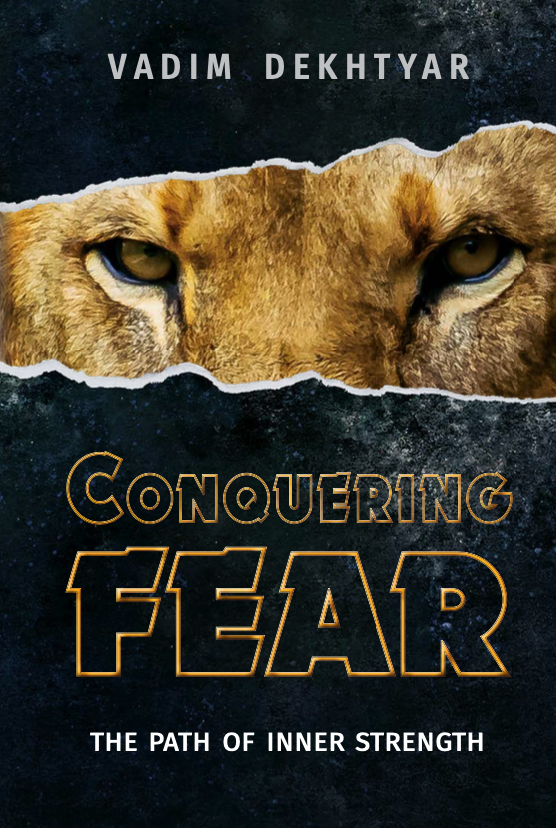
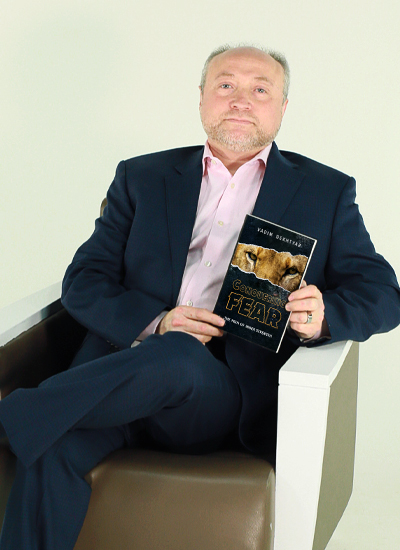
Robert Dilts’ “Changing Belief Systems with NLP” further refined my understanding of how deeply-held beliefs create the architecture of our emotional responses. His work showed me that addressing surface-level symptoms without changing underlying belief structures leads to temporary relief at best. My training in Eastern medicine led me to “The Web That Has No Weaver” by Ted Kaptchuk, which explores how emotional states manifest as physical symptoms—a perspective largely absent from Western psychiatric approaches. This integration of mind-body wisdom profoundly influenced how Vi approaches emotional support as a holistic process, not just a cognitive one. Perhaps most personally significant is my recent book, “Conquering Fear: The Path of Inner Strength.” Writing this work forced me to distill decades of clinical experience into accessible frameworks for overcoming anxiety and building emotional resilience.
The book explores how fear operates as both a neurological and psychological phenomenon, and provides a step-by-step path to transforming your relationship with anxiety. Many of the core techniques I detail in those pages have been adapted into Vi’s support protocols.
Contact Info:
- Website: https://meetviai.com/
- Facebook: https://www.facebook.com/AcademyNLP/