


We were lucky to catch up with Troy Herion recently and have shared our conversation below.
Troy , thanks for joining us, excited to have you contributing your stories and insights. What was one of the most important lessons you learned in school? Why did that lesson stick with you?
One lesson that really stands out to me is something I learned from my piano teacher during college. I was a composition major, but I was required to show mastery on my instrument by the time of graduation. I was only moderately talented, so I practiced constantly to make up for my deficiencies. By senior year, I worked my way up to tackling some really difficult pieces. But there was definitely some frustration because no matter how much time I put in, I just hit a ceiling. Some things felt impossible to master.
I was preparing for my final performance evaluation. I practiced for months, but there was one spot where I kept making the same mistake every single time. No matter what I tried, I couldn’t fix it.
Finally my professor said, “Okay, show me how you’re practicing this.”
So I did. I showed him how I slowed the tempo down to 50% —still making the mistake. I showed him how I isolated the difficult measure—still making the mistake.
Then he stopped me and said, “Here’s the problem: You’ve been repeating the mistake over and over again. This has happened so much that now the mistake is ingrained in your brain.”
“You are literally practicing your mistake! Don’t practice your mistakes!”
That was a lightbulb moment. He had me break it down further—not just the measure, but the exact moment where things went wrong. Then I practiced the correction, over and over, until I started getting it right with confidence.
“What you need to do is practice the solution. Isolate the solution and practice that.”
That idea totally shifted how I approach challenges. I’m so much more aware now of when I’m “practicing mistakes” and how important it is to slow down, zero in, and focus on getting the solution right. It’s a mindset I still carry with me.
Awesome – so before we get into the rest of our questions, can you briefly introduce yourself to our readers.
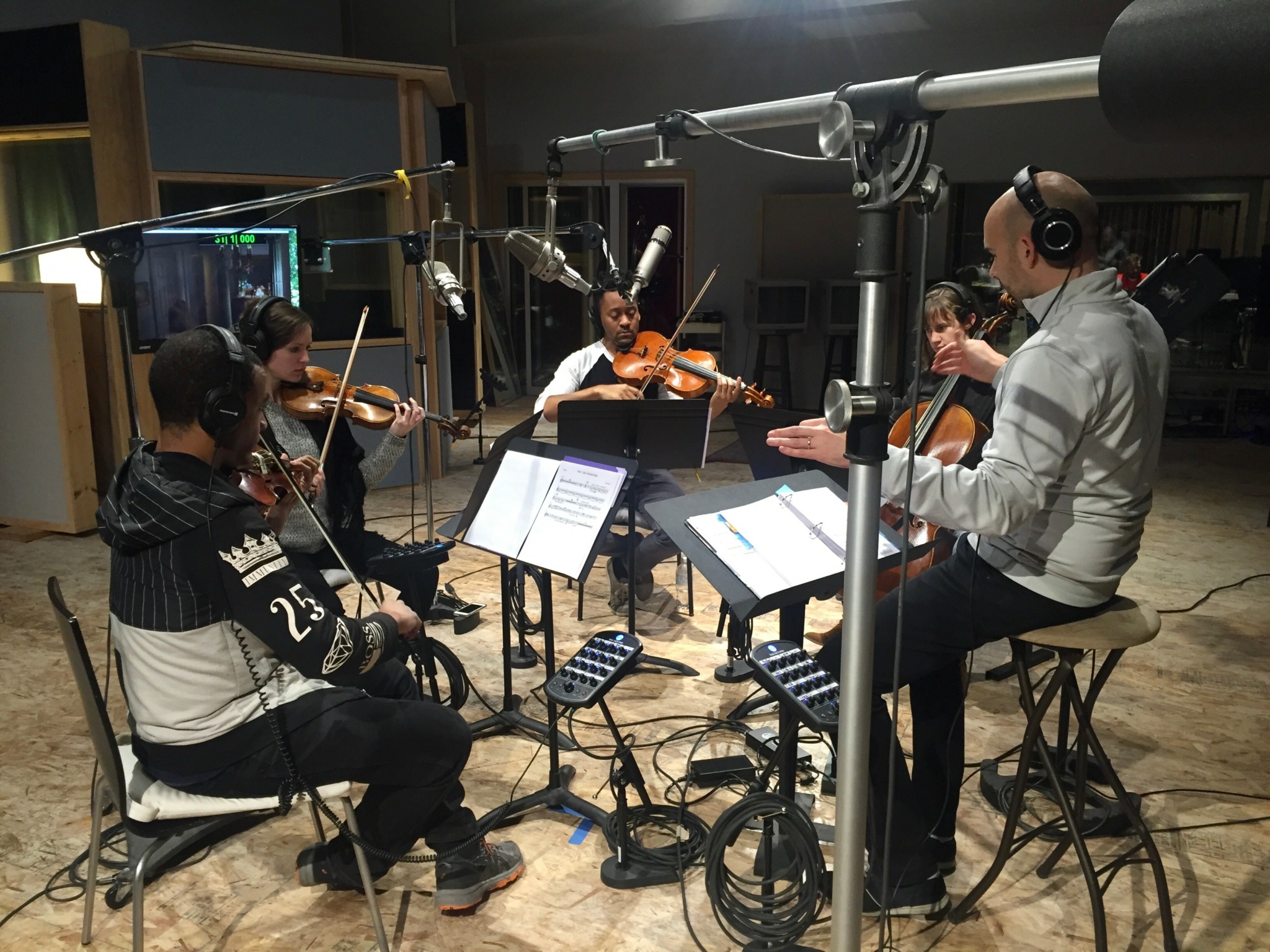
I am a composer of instrumental music. I score movies, TV, and commercials. I am co-founder, along with my colleague J.R. Narrows, of the music production company Spacelute.
I began my career writing commissioned music for the performing arts world – think orchestra, ballet, theater, and chamber ensembles. This was a period of deep creative exploration and I’m incredibly grateful for it. I pursued a PhD at Princeton where I focused on experimental music and collaborated on some wildly ambitious projects. One highlight was creating theatrical productions with hundreds of performers, elaborate sets, and even sentient halal carts. It was a time of unfiltered creativity where I had the space to fully immerse myself in my own ideas. Looking back, those years burned bright and fast. They were exhilarating, and truly all-consuming. But eventually I felt it was time to move onto something new.
That transition led me to scoring for various media industries, where I could connect my music to wider audiences and work within an entirely new creative framework. My clients today range from independent filmmakers to major TV production companies and some of the largest brands. Moving between these different worlds is energizing for me – they’re like separate universes with their own unique cultures, demands, and rhythms. Even during my earlier career, I found power in juxtaposition: taking techniques or ideas from one context and applying them in an entirely unrelated setting. It’s amazing how skills that feel second nature in one area can become unexpected superpowers in another.
At its core my job is about solving creative problems through sound, music, and storytelling. And the most important skills aren’t always musical. A lot of it comes down to listening deeply to what a client or project needs, communicating effectively, and transforming abstract ideas into music that feels alive and essential. Sometimes I have months to work on a project, with time to dream and iterate and change my mind. Other times I have only a few hours to hit a bullseye that will be heard by millions of people. On any given week things can get pretty thrilling.
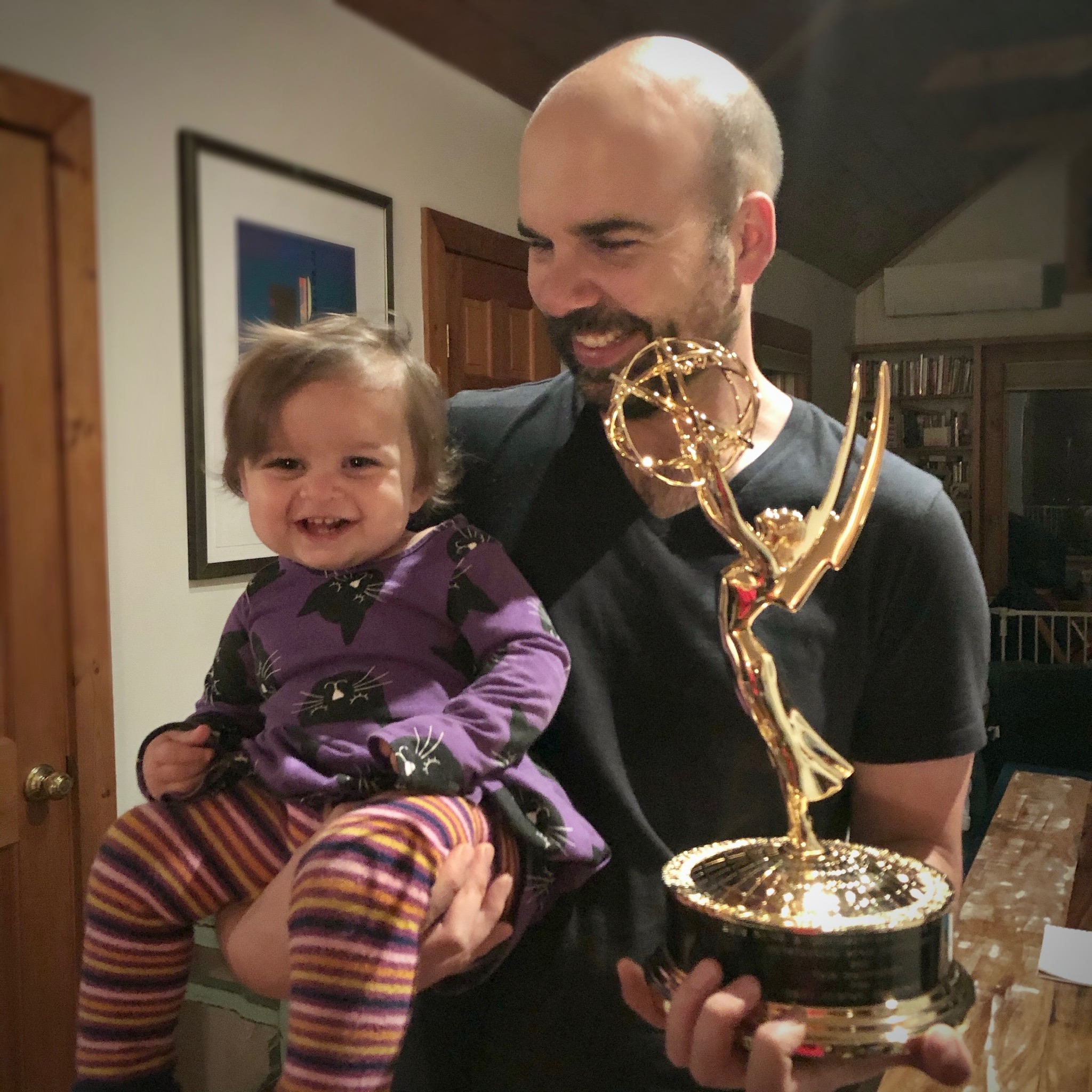
One of the most meaningful projects I’ve worked on is the Emmy Award-winning score for 306 Hollywood, a film directed by my wife, Elan Bogarín, and her brother, Jonathan. The film and its music are deeply personal to me. That experience reaffirmed what I love about this work: the ability to enhance stories in ways that linger with people long after they’ve watched or listened.
I’ve worked on projects that have won awards and reached a lot of people, but what really gets me excited is knowing that something I created became part of someone else’s memorable experience. Maybe it’s a moment in a film, a jingle that won’t leave your head (in a good way), or a soundtrack that made a story hit harder.
Have you ever had to pivot?
Starting a family and having two young kids during the pandemic was probably the biggest pivot of my life. For anyone with kids, it’s clear that the only way humans must have survived this long was by sharing caregiving among groups of people. There’s a reason for the saying, “it takes a village.” That’s no joke. My family happened to move out of NYC to a rural area at almost the exact moment the world shut down, so we were doubly isolated.
As a film composer, my business was booming at the same time. Post-production was in high demand during those years. But I simply couldn’t do it all – grow the business and meet family obligations while running on a few hours of sleep for years at a time. Ultimately, I had to reassess what I was doing, how I was doing it, and why I was doing it.
Fatherhood is deep. It connects you to primal instincts – not just to nurture and protect, but also to reimagine what legacy means. During those sleepless years, I started questioning how I was working. Creativity had always been central to my life, but suddenly I felt pulled between my professional ambitions and the values I wanted to instill in my kids. I knew that being present for my family mattered more to me than anything else.
I was forced to rethink my approach to work. I streamlined my processes, redefined my priorities, and found ways to be more efficient with my time. That meant saying no to certain projects, hiring extra support for my business, and reimagining what success looked like for me. I focused on maintaining a more sustainable balance – choosing to do work I’m proud of while still being the kind of parent I aspire to be.
That pivot didn’t just reshape how I work – it reshaped how I think about creativity. I stopped seeing it as something tied to external validation or endless productivity. I see creativity as something more grounded, a way to connect with my family, friends, and the world around me. These days, I find inspiration in unexpected places, like building imaginative outdoor spaces for my kids or noticing the rhythms of everyday life in a rural setting. Those experiences have a way of seeping into my work and making it feel more authentic.
Looking back, I wouldn’t trade that period for anything. It was grueling, but it also clarified what matters. It taught me how to prioritize, how to adapt, and how to root my creativity in something deeper than just the next deadline or achievement.
What do you find most rewarding about being a creative?
It’s difficult to pin down what’s truly rewarding about being a creative. Honestly, that word -rewarding- feels too clean, like there’s a simple payoff at the end of all the effort. Instead, I think it’s easier to talk about the rewarding lessons I’ve learned along the way, the hard lessons that have shaped how I approach this work and lifestyle.
I’ve learned that being a professional creative requires both a huge ego and no ego at all – just not at the same time. Every new project begins with the blank canvas, and no matter how many hard-fought successes I’ve had before, none of that matters now. In fact, the more experience I’ve gained, the more intimidating a new project can feel. Early in my career, I could lean on naivety, but now I know too much. I’m fully aware of what it takes to make something truly exceptional.
So, I puff myself up. I convince myself, sometimes forcefully, that I am the right person for the job. That self-confidence, even when it feels like an act, is what gets the ideas flowing. Without it, I’d be paralyzed by the weight of starting from scratch again and again. It’s not about arrogance, it’s about survival. You need that belief to push past the fear and put something – anything – on the page.
But once the ideas are out in the world, that ego has to shrink fast. Because here’s the thing: there’s no such thing as perfect – there’s only perspective. What resonates with me might not land for someone else because their context is entirely different. A director, for example, might hear my music and feel it misses the mark. That doesn’t mean it’s wrong – it just means they’re seeing (or hearing) it from another angle. Learning to flex my own mental paradigms and look at my work from a different perspective has been one of the hardest but most valuable lessons.
It’s about finding something interesting in what I thought wasn’t working. It’s this ability to reframe, to dig deeper, that allows me to stay energized and creative even when a project seems to take an unexpected turn. That openness – to different interpretations, to changing directions – has taught me that almost anything can be transformed into something worthwhile if you’re willing to keep looking for it.
Contact Info:
- Website: troyherion.com / spacelute.com (note: my company is being rebranded – hoping to launch in another month or so…)
- Instagram: @spacelute
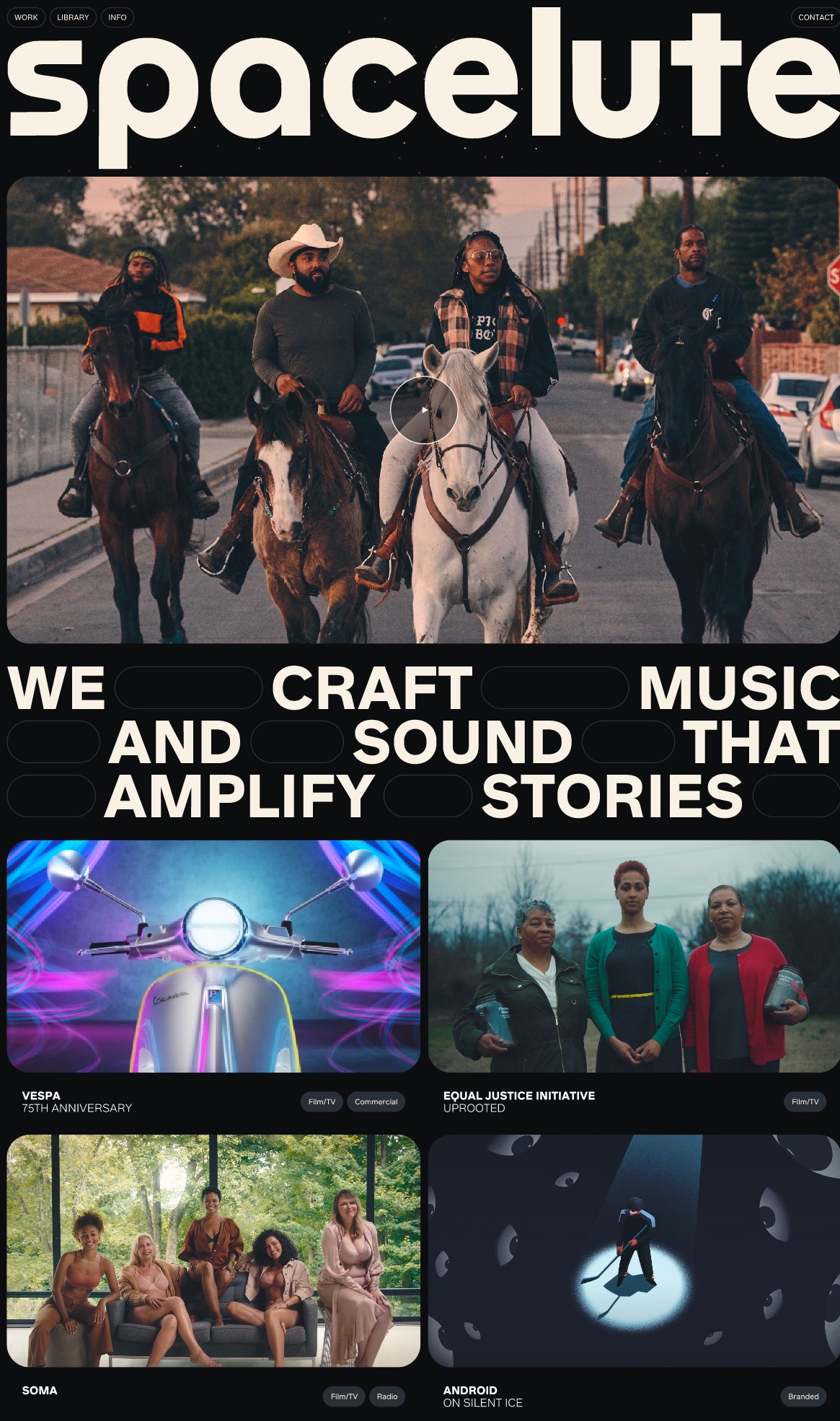
Image Credits
Photos by Elan Bogarin