



We’re excited to introduce you to the always interesting and insightful Trey Tetreault. We hope you’ll enjoy our conversation with Trey below.
Trey, looking forward to hearing all of your stories today. Can you talk to us about a project that’s meant a lot to you?
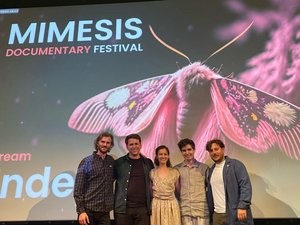
I’m currently obsessed with a project I am so proud of, Holding Back the Tide, which just enjoyed 3 world premiere screenings at DOCNYC 2023 and was the recipient of the Audience Award for Best Documentary Feature at the Mimesis Documentary Film Festival 2023. I am one of the producers and the narrative supervisor of the film, which took nearly four years to make. The film is a hybrid, experimental, impressionistic symphony that traces the oyster through its many life cycles in New York City.
My dear friend, Emily Packer, who directed the film, brought me on to produce in January 2020. We initially set out to make a short doc, solely about the oyster life cycle in relation to New York City’s conservation efforts, but suddenly found ourselves with endless time to research and develop through the pandemic. What unfolded from this time was a deep dive into the myriad connotations of the oysters through the history, culture, infrastructure, iconography, and environment of New York. Looking back, I’m eternally grateful for this time because it gave us ample opportunity to play to our strengths, naturally evolving our roles and connection to the film, based on interests and expertise.
I remember when we began, all I knew was that I wanted to work with Emily. She’s a visionary in every sense of the term, both in how she works, and how she envisions her films. When she approached me about a film centering oysters, I was interested, but not immediately grabbed. Everything changed, however, when we discovered that oysters are naturally occurring transgender organisms, affirming their sex, based on the needs of their communities. It blew my mind and I knew that I wanted to champion this in the film. From there, many ideas circulated as to how we could represent this in documentary form. We studied mythology and the iconographic influence of the oyster as it appears in art and literature. We consistently found inherent queer and poetic representations that seemed ideal for a scripted narrative to support the more traditional, intellectual study of the oyster through observational verité. Thus, the birth of our hybrid format.
Having a background in narrative filmmaking and structure, Emily tasked me with supervising these scripted segments and suddenly the film became so much more than the short film we initially envisioned. To craft this, we drew inspiration from the oyster itself, looking at its lifecycle as a process of regeneration and transformation. We drew from classic films to better understand how we could interweave dueling narrative structures. As oysters were an exploited resource, misunderstood and sexualized, we found a lot of artistry in the expression of these ideas and structure within Jûzô Itami’s Tampopo. From there, we directly referenced the Greek myth of Hermaphroditus, reclaiming it in the context of the oyster, as a tale of actualization and sustainability through strength of self. And what we found through it all was that we had created something intrinsically new, a wholly original documentary format.
It’s been an incredible journey working with a team of colleagues, now dear friends, as we’ve come together, interweaving our interests and backgrounds into a poetic, unified vision. The film provides a stunning perspective on how we can reconsider a singular organism. I find this vital for our world today, especially with the continuous attack on womens bodies, trans people and their right to exist, and those who are continually oppressed here and abroad. I’m so proud of this work and I cannot wait to see where it’s headed. I’m incredibly lucky to have been a part of it and know that it will stay with me and my career for the rest of my life.
Beyond Holding Back the Tide and as I look further into 2024, I’m excited to move towards directing projects of my own. Currently, I’m finding a lot of meaning in the meditation on art in relation to AI and its impending dominance, a hyper-queer, experimental adaptation of Tennessee Williams’ classic The Glass Menagerie, in writing a compulsively impulsive character, and in the general history of queerness within the ancient world.
Awesome – so before we get into the rest of our questions, can you briefly introduce yourself to our readers.
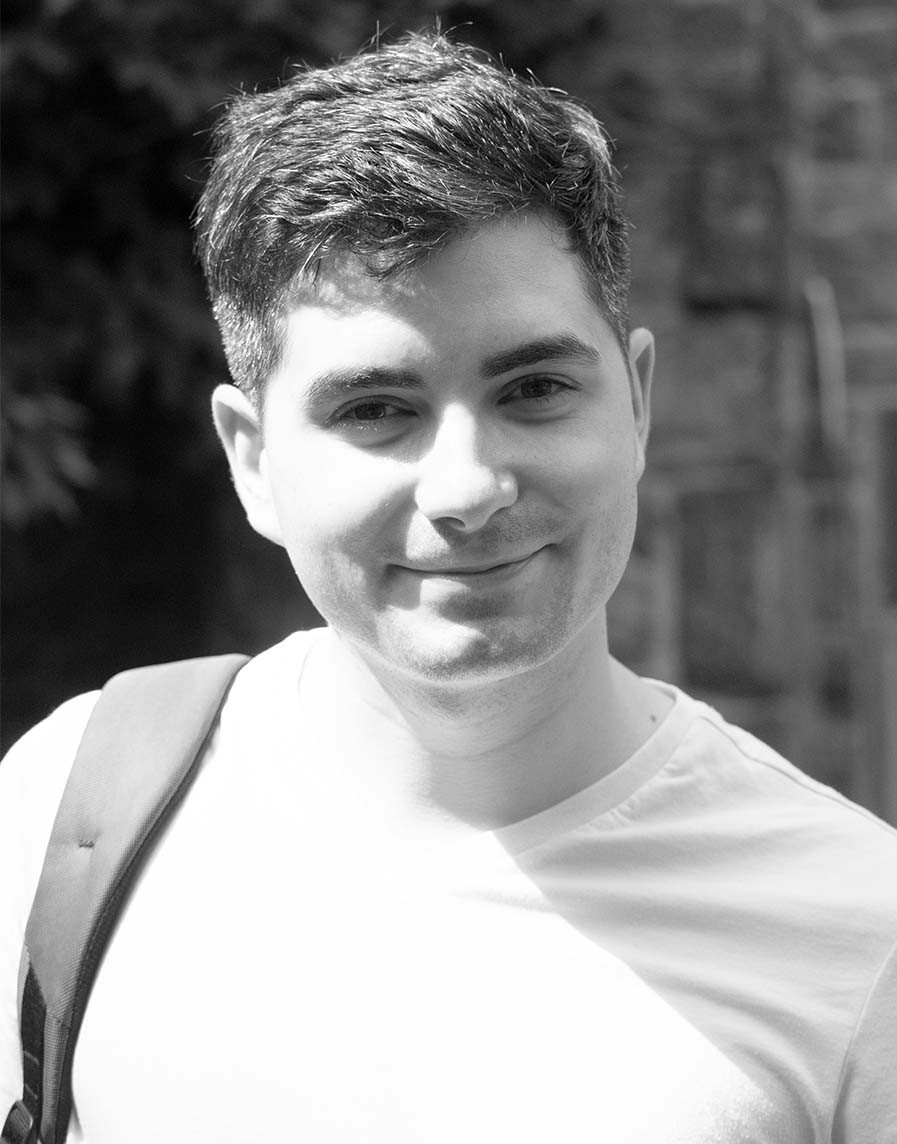
Hi. My name is Henri Louis Tetreault III, commonly known by my nickname, Trey. I am a communicator, collaborator, and humanist. Professionally, I am a director, producer, and production specialist living and working in NYC.
I was born in Richmond, VA, where I spent my early years growing, learning, and evolving. I am lucky enough to come from a loving, emotional, and loud family that continually supports me through it all. I was raised to be an empathetic soul, always looking to understand what causes behavior and how the world is not always going to work in your favor. I learned from a young age what it was to be different, the impact of death, and that money comes and goes. These experiences shaped me into who I am, of course, but provided me with a greater sensitivity. I found myself looking at the world with a cautionary eye, but also with the understanding that beauty could be found with a shift in perspective. Naturally, because of my proclivities here, I was drawn to artistic expression and, ultimately, towards the grandeur of film.
At 24, I moved to the city to pursue a greater career. 8 years later and New York is just as much a part of my story as anything else. It’s shaped me into the person I am because it’s forced me to reckon with all parts of myself and grow beyond. That’s just what this city requires of you. And as an artist, this is what is required. To know yourself, is to see yourself, is to hear yourself, is to trust yourself. You cannot waiver. Because how else can you make art or be an artist if you don’t know who you are? What do you have to say, is always the question, right? You must face who you are in the world and what the world truly is, moment to moment. And it is from this place that I operate as an artist.
Overall, in my work I am intently interested in queer stories and the queer agenda. I am interested in sharing our experience as a diaspora, connecting through common experience, motivation, and point of view.
At the core of my philosophy lies a simple principle: to move from a place of intuitive empathy, facilitating an authentic and compelling portrayal of the human experience. I seek to amplify different viewpoints and challenge the status quo, fostering work that encourages growth, innovation, and a deeper understanding of the human condition.
Is there a particular goal or mission driving your creative journey?
When I think about what drives me, a lot of things come to mind. I’m driven by the need for diverse queer identities to be represented and our stories told. I’m also driven by the need for more empathy in the world, by my desire for success and a sustainable career doing what I love, and by a deep desire to share what connects us and makes us collectively human, at large.
Ultimately, however, I’m driven by the desire to share how I see and experience the world. As a filmmaker, this is what is asked of you, but I also feel called to do so because of my tendency towards empathy.
I say I’m a humanist because, at my core, I believe people are good. I look at humanity as the most tangible, concrete form of belief: we affect our perspectives moment to moment. How we interact can change everything. How we see our immediate surroundings can shape our entire outlook. We are the masters of thought and thought is the genesis of creation.
I believe that with sensitivity, comes understanding, that with understanding, comes empathy. Even with all the chaos and turmoil in the world right now, I am hopeful because so many are moved to rise up, speak out, and defy in response. And that’s what I’m interested in most: how we counter and transform the binary of good and evil.
So, my goal is to tell these stories, in all their flaws, in all their truths. I’m driven by the reality of what things are, how they’ve come to be, and why what is true, is true.
Are there any books, videos or other content that you feel have meaningfully impacted your thinking?
Film, overall, has been the one constant source of inspiration in my life. As a medium, it has shaped my perception of the world, informs my aesthetic, and propels the motivation behind my own creative pursuits.
These are the film that best explain my passion:
The Lord of the Rings Trilogy
Moonlight
Atonement
Marie Antoinette
Lost in Translation
In the Mood for Love
Happy Together
Of An Age
Close
Taxi Driver
And from the list, I really must give the most credit to Peter Jackson’s Lord of the Rings trilogy. I’m no longer embarrassed to admit that these films fundamentally changed my life, even at 10 years old. I vividly remember each time I went to the theater to watch these films. I was in awe of their scale, the world, and the cinematic scope. I was obsessed, insisting – even to this day – that the only versions of the films are the extended. I would spend countless hours pouring myself into the appendices, rewatching over and over. I had to know everything. I was fascinated with how these films were made and what it entailed. I wanted to be a part of it, paying close attention to what each short documentary featured. I was enthralled with every aspect: the direction, the cinematography, the art, the scoring… It informed my passion from the start. Those appendices were, in many ways, my film education. They were there for me when little else made sense in my life and when I needed to understand what moved me in the experience of film. They were an escape, but also a tool to better understand my sensibilities, sensitivities, and wonder. I’ll always cherish them and look to that influence as the foundation of my love for film.
More presently, I must also highlight Barry Jenkin’s Moonlight. The experience of this film was transformative as a young adult. I remember being so shaken by the juxtaposition of hard and soft and the degree of sensitivity with which it was handled, that I couldn’t move when the credits rolled. I felt so close to the experience of hiding, guarding, and pitting yourself against everything around you. For the first time I had witnessed a true, fresh, new perspective in film. I had witnessed a certain degree of empathy, so delicately, quietly, and respectfully conveyed, that I felt seen in my own aesthetic. Finally, I could point to someone whose work would be a direct guiding force in my creative life.
I would be remiss if I didn’t also mention other influences that I consistently consider in my work:
Vonnegut’s Slaughterhouse-Five
Mark Rothko’s art
The architecture of the palace and gardens of Versailles
Ishiguro’s Never Let Me Go
Capote’s Music for Chameleons
Mehta’s A River Sutra
Coldplay’s Parachutes
Anything Robin Williams ever touched
All of these works found me when I needed them and transported that young, confused kid to a greater place of understanding both his proclivities and his appreciation for the beauty in this world.
Contact Info:
- Website: www.treytetreault.com
- Instagram: @treytreynyc
- Linkedin: Trey Tetreault
Image Credits
Grace Blessington, Denver Crawford