

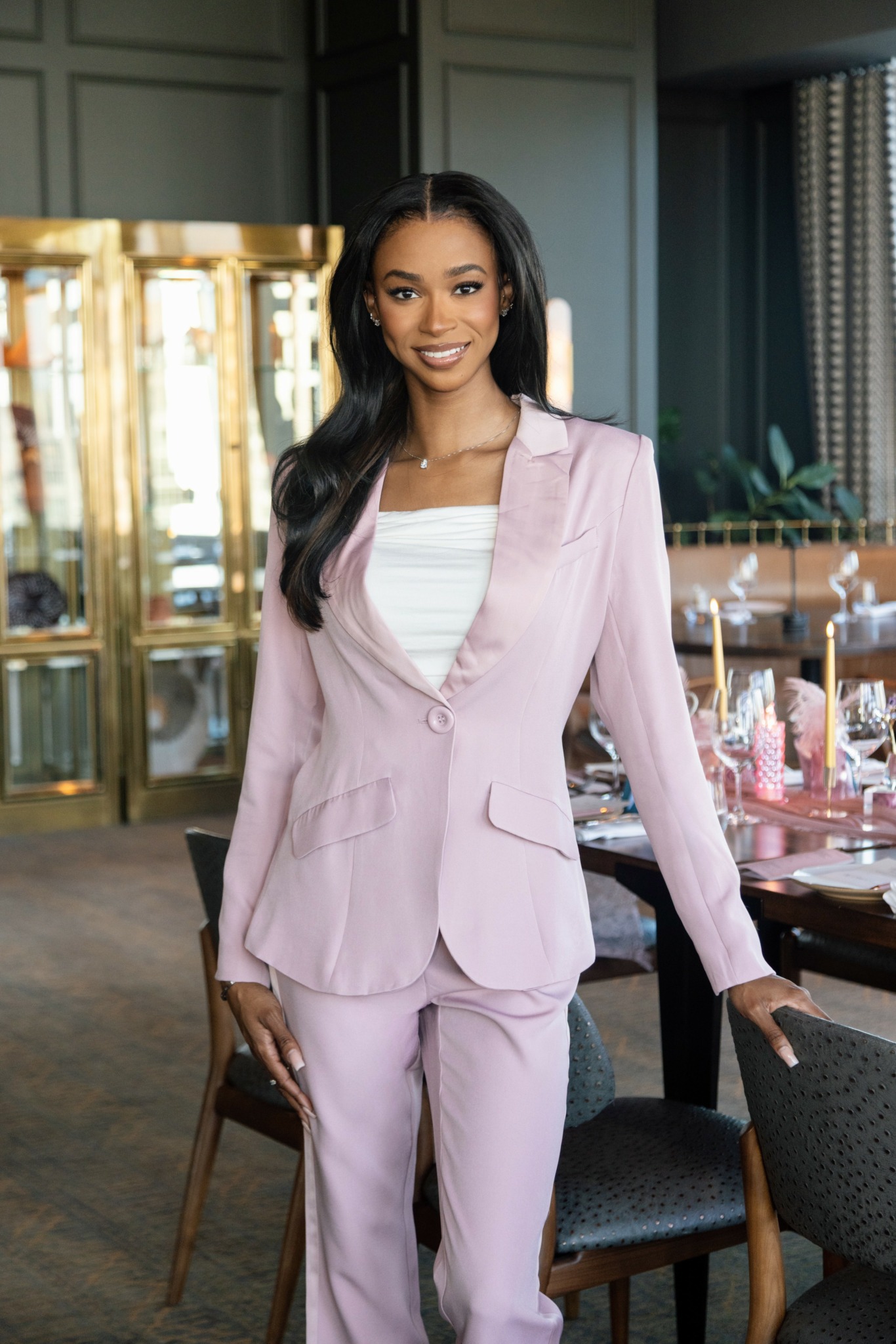

Alright – so today we’ve got the honor of introducing you to Trace Winningham. We think you’ll enjoy our conversation, we’ve shared it below.
Hi Trace, thanks for joining us today. What was it like going from idea to execution? Can you share some of the backstory and some of the major steps or milestones?
Honestly, Clear Lane didn’t begin as a business plan. It began as a realization.
At the time, I was going through a major transition in my life. I had recently lost my job, I was questioning what direction I wanted my career to go in, and for the first time in a long time, I was being forced to sit still and really evaluate who I was outside of survival mode.
What I kept noticing during that season was that people naturally came to me for clarity. Friends, creatives, founders, they would ask me for advice on their image, their presence, their social media, their messaging, or why they felt disconnected from the way they were showing up online. And I realized I had been doing this organically for years without fully recognizing it as a real skillset.
The idea for Clear Lane came from asking myself a simple question:
“What if the thing that comes naturally to me is actually the thing I’m supposed to build?”
Once I had the idea, the hardest part was moving before I felt fully qualified or fully ready. There wasn’t some huge overnight launch or investor behind it. It was me sitting in my apartment researching, building decks, refining messaging, creating mockups, testing ideas, studying positioning, and figuring things out one step at a time.
I started by offering complimentary clarity sessions to people I trusted so I could understand what transformation I was actually creating for others. That became one of the most important parts of the process because it gave me proof that this wasn’t just “an idea” — people were genuinely walking away feeling more aligned, more confident, and more clear about themselves and their brand.
From there, everything became intentional.
I built the intake forms. I created the client experience. I refined the visual identity. I developed the strategy framework. I spent hours thinking about how I wanted people to feel when they interacted with Clear Lane — not just what they would buy.
There were definitely moments where I questioned myself. Moments where I wondered if I was doing too much or moving too slowly. But I think what pushed me forward was realizing that execution doesn’t always look glamorous. Sometimes it looks like consistency. Sometimes it looks like building quietly before anyone fully understands the vision.
What’s been most rewarding is watching something that started during one of the most uncertain seasons of my life slowly become one of the clearest things I’ve ever built.
Clear Lane taught me that sometimes your next chapter starts the moment you stop waiting to feel “ready” and decide to trust your vision anyway.

Trace, before we move on to more of these sorts of questions, can you take some time to bring our readers up to speed on you and what you do?
My name is Trace Winningham, and I’m the founder of Clear Lane Consulting — a creative consulting studio focused on image, identity, positioning, and intentional visibility for founders, creatives, and personal brands.
Before launching Clear Lane, I spent years working within creative, entertainment, and branding spaces while also building a career as a model and on-camera personality. A lot of my experience came from observing how people present themselves, how brands are perceived, and how visibility impacts opportunity, confidence, and connection. Over time, I realized that what naturally came easiest to me wasn’t just aesthetics, it was helping people refine how they were seen, understood, and remembered.
What eventually led me into this work was recognizing how many talented people feel disconnected from the way they show up online and within their personal brand. So many people know they’re capable of more, but they struggle with direction, consistency, positioning, or confidence in how they present themselves to the world. I became really interested in the space between potential and alignment — helping people bridge the gap between who they are internally and how they’re being experienced externally.
That’s what Clear Lane was built around.
Through strategic clarity sessions, brand positioning, identity refinement, and visibility consulting, I help clients gain a deeper understanding of their personal brand, audience perception, messaging, content direction, and overall presence. My goal isn’t to help people become someone else — it’s to help them become more intentional and aligned in who they already are.
I think what sets Clear Lane apart is that the work is deeply personal and emotionally intelligent while still being strategic. A lot of branding spaces focus only on algorithms, trends, or aesthetics. While those things matter, I believe the strongest brands are built from self-awareness, clarity, and intentionality first. People don’t just connect to polished visuals, they connect to alignment, confidence, and authenticity.
One thing I’m especially proud of is building Clear Lane during one of the most uncertain seasons of my life. What started as a small idea during a period of transition slowly became something much bigger than I imagined. Watching people resonate with the vision, trust the process, and walk away feeling more confident and clear about themselves has been incredibly meaningful to me.
More than anything, I want people to know that Clear Lane is not about creating the “best” brand, it’s about creating more intentional ones. I want people to feel seen, refined, empowered, and understood when they interact with my work.
Because visibility means more when it actually reflects who you are.

Learning and unlearning are both critical parts of growth – can you share a story of a time when you had to unlearn a lesson?
One of the biggest lessons I’ve had to unlearn is the belief that I had to become a completely different person in order to be successful, respected, or worthy of visibility.
For a long time, I thought success meant constantly performing, overextending myself, proving my value, or fitting into whatever version of myself I believed other people would respond to most. I spent years navigating industries centered around image, perception, and visibility, and while I learned a lot from those experiences, they also taught me how easy it is to disconnect from yourself while trying to keep up externally.
The backstory behind that lesson really came from experiencing multiple seasons of transition at once. Career shifts, uncertainty, rebuilding my confidence, reevaluating my purpose, all of it forced me to slow down and confront who I actually was underneath productivity, aesthetics, and external validation.
At first, that process was uncomfortable. I realized how much of my identity had been tied to constantly “figuring it out” or trying to appear ahead of where I emotionally felt. But over time, I started understanding that clarity, alignment, and self-awareness create a much stronger foundation than performance ever could.
Ironically, once I stopped trying so hard to force a version of success that didn’t fully align with me, things began flowing more naturally. My creativity became clearer. My relationships became more intentional. And eventually, Clear Lane was born from that shift.
Now, I approach visibility very differently. I no longer believe people need to become louder versions of themselves to make an impact. I think the real transformation happens when people feel grounded enough to show up as who they truly are, with intention, confidence, and clarity.
That’s a lesson I’m still carrying with me, both personally and professionally.

Can you share a story from your journey that illustrates your resilience?
One story that really reflects resilience for me is the season that ultimately led to the creation of Clear Lane.
At the time, my life looked very different than it does now. I had recently lost my job, I was navigating uncertainty financially and emotionally, and I was questioning a lot about my identity, purpose, and direction. From the outside, I think many people would have assumed I needed to “pause” my dreams until life became more stable again.
But strangely enough, that difficult season became the exact environment where my clarity started growing.
Instead of completely shutting down creatively, I started paying closer attention to what naturally came to me — the conversations I kept having, the ways people sought my advice, and the patterns I noticed in branding, identity, and visibility. What began as small ideas, notes, and late-night brainstorming sessions slowly evolved into the foundation for Clear Lane.
Resilience for me didn’t look like having everything figured out. It looked like continuing to build while things still felt uncertain.
There were moments where I doubted myself deeply. Moments where I questioned whether people would understand the vision, whether I was experienced enough, or whether I should wait until my life felt more “perfect” before launching something meaningful. But I learned that waiting for complete certainty often keeps people disconnected from the very thing they’re meant to pursue.
What I’m most proud of is that I kept moving anyway.
Now, watching Clear Lane grow in real time, receiving inquiries, connecting with clients, building community, and seeing people genuinely resonate with the work — feels incredibly emotional because I know where it started. It reminds me that resilience isn’t always loud. Sometimes it’s choosing to keep believing in your vision quietly, consistently, and intentionally before anyone else fully sees it.
Contact Info:
- Instagram: @ClearLane.Co & @TraceWinningham


Image Credits
Myron Rogan
Francois Joseph