

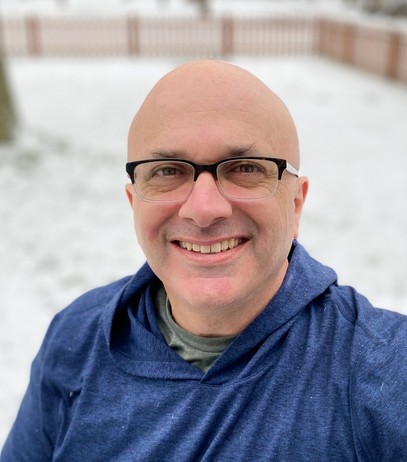

We recently connected with Tony Pino and have shared our conversation below.
Alright, Tony thanks for taking the time to share your stories and insights with us today. What’s the kindest thing anyone has ever done for you?
When I started my food truck 10 years ago, I needed a health department certified kitchen to work from. Most people don’t realize food trucks must have a brick and mortar kitchen called a commissary. I approached a bagel shop in Norfolk Virginia, called Yorgo’s, whose owner has a great reputation. I asked if I could use his kitchen after hours, given he closed at 3pm every day. We agreed I would track the time and the ingredients I used from his kitchen so he could bill me for the service.
I sent him the tally, but he would never bill me. After a while, he said I could use his kitchen for free – and I could pay him back by becoming successful. He just wanted to see someone else succeed.
I will never forget that.

Tony, before we move on to more of these sorts of questions, can you take some time to bring our readers up to speed on you and what you do?
After a string of startup attempts, about 15 years ago, some better than others, I realized I would no longer attempt to start a business in which I was not intimatiely familiar with the core competency. The last one was as a minority owner in a bistro. I knew nothing of commercial cooking or running a food business. The business failed. Mid-life crisis looming, I enrolled in the Culinary Institute of Virginia and built a food truck to practice and perhaps profit.
Pino’s Meatballs started as a small food cart in Norfolk, Virginia in 2015. We sold my take on our family’s tradition of meatballs and sauce at area farmer’s markets and breweries. Served 4-to-a-cup in suace or on a hoagie that I baked fresh that morning, the meatballs quickly gained a following and recognition, earning “Best Tasting Meatballs in the Hampton Roads area that same year.
After some ups and downs I sold the cart to relocate to Cleveland for my wife’s career and set aside the concept. I enrolled at Case Western Reserve University and earned an MBA. (I never stopped working my full-time job as a defense analyst throughout all this.) Armed with knowledge and confidence, I rekindled the brand as Tony Pino’s Meatballs. Using the same recipe from Virginia, we packaged the meatballs with the sauce, frozen, in servings of two, to meet the growing trend of affordable, restaurant-quality cuisine in grocery stores. I added a Swedish meatballs and sauce to the lineup. People had been suggesting a vegetarian meatball product for years. I personally believe vegetables should not be processed to resemble meat – the result pales to the actual taste of meat while negating the health benefits of vegetables. But the need was there, so I added a line of baked falafel. Healthy and vegan, they’re technically balls. So, I trademarked Vegitaballs® along with my brand as a humorous way of including them in the line-up.
Competing in frozen foods is challenging in several ways. Firstly, the segment is dominated by large food manufacturers with professional marketing teams. Many food start-ups are in shelf-stable, low risk food categories like hot sauces, salsas, jams, and dry goods. Quaint, low-cost packaging is expected. The barrier to entry for them is low, but it’s a crowded sector. My branding had to be as polished as the big brands in frozen foods and we knocked it out of the park with Fizz Creative.
Another challenge: sourcing affordably. Large food manufacturers have buying power and purchase in sufficient quantities to drive their down their Cost of Good Sold. They can enter the market at a lower price point and profit more. More challenging still, food costs doubled throughout the product development phase from fall of 2021 to the launch in fall of 2023. We constantly revised the business plans and scrambled to find replacement ingredients that did not compromise the clean label approach that was central to the ethos of the brand. I struggled to go to market at a profit. The struggle continues, and one of my three SKUs barely breaks even. The only solution is to scale production to realize bulk pricing and labor efficiencies. By moving into a wholesale model like hospitality and institutional kitchens (schools, corporations, private label, and events) I can further save through packaging and advertising.
Finally, the logistics of frozen foods almost prohibits any start-ups from entering the market. Large stores rely on distributors with large footprints and end-to-end temperature control assurances for food safety. Shelf-stable start-ups can deliver products themselves when starting out. I’m beholden to use distributors with whom retailers already have established relationships and whom I cannot control. These distributors cost money, adding to the end price of our products.
Traditional retail is still a viable channel for this band, but to compete in frozen foods I must operate like the players in frozen foods.
Can you share a story from your journey that illustrates your resilience?
*Please help me edit this so it flows and doesn’t sound self-absorbed. I might ramble. At my age its hard to know what was a real struggle and what is a common experience.”
1. As a young college student, I ran out of money and food. For about a week, I ate nothing but some potato chips. The power was shut off and the phone disconnected. I received an eviction notice and took cold showers by candlelight. It was the first real challenge of my young life. I realize now how many have gone through a similar time. But at the time I almost quit school and moved back home. Instead, I figured it out. I moved in the middle of the night to a safe place. I survived, of course, and went on to get my degree.
2. My financial struggles continued, so I joined the Marine Corps. Deployed to Afghanistan and Iraq for both initial invasions.
Years later….
3. To start the food truck, I enrolled in culinary school. I worked all day and went to culinary school until 11pm every night. On Fridays I prepped food all night and operated the food truck on the weekends. This continued for a couple of years. While rewarding, this produced stress on the family and pushed me to exhaustion.
Finally, with the food cart looking good, I discovered my wife was miserable at work. We had two young children and I was not helping. She changed jobs and we had to move. I made the difficult decision to give up my burgeoning business. It was crushing. It began to feel as though success as an entrepreneur was not meant for me. I felt a failure as a husband and father. This occurred as I was struggling with then undiagnosed depression and PTSD. An endless string of misfortunes while readying the house for sale, including the hospitalization of our younger child, compounded the stress. I broke down with Bell’s Palsy and lost a lot of weight. I made mental plans to leave my family, believing they were better off without me. Every day I vowed to get up and move on. For three years. I sought help and got it. We moved again, this time to Cleveland, and I enrolled in business school – partly out of hope and partly to just keep moving. I finished 3 years ago and started the current iteration of my brand.
Have you ever had to pivot?
I think the story above of having to move kind of qualifies as a pivot.
Contact Info:
- Website: tonypinos.com
- Instagram: @pinosmeatballs
Image Credits
second photo by Kaitlin K Walsh. IG @barefootkate