



We’re excited to introduce you to the always interesting and insightful Tommy Wan. We hope you’ll enjoy our conversation with Tommy below.
Tommy, appreciate you joining us today. What did your parents do right and how has that impacted you in your life and career?
One night, as my mom glazed over her braised pork belly with a final sprinkle of rice wine, she asks me to come down to the dining table to talk to me about what being a good person looks like. It was these moments that developed the conviction, morals, and values that I have today. A parent plays an important role. A father, a mother, a guardian, a caretaker—they empower their children by instilling a foundation of good ethics and a direction of morals.
I grew up in a household pregnant with stories. As a first-generation Asian American student, Mandarin and English danced, tangoed, and filled the rooms with loud laughter—celebration. I was raised on seemingly fairy tales, folklore from back home, and everything in between. These blurred lines, teasing between myth and memory, were what gave me my first true taste of the power of community.
But more importantly, I learned that we could write the future. That we could build cathedrals in the clouds, fill oceans with colored corals; We could end all wars and sew heat. It would take a single word, a call to action, to change the world.
I grew up in Southwest Houston in Alief, bordering neighborhoods of historic Piney Point, Tanglewilde, and the Westside. My childhood is deeply rooted in the rich cultural heritage of the Viet, Chinese, Latinx, and African communities. As I experienced these cultures, traditions, and practices during my attendance at Outley Elementary, Mahanay Elementary, Youthblood Intermediate, and the Village School, I realized that youth voices were of utmost importance. It was also one that is underrepresented in political thought and local legislation. The people within the community, the friends I’ve made in the district, and the opportunities provided have greatly informed me how local issues impact our neighbors—especially young people.
Our communities are built on brick, mortar, and sentences—the state constitution, statutory law, the rules seem stuck to our refrigerators. One word at a time, the injustices of the world plead to be rewritten. And as stories spill from my fingertips, as I search for the unspeakable truth hiding between my ribs and beneath my heart, I can feel small bangs beginning to rise. Word by word, vote by vote, shout by shout—a new chapter gleam and promises a future for all.
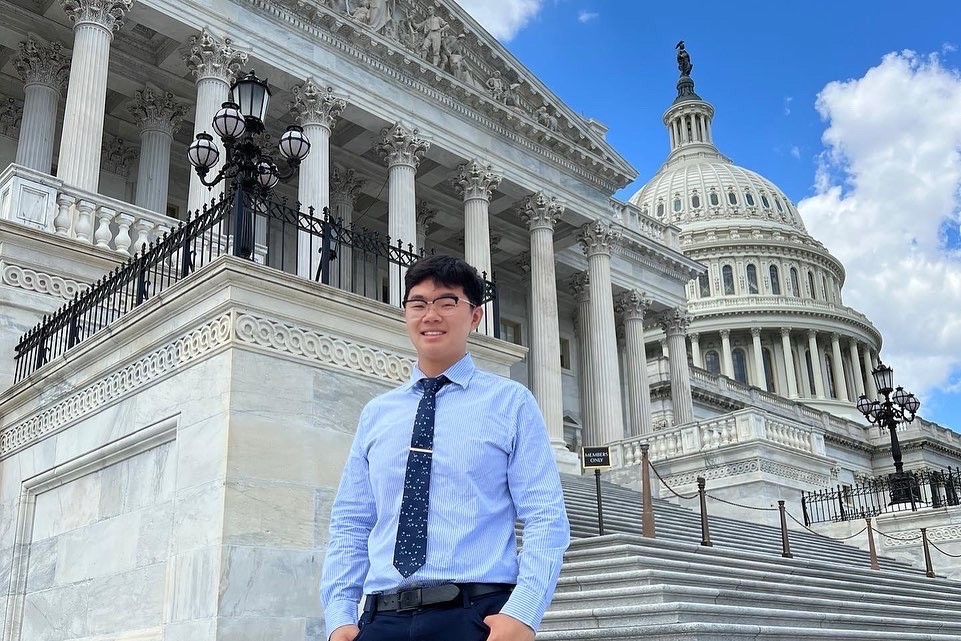
I took this astonished curiosity and ran. As I slowly grow, mature, and learn the ropes of society, I am fulfilled with each additional opportunity. Currently, as a legislative aide at the Texas House of Representatives, My index fingers and thumbs collide, and I zen into a world of limitless, yet challenged change.
My experiences at the state capitol solidified the meanings of stories, of transforming facts, and of delicate work. From working on expanding SNAP benefits to drafting bills to expand migrant worker opportunities here in Texas, these stories empower me. They teach me what I don’t know. They allow me to grab my pen, to float my words, and to realize the aspirations most important—our community.
I thank my parents for teaching me how.
Tommy, before we move on to more of these sorts of questions, can you take some time to bring our readers up to speed on you and what you do?
My name is Tommy and I study Civil Engineering, Government, and Plan II at the University of Texas at Austin.
I began learning about civic engagement at the outset of my high school career. Perpetuated and powered by youth organizers within the community, I am proud to know that my youthful perspective has an impact on local policy, advocacy, and when voting. When I began understanding the workings of local government through Mi Familia Vota’s environmental fellowship program, I was appalled by the lack of policy serving underfunded communities—neighborhoods plagued by superfund sites, concrete batches, and unwarranted pollution. What also inspired me was the power of youth in turning the tide of local decisions. It was at this moment that I realized that in order to empower youth voices, we must work to show our generation that our voice DOES matter.
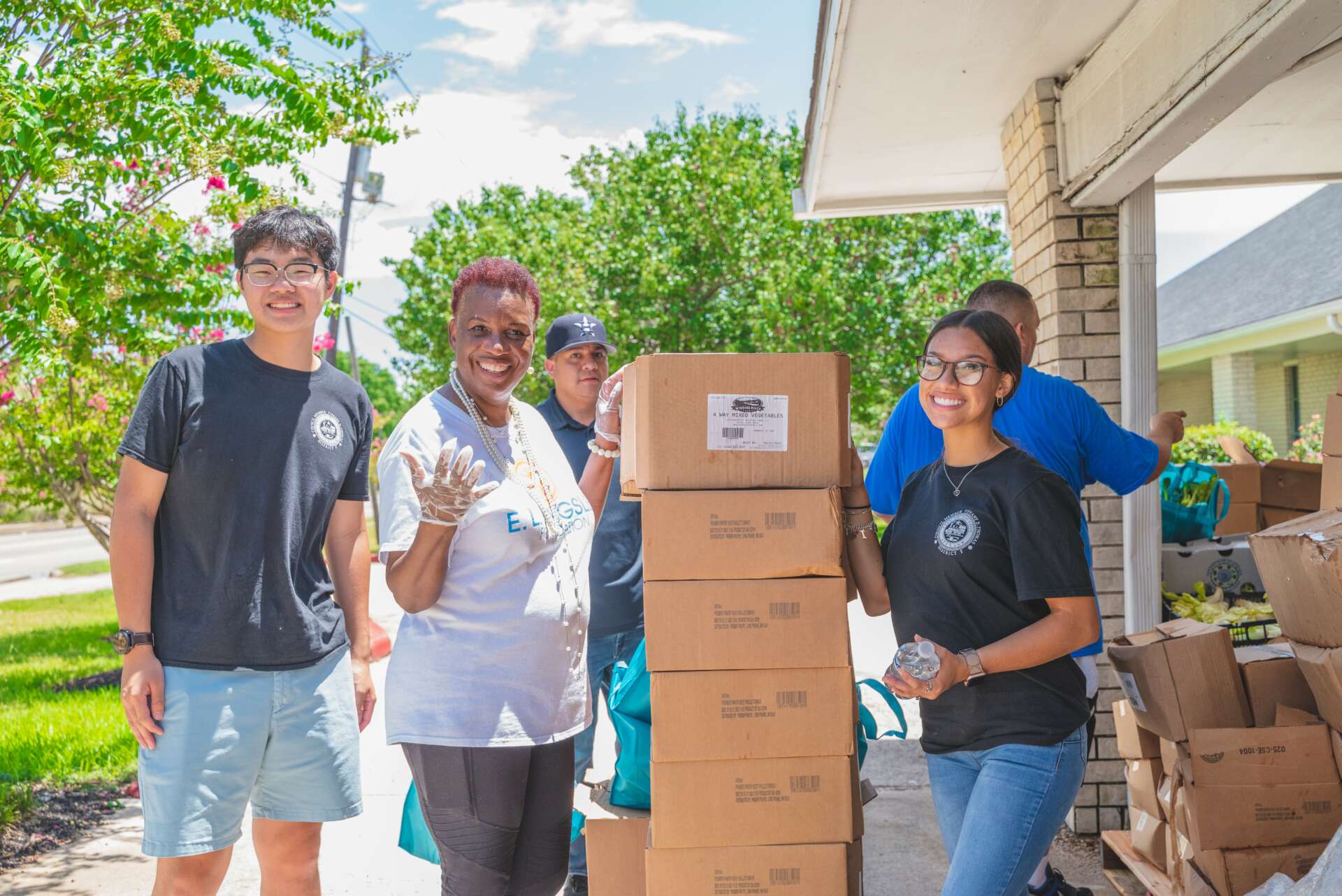
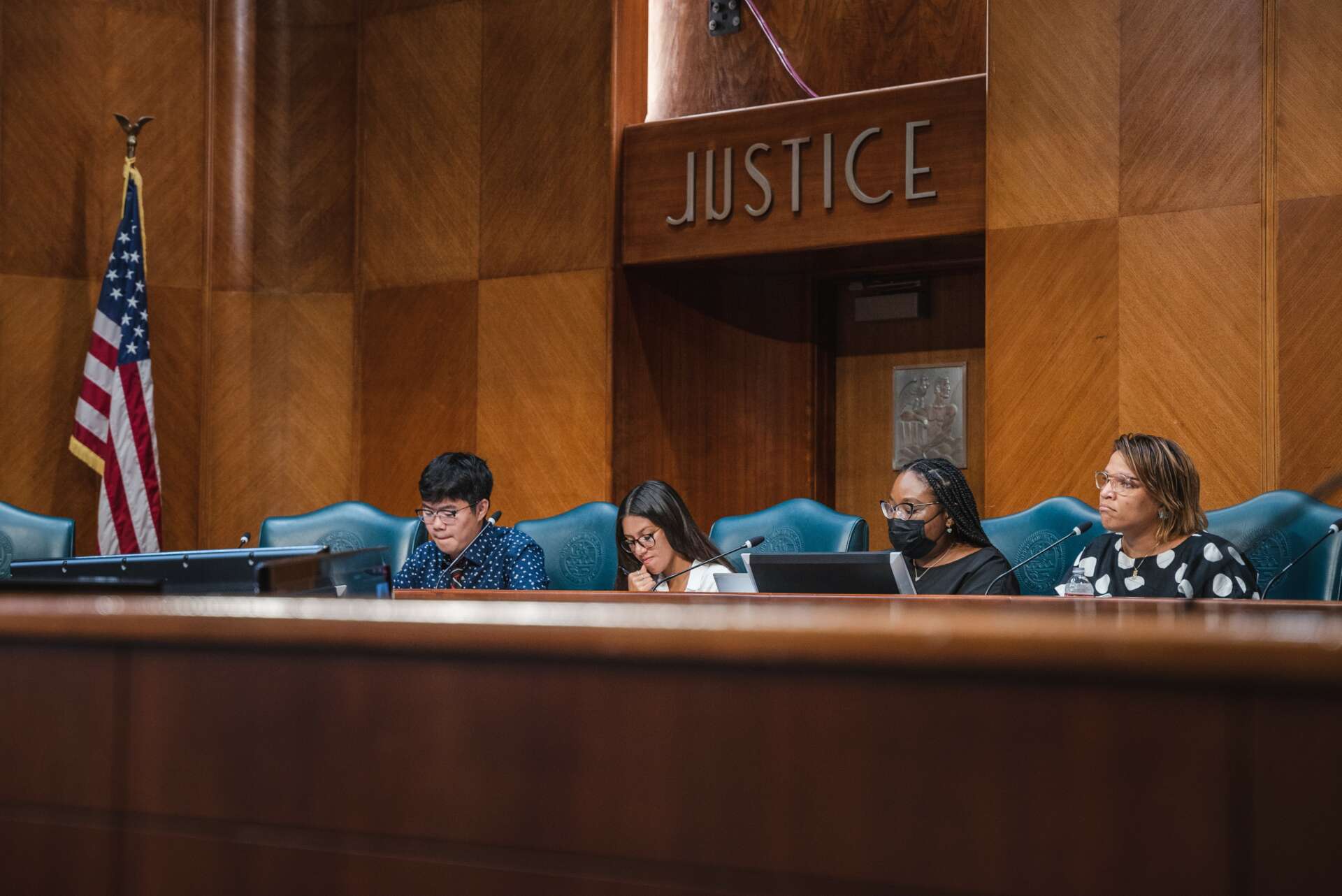
This summer, I worked at the Houston City Council, where my projects focused on the Southwest region of Houston. There, I learned that effective public policy is powered by data and scientific facts. During my time in the District F Office, it was apparent that many constituents had concerns about infrastructural improvements, Chromium-6 lead contaminant in the water supply, and transportation planning regarding highway expansion.
I rarely hear youth talking about local issues—issues that impact my peers, their parents, and the community surrounding them. When I brought up environmentalism to the Chinese-American community, I was faced with the notion that “Who cares about the climate? And, an Asian would never have enough votes in America.”
The hidden, tense, disquiet reflected in the underserved and underrepresented neighborhoods of Houston prove otherwise.
These remarks from my own community meant that environmental issues were not brought to light yet. Practically woven into daily life, the immense flooding, uncontrollable pollution, and the myriad of environmental injustices mean that Houston is on the front lines of the climate crisis. Through this, I also recognized that the youth will be the next generation of policymakers, influencers, and civically-minded citizens. If we can instill values of civic engagement in my peers today, we will flourish into a successful system within Houston as in the years past—one which preserves access to democracy.
I’m usually asked, “Why Engineering?” I found that these core issues in governance have a natural relationship with Civil Engineering. These systems particularly piqued my interest as the City of Houston relies on the intersection of engineering and local governance. When the City Council was drafting ordinances and making decisions relating to flood mitigation, I had to opportunity to work closely with the Army Corp of Engineers and disaster management engineers from universities around Houston. Since Houston relies on extensive land use, and reservoirs, and is built on a Bayou, I began to learn about urban water systems and the essence of hydrology in cities. However, it was clear that science was often not a priority when drafting policy. This needs to change.
Currently, at the Texas House of Representatives, I focus on committees on transportation and the environment—from concrete batches to the expansion of public transportation, my interests in exploring the intersection between governance and civil engineering were even stronger. Drafting bills relating to the environment, the TCEQ, working with staff from the Department of Transportation, and learning the ropes of infrastructural projects stood pivotal to my experience.
Eventually, I hope to take these fundamental skills in engineering and apply them in the realm of public policy and local governance.
By receiving a degree in Civil Engineering, my studies will be more intentional. I’m from a part of Houston where infrastructural and transportation projects were not prioritized. I want to change this—rather than dividing neighborhoods, the intersections of engineering and governance have the power to connect communities. Good public policy in cities is backed by data and science—as such, the fundamentals of transportation systems, energy, urban hydrology, and environmental control are all aligned with what I want to focus on in my career.
Currently, I hope to pursue my undergraduate degree, followed by a master’s in public policy. From there, I hope to take a couple of gap years to become a high school teacher, followed by legal education. Ultimately, I hope to work in law or the government—one where I can give back to a community that gave me so much. As we like to say, “The west side is the best side.”
For me, there is a simple doctrine: To know that I have the ability to command the stage of discourse empowers me. To know that I have a voice in turning the tide within societies’ status quo is inspiring. Much like how a single seed can turn into a forest, a single (civically engaged) heart has the ability to transform a nation.
This I believe: education is the power and inexplicable force. Education with intentionality is limitless. Those who embark on this mission to be forces of academia will stand in their true purpose—I hope to do the same.
We often hear about learning lessons – but just as important is unlearning lessons. Have you ever had to unlearn a lesson?
Government is a dual responsibility—elected officials and constituents. Entering conversations of power is difficult, divisive, and often through shibboleth ways. We now know the rhythms of decorum, the repeated statistical points, and our tense disquietness. Uvalde, Buffalo, Santa Fe, Douglas, Ukraine, Roe. Events blink so fast, our hearts shake, and we are forced to move edge to edge, day by day.
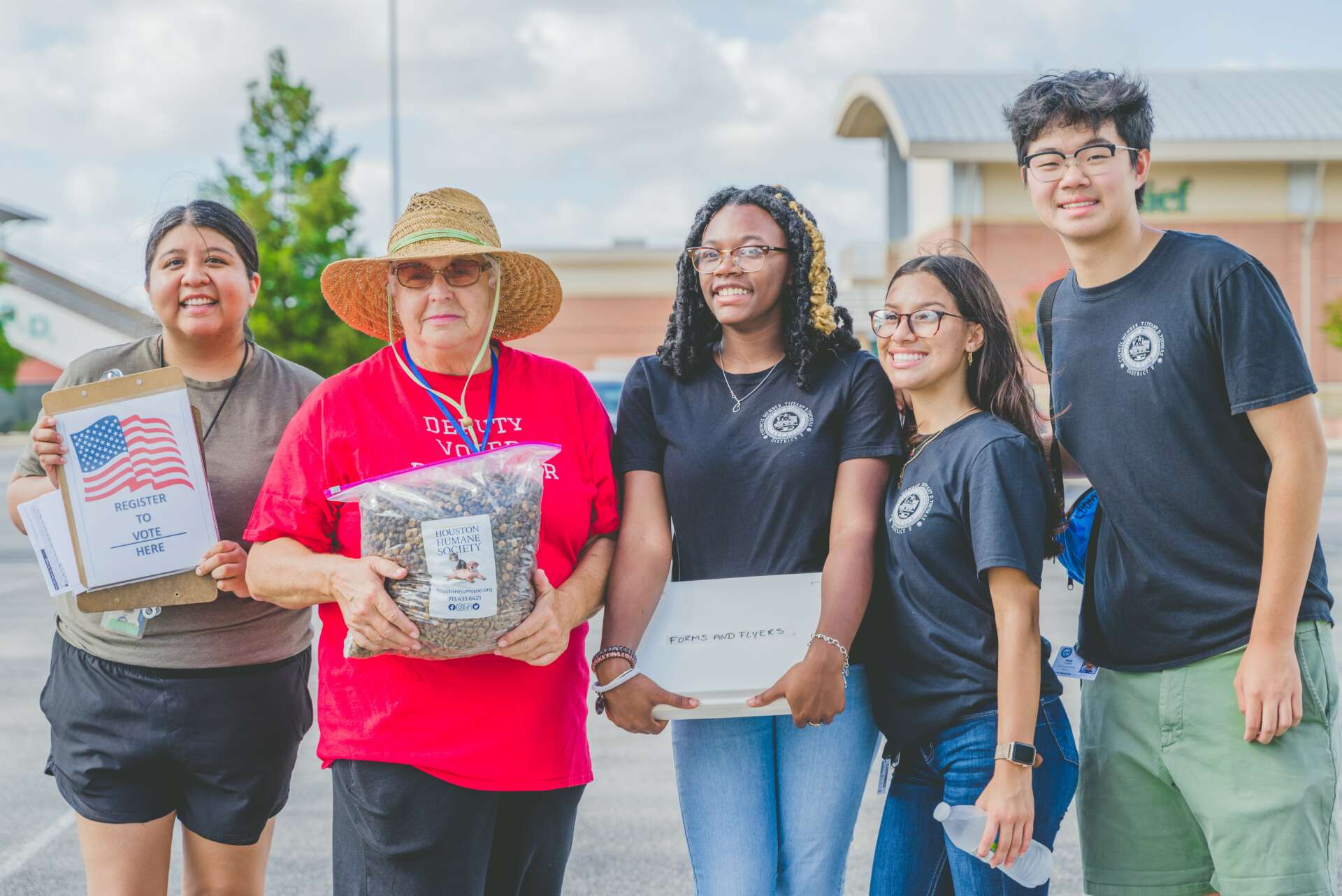
Don’t expect this to stop, especially through our next years in higher education or in the workforce. Legislation can change, but advocacy is needed. And federal change trickles down to the local government. Do you know who your city council member is? The mayor? These people are powerful. One protest will generate short attention, but almost never sustained change. Dedicated civic engagement does—voting, attending town halls, attending city council meetings, registering voters, researching political candidates, and utilizing your tools of education to inform yourself on issues. Take the time and get engaged. When we all do, we will see the world we want.
How’d you build such a strong reputation within your market?
Bordering historic Piney Point, Alief, and the Westside, Houston’s District F fills with vibrancy from the rich cultural heritage of the Viet, Chinese, Latinx, and African communities. Yet, there is a tense disquiet boiling within the district—an unease defined by an ever-increasing academic gap. Education is a force to be reckoned with. It’s a passport to greater opportunity for working-class families, a weapon to enact change, and an avenue to equalize those within communities. The District F Office, Parks and Recreation, and the Mayor’s Office of Education all recognize the need for youth intervention and programming. However, we are missing a decisive factor in youth programming—civic engagement. Reputation is built through showing up. And we must show up.
Contact Info:
- Website: tommycwan.com
- Instagram: https://www.instagram.com/tommycwan/
- Linkedin: https://www.linkedin.com/in/tommy-wan-4672a3132/
- Twitter: @tommycwan
Image Credits
Fredrick Douglas Wilson III