

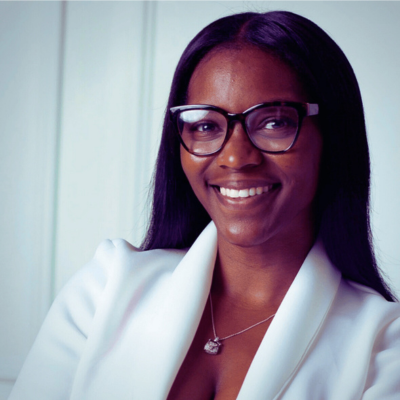

We were lucky to catch up with Tiyana Jordan recently and have shared our conversation below.
Tiyana , appreciate you joining us today. If you’re open to it, can you talk to us about the best (or worst) investment you’ve made. What’s the backstory and the relevant context behind why you made the investment
The best and worst investment I’ve made as a business owner was opening my brick-and-mortar coworking space in New Orleans, the first Black woman–owned coworking space in the city. It was a dream I had nurtured for years, and finally bringing it to life felt like the culmination of both purpose and passion. The space wasn’t just a business; it was a cultural and creative hub for community, collaboration, and professional growth.
What I didn’t foresee, what none of us did was the world would literally stand still with COVID-19. Practically overnight, the business model that relied on in-person energy, shared workspaces, and physical community became impossible to sustain. I had poured significant financial resources and an even greater amount of time, hope, and identity into the space. And while the investment itself was sound, what I lacked was a crisis management plan, no contingency strategy for an unprecedented disaster that could shut down operations indefinitely.
COVID didn’t just interrupt my business; it forced me to confront the difference between building a dream and protecting it. I had the vision, but not the infrastructure to weather something of that magnitude. Closing the physical space was one of the hardest decisions I’ve made as an entrepreneur.
But it also reoriented my path.
As both a writer and a founder, I learned to pivot gracefully, strategically, and with a wider lens on what the world actually needs. I began leaning into technology, digital infrastructure, and business models that are resilient, scalable, and not tied to a single physical location. That shift has opened doors I couldn’t have imagined at the time. It taught me that the dream doesn’t die when the form changes; sometimes it becomes more aligned, more accessible, and more impactful.
The lesson I learned was a great investment is not just about the idea it’s about preparing for the unexpected. And sometimes the “worst” moments in business are actually the catalysts that push you toward your most expansive work.
A pivotal lesson for me has been defining the boundary between a customer and a partner. Your customers are there to purchase your value, not to build your infrastructure. While it is vital to use accessible tools to analyze behavior, spending habits, and market fit, relying on customers for feedback on the ‘insides’ of your operation especially financials is a mistake. My advice? Use software to get that granular data on spending and behavior, but protect your intellectual property. I learned this the hard way: after oversharing with the wrong people, I watched a competitor open next door using my exact business model. Now, I let the data tell me what the customer wants, and I keep the operational details to myself or a trusted team with the same interests . As they say, ‘it’s business,’ so you have to keep it business.”
Tiyana , love having you share your insights with us. Before we ask you more questions, maybe you can take a moment to introduce yourself to our readers who might have missed our earlier conversations?
I’ve spent over 15 years as a communications strategist, navigating both the for-profit and nonprofit sectors. My career has been defined by refining messaging for high-stakes leaders from metropolitan mayors to CEOs in finance and tech. However, as technology began to reshape the communications landscape, I took a step back to ask: ‘Where do my existing skills intersect with my new curiosities?’
That question launched a journey of deep introspection. To truly pivot, I realized I didn’t just need a crash course; I needed foundational knowledge . I am currently back in school earning a second bachelor’s degree, with a master’s to follow, specifically to bridge my expertise into the digital health space which I am so excited to build community engagement and launch. I’ve become fascinated by neuroplasticity, Dr. Tara Swart’s work is a must-read and I am applying those concepts of brain agility to my own business expansion.
I’m currently reading Good to Great by Jim Collins, and one insight resonated deeply: the best students don’t accept what a professor says at face value. That is the mindset I want to offer to emerging entrepreneurs and those navigating a major life pivot. Stay curious. Question boldly. And remain committed to your purpose, even when the path requires you to evolve.
Are there any books, videos or other content that you feel have meaningfully impacted your thinking?
I encourage business owners and creatives to read constantly and widely both inside and outside of your industry. The facts are always in the data, and while social media can be a quick source of inspiration or trends, it shouldn’t be your primary form of education. To build something sustainable, you have to stay informed through credible, research-based sources that can tell you where your industry stands, what trends are gaining momentum, what strategies are working, and which approaches are falling flat.
It’s also incredibly valuable to study your competitors. Not from a place of comparison, but from a place of strategy. Understanding how others in your space position themselves can reveal opportunities for differentiation, areas where you can improve, and spaces where your strengths naturally shine.
But don’t stop there read beyond your industry. Some of the most innovative ideas come from cross-pollination. When you understand how other fields operate, you stay creative, adaptive, and capable of introducing fresh concepts others may overlook.
And finally, invest time in reading about leadership, team management, and organizational development. The right people are essential to building a business that lasts. Knowing how to communicate, motivate, and guide a team is just as important as knowing your craft.
Reading isn’t just about information it’s about expanding your perspective, sharpening your instincts, and equipping yourself to lead with clarity and confidence.
Learning and unlearning are both critical parts of growth – can you share a story of a time when you had to unlearn a lesson?
One of the most important lessons I had to unlearn was the belief that grinding, constantly pushing, hustling, and stretching myself to the limit equates to peak performance. For a long time, I saw nonstop productivity as a badge of honor. I believed that if I wasn’t working around the clock, I wasn’t doing enough. That mindset is common among entrepreneurs, especially those of us who build businesses from the ground up with limited resources and big dreams.
The backstory is simple: I grew up professionally in environments where overworking was normalized, even praised. When I launched my own business, I carried that conditioning with me. I felt responsible for every outcome, every detail, every success and setback. And while that level of commitment can build momentum, it can also quietly destroy your health, your creativity, and your clarity.
Eventually, I hit burnout physically, mentally, and emotionally. And it forced me to confront a truth I had been avoiding: grinding isn’t leadership. It’s survival mode. It leaves no room for vision, strategy, or sustainability. It shrinks your capacity instead of expanding it.
Unlearning that mindset required shifting how I defined success, rest, and productivity. I had to embrace the idea that rested leaders make better decisions, and supported leaders build better teams. Real performance comes from clarity, not chaos. From alignment, not exhaustion. And taking a pause to FILL yourself up as well with things like art, nature, community, volunteering whatever fills you.
Letting go of the grind culture opened up space for me to be more creative, more strategic, and more present. And the lesson continues to guide me: Productivity is not about doing the most it’s about doing what matters, in a way that allows you to lead with longevity.
Another lesson I had to unlearn and want other budding entrepreneurs and even those who have years of experience to unlearn is it OK if your interest, curiosities and purpose leads you to other ventures. That is the beauty of living a full life, we can extend ourselves into different areas without feeling like we’ve failed or gave up. You deserve to touch any and everything that your brilliance deserves!
Contact Info:
- Website: https://tiyanajordan.com/portfolio