

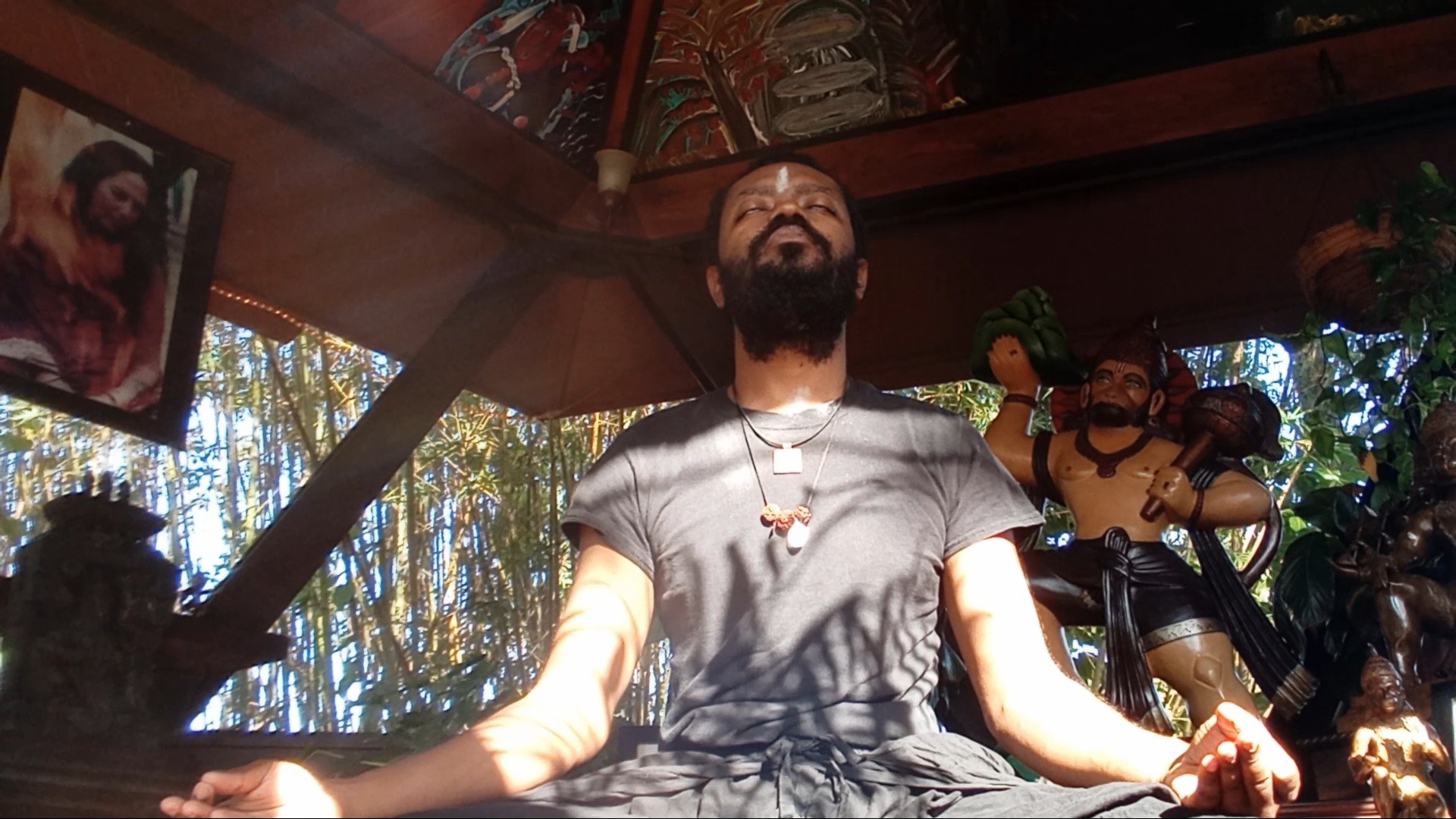

We caught up with the brilliant and insightful The Ema a few weeks ago and have shared our conversation below.
Hi The, thanks for joining us today. Can you share an anecdote or story from your schooling/training that you feel illustrates what the overall experience was like?
It wasn’t until early 2013 that I learned of the training that would begin to bring it all together for me. Convinced that I needed to shake up whatever pattern kept me arriving at the same conclusion in life, I started making bold moves like packing up my car & moving from Charlotte to Los Angeles like I’d always wanted. Word of the moves I was making made its way to my old pal Overton Loyd who I knew from my college days of working with George Clinton & P-Funk. He introduced me to a program he’d taken in the 70s that led to breakthrough that initiated his working with George.
The Landmark Forum, based on the EST Trainings (as the were called when Overton attended) is a 3-day, 1-evening “transformational learning” experience which, at the time, cost $575. I resisted for months, considering that this was about half of what I was earning per month. I was certain that I’d starve to death if I invested in a 3-day weekend in which I had no idea what would be happening. I finally figured, “It worked for Overton… What more do I have to lose besides a few bucks?”
The program wasn’t informational so much as a conversational journey through how past events in our lives shape our future until we are complete with what happened. As I’m reflecting, I’m suddenly remembering something from junior high. I’m in the kitchen preparing to fix myself a plate after my mother had announced dinner was ready. Out of nowhere, she’s yelling at me for eating before my younger siblings. From that point forward, I’d made it mean that taking care of my personal needs was a burden to others.
At this point in the training, I’m realizing that, upon arriving in Los Angeles, my aunt with whom I was living told me that I was welcome to anything in the kitchen, but I took it upon myself to buy my own separate food as to not be a “burden”. Calling my aunt during our break, she’s revealing to me that she & the others in the house thought that I was being selfish by bringing home food without offering any. I began thinking back: How often had I thought I was doing the right thing for people without checking in with them to see if that’s the way it was occurring for them? I was soon realizing this was a limitation that had been blindsiding me & impeding my results in life for many years.
I spent the rest of the training checking in with fellow participants about how their experience was going and sharing with them my discovery. During lunch break, I’m sitting under a tree (which I’d rarely felt I had time to do in recent times) feeling more unburdened & lighter than ever in life. Then, other participants randomly began to bring & offer me food. At one point someone brought me an entire tray of expensive fruit. I no longer felt that my $575 investment would starve me. I left my job the following Monday & earned nearly 3 times that amount over the next 3 days.
That ability to unburden myself from the effects of time has served me and, by proxy, many others ever since. Rather than guessing where I’m needed, I simply ask where I can be of service and promise only what’s within my means to offer.
As always, we appreciate you sharing your insights and we’ve got a few more questions for you, but before we get to all of that can you take a minute to introduce yourself and give our readers some of your back background and context?
I am The Ema (pronounced “ey-mah”), which is a Sanskrit word for “the way, path, or course”. I have cultivated myself through various trainings and initiations as well as by subjecting myself to challenges that would help me understand what people of various walks of life endure. While I have owned businesses in the art & music industries, I am also an ordained minister of the Universal Life Church Monastery & a certified Tai Chi/Qigong instructor & healer. As a stay-at-home father of two small children with special needs, I make myself available in various ways as needed & share my wisdom through social media content & speaking events.
For example, I am currently assisting the Gifford Cultural Center & Historical Museum break ground with its new building in my Florida hometown. I’ve brought fresh perspective to community projects like this in multiple cities by simply being a clearing for possibility, emptying myself such that I can listen for what’s missing in the conversation that would make a lasting difference if present.
It may not sound like a typical career or path, but I have more than I could ever want and have made myself valuable to people in ways I could never have imagined. There isn’t really a name for all that I am other than being a clearing or a way where there is none, and thus I’m simply The Ema. I’m most proud that, of all the paths I could have taken in life & all the worlds my journey has taken me through, I wound up on one that helps others find and walk their own.

Learning and unlearning are both critical parts of growth – can you share a story of a time when you had to unlearn a lesson?
One lesson I had to unlearn is “good education equals good life/career”. We’re taught as kids that our academic performance is what will bring you success, but it’s really your social development that makes the difference. The good grades thing isn’t emphasized because your intelligence will automatically be respected; those marks determine whether you will have access to the exclusive circles represented by Ivy League schools, for example. Facebook was created out of rebellion for the exclusion private circles represented in colleges only to turn around & give Zuckerberg greater access to the most exclusive social circle on the planet: the 1%.
When I started college in 2005, business degrees of any kind were highly coveted. Though I had a background in both art & music, I felt I’d get the most benefit from learning how to run my own business–skills I’d be able to apply to whatever career I wanted. In 2008, the housing market crashed sending the country into recession. So, by the time I graduated in 2009, a 4-yr business degree was almost worthless in the eyes of employers.
In fact, I struggled to get hired anywhere until I intentionally left my degree off of my resume, having previously been told I was over-qualified for available positions. As I learned how to prioritize building relationships as a function of gaining access to greater opportunities, I, in retrospect, realized the functional purpose of the clubs, organizations, etc, in grade school. I was a kid in a lower-middle class family being bussed to a school to take courses with kids from families in a higher tax bracket because I was smart enough to handle the coursework. Unlike them, I wasn’t being coached from home on which extracurriculars and whatnot would give me advantages in the outside world.
On one hand, I allocated much of that extra time toward advanced coursework that ultimately had me enter college a credit or two shy of being a sophomore. I also received scholarships that prevented me from having to work a job while in school. The drawback is that much of the experience employers were looking for came from such years of working. I’d had jobs in highschool; but my friend, for example, didn’t go to college and stayed at his highschool job for many years allowing him to move up the ladder. He had time to learn from older people at the job on how to navigate–a kind of education you can’t get by sitting in a classroom.
Other than training/knowledge, what do you think is most helpful for succeeding in your field?
It sounds counterintuitive for wellness & spirituality, but I’ve heard well-known global figures like Sadhguru echo something to this effect: Don’t let money rule you, but be understanding of how it rules people.
I later trained on the backend of the transformational education program I mentioned earlier in the interview. A question that would often come up is,
“If we’re working to save the world, why isn’t this free?”
The more common answer you’ll hear when this question is posed throughout this field is because it costs money to provide the services. While there are non-profit implications for religious organizations, for example, things like life coaching and holistic health are largely considered for-profit. With organizations like the Isha Foundation, Sadhguru having been a business owner in his younger years, knows all too well the drawbacks of accepting money from government when your mission to improve people’s lives may sometimes work counter to the government’s more financially motivated aims. As such, most of their money comes from a limited number of wellness products and donations by the volunteers themselves.
The other response that intrigued me most was because of perception. Landmark Worldwide found themselves in a position where what was essentially the same coursework had to be repackaged into an exclusive or corporate version with a price tag nearly 5 times as high. These participants simply weren’t open to the possibility of transformational learning unless they felt they were getting something others couldn’t afford. In an almost Great Gatsby sort of way, I’ve personally benefitted in the past from the notion that most people assume that the only way I could’ve accomplished certain things in life is because I had a ton of money. As a result, I was often given access to people with lots of money, allowing me to bring value to their lives in other ways, and prompting them to invest in altruistic efforts.
Contact Info:
- Instagram: https://www.instagram.com/the_ema_wisdom
- Facebook: https://www.facebook.com/profile.php?id=61552135048080&mibextid=ZbWKwL
- Youtube: http://www.youtube.com/@TheRetconists
Image Credits
All photos by S. Windhom