



We caught up with the brilliant and insightful Tempra Board a few weeks ago and have shared our conversation below.
Tempra, thanks for taking the time to share your stories with us today It’s always helpful to hear about times when someone’s had to take a risk – how did they think through the decision, why did they take the risk, and what ended up happening. We’d love to hear about a risk you’ve taken.
My first big risk was leaving the suburban San Diego home of my upbringing at age 17 to attend a small, rural state college on the far other end of the state, what was then Humboldt State University. I had never been farther north than Solvang, and I knew little about where I was headed. I just knew it was “away.” My family had little money, and I was warned that I couldn’t afford this endeavor. I worked part time, and obtained federal-aid grants and student loans (which I ultimately would not pay off until my mid-40s). My life opened to me during this time. I experienced the joy of learning and studying literature, the freedom and sometimes pain of making my own decisions and mistakes, and the awe and humility of living in a place surrounded by wildness and beauty.
After college, and after obtaining a master’s degree in communication, I played it safe. I found a stable career as a grant writer, and though this wasn’t at all glamorous or particularly creative, I was able to make a steady living helping nonprofit organizations, and this felt good. For a while.
I had always been interested in art, but had never gotten much positive feedback on my early artistic endeavors, and when I would attempt drawing or painting, my initial results were terrible and I judged myself harshly. About four years ago, a local friend started a nature journaling group and invited me to join it. I thought it would be writing-focused, but when I learned that sketching was a large component, I balked. But then my friend said something that stuck with me: “It’s not about making a pretty picture. That doesn’t matter.” Those simple words gave me the courage to make some sketchbook entries, and even though they were simplistic, I found a couple of glimmers . . . one or two things I liked, like the shape and shading of the underside of a mushroom rendered in ink.
And thus started the second phase of my life: one as an artist. I have since taken several workshops in drawing, watercolor, Chinese brush painting, and life drawing. I have honed my skills and gotten into a gallery. I got involved in local arts organizations and communed with other creatives. I have been selling my artwork and building a budding hobby.
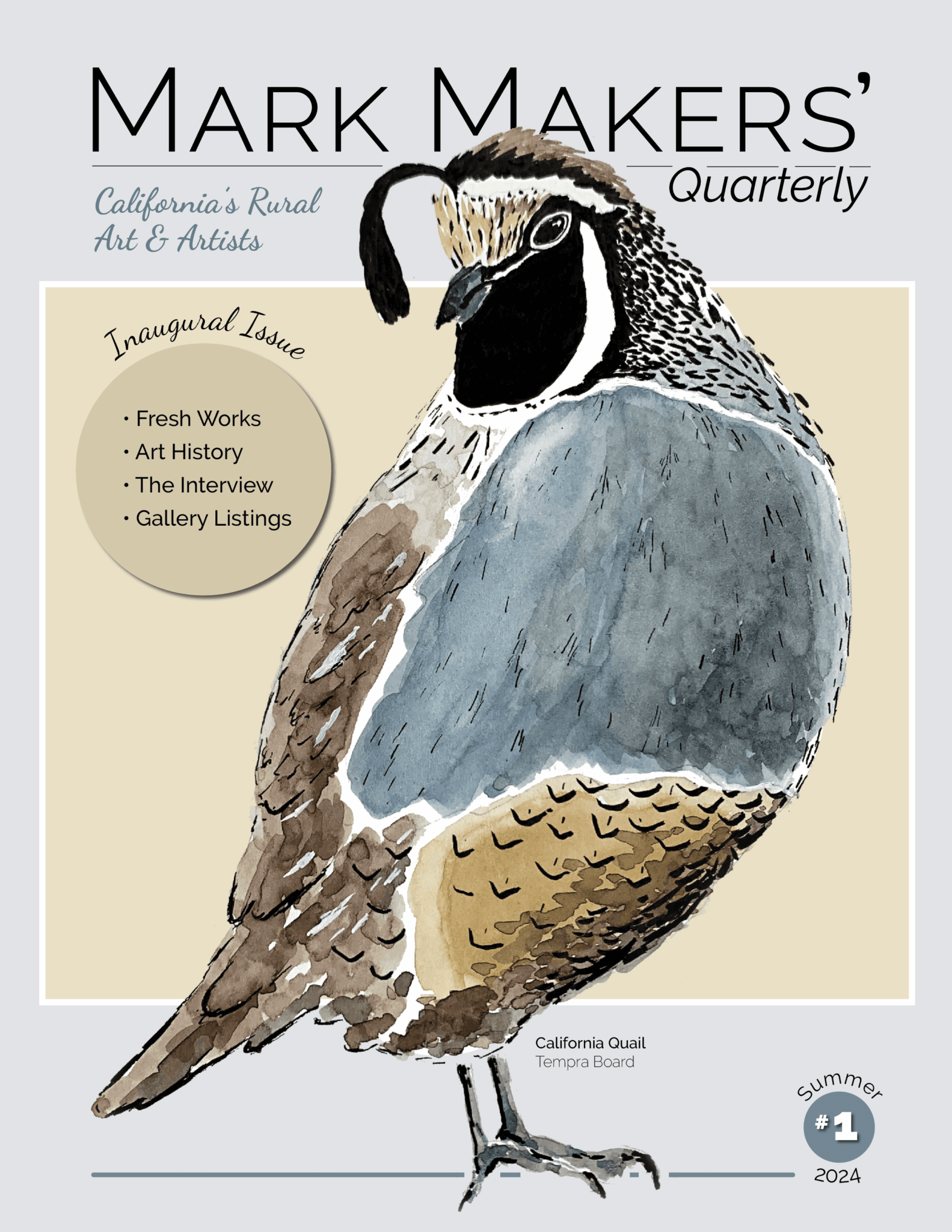
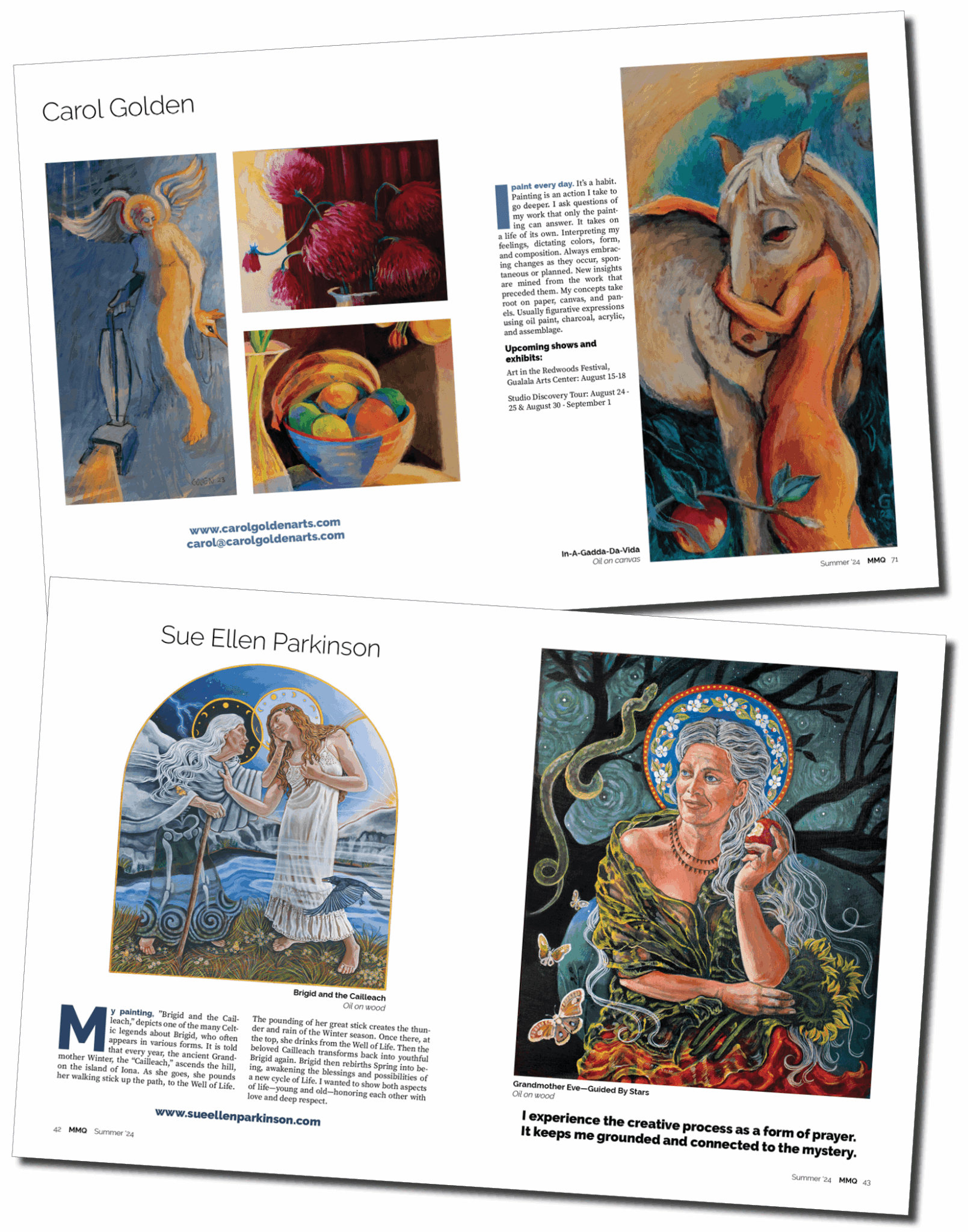
Then came the other big risk: starting my own art magazine. In addition to grant writing, for many years I had been exercising my creative urges on the side through page layout and design. For the past four years I’d done the graphic layout for the 68-page quarterly magazine of The Sea Ranch Association, where I live. I decided to bridge my interest in art, my talents in graphic design, and my writing ability to launch Mark Makers’ Quarterly, a journal of rural California art and artists. I figured I’d put my own money into the printing, collect art from rural artists anywhere in the State, and sell subscriptions. I found sponsors and an advertiser for the first issue. I printed 1,000 copies. This might have been ambitious, but my subscriber list has been growing, the magazine is selling in several outlets, and artists have started clamoring to be included.
One gallery manager said it was the most beautiful magazine she had ever held in her hands. The product is indeed gorgeous and inspiring, and I’m now hard at work on the second issue. I can’t wait to see where it’s all going to go. And I know I have a lot of marketing and selling work ahead of me – not the most fun part of the process compared to the creation of the magazine, but a necessary and surprisingly fulfilling one.
Tempra, love having you share your insights with us. Before we ask you more questions, maybe you can take a moment to introduce yourself to our readers who might have missed our earlier conversations?
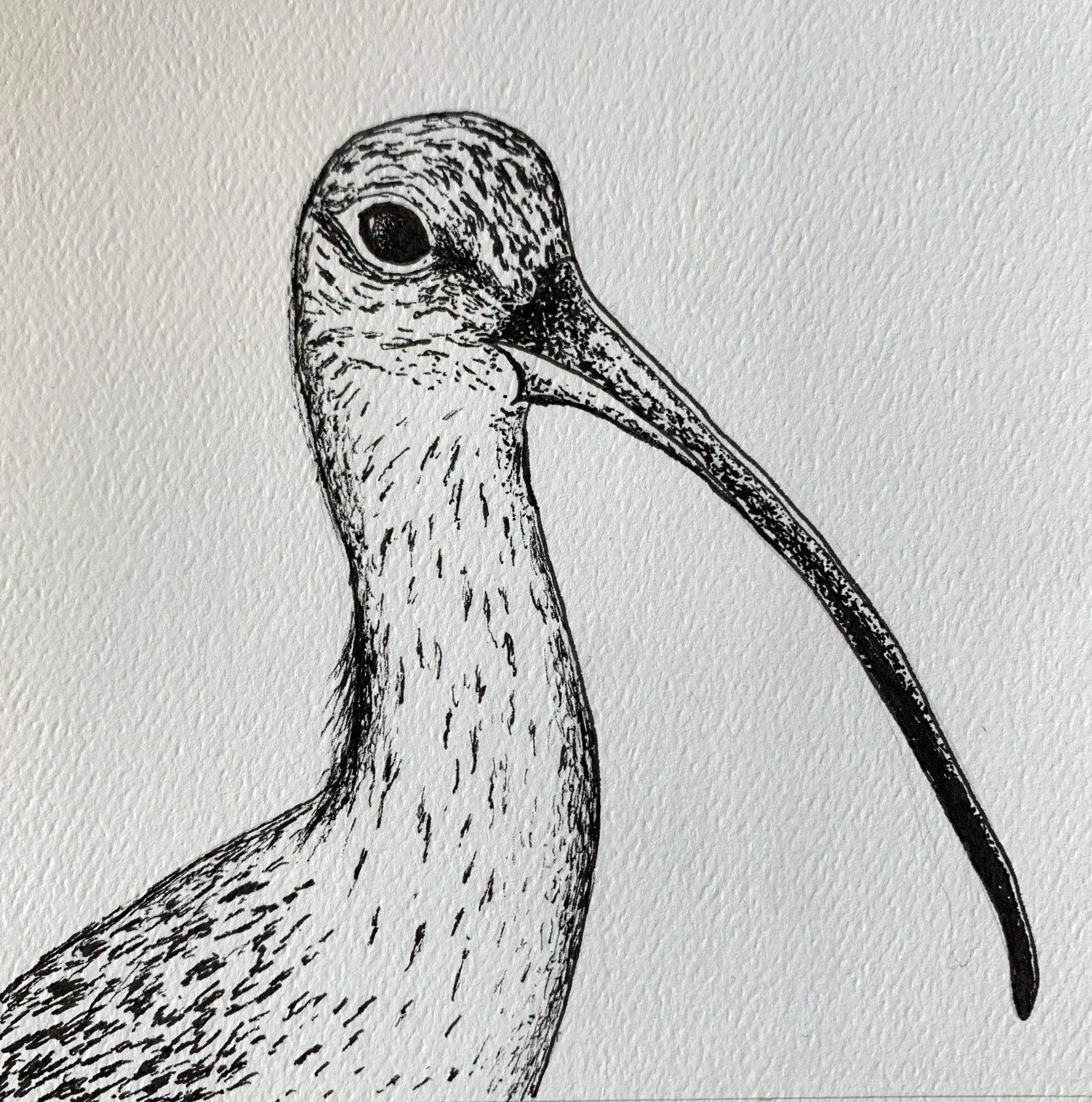
I have been a grant writer and graphic designer for most of my career, having taken the leap and started making visual art in earnest just four years ago. I’m mostly self-trained, working in ink, watercolor, colored pencil, and markers. I have taken two entirely butt-kicking classes in botanical illustration from the New York Botanical Garden’s continuing education program. I have taken workshops with local artists Mike Henderson (graphite), Andrea Allen (Chinese brush painting in sumi ink), and Bea Acosta (basketweaving).
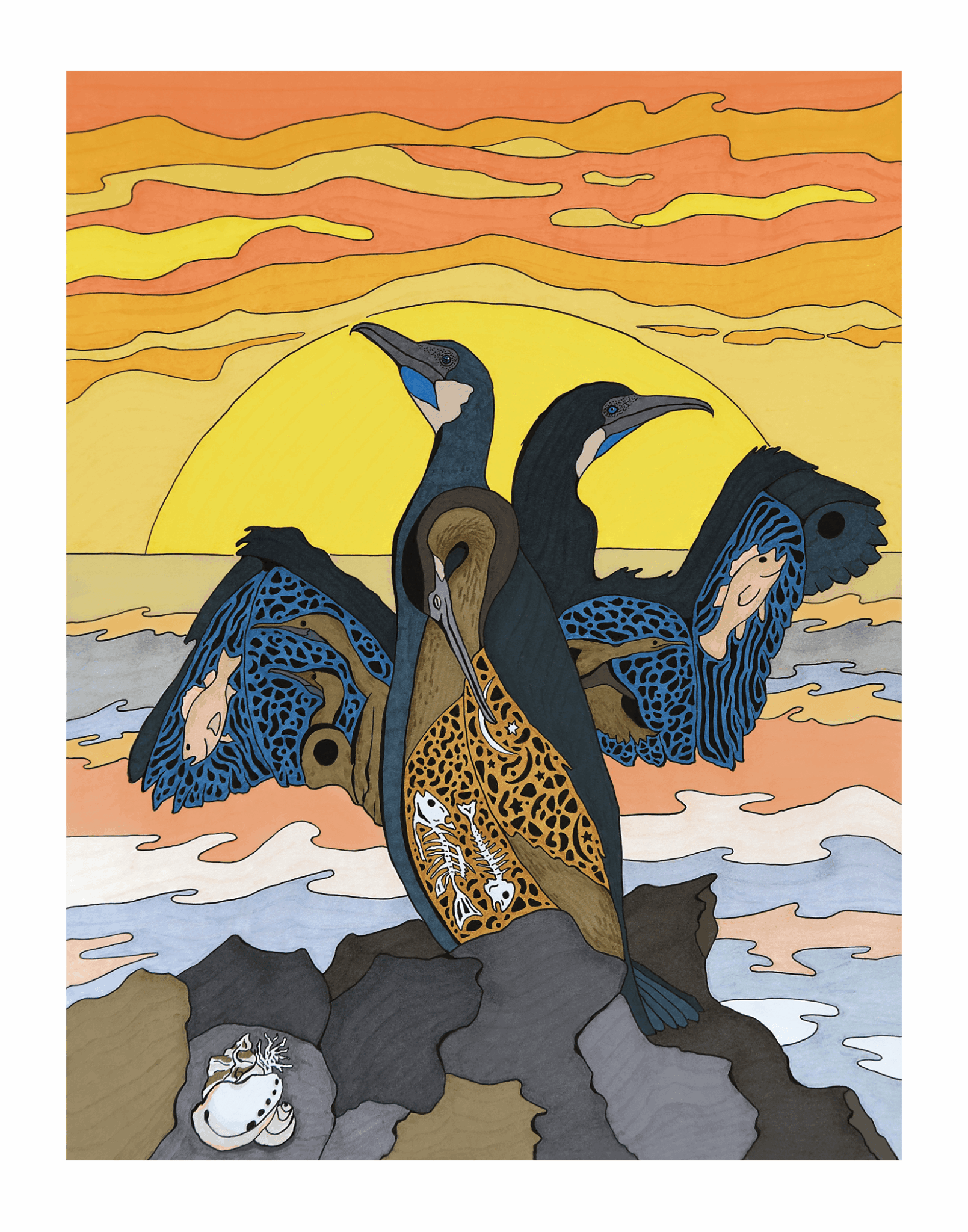
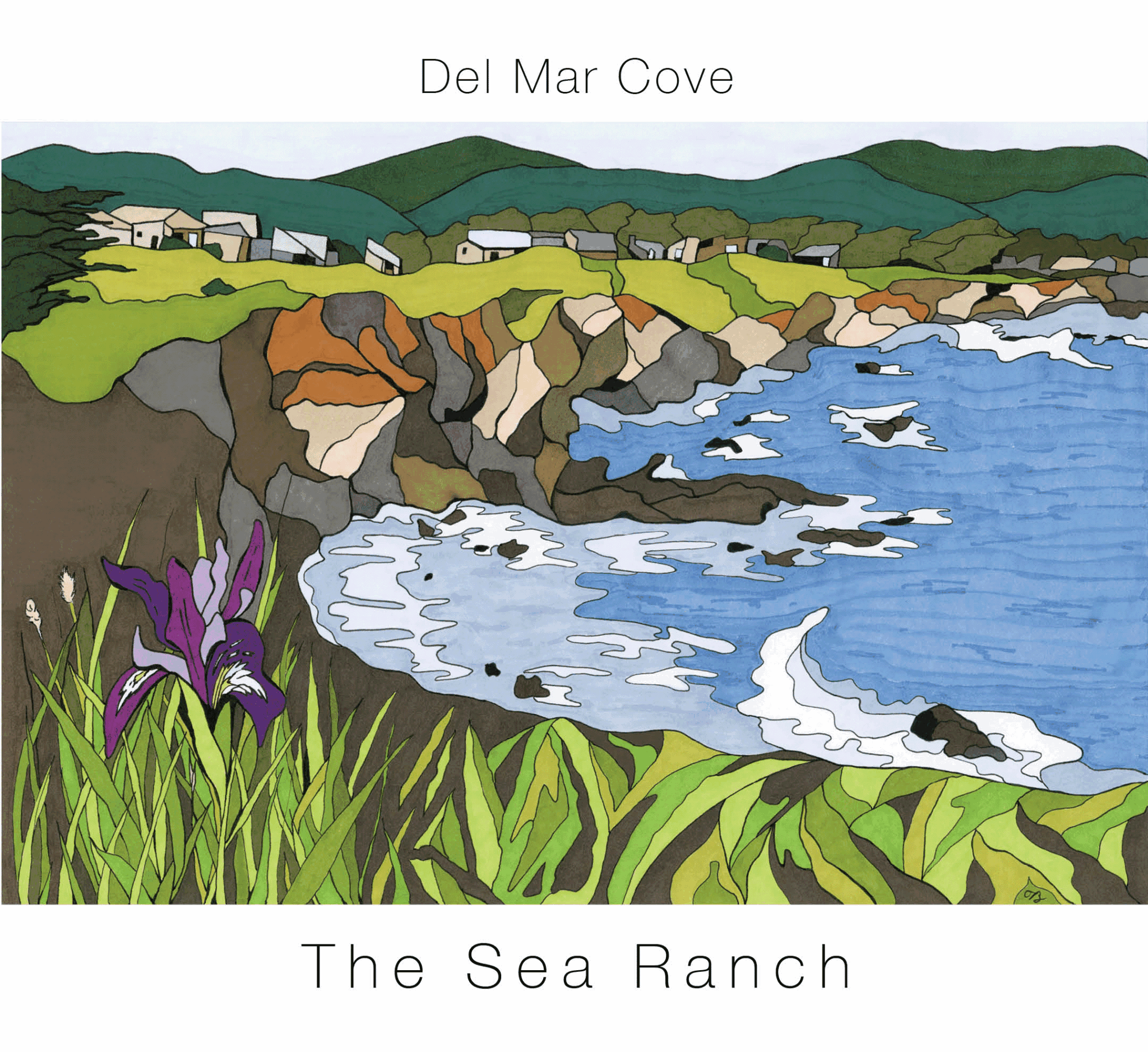
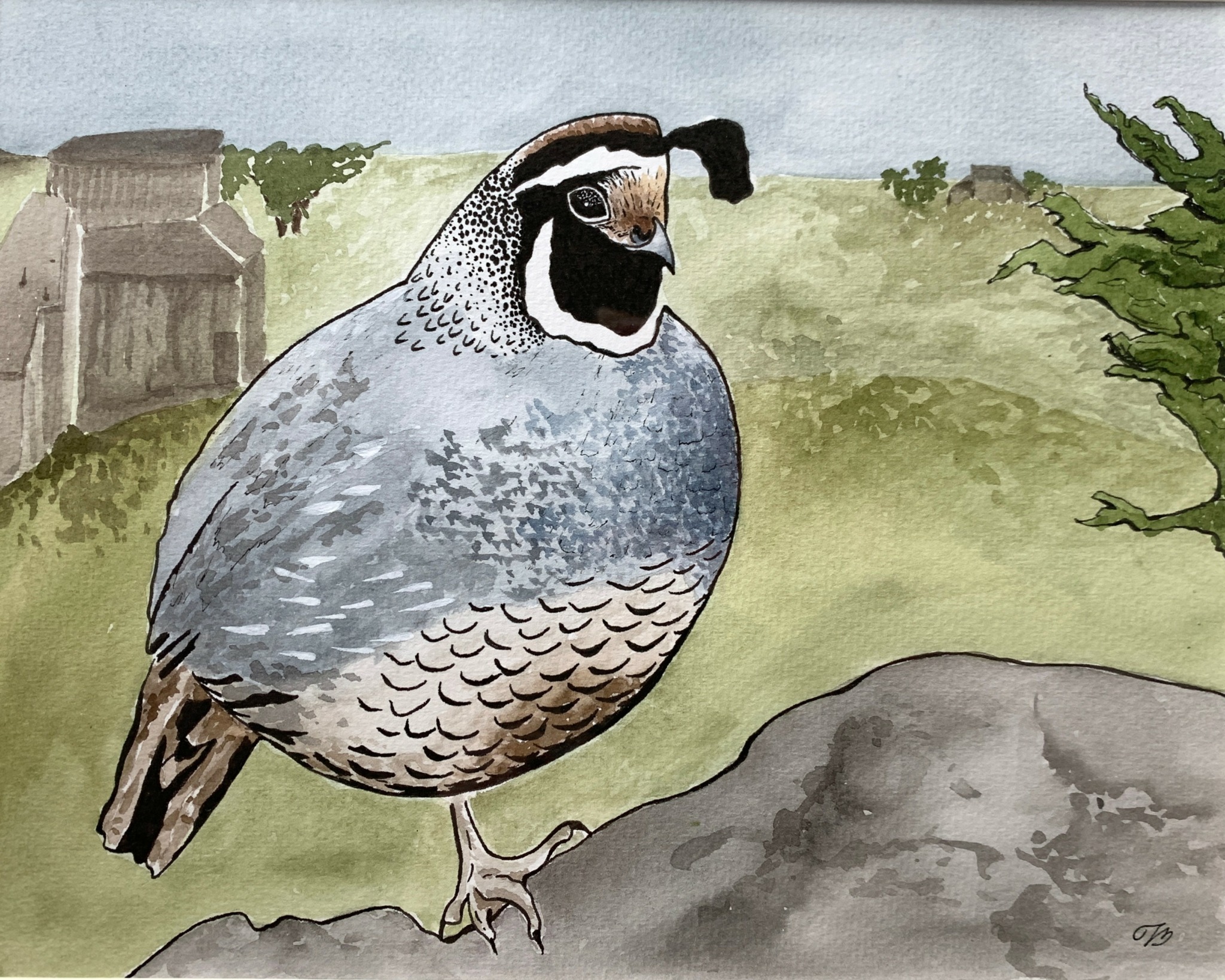
I am continually bowled over by the micro and macro world of The Sea Ranch on Sonoma County’s far northern coast, where I live, from the smallest mushrooms and lichen peeking out of a downed redwood log, to the constantly changing land and seascape, and all our native plants, birds, and other wildlife that quietly and not so quietly go on about their business, in spite of us. This has been my dominant inspiration. My artworks include ink and watercolor drawings of the plant and animal life found where I live, and ink and marker landscapes that have the feeling of old WPA posters.
I make art because it’s challenging, meditative, and fun all at the same time. I love the hopefulness of a smooth white sheet of paper ready for my ink. And I love the state I am in while making marks on paper. Susan Magsamen and Ivy Ross, in their book Your Brain on Art: How the Arts Transform Us, tell us that the arts—both making and appreciating—provide a range of health benefits that are both physiological and psychological, and in particular their ability to induce a “meditative-like state.”
After being on a local Studio Tour for two years, I was invited to join an artists co-op gallery, and it has been a wonderful experience. Getting to know other artists in all kinds of media, and being inspired by their work, I decided to blend my skills and interest in writing, graphic design, and visual art by launching my own print magazine, called Mark Makers’ Quarterly, a Journal of Rural California Art and Artists (https://www.markmakersquarterly.com). My vision is for this to become a state-wide repository of the amazing art of artists living in rural areas of the state, who do not have access to the audience and representation that urban artists may have. The first issue was a true labor of love, and came in at 96 pages, featuring more than 50 artists. I’m now working on the second issue and I find that there’s nothing I’d rather be doing than pouring over and curating fantastic art, and designing pages built to inspire.
What do you find most rewarding about being a creative?
Creating art is the easiest way I’ve found to quickly access the realm of pure joy. That’s the only way I can describe it. Making marks on a previously white sheet of paper and letting myself get lost in this process and seeing where it goes is some of the best meditation. In the end, you have a product that delights. Both the process and the product are the reward. And then sharing this art with others and seeing their joy, is yet another gift. Designing a magazine about art is similarly rewarding and constantly inspiring. I am in awe of other people’s work, and their words about how making art makes them feel, why they do it, and what they learn from it. The extent to which I can make and sell my art and design, to me is like I am being paid to practice. And it keeps getting better.
In your view, what can society to do to best support artists, creatives and a thriving creative ecosystem?
We need to see art as a necessity, not a luxury. Everyone, from an early age and then continuing through school and beyond, should be encouraged to practice art, whether it’s visual art, theater, dance, music, singing, writing, or any other art form. Teaching art should not be relegated to an “extra,” but should imbue every other kind of learning, including science and mathematics. The blending of disciplines only enhances learning and discovery, and the joy in creating and taking in art is part of why we are here.
Contact Info:
- Website: https://www.markmakersquarterly.com
- Facebook: https://www.facebook.com/tempra.board
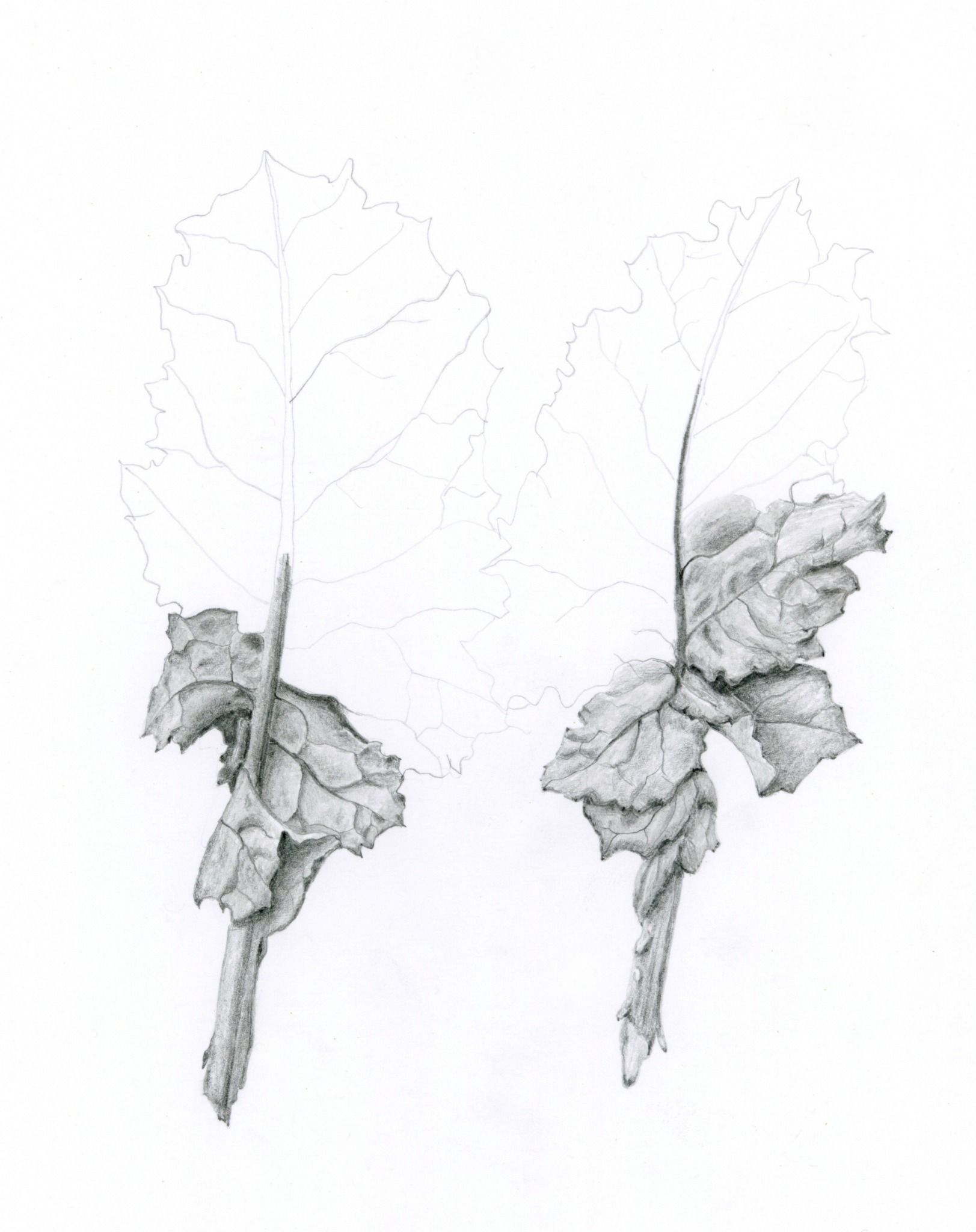
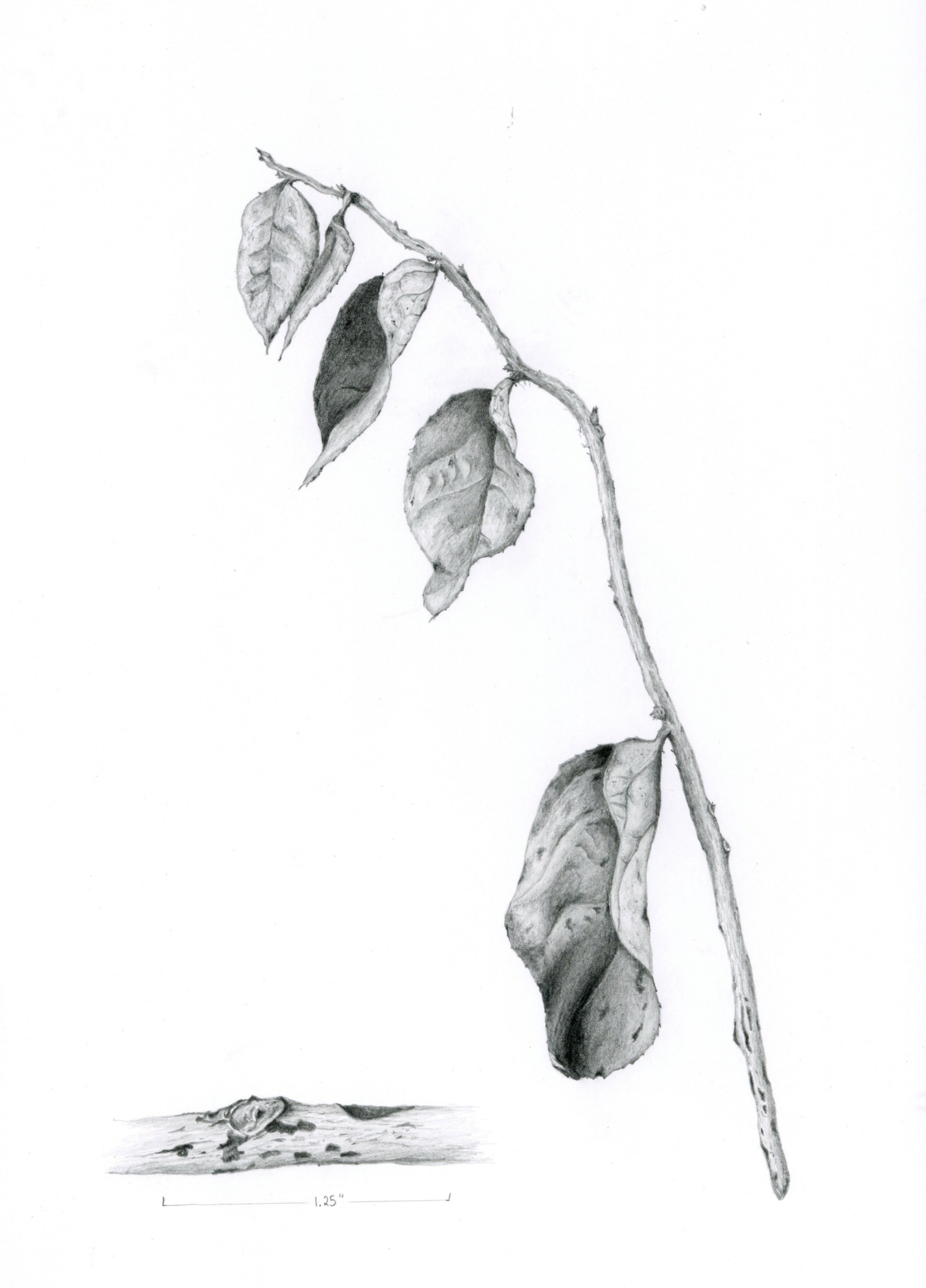
Image Credits
All photos by Tempra Board, except the photo of Tempra, is by David Yager.