



We were lucky to catch up with Teddy Giard recently and have shared our conversation below.
Teddy, appreciate you joining us today. So, let’s start with a hypothetical – what would you change about the educational system?
This article is intended to discuss my position on how modern-day business education should be conducted at a collegiate level:
It’s time to prioritize learning by reverse engineering. Our current educational systems, built on presenting minor concepts with little context, often fail to prepare students for the real world. We need a more practical approach that focuses on application-based learning. This shift will allow students to understand the big picture by working on real-world problems and projects, enlightening them about the current shortcomings in the education system.
Our goal in everything we do should instinctually be to obtain conceptual, transferable knowledge. There is no more significant waste of resources and bandwidth than having an abundance of knowledge that is incapable of being utilized. To do so, we have to gamify tasks and identify what we define as progress or, in this case, “the reward for applying your skills” and thinking big picture, “the desired outcome.”
Now, don’t get me wrong. If we were to teach a kindergartener algebra, things would backfire. We’ve all seen how the parents talk in “The Peanuts.”
But what is the root cause? For one, as we approach higher education, public universities prioritize their research criteria over the development of their students. Harsh? Until higher education changes, research will remain the backbone, likely unchanged until a significant drop in tuition starts to reflect on their bottom line revenue. We live in a modern area where information can be accessed at our fingertips, meaning research can outdo itself when it hits a textbook or is published online. So, are industry veterans teaching higher-level classes? Why is it a requirement to have a PhD to teach a college course? Why is quality of education a second-tier item on the agenda? I mean, we live in the digital age! You can read a textbook by someone who has analyzed product marketing for a living or watch a keynote speech by Steve Jobs on YouTube. Which perspective has more experience understanding how the intricate frameworks of business affect the big picture? Take it a step further. What if one of your professors was a retired executive, director, or high-level manager from a publicly traded company in the S&P 500? What if they were a commercial real estate investor who could’ve retired at 45? We’re talking business skills taught by businessmen and women, so where is the ROI for the knowledge we invest in? In short, if it’s not from a source that has lived the industry, it’s inapplicable and likely outdated. Where is the priority on the application of knowledge? We must inspire and motivate educators to bring real-world experience into the classroom.
First, we need to identify how we measure “success” in a modern-day scholastic environment. Our current grading system often serves as an arbitrary means to represent how capable somebody is of regurgitating information. This system incentivizes memorization over application. But what are we memorizing? Topics. It’s time to shift our focus. We need to assess students’ application skills and ability to use the information they’ve learned in real-world situations rather than memorize and regurgitate facts. The application of knowledge should be judged on our ability to obtain and transfer our skills or positions to a product, service, or trade capable of driving revenue. Think about it this way: when you’re assigned a job in corporate America, you either did the job or didn’t. From there, the job either yielded a profitable return or didn’t. Your value is quantifiable and measured as a pass or a fail.
Effective communication is not just a skill; it’s a necessity in our modern world. We live in an environment where information is accessible at our fingertips. So why are we still teaching information? We need to teach the application of information, the process of presenting information, the articulation of information, and, most importantly, the prompts you need to extract valuable information. The urgency and importance of this skill in the modern world cannot be overstated. We’ve all heard of AI… Let’s be honest; even if you didn’t want to hear about it, you still heard about it. It’s everywhere. Now, think about this: what must we do to get a viable response from an AI platform? We have to tell the platform what we want. Therefore, we need to be capable of articulating our expectations.
Tech can process trends, scrap databases for keywords, and merge information, but it still requires a prompt. And what does a good prompt require? An effective prompt requires the individual on the other side to articulate the desired outcome from the source. We are only as good as our ability to communicate our expectations, needs, desires, and discretionary benchmarks. We don’t need small-picture thinking; we need big-picture thinking. To understand how something works, we need to know how to articulate the value or framework of the topic, and to do that; we need to know how something is made. Now, how do you do that?
You may have wondered when I’d return to my reverse engineering topic, so here it is. When we reverse engineer, we take a product with the intended functionality and understand the intricate components that deliver the result. Once you have taken something apart, the hardest part is rebuilding it. That’s where the power of strategy and restructuring come into play. Suppose we’re taught to understand the big picture of how something can add value to our lives. In that case, the individual details have a purpose; we can seek to understand how the details work together, and most importantly, when disassembling and re-assembling, we can substitute processes and parts to improve things. In business, you make money through innovative products and effective marketing; both work in tangent to create the value you demand, deliver the utility, and effectively address the problem. Some companies like Chick-fil-A make their franchise owners work every job within a franchise before owning or operating one themselves. This poses the question, why are we not taught big to small, and why are our professors responsible for teaching us not required to have worked within the industries they are professing about?
A professor’s value should be equivalent to that of a high-level consultant. A consultant is engaged in providing expertise within a subject matter with the intent that the investment in that individual or group will yield a higher return for the company in the long term, either by saving them the cost of time invested in the wrong direction or the cost of undoing underperforming efforts. What if our professors were like consultants? What if our professors were real-world consultants with real-time industry experience? Would they be capable of helping us articulate our thoughts and present our findings and frameworks? Would they prepare us to engage with future employers, employees, or technology software? Most notably, would you understand topics better if you could comprehend the intricate correlation between the linear steps required to achieve a profitable outcome?
Imagine life as a racetrack with three trails leading to the finish line. If you had a map of the trails, would you feel more confident in strategizing your way to the finish line utilizing your acquired or God-given skillset? That’s the power of reverse engineering. There’s not one way to do something, but there’s always a way to do something better if you can identify the inherent need of the pre-desired product.
PS—Start grading students on their ability to present a solution to a real-world problem. The classroom should be viewed as a consulting session, not a lecture. Inspire those intrigued to seek, assist with areas they become stuck in, and lead the lost towards an area of work that further suits their desires and valued skillsets. Everybody who wants to provide value can do so; guiding somebody towards what they’re most valued at is priceless.

As always, we appreciate you sharing your insights and we’ve got a few more questions for you, but before we get to all of that can you take a minute to introduce yourself and give our readers some of your back background and context?
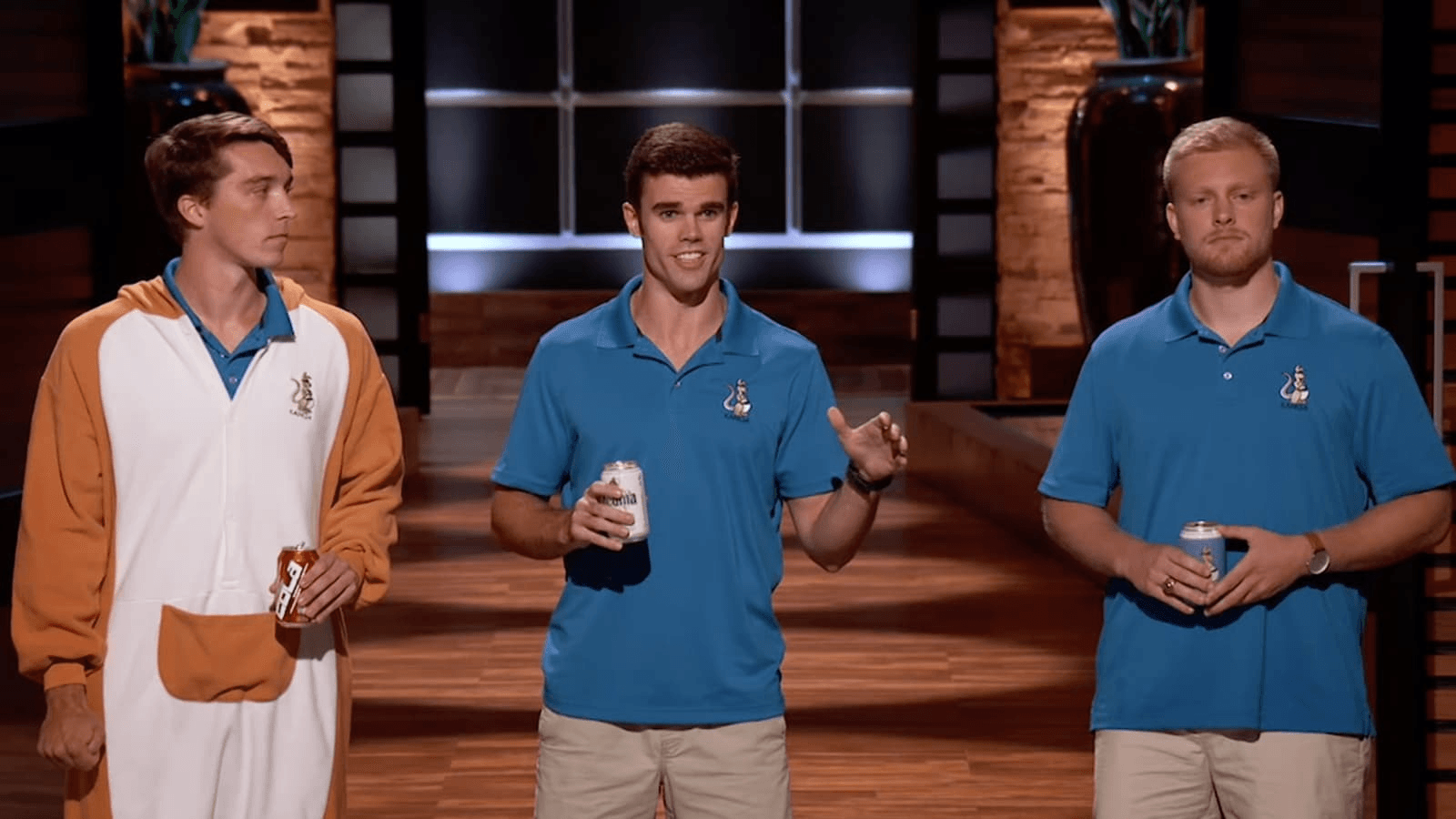
Teddy Giard is a highly accomplished lifestyle product and brand industry professional with a background in film production, brand strategy, and product development. At 19, in 2017, he co-founded Kanga Coolers, where he spearheaded the brand strategy and marketing efforts. Under his leadership, just three years into the business, Kanga Coolers generated over 110 million organic impressions in 2020, with direct-to-consumer (D2C) sales accounting for more than 60% of the company’s revenue. The company also made a successful appearance on ABC’s Shark Tank. It grew from $0 to $5 million in revenue within four years, laying a solid foundation for Teddy’s impactful career in the outdoor industry.
In his current role as the founder of Giard & Co., Teddy leverages his expertise to develop monetizable lifestyles for consumer brands within the outdoor lifestyle industry. He is on a mission to bring more brands into the market that support people, products, and philosophies with a moral compass.
Some homerun projects include the launch of Shift Robotics, which achieved 179 million organic impressions and $2.1 million in pre-order sales in just 45 days. This success was attained through organic social media engagement, global press coverage, and a campaign spotlighted by Business Insider. Giard has also assisted in capital raises, served as interim CMO for several multi-million dollar brands, and launched a few products to build his brand portfolio.
Teddy Giard has an ambitious 10-year vision that includes fostering a CPG venture accelerator in the Upstate of South Carolina, producing a Super Bowl commercial, fostering a portfolio of lifestyle brands on his own, and continuing to build innovative products that make life more enjoyable. His unwavering passion for creating products and brands that narrate unique stories drives his innovative and ambitious plans.
“Okay, that’s enough writing in the third person for one guy,” says Teddy with a chuckle.
Any advice for managing a team?
In my industry, everything starts with the mission and purpose. It may sound funny, but the people in your business must live the lifestyle you’re trying to promote. It can be easy to overlook, but if your employees don’t support or embody your values or vision for the world, it affects the products they bring to market.
Surround yourself with like-minded individuals who live a specific way, manifest growth, and actively pursue a life that makes them passionate. They’ll feed off each other, and your brand will begin to spread like wildfire. Like-minded people attract like-minded people, building a community that’s worth fostering and capable of being monetized.
What drives everybody is an innovative product that expresses your core beliefs and stands for what you believe in. People buy into your brand because of a shared purpose or world perspective. This shared purpose is not just a selling point; it’s the fuel that powers your brand’s success. In other words, they buy into the value you’re providing society, not just the utilitarian value of your products but the holistic value of your mission. If somebody isn’t a good fit, the best thing you can do for yourself, your business, and your other employees is to remove that individual. It may sound harsh, but you’re doing them a disservice by leading them on.
A brand must remember why it exists and that employees understand that they are there to ensure the brand lives on. When you foster a community, people want to do good work, take pride in what they do, and naturally come up with solutions to problems your community faces when pursuing the activities that embody your company culture.
Culture is everything. Hire slow, fire fast.


Alright – let’s talk about marketing or sales – do you have any fun stories about a risk you’ve taken or something else exciting on the sales and marketing side?
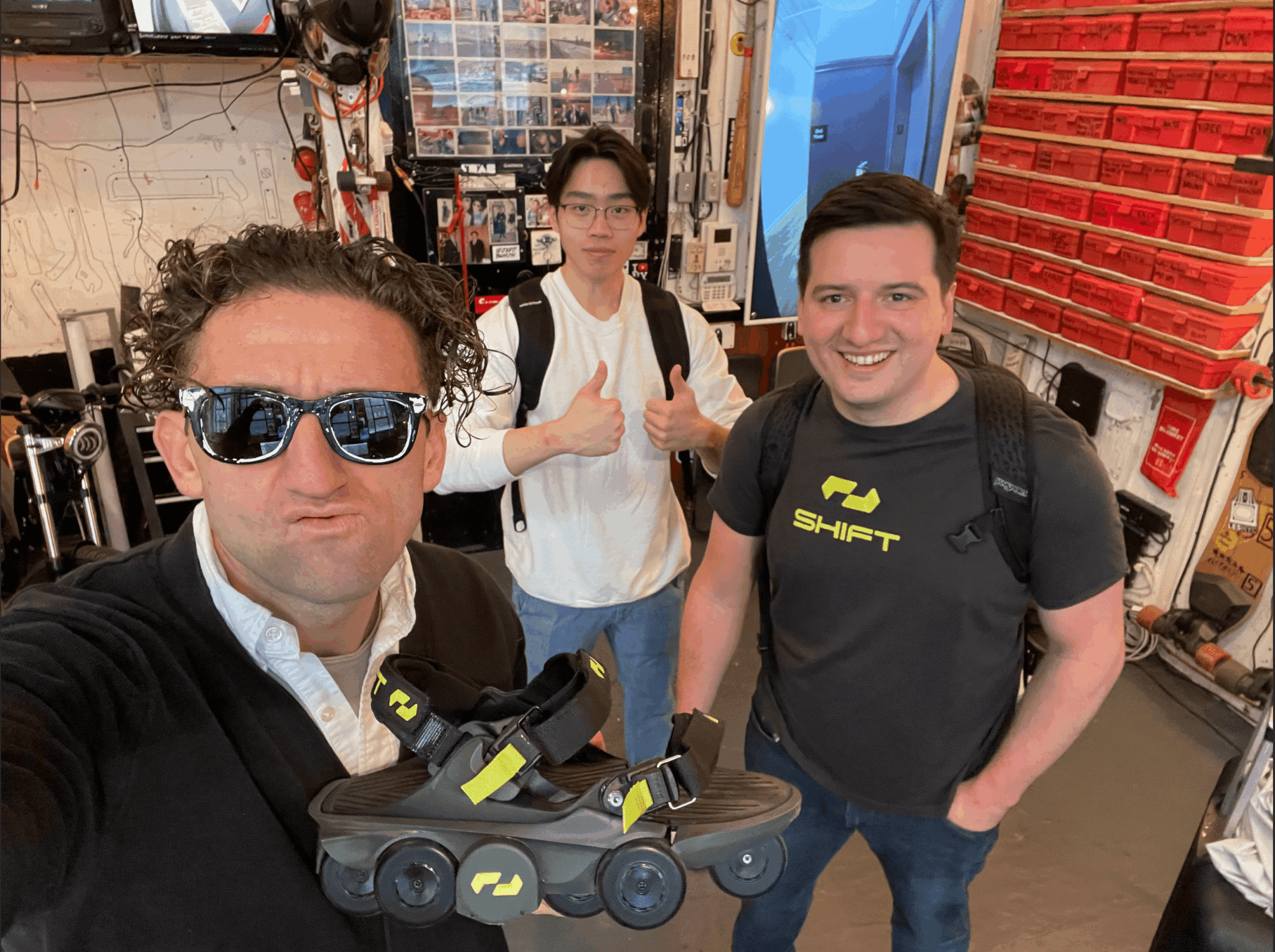
In 2023, we launched the world’s first AI-powered electric shoes. When we released the product, we had enough research and produced content to conduct what we had coined a “content blitzscale,” which has amassed several million views for other clients. However, in this case, the challenge was to convert this traffic into sales. We were selling electric shoes that you strap over your regular shoes. These shoes can propel you forward at speeds of up to 7 mph when you walk and stop when you stop. They function similarly to how a speed walkway at an airport does. Based on that description, this product is pretty wild to conceptualize, meaning we must educate just as much as we have to create value and sell.
To take it a step further, we also launched the product as a pre-order, so the only functioning pairs of shoes in the United States were in our possession for marketing material. We needed to sell at least a million dollars worth of shoes to get off the ground and rolling. We aimed to capitalize on any earned PR opportunities, and one of our biggest goals was to get a video by Casey Neistat.
We seized the opportunity when Casey tweeted that he wanted to try a pair of our shoes for a video. However, despite our efforts to get in touch, we are still awaiting a response. We decided to leverage our audience by waiting for someone in our comment section to suggest that Casey Neistat should make a video with the shoes. Once we found the comment, it was go time. We screenshotted the tweet he tagged us in, which also showcases our response, and added a caption overtop of the video that said: “Casey left the worlds fastest shoes on read: This generated significant attention, leading to Casey placing a pre-order for the product that night (insert shopify ding). We wanted to make the most of this opportunity, so we created an entire “Fast Track” program within 48 hours and shipped Casey a pair of prototype shoes, hoping to capitalize on the excitement from the conversation.
Truthfully, we had yet to determine if Casey would make a video, but we knew we could control his unboxing experience with the right strategy. So, without overthinking, our engineers ran to a hardware store to grab a bulletproof case and some spray paint to paint our logo on the cover. From there, we added a custom insert explaining to Casey that his order had been fast-tracked and included a QR code signed and endorsed by the CEO. The QR code led to an unlisted YouTube video with an AI voice-over addressing Casey by name and explaining why his order had been fast-tracked. From there, we highlighted product features and explained how he could use the shoes. One of the reasons we went through the effort of creating a custom video was we wanted Casey to use some of the marketing vocabulary (i.e., Keywords) when describing the product in his video, but we didn’t want to give him a product brief; this is his video, not ours. We’ve collected enough information from previous case studies to understand that consumers are prone to explaining products using the most simplified logic or use-case scenario. What this means is when asking a qualified user why they like your product, they are likely to tell you positive attributes about your products that come from the marketing material you’ve provided. Long story short, this was a great way to position our product and give an unboxing experience that would not only position what we made but hopefully create an exciting unboxing experience to capture on video.
The story gets pretty crazy. It’s one thing to have a video about your product, but another thing to have a video about your product when it’s not working correctly. The pair of shoes we sent to Casey malfunctioned in the middle of him filming the video. We had a weekly team meeting to discuss our next growth phase and campaign rollout when the CEO received a FaceTime call from Casey Neistat, telling him that the shoes were broken. We then hurriedly took our seven pairs of prototypes, rented a car, gathered all our mechanical engineers, and drove from Pittsburgh to Manhattan to hand-deliver new shoes and ensure the walking experience was up to speed (no pun intended). Casey was then able to execute the video. Once posted, the video received several million views and played a crucial role in our global PR efforts, helping us continue our rapid go-to-market campaign. This attention allowed us to receive over $2.1 million in pre-order sales to kick off the company’s first legitimate production run.
In summary, here’s how the campaign panned out.
1.) Initial Contact: Casey saw one of the early Shift Robotics teaser videos. He retweeted it, saying he wanted to review the shoes. Our team replied but got no response.
2.) Content Blitz: Our team launched a content blitz scale, generating as much top-of-funnel traffic as possible. I then responded to a comment someone left, requesting a review from Casey… with a screenshot of Casey’s original tweet, saying, “Casey left the world’s fastest shoes on read.” That did the trick.
3.) Creating an Experience: Casey placed a pre-order for the shoes that day. Our team then prepared a highly customized unboxing experience for Casey, complete with the CEO’s phone number and a QR code to a personalized video that could be watched only once before “self-destructing.” The self-destructing part made the whole video feel more exciting.
4.) FaceTime Follow-Up: Shortly after, while Casey and his team were filming the review, he had some technical issues with the shoes, so he FaceTimed the Shift Robotics CEO. We had a tight window to solve this, so they drove to fix the boots in person from Pittsburgh to New York.
5.) Global Reach: Casey made the video and had a great experience with the product. The launch campaign we created for Shift garnered 179 million organic impressions within 45 days of its launch. These impressions were generated solely through our social media channels, and this number does not even include the worldwide press and cross-promotion, including Casey’s video. As a result, we gained several hundred thousand followers on each social platform. This set the stage for improving our website traffic and funding the company’s first purchase order.
If you want to read a case study about the launch, you can access it here: https://giard.co/case_study/shift-robotics/
Contact Info:
- Website: https://www.giard.co
- Instagram: https://www.instagram.com/teddyg111/
- Linkedin: https://www.linkedin.com/in/teddygiard/
- Twitter: https://x.com/teddyg111
- Youtube: https://www.youtube.com/teddygiard

Image Credits
Aaron Greene