



We were lucky to catch up with Tara Jenkins recently and have shared our conversation below.
Tara, appreciate you joining us today. Can you share a story with us from back when you were an intern or apprentice? Maybe it’s a story that illustrates an important lesson you learned or maybe it’s a just a story that makes you laugh (or cry)?
As a music therapist in the dementia community, I often get to see the best of my clients. Music accompanies life both personally and culturally. It is one of the first things we can respond to in the womb and it is one of the last things we can respond to at the end of life. Engaging in music activates many areas in the brain including those associated with memory and emotion. It is the only sensory input that is processed in the brain simultaneously, and it can account for why people living with dementia will retain musical information longer and recall musical memories more clearly than non-musical ones.
After 4 years of coursework, music therapists have a 6-month internship before graduating and taking the board exam to obtain the MT-BC (Music Therapist Board Certified) credential. It was during my internship that I learned a very important lesson from one of my individual clients that still guides my work all these years later.
During my internship, I provided group and individual music therapy sessions in a long-term care community. Most of my individual clients were referrals from the activities director. These clients were typically socially isolated, physically unable to leave their rooms, or not interested in participating in group activities.
This particular client had several diagnoses, including dementia and vision impairment. Music therapy was recommended even though most other traditional methods of care and engagement had not been successful.
During our weekly visits, we developed a strong rapport and it was evident that music therapy was extremely beneficial. They loved Hank Williams-era country music and participated by listening, vocalizing, and playing handheld musical instruments. One day I walked in to greet my client and it was evident something had happened. They were frustrated, upset, and angry but were unable to express why. I tried to meet them in the moment and give verbal and musical support but on this particular day that was not enough. My client was so upset that at one point they threw musical instruments at me and asked me to leave. I respected their wishes, packed up, and left. As an intern, I was devastated. I felt like I had failed. I was nervous to see my client again and wasn’t even sure they would recall the incident.
Fast forward to the following week. I arrived, set up and greeted my client. We began to share music as if nothing had happened. All of a sudden, they stopped the music and said, “Before we go any further, I need to apologize.” They began to express how sorry they felt for taking out their anger on me and how I did not deserve to be treated that way. I was speechless and had to fight back tears. I could not believe that my client not only recalled the incident but felt that they had to address it with me. I was humbled and learned a very important lesson that day. Never again would I assume that my clients would not recall or remember something because of their diagnosis or limitations. I was determined to focus my work on celebrating their achievements and what they are still capable of instead of what they can no longer do.

Tara, before we move on to more of these sorts of questions, can you take some time to bring our readers up to speed on you and what you do?
I first became interested in music therapy in high school. I knew I wanted to go to college for music but was unsure of my specific major. I began to research music majors and came across music therapy. Using music to help people sounded like a great fit.
Essentially, music therapists use different aspects of music to achieve non-musical goals both in and outside of sessions. One of the things I love about music therapy is how individualized a session can be depending on the client. During my first year, it was clear that not only was music therapy a good fit, but I truly had a passion for it and more specifically working with older adults.
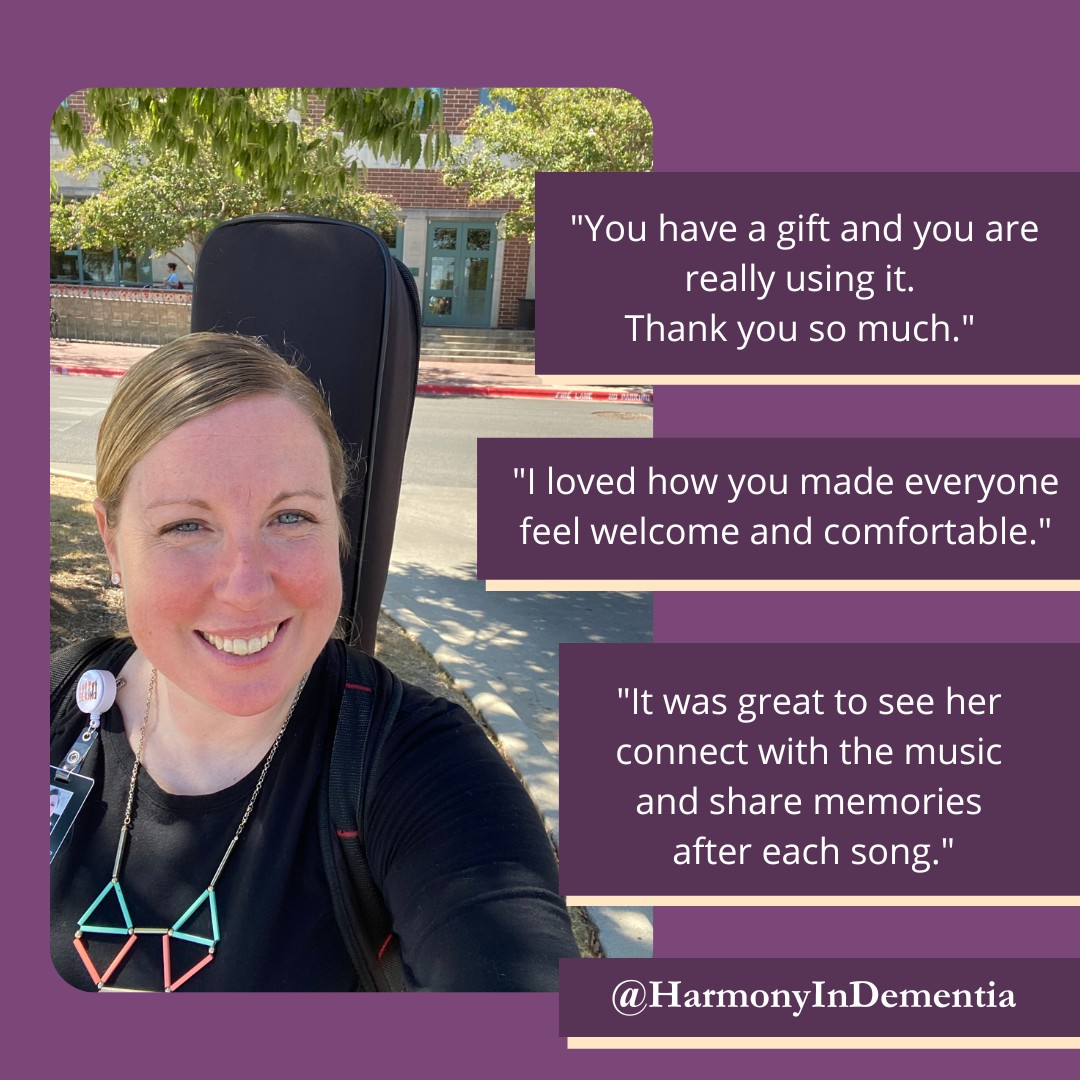
My private practice, Harmony in Dementia, provides customized music wellness workshops, group and individual music therapy services, and music consultation support to older adults, caregivers, professionals, and students.
I strive to build strong relationships, foster meaningful connections, and cater to my clients’ unique needs and interests. I have always been passionate about the importance of utilizing music with older adults. I am dedicated to supporting caregivers and professionals on how to engage in meaningful music experiences on a daily basis. I believe in the importance of accessing quality, creative, and meaningful music experiences.
My company was born from this belief and prides itself on:
• Advocating for the importance of music accessibility and education for caregivers and professionals
• Participating in creative musical caregiving experiences
• Delivering personalized care and support
• Designing workshops for individualized needs and preferences
• Sharing tips, tools, and resources to meaningfully engage people living with dementia
What distinguishes Harmony in Dementia is my person-directed care approach. I believe in treating everyone with dignity and respect, developing individualized care to meet the dynamic needs of those I serve, getting to know each person’s interests and preferences, encouraging in the moment connections, building meaningful relationships, and providing a safe and supportive environment. All of my services are customized to meet my clients’ unique needs and interests.
Services:
Music Wellness Workshops-
I believe that workshops should not be “one size fits all.” I strive to design a workshop that will support the participants and those they care for. All of my workshops are experience and research based. My main goal is to utilize music to meaningfully engage employees, professionals, caregivers, students, and those living with dementia.
Music Consultation Services-
My consultation services provide individualized support to make the most of music experiences. Here are some examples of how I can help.
• Assist with music listening programs
• Design efficient music preference documentation
• Create music preference playlists for older adults and their loved ones
• Strategize how best to utilize volunteer musicians
• Develop a music therapy program
Music Therapy Services-
Musical Memories (Group Services):
Music therapy groups for older adults with a multi-sensory approach to maximize participation. All groups utilize singing, moving, listening, and playing activities to support preferences within the group.
Together In Harmony (Individual Services):
Personalized individual music therapy for older adults. These sessions focus on the client’s needs, interests, and music preferences and can be customized in a variety of ways. All sessions will incorporate a multi-sensory approach based on what the individual connects with the most.
All services have the option to be in person or virtual depending on the client’s needs and location.
Other than training/knowledge, what do you think is most helpful for succeeding in your field?
For me, I think one of the most helpful skills is to foster relationships. I am constantly building rapport with my clients, their caregivers, and professionals. From the moment I get out of my car, I am smiling and saying hello to the person at the front desk, chatting with residents in the hallway on the way to my session, greeting and asking for help from staff, and engaging with my clients and their family and friends (if they are present). Building relationships takes time and effort but it is absolutely worth it. When I am walking in with all of my instruments someone from maintenance recognizes me and offers to help with my bags or I may need to ask for assistance from a staff member to help support a client who is having a challenging moment during my session. Recalling client names and their personal stories helps support those individuals when they are trying to connect with one another and the music. The stronger these relationships are the better I can advocate for and support my clients as well as everyone I interact with on a daily basis.
Have you ever had to pivot?
When I first started my private practice, it was out of necessity. I was working at a job that was starting to affect my mental and physical health. I am a planner and had never left a job without something else lined up. This time, I put in my notice and thought, “Now what?” It was time to pivot into unknown territory; owning my own business.
I was terrified and had no experience running a business but I figured it was worth it to give it a try. I was fortunate to have a support system of friends, family, and colleagues who helped during this transition. It was overwhelming and scary, but also exhilarating. I loved the autonomy, being able to create my own schedule, deciding who I worked with, defining what I stood for, and focusing on how best to represent myself in the dementia community.
Contact Info:
- Website: www.harmonyindementia.com
- Instagram: @HarmonyInDementia
- Facebook: www.facebook.com/HarmonyInDementia/
- Linkedin: www.linkedin.com/company/harmony-in-dementia/
- Youtube: @HarmonyInDementia