


We were lucky to catch up with Tamara Olmedo recently and have shared our conversation below.
Hi Tamara, thanks for joining us today. What’s the backstory behind how you came up with the idea for your business?
I can’t even remember when I first fell in love with the idea of opening a bookstore, but I know they were always a place of solace for me. In my mid-thirties, I remember feeling lost and unfulfilled by the jobs I kept getting, and anytime someone asked me what I wanted to do, what I was good at or loved, I would always say books. That’s what I knew, it’s what I gravitated towards, but it was just a thing, not a fully fleshed out plan or even a career. From living in New York and having to commute, I learned to always carry a book, or two in case the first one ended. This is something that stuck with me, and deepened after I had my son. I just hadn’t been that aware of the constant presence of books. It was a silent companion.
When the pandemic hit, I remember reading a book that stayed with me. It was the first time I had read a book by an Afro Latina and I recognized the characters. I recognized their personalities and their stories, even though the novel was a young adult novel about a teen mother and I wasn’t a teen or a teen mother during the pandemic. The story resonated because I had known many teen mothers, many Latina teen moms who had never been portrayed in such a dignified way. The character of Emoni was given grace and a story, and I feel in love with reading as a way to connect and empathize, but I also realized that there were stories out there that painted a different picture. I thought about how amazing it would have been for the teen mothers that I grew up with to see a character that was strong, and had dreams, and wasn’t a sob story about struggle. I started to research more books by Acevedo and other Latino authors, and then more BIPOC authors and came across these rich stories that talked about identity, life, spirituality, love, all from a non-Anglo perspective, and I understood the importance of representation in literature. Here I was in my 30s, and it was the first time that I felt connected to books in a way that I hadn’t before, because there was always a level of separation between me and the characters on the page. I felt seen. I was so inspired that I went back to school to pursue a degree in English, exploring creative writing as an outlet.
While writing is not my main focus, I began to entertain the idea of opening a bookstore. At first it seemed far fetched, so I broke it down into steps. I researched what it would take to open a bookstore. I signed up for a foundations business class and tossed the idea around. More than anything, I started to engage in conversation with out BIPOC and even non-BIPOC individuals who could acknowledge the lack of attention that BIPOC authors often get compared to white authors. So it began. I sat with my friend Cristina one night talking about our dream about owning a bookstore and the ways that we wanted to diversify bookshelves in literary spaces and the rest is history. While we haven’t gotten to the point where a brick and mortar space is possible, we are getting ready to launch our first pop-up event in collaboration with a coffee shop and we’ll be offering not just books written by BIPOC authors, but also bilingual books to make Spanish language books available to our community. We are intentionally creating a space that highlights BIPOC and BIPOC LGBTQIA+ authors, letting people in the community know that they can find rich stories all year round, without having to wait for a small table on a specific month, to stories with new perspectives, new experiences, and cultural richness. The pop-up style makes it possible for us to collaborate with small businesses and travel with our books to reach different audiences as well.
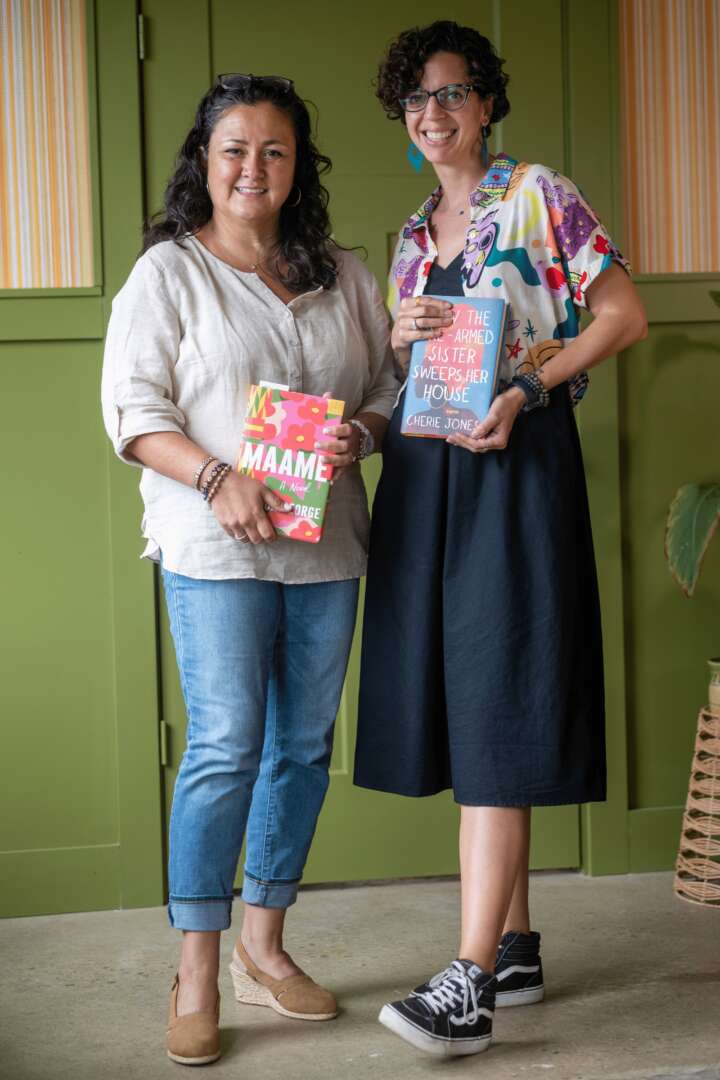
Tamara, before we move on to more of these sorts of questions, can you take some time to bring our readers up to speed on you and what you do?
I am a Latina from Bronx, New York and when I moved to the mountains of Asheville, NC in 2010 it was a huge culture shock to me because it lacked the diversity that I was used to. Finding a sense of belonging was difficult. However, I found some connection and community through nonprofit working, particularly working with Latino and other BIPOC groups. Being bilingual in a small city was a huge advantage because it bridged the language barrier and also helped me to learn about the experiences of Latinos in rural areas.
While I continue to work in nonprofit, the shift to small business owner has been exciting. My background in nonprofit has definitely informed my approach to business. I have more awareness about factors that can affect both literacy and access to books. I also understand the economic constraints of certain populations where I live. For example, because I know that the cost of living has risen drastically, and I know that books are not always a priority, it is important for Cristina and I to offer used books that are affordable. We want to ensure that in the future, we offer programming for our Spanish speaking customers, and we want to partner with BIPOC owned establishments to continue to show our support in other ways.
The thing that I’m most proud of is our commitment to learning, but also to being respectful of others’ nationalities, ethnicities, and cultures, and sexual orientations. We are committed to uplifting and celebrating so that we can build new connections and bring communities together.
Can you open up about how you funded your business?
Cristina and I knew from the start that we didn’t want to take out any loans for our initial capital. We wanted the space to explore what a pop-up bookstore would look like without the pressure that comes with needing to meet certain quotes or numbers in order to cover a loan payment so got scrappy. We each put in the initial $250 for paperwork and other small tasks and then we turned to our community. We crowd funded for our initial inventory to cover the cost of our first upcoming event. We started with a lofty amount as a goal, which would be nice, but we also knew that we could start this thing with less. We spread the word and while it doesn’t seem like much, within our first 5 days, we had $1,500 of the $2,000 we needed for the first orders.
Have any books or other resources had a big impact on you?
The biggest resource for us was taking the Business course that helped us create our initial business plan. I went into that class nervous because all we had was an idea, a concept and not much more, However, the class walked us through all the major components, and we were able to do so with the support of classmates. Being a part of that groups was so important because we hyped each other up and gave each other tangible and usable feedback. My recommendation for anyone would be to find a business class or workshop at their local small business center or online. It’s the best way to see if the idea is viable or not, without having to invest too much.
Contact Info:
- Website: https://cuentosycafe.com
- Instagram: @cuentosycafebooks
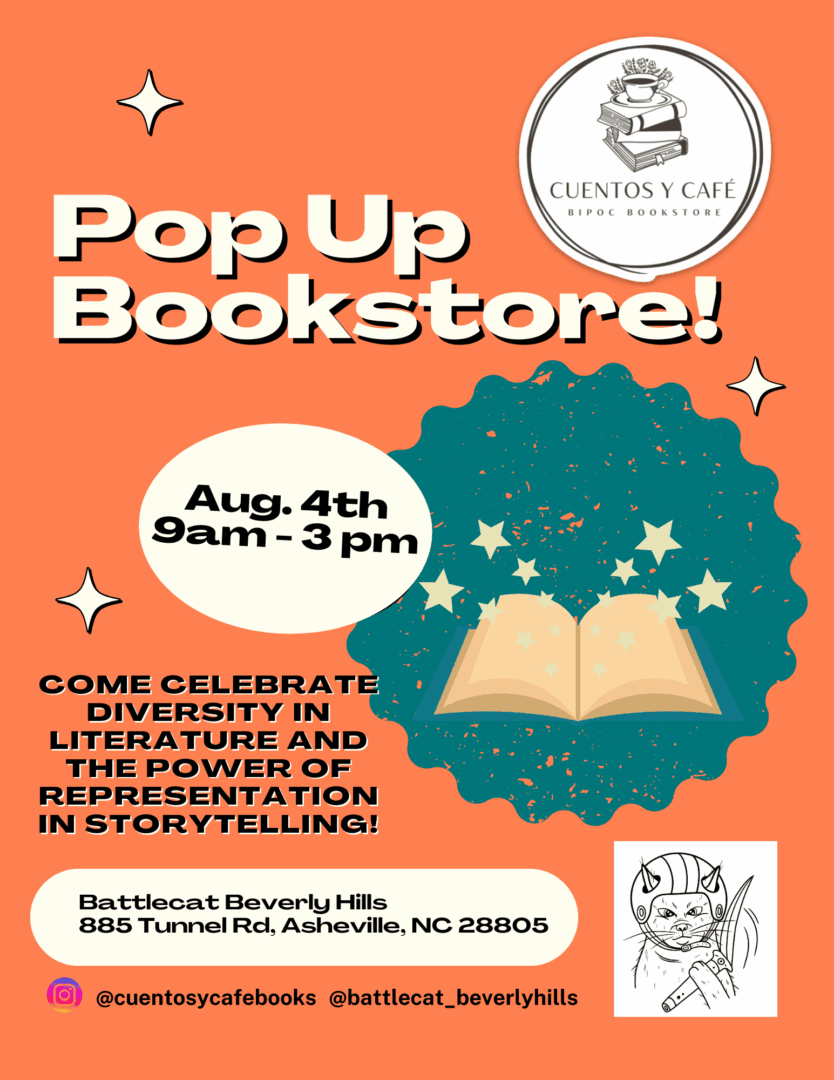
Image Credits
Photos by Julio Tordoya at JMPRO