


Alright – so today we’ve got the honor of introducing you to Susmit Sen. We think you’ll enjoy our conversation, we’ve shared it below.
Alright, Susmit thanks for taking the time to share your stories and insights with us today. Can you recount a story of an unexpected problem you’ve faced along the way?
One of the most unexpected challenges in my professional journey wasn’t technical—it was human.
Early in my leadership phase, I was leading a high-impact data transformation initiative. On paper, everything was aligned: we had the right architecture, a capable team, and strong executive sponsorship. But within weeks, progress started slowing in ways that didn’t make immediate sense. Deliverables were slipping, meetings felt performative, and there was a subtle but growing disconnect across teams.
What I hadn’t anticipated was the depth of silent resistance.
The initiative required standardizing data practices across multiple business units. While leadership supported it, at an operational level, teams felt they were losing control—of “their” data, their processes, and in some cases, their influence. No one openly pushed back, but the resistance showed up in delays, partial adoption, and quiet misalignment.
At that moment, it was frustrating—and honestly, confusing. From a purely logical standpoint, the solution was clearly beneficial. But that was the turning point where I realized: transformation is rarely blocked by technology; it’s blocked by psychology.
Instead of pushing harder on execution, I shifted focus entirely.
I started engaging teams in smaller, more personal conversations—not to convince them, but to understand their concerns. I reframed the initiative, not as “centralization,” but as “enablement.” We introduced co-ownership models, where business units retained visibility and influence while benefiting from standardized systems. I also identified informal influencers within teams and brought them into the design process early.
One unconventional step I took was pausing parts of the rollout temporarily. That felt counterintuitive under delivery pressure, but it created space to rebuild trust and alignment. We also made quick, visible wins a priority—demonstrating value in weeks, not months.
The shift was gradual but powerful. Resistance turned into participation, and eventually into advocacy. What initially looked like a delivery problem became a culture-building opportunity.
Looking back, that experience fundamentally changed how I approach leadership. I became far more intentional about stakeholder alignment, change management, and communication—especially in data and AI initiatives where impact cuts across functions.
If I had to summarize the lesson: the most unexpected problems are often not the ones you can debug—they’re the ones you have to understand. And solving them requires empathy as much as expertise.
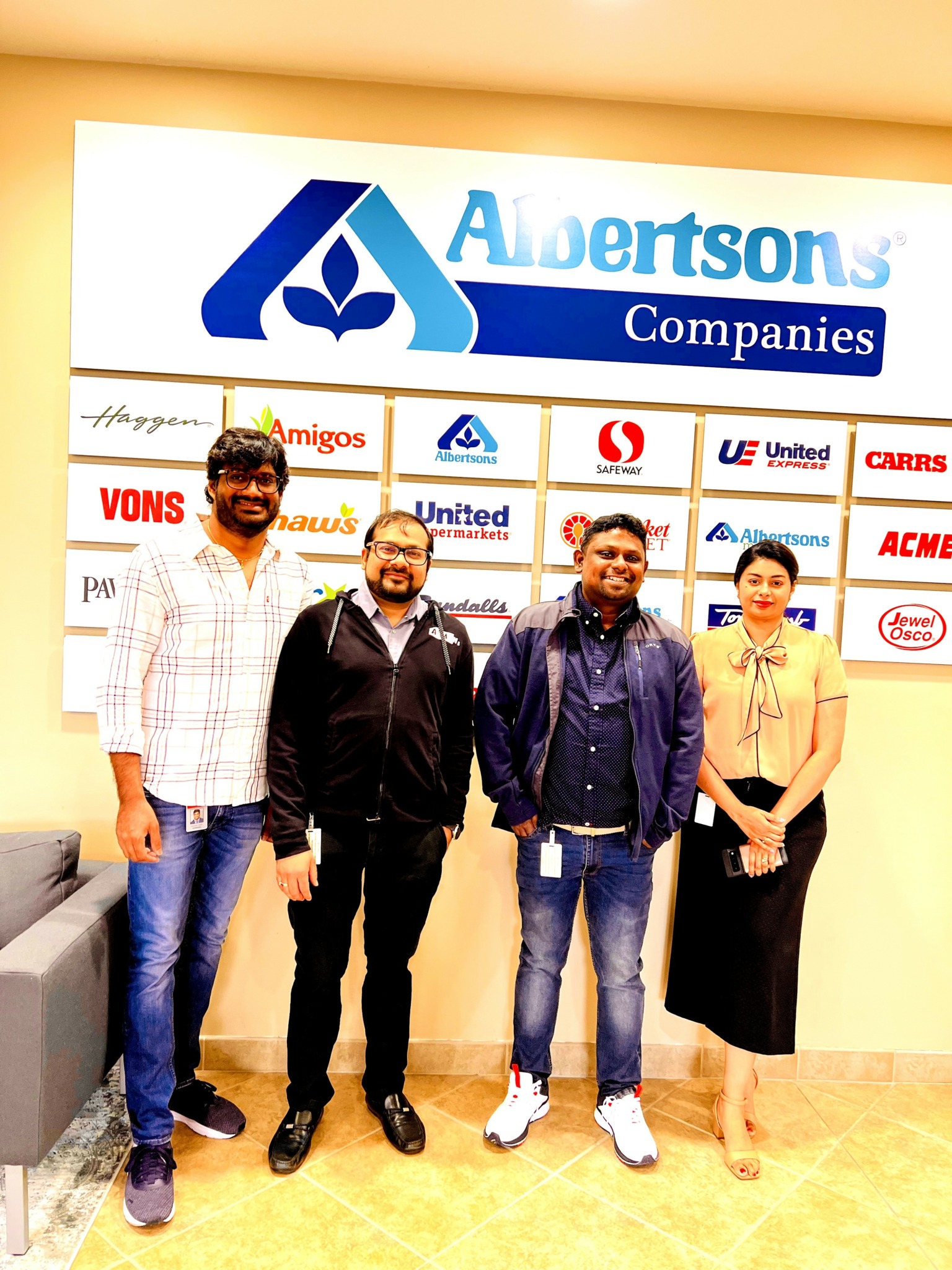
Susmit, love having you share your insights with us. Before we ask you more questions, maybe you can take a moment to introduce yourself to our readers who might have missed our earlier conversations?
I’m a data and AI leader by profession, but at my core, I’ve always been driven by curiosity—understanding how complex systems work, and more importantly, how they can be improved to create meaningful impact.
My journey into this space wasn’t accidental. It evolved at the intersection of technology, business, and problem-solving. Early in my career, I realized that data wasn’t just a byproduct of systems—it was the foundation for decision-making, innovation, and competitive advantage. That realization drew me deeper into the world of data governance, data quality, and ultimately AI-driven transformation. I have worked in various data driven organizations like IBM, Cognizant, Tata Consultancy Services , Wipro to Pacific Coast Banker’s Bank, Albertsons, Vale Base Metals etc both as a consultant and as client myself.
Over the years, I’ve worked across industries leading large-scale data and AI initiatives—helping organizations move from fragmented, reactive data environments to structured, intelligent, and value-driven ecosystems. My work primarily focuses on building data strategies, implementing governance frameworks, improving data quality, and enabling AI adoption in a way that is both scalable and responsible.
At a practical level, I help organizations solve some of their most pressing challenges:
Lack of trust in data due to poor quality and inconsistent definitions
Disconnected systems that prevent a unified view of the business
Difficulty in scaling AI initiatives beyond experimentation
Misalignment between business goals and data/technology investments
What sets my approach apart is that I don’t treat data as just a technical problem—I treat it as a business and cultural transformation. Technology is only one part of the equation; alignment, ownership, and mindset are equally critical. I focus heavily on bridging the gap between technical teams and business stakeholders, ensuring that solutions are not only built well but also adopted and sustained.
Another differentiator is my emphasis on execution. Strategy is important, but I strongly believe that value is realized only when strategy translates into measurable outcomes. I prioritize building frameworks and solutions that are practical, scalable, and tailored to the organization’s maturity rather than overly theoretical.
One of the things I’m most proud of is the ability to influence transformation at both strategic and operational levels—whether it’s shaping enterprise-wide data strategies or mentoring teams to think differently about data and AI. I take particular pride in building teams and cultures that continue to deliver long after the initial implementation.
Beyond my core work, I actively contribute to thought leadership—sharing insights on data, AI, and digital transformation through articles, speaking engagements, and industry collaborations. For me, it’s important not just to practice in the field, but also to contribute to how the field evolves.
If there’s one thing I’d want people to know about me and my work, it’s this: I’m deeply committed to turning complexity into clarity. In a world overwhelmed by data and emerging technologies, my focus is on helping organizations cut through the noise, make confident decisions, and build systems that are not just intelligent—but truly impactful.
We’d love to hear a story of resilience from your journey.
Early in my leadership journey, I made a decision that looked absolutely right on paper—and almost failed in reality.
We were building a high-performing data team from scratch, and I was under pressure to deliver fast. So I did what most leaders would do: I hired some of the most technically brilliant people I could find. Strong résumés, deep expertise, impressive problem-solvers.
Individually, they were exceptional.
Together, they struggled.
Progress slowed, collaboration felt forced, and instead of momentum, there was friction. Everyone had strong opinions, but alignment was missing. Meetings became debates, decisions took longer, and ownership started to blur.
At first, I treated it like a process problem—more structure, clearer roles, tighter governance. But nothing really changed.
That’s when it hit me: I had optimized for intelligence, not cohesion.
The uncomfortable truth was that I had built a team of experts—but not a team.
Fixing that wasn’t easy, because it meant going beyond systems and confronting dynamics. I had to reset expectations, redefine what “high performance” meant, and have some very direct conversations—about collaboration, not just capability.
We introduced shared accountability instead of individual silos. I started rewarding alignment and team outcomes, not just individual brilliance. And in a few cases, I had to make tough calls where the fit just wasn’t right—even if the talent was undeniable.
It was slow. And at times, it felt like we were stepping back.
But over time, something shifted. The same group of people who once pulled in different directions started building on each other’s ideas. Decisions got faster. Trust replaced friction.
That experience stayed with me.
Because it taught me that raw talent doesn’t build momentum—alignment does. And sometimes, the hardest leadership decisions aren’t about hiring the best people, but about building the right team.
Resilience, in that phase, wasn’t about pushing harder.
It was about admitting that the original approach—despite looking perfect—needed to be rethought, and having the discipline to rebuild it properly.

Learning and unlearning are both critical parts of growth – can you share a story of a time when you had to unlearn a lesson?
One of the hardest lessons I had to unlearn was this: “If I work harder and get deeper into the problem, I can fix anything.”
That belief served me well early in my career. I built a reputation for diving into complexity, solving tough problems, and delivering results under pressure.
But at one point, that strength became a limitation.
I was leading a critical initiative, and things started slipping—timelines, quality, alignment. My instinct was immediate: go deeper. I got heavily involved in the details, reviewed everything, stepped into problem areas, and started driving solutions myself.
In the short term, it worked. Issues got resolved faster.
But something else started happening.
The team became quieter. Decisions began flowing through me. People waited instead of acting. Without realizing it, I had become the bottleneck.
The turning point came when a senior team member said something simple but uncomfortable: “We’re moving faster when you’re in everything—but we’re not growing.”
That stayed with me.
I realized I hadn’t built a scalable system—I had built dependency around myself.
Unlearning that was difficult. It meant stepping back when my instinct was to step in. It meant allowing space for others to struggle, decide, and even fail. It meant shifting from being the problem-solver to being the enabler.
I started focusing on clarity instead of control—clear ownership, clear expectations, and trust in execution. Instead of giving answers, I asked better questions. Instead of fixing problems, I made sure the team could.
Over time, the shift was visible. Decisions sped up—not because I was driving them, but because I wasn’t. The team became more confident, more accountable, and far more effective than when I was at the center of everything.
That experience fundamentally changed my leadership style.
Because sometimes, the biggest growth doesn’t come from what you learn—it comes from what you’re willing to let go of.
Contact Info:
- Linkedin: https://www.linkedin.com/in/susmit/