
Alright – so today we’ve got the honor of introducing you to Suneet Bhatt. We think you’ll enjoy our conversation, we’ve shared it below.
Suneet, appreciate you joining us today. So, let’s start with a hypothetical – what would you change about the educational system?
I love this question, because what I would change about the education system is what I am currently changing about the education system as a “Professor of Purpose” at Rutgers University.
Our greatest responsibility to the next generation is to equip them with a greater level of self-awareness, worth and value, so they feel confident standing atop the two major technological transformations that will underpin their lives: interconnectedness, which has made the world smaller, and augmented intelligence, through the evolution of AI, which will has the ability to make us all smarter, more productive, and more capable of realizing our grandest dreams. The work we’re doing at Rutgers University is at the forefront of embracing that responsibility.
Why is this our most important work?
For my entire life, 49 years, we have focused on making human beings more like machines. Increasing productivity and efficiency. Forcing visibility, discipline, accountability. Stacking work on top of people at increasingly alarming lates, while tricking them into taking less personal time (BYOD for 24/7 connectivity, unlimited PTO leading to less PTO being taken) and giving very little of a damn about employee health and engagement (look at Gallup’s Employee Engagement survey as far back as it will take you — 50% of people remain apathetic about work for as long as the survey has run).
The saving grace of this push to productivity is that there was always work to be done that didn’t require you to love it; it simply required you to tend to it and do it.
The acceleration of globalization, of digital connectivity and capability, and now, the emergence of AI with almost day-to-day practical use cases (and more arriving faster than we can fathom) has changed what it means, what is required, and what is possible of people at work.
For the first time in my life, the conversation has shifted from making human beings more like machines, to making machines, more like human beings.
It is our humanity that is being called upon and elevated on one hand; and with so much “work” being taken away, there’s also fewer and fewer places to hide behind meaningless, transactional work.
This has been in flight for my entire professional career. In 1999, Art Ryan, Prudential’s then CEO who was leading the company through demutualization, spoke to a handful of young leaders at the company and what stood out to me and sticks with me to this day was his absolute clarity that the days of a long-term employer / employee relationship is behind us.
“Every hiring relationship is a short-term contract now. 1 year. 3 years. 5 years. Where both sides agree to the work and acknowledge that at some point, this may no longer be a mutual fit. At which point one or both sides will opt out.”
That was prescient. Genius. And I went from being skeptical of that comment as a new hire, after watching my Dad slave away at one company for 40+ years and get nothing but an acrylic award for his time, to being a staunch believer in the model, to ultimately, as an Executive, feeling responsible for the people who I invited into that relationship as my team members and employees.
Right now, that contract isn’t fairly negotiated. Organizations have all the leverage because they spend their time and essence building out job descriptions and deciding what they need in service of what they are trying to do. And more often than not, if the organization makes a mistake, they correct without repercussion. How often an organization changes its job descriptions, switches out its employees, is significantly less impactful to its reputation than how often an individual changes jobs for the same reasons.
That is the gap, the void, the space that the education system needs to fix. It’s equipped to do so; it just isn’t motivated or rewarded for doing so in the moment as a system. There are plenty of educators and good actors fighting the good fight but systemically, it hasn’t been prioritized.
Or, at least, hadn’t been prioritized until October 1, 2024 when Rutgers University School of Arts and Sciences (which captures a super majority of the students at Rutgers University’s largest campus in New Brunswick, NJ) put this into their 5 year Strategic Plan:
GOAL 1: Advance the success of our students while they are at Rutgers and into their futures
A. Adapt to changes in how students learn and prepare for their futures
Maximizing student and alumni success requires focusing on pedagogy as well as access to professionalization resources such as internship opportunities, career guidance, and alumni networks to facilitate negotiation of professional paths and lifelong learning. SAS major and minor programs must adapt to the new realities of shifting demographics, job markets, and technologies.
Strategies
Support students in discovering their purpose and defining how they see success in their professional careers by fostering the development of durable and critical thinking skills. Expand existing course opportunities (including those in partnership with campus-level offices) and student-led mentoring; and update program-level learning goals to include these skills.
…….
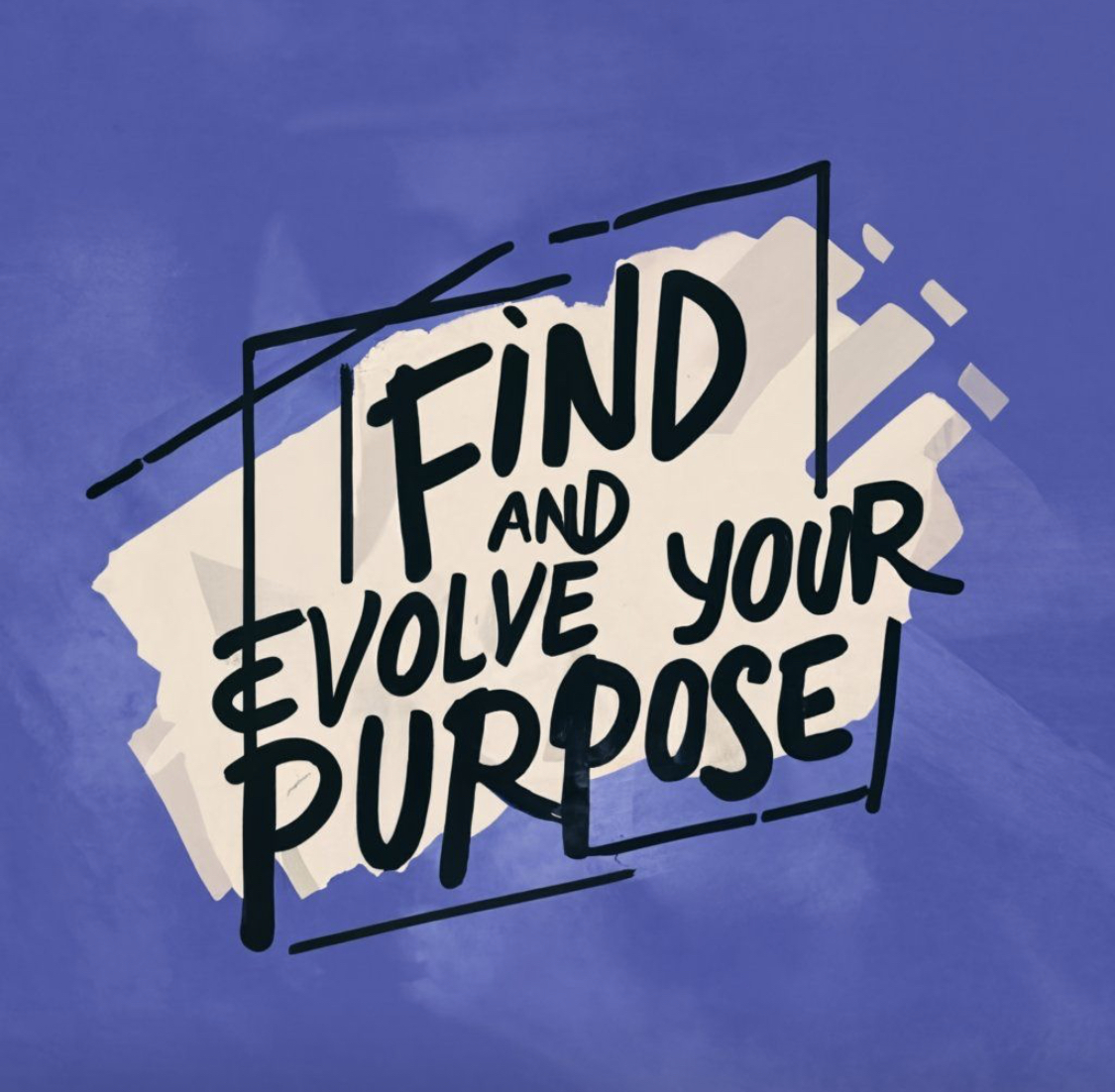
Since the Fall of 2022, I have been teaching a class titled “Find and Evolve your Purpose” at Rutgers University. It was built on my approach to management as an Executive (first), then my work as an Executive Coach (next).
After working with incredibly successful people who kept raising their hands due to some mid or late life crisis (the eldest person I worked with was 67, successfully exited 2 companies, raising a proud family with deep personal connections) — I asked myself: “How much happiness, goodwill, productivity — how much joy are we wasting by not teaching people about their unique value and purpose until their faced with a mid-life crisis? What if we equipped people with these tools when they were 18, 19, 20, 21? And what if we were ok with them not fully grasping the power of this knowledge until later in life, and instead took solace in the fact that what we were teaching would click in the moment, down the line, when they needed it most?”
I codified my framework on Purpose into a curriculum that’s now a highly reviewed and celebrated course at Rutgers. And when the Strategic Planning Committee was looking for inspiration for its 5-year plan, it turned to my syllabus.
And then, codified it.
The greatest responsibility we have to this generation is to acknowledge the environment we’ve created for them, and then, to spend the rest of our days equipping them with the self-awareness and self-worth to break through the anxiety they feel and instead harness and direct the humanity they have.
This generation … is smarter, more diverse, more inclusive, more empathetic, more self-aware … than I am and ever have been on my best days.
They are also more anxious.
Anxiety = Fear + Uncertainty.
It is our responsibility to help them relegate that fear by helping them gain clarity and confidence in who they are, so they feel equipped and unleashed to take on this next phase of human progress.

Awesome – so before we get into the rest of our questions, can you briefly introduce yourself to our readers.
In 2019, a company where I was Board Chair asked me to step-in as President. They had just lost their biggest customer, were struggling with making payroll, tough times.
Never fear. Before we could process that sucker punch, COVID hit and we lost an additional 35% of our customer base overnight.
For 25 years I’d helped companies fight through these moments of intense, urgent transition. We got to work. I didn’t sleep for more than two hours straight for months.
With discipline, accountability and execution we went from “why us” to “wow us” and 10x’d revenue and 6x’d headcount as a result. It took 2.5 years to turn things around; it also took 10 years off of my life.
Why was this part of the work always so hard?
Every success. Every failure. At work. With a passion project. Always came down to discipline, accountability and execution. Sure.
It also came down to how you embraced, equipped and unleashed the people around you.
When I realized that what mattered most to me was helping people achieve their best, knowing all the other bests would follow, it was like getting the words to a song I’d loved for years but kept singing incorrectly.
So the lyrics aren’t “Hold me closer Tony Danza?”
Today I spend all of my professional time helping people and organizations get unstuck, find their purpose and reach their potential. I do what I love so the people I love get the best of my love; and not a tired and frustrated soul taking his work frustrations out on them and their daily grind.
Do you have any stories of times when you almost missed payroll or any other near death experiences for your business?
This is the story and it’s my biggest pride when it comes to pure operational execution: https://boldrimpact.com/learn/when-a-pandemic-teaches-you-what-you-really-need
Can you share a story from your journey that illustrates your resilience?
The same story above, with all sincerity: https://boldrimpact.com/learn/when-a-pandemic-teaches-you-what-you-really-need
(NOTE: I see this as your intake and I’m happy to expand upon / retell that story above now that there’s space from it. But the principles are still true and I see it as a crisis playbook I’d like to teach a full class on.)
Contact Info:
- Website: https://www.myauthenticstory.com
- Linkedin: https://www.linkedin.com/in/suneetbhatt/