

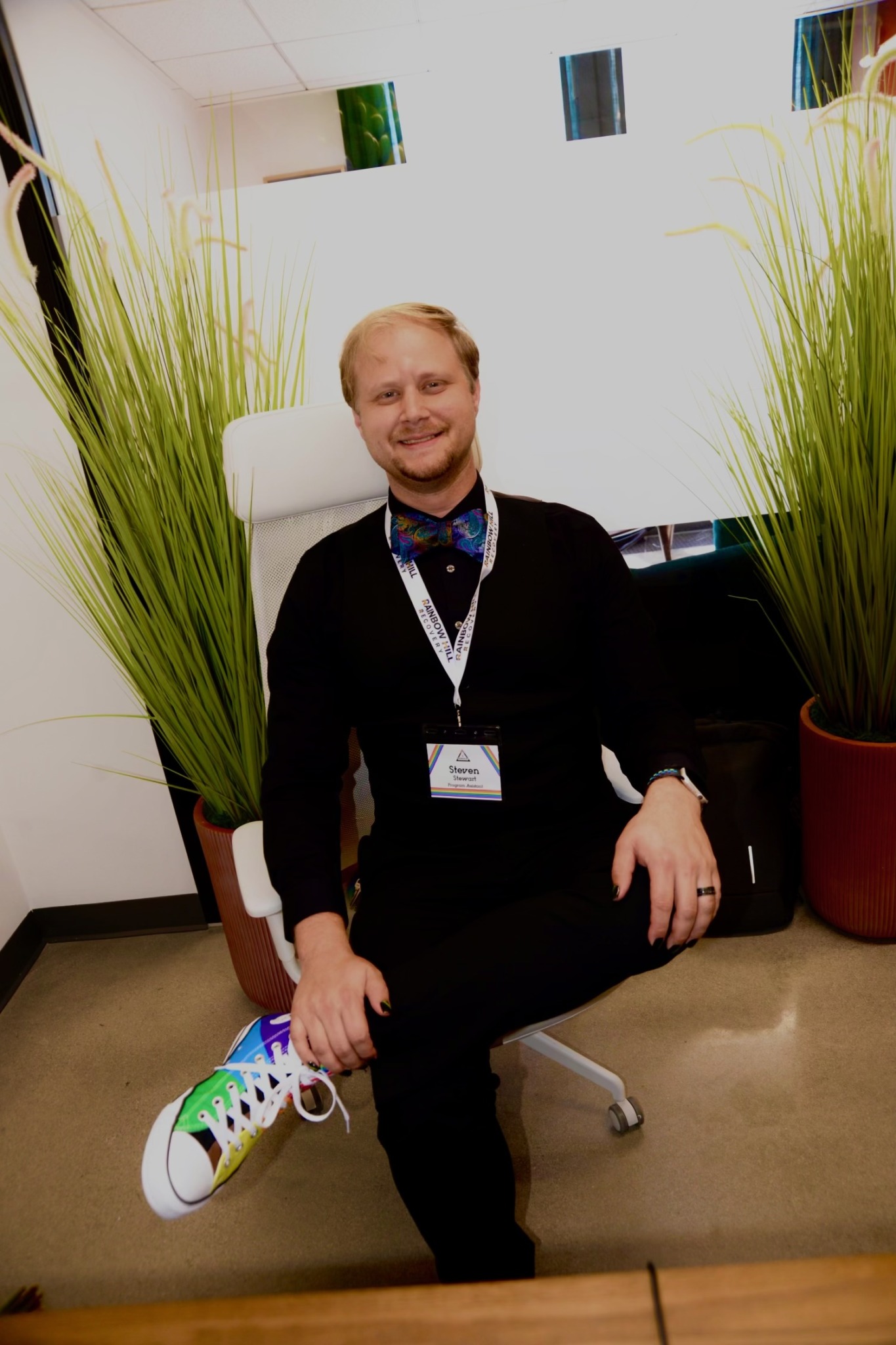

We’re excited to introduce you to the always interesting and insightful Steven Stewart. We hope you’ll enjoy our conversation with Steven below.
Steven, thanks for taking the time to share your stories with us today How’s you first get into your field – what was your first job in this field?
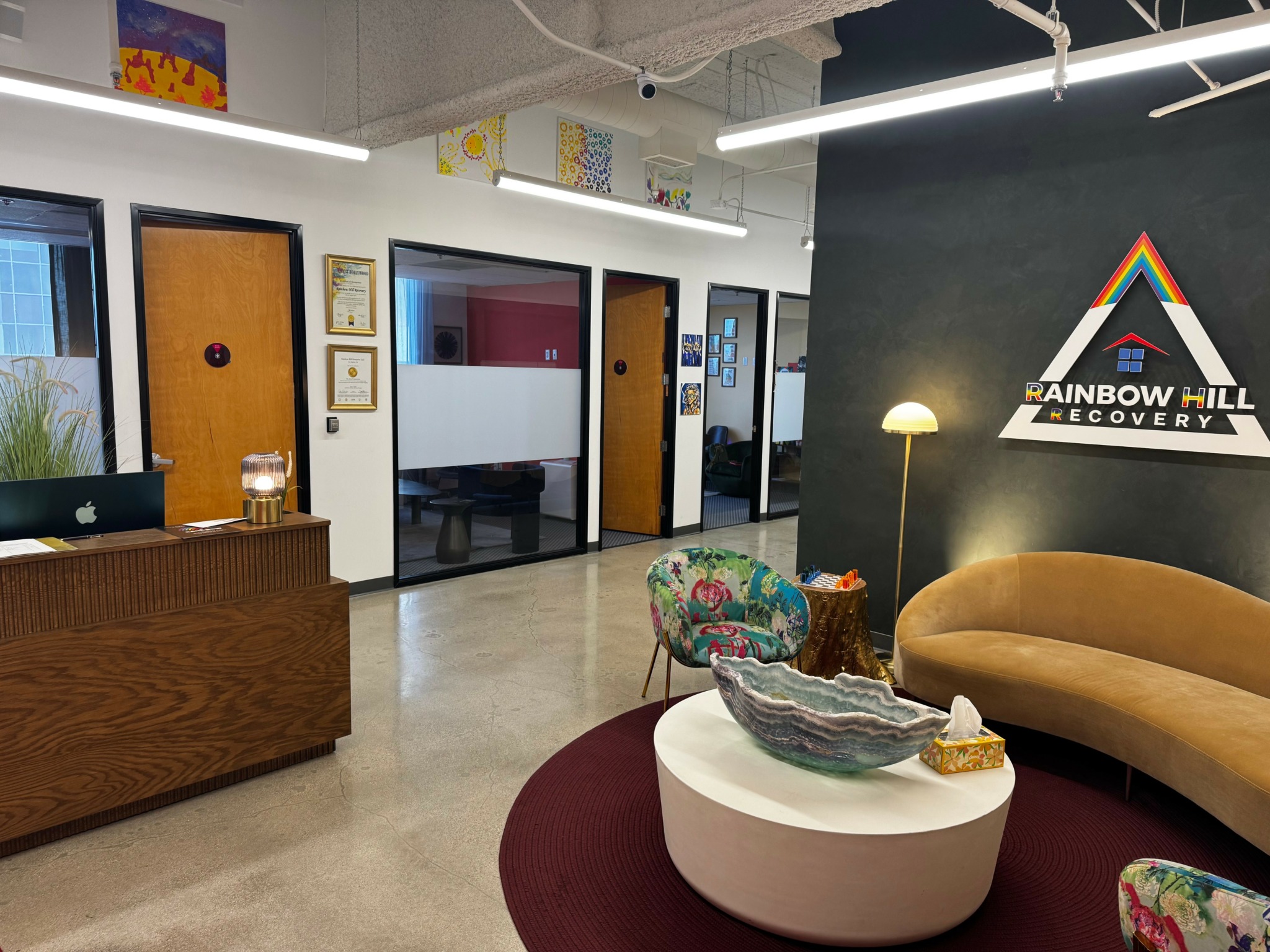
I first joined the field in a peripheral role by a chance reconnecting with a friend I made 4 years prior. I was leaving my job at Starbucks getting ready to head home when I ran into a friend I hadn’t seen in four years, Joey, who I knew at the time was creating a queer spaced sober home, Rainbow Hill Sober Living . I had been following the remodel of the house on Facebook and was impressed and in awe that someone I knew personally was creating such an amazing space for our community. At the time Joey asked me if I knew anyone who was looking to maybe be the house manager of their sober living. At the time I couldn’t think of anyone but told him I would keep an ear out. He followed up with me about three days later asking if I would like to apply for the job. I decided yes after much debate, little did I know it would spark something in me that would start a passion burning and desire to be a helping professional. I’ll be honest at the time that I started, I thought it would be a good way to save some money and start building a better life for myself. Meeting and working with my first generation of members for the house brought an awareness to myself that I loved seeing the journey these humans were starting out on, I wanted to help them in every ethical way I could. I started my journey at Rainbow Hill Sober Living, I enrolled in a school to get the education I would need to become a CADC-I (California Alcohol and Drug Counselor). I realized in this position that I wanted to help people stabilize and nurture their desires for sobriety and mental well being. While in school for my CADC-I I realized I had another aspiration, I set myself another goal I wanted to go back to formal college and obtain a masters degree in Social Work and later achieve my license to become an LCSW. I don’t know if any other job would have sparked the passion I feel for the field I am now working in. And I can honestly say I tried many different types of work before, by a chance encounter, I stumbled into one of the best opportunities of my life.
Steven, love having you share your insights with us. Before we ask you more questions, maybe you can take a moment to introduce yourself to our readers who might have missed our earlier conversations?
My Name Steven Stewart, I am 33-years old, I have 6 years sober from all mind altering substance. I got in to the industry of Behavioral health and Substance Use Disorder treatment because of the opportunity I was given to be a house manager at Rainbow Hill Sober Living. I specifically started working as a case manager because of my own difficult experiences of trying to navigate social services and social medicine as a consumer. There were programs that could have helped me when I was in my addiction and homeless that I didn’t have any understanding of or that they even existed for people like me. At Rainbow Hill Recovery I have the opportunity to connect our Client’s with programs that help them achieve their goal of maintaining sobriety, but also I am able to connect them with programs that can help afford them the opportunity to pursue more for themselves. What I believe is unique about the way I approach case management is that one of the core aspects of successful treatment is helping the Client to develop an understanding of Autonomy. With this understanding I will find programs for Client’s that I know or believe they will qualify for, instead of doing the work and filling out applications for the Client, I spend the time with them while they fill out applications, submit qualifying documents, and if they need to go into an office I will accompany them and model appropriate behaviors and support them as they interact with the different professionals. I believe that if we take away this autonomy then we are in some ways crippling the client for future needs. A metaphor that comes to minds is that of a bow tie, tying a bow tie can be complex and frustrating and if no one ever teaches us or takes us through the steps how can anyone expect us to be able to do it our self. going further if someone (a case manager) ties the tie for us every single time, what happens when we no longer have access to that person. I recognize that the metaphor may not relay the need and severity I want to convey, but teaching people how to access life saving medication, or how to access food, or safe lodging could potential save their life if they ever find themself in the situation where someone can’t or even won”t help them. I would say that the thing I am most proud of is getting to see the change in a client when they realize they are capable of handling life on life’s terms.
Other than training/knowledge, what do you think is most helpful for succeeding in your field?
I would have to say that the most helpful thing to succeed in my field is the desire to learn and the capacity for compassion for everyone no matter the differences we may have. Working in my field I have discovered that there is never not an opportunity to learn, whether we are learning about a new technique, assessment, or strategy. Maintaining the teachable attitude, no matter how far along we are on our journey in our field. Learning about ourselves and our perceptions and our biases, there will always be a chance to learn and improve. On the topic of compassion, any one who works in the helping field will understand the phrase “unconditional positive regard” I can admit that it can be difficult and a struggle to achieve; but if we look at it from a lens of compassion it becomes so much easier. Compassion to me includes the ability to realize I may not understand the position of the person I am working with, but I can listen and hear them and respect their experiences.
We’d love to hear a story of resilience from your journey.
I’ve stated that I have 6 years of sobriety, getting to this point has not been easy. My addiction started young, I began experimenting with illicit substance at the age of 13. By the age of 19 I was fully engrossed in my addiction and living on the street as an unhoused individual with my ex-partner. In my addiction I never lost sight of myself which I believe was a saving grace it took until I was 26 years old for me to finally ask for help. I began my sober journey at a treatment center in Culver City, the same place my father went to and had maintained sobriety for over twenty years. I didn’t get it the first time it took me going back and spending almost 11 month in treatment. After completing this program I felt whole. My father saw me take 1 year sober and was proud of me, more proud than any other time I can recall. The first and really only time so far that I felt my sobriety, my freedom of mind and spirit, was in jeopardy was at 1 year and 8 months sober my father the man who championed me through my entire journey, passed away suddenly from heart failure. My mother was supposed to be there to help me settle his affairs, I had no idea was I was doing, she ended up in the hospital after getting a kidney infection and going into septic shock. I had no idea how to handle this, I only knew I felt like a child staring into a the face of their worst nightmare. I remember it was on the third day when I thought I was going to just give up on everything, when I remembered all I had to do was ask for help. For some reason there was a shame in me that I couldn’t handle this situation on my own, shame feeds on that isolation and feeling of not enough. Reaching out and asking for help and talking about my fears and the need for help was the resilience as skill I needed, shame cannot exist when pulled into the light of connection and compassion.
Contact Info:
- Instagram: @srstewart91
- Linkedin: https://www.linkedin.com/in/steven-stewart-260097199