



We’re excited to introduce you to the always interesting and insightful Steve Domahidy. We hope you’ll enjoy our conversation with Steve below.
Hi Steve, thanks for joining us today. Can you talk to us about a risk you’ve taken – walk us through the story?
In 2004, as my business partner (at the time) and I surveyed the land of bicycles for opportunity on how to enter the market and where best we could make an impact, a small band of people were beginning to make noise around the 29″ wheel. We each, in turn, went out of our way to find a 29″ wheel bike and give it a spin, and we both knew, right away, that this was it. This was the opportunity we were looking for. In October of 2004, we sat down in a crowded lunch restaurant in the hallway connecting the Venetian Hotel to the Convention Center where Interbike 2004 was taking place, and we shook hands on a business dedicated to making ONLY 29″ wheel bikes. It was a bold move, given that NO industry stalwart had any interest in the wheel size. In the next few months, as word of the business we had started began spreading through the industry, I got email after call after email from industry insiders expressing their concern for our newly formed business, aptly named Niner Bikes. The chorus was saying, in one form or another, “You guys are crazy”. But for us, the decision was measured and calculated. We had both been long time riders who had seen change in the industry from the start, and the kickback each change came with: “Suspension will be too heavy”, “Disc brakes aren’t necessary, V-Brakes stop me just fine”. With each new technology came a group of retro grouches who deemed the technology unnecessary and to each of those grouches, the consumer said otherwise. We knew that the 29″ wheel would be no different and we knew that getting in ahead of the curve on this, and even potentially defining it, would be a valuable asset to the company and our growth. Nobody could have prepared us for how right we ended up being, and we grew at an unprecedented pace, even through the recession of 2008-2009. It’s important to note that we were in the right place at the right time to make the impact we had, but it’s also invaluable to understand that our deep knowledge and historical perspective of the industry as a whole allowed us to see where opportunity was waiting and how we could enter the market with a splash and attain market dominance in an already overcrowded field. We also had to have outstanding product that appealed to the market place, and this was deliberated in every single choice we made, to our brand name, our logo, our font, our color choices, and our industrial design. Yes, bikes need to ride amazing, but they also have to look like they ride amazing sitting on a showroom floor. We are a people of first impressions, and people form them well before throwing a leg over a frame and giving it the first stroke of the pedals.


Steve, before we move on to more of these sorts of questions, can you take some time to bring our readers up to speed on you and what you do?
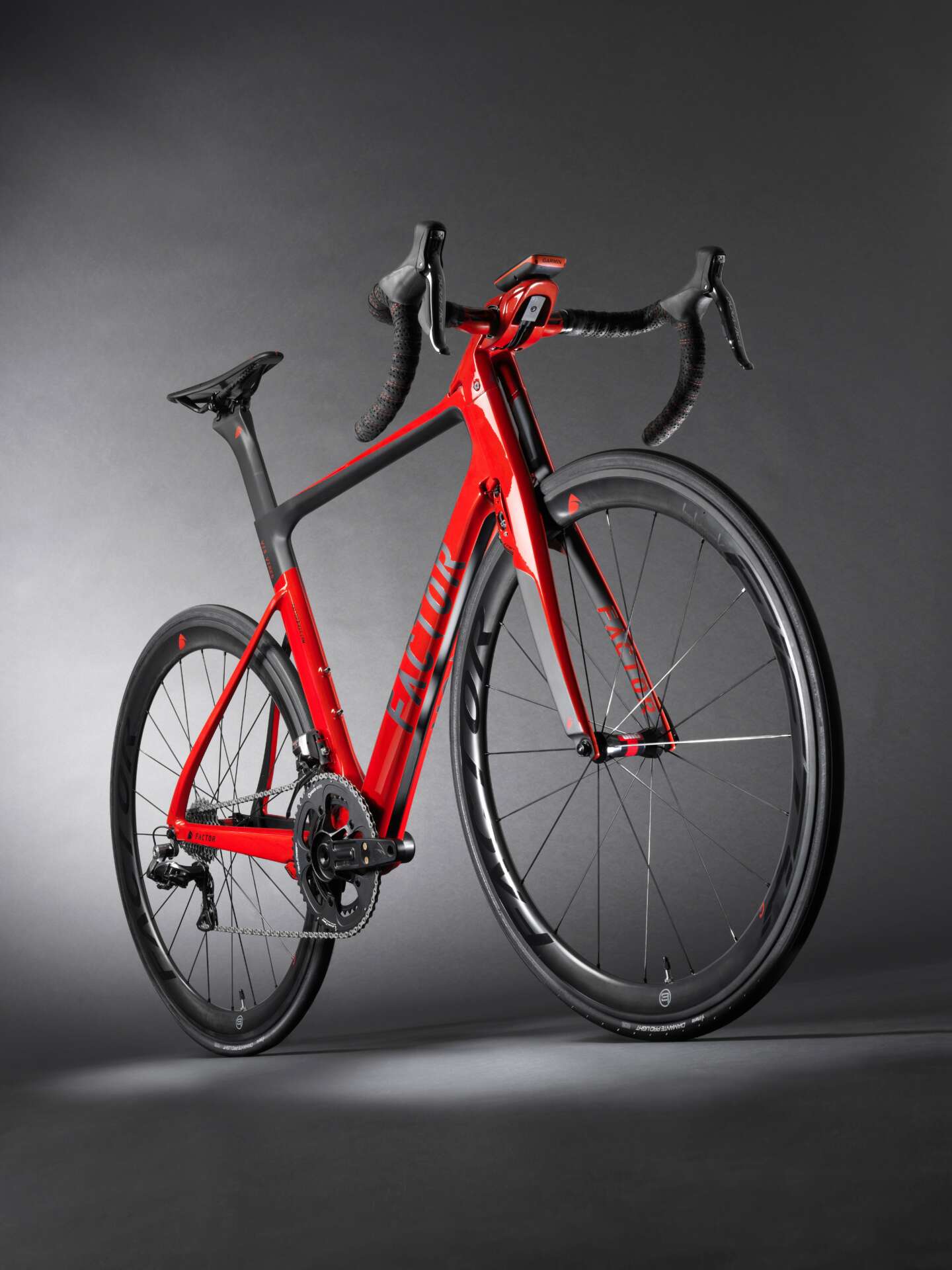
I am Steve Domahidy (Dom-a-hid-ee) and I’m a lifelong veteran of the bicycle industry. When I was in my early teens, I started a business doing tune-ups for people in my neighborhood. Many of them gave me decrepide bikes that hadn’t been ridden in years, more out of sympathy for my burgeoning business than an actual need to have their bikes serviced. From there, I taught myself how to tune them, well before there was a You Tube channel for it. I learned the hard way about tools I had never seen before (it turns out old crank sets needed to be ‘pulled’ from the bottom bracket with a special extraction tool and that they weren’t just ‘stuck’ onto the bb). My fascination for the bicycle was a desire to learn the intricate mechanical nature of how things worked and why. As I grew in my career, I studied every new design and contemplated the how and why of it. I was fortunate enough to begin my love of bicycles in the 80’s when mountain bikes first began surfacing in the marketplace and I watched as front suspension, disc brakes, full suspension and carbon fiber emerged as technology improved at a quickening pace. In the mid-to-late 90’s, I was given an opportunity from my employer, Alan Goldsmith who owned a very successful chain of stores in Southern California, to travel over to Taiwan, meet with a manufacture that Alan had a relationship with, and help to design my first ever bike, which was to become a full suspension model for the stores in-house brand. That was the beginning of my design career and I was hooked. Creating something from scratch and seeing it through to the end was a perfect combination of my passion for bicycles, and the creativity I had cultivated since I was a child, often winning my school’s art festival. In 2004, I co-founded Niner Bikes. This would be my first step in creating a brand from scratch, building it and the portfolio of products to be designed and executed, working directly with Asian suppliers on the full supply chain, and creating sales channels with which to sell the product. It was a cultivation of my understanding of bikes, my ability to sell, and, most of all, my ability to keep the eye on the big picture, balancing ALL of my duties and disciplines in the entrepreneurship of this small, start up company called Niner Bikes. It was an amazing seven years with unparalleled growth and challenges. Growing at an AVERAGE of 120% per year creates its own unique monster, as an already cash hungry startup turns into a cash devouring machine. With each new model we met an ever increasing demand, always chasing the heels of getting up and over the top of the hill, allowing for a moment of breath. It was at once both exhilarating and exhausting. Niner became the leader in the 29″ wheel mountain bike for a few years, as the industry, realizing they were missing out on growth that was ONLY coming from the larger mountain bike wheel segment, caught up to us. In 2011, I stepped away from Niner and began consulting for the bike industry. By that time, I had over 20 years in the industry and I felt that I could broaden my sphere and work on different projects for burgeoning brands. First was Factor Bikes, a new road bike company I helped establish that is now being raced in the Tour de France. I did a soup to nuts consultation program for them for two years, designed their first bike as well as helped steer brand identity, logos, color palette, in addition to setting up their Asian supply chain and their first production run of new bikes, called the Vis Vires. I stated at the time that I thought Factor would be under a pro-tour team within five years. They only took four! After that project, I jumped over to another start-up fresh out of the gates called Faraday Cycles, a commuter e-bike brand out of San Francisco. In the case of Faraday, the owner and founder of that company, Adam Volmer, had already created the look and feel of the bike, which was amazing. My job for them was to re-design it so it functioned, and find a supply chain that could make and assemble the bike to steer the company to profitability. Faraday was established through a successful Kickstarter campaign and that campaign had guaranteed it’s pre-purchased customers US made frames, which I helped to facilitate, but the company couldn’t reach profitability with this business model, the frames, which were made out of steel, would just be too expensive to be competitive, so I also developed an Asian made and assembled version parallel to the US made ones, for sales to customers after fulfillment to the Kickstarter backers. This proved to be a wildly successful move and within three years of sales, Faraday Bikes was purchased by one of the worlds largest bicycle holding companies for eight million dollars.
While working on the Factor/Faraday projects, I launched a small brand of my own, originally called Domahidy Designs and later changed to Viral Bikes (I knew that Domahidy had a limited market appeal, but the side project was a small one and I wanted to keep growth manageable). Viral Bikes is also pushing the envelope and is developed solely to the gearbox, another breakthrough technology that will change the world of mountain bikes and bikes in general.
One of the project I am most proud of is the last one I worked on. For the past four years, I was the Director of Carbon Development and Engineering at Argonaut Cycles. I was brought on as the company was going through a transition. At the time of my arrival, Argonaut had only one bike, a road bike with no actual model name, known only as the ‘Carbon Road’. It was produced by a carbon fiber supplier in White Salmon, Washington who also produced parts for Boing, Space X, and others. The bike was a very small part of their business, and because of its minuscule size (compared to their other vendors) they just couldn’t find a place for it in their growing business model. I was brought on to design a new bike, AND a new process that we could move forward with to build carbon bikes from the ground up in our own facility. It was an amazing four years of growth and learning. I had designed carbon fiber bikes in the past, but relied heavily on my manufacturing partners to put together the carbon layup schedule and tooling to make it happen. In this case, I had to learn it all, on the job, and get the bike into production. It was an amazing time and I was stoked to have designed not only two award winning bikes for Argonaut (the RM3 and GR3 have already stacked up awards even as new as they are, the GR3 only launched late 2022), but I patented a new molding process, designed every single tool and mold and created a carbon fiber facility in Bend Oregon capable of growing the business. In the short time I was there, we saw growth of over 300% and grew the staff from our original five persons to over 20. I am immensely proud of the work I did at Argonaut, the things I learned along the way, and the implementation of that learning into creating incredible bikes with incredible ride quality. It was an outstanding way to further my career and push outside my comfort zone to new heights.
Can you tell us about a time you’ve had to pivot?
At Argonaut Cycles, I was originally brought on to do two things: design a brand new gravel bike and bring production in house. At the time, the ‘Carbon Road’ bike was being produced by an outside source, and Ben, the owner of Argonaut, saw the writing on the wall, we would not be able to stay there indefinitely. So, my first task was to design a carbon gravel bike from the ground up, my second task was to figure out how to make that gravel bike in house. We began with getting a carbon fiber expert to show us some alternative methods of molding and who brought some interesting ideas to us that we tested and either completely discarded or pivoted from to find what would work for us. The task was pretty monumental, as the directive from Ben was the bike had to be better than our last and it had to be more customizable than our last. Argonaut had already established itself as a custom carbon manufacture but there were strict limitations to the tooling that was created with the vendor in White Salmon. Roughly a year into design and development of the gravel bike, we got word from our supplier of the current road bike that they would no longer make our frames. We had a finite amount we could sell before they turned the supply taps off. As Argonaut was a road bike company first, it would be impossible to go without a road bike and I was forced, in a day, to change directions 180 degrees from the course I was on, and design and execute on a road bike FIRST, before the gravel bike I was already working on. But it was the right choice for the business, and for the development of the processes we were creating from scratch. It was a hard pill to swallow and it left us scrambling and without the ability to deliver bikes for some time before we pushed the new road bike through production, but we were able to squeak by, and deliver on our promise. The result was the award winning RM3 road bike. In addition, this pivot to the road bike allowed me to learn a lot more about what did and didn’t work, what could be improved upon, and how I could create the gravel bike to be even better than it was originally conceived. In the end, it worked, and allowed me to learn, create, and grow in an elevated stress environment, but Niner had already proved that I had the mettle to do it.



Alright – let’s talk about marketing or sales – do you have any fun stories about a risk you’ve taken or something else exciting on the sales and marketing side?
Interbike used to be THE bike industry trade show. Every year, the marketing budget was largely eaten up by this monster of an event, but it was an important one. Media from the entire world was watching and every dealer in the USA would send store managers and purchasing departments to this show in Las Vegas which was part business, part debauchery. At one point, Interbike added ‘Outerbike’, the outdoor component which was an opportunity for the show attendees to take a spin on one of the new model year bikes. It was a huge success, with some companies opting ONLY to attend the Outerbike portion, and forgo the rigamarole of the indoor event (and consequently miss out on the face palm antics of loading and unloading a convention center under union control). In 2009, while still growing Niner, we opted for a HUGE splash. That year, pretty much the entirety of the marketing budget was spent on our Outerbike presence, which we wanted to appear to the rest of the bike industry to be every bit on par with Specialized, a company with a budget a factor or 10 larger than ours. This was a huge roll of the dice and required a significant up front cost to pull off. 10×20 tents, three of them, made up our huge footprint in the desert. We amassed a fleet of some 100 demo bikes, which was roughly ten times the amount we had ever put together in the past, which meant we had to both have the inventory and budget for the parts, and we had to get them all built in time for the event. Around the clock wheel building, bike building, and packing commenced and we leaned heavily on friends and family to help fill the gaps. It was an exciting time, no other time had we seen that many Niner’s in one place, and the result was spectacular. People showed up to Outerbike that year, and they were confronted by three solid rows of shiny new Niner Bikes under spectacularly red tents, creating the illusion that everybody underneath was an umpa lumpa. The objective of this stunt was to make Niner appear to be a larger, more well funded company than it was, and to make people stand up and pay attention to what we were doing, The results were exactly that, and the line of people to test ride a Niner was around the ‘block’. We grew by over 200% that year and the Outerbike gamble paid off.
Contact Info:
- Website: http://www.viral.bike
- Facebook: https://www.facebook.com/domahidydesigns/
- Linkedin: https://www.linkedin.com/in/steve-domahidy-64403349/