



We’re excited to introduce you to the always interesting and insightful Stephen Curtin. We hope you’ll enjoy our conversation with Stephen below.
Alright, Stephen thanks for taking the time to share your stories and insights with us today. How did you come up with the idea for your business?
My business partners and I all work in the concert touring and entertainment industry. Although we all have our specific avenues of expertise, we all shared an idea of building a quality, friendly entertainment industry storage solution. For a better understanding of what I mean, picture this… You buy a ticket to a concert by your favorite artist. You get to the show and start to take in everything in front of you. The lights, the sound, the instruments, the set pieces, and the wardrobe all create this concert experience. This is a massive amount of equipment and set. Where does it all go at the end of the tour? The lights go back to the lighting company and the speakers back to the sound company. That leaves the instruments, the set pieces, and the wardrobe. These are all items that the artist spent a very big amount of money on and human nature has created an attachment to that stuff that created that show. With that in mind, there is only one thing to do with it at the end of the tour. Put it in storage. Everything is far too big for public storage lockers so there has to be another solution. That is where Offstage Storage was born. We are not the first company to provide this type of storage service and we certainly won’t be the last. We are however the only entertainment-specific storage solution that operates in the manner that we do. We saw a way to modernize this simple storage solution to make it user-friendly and easy for our clients.
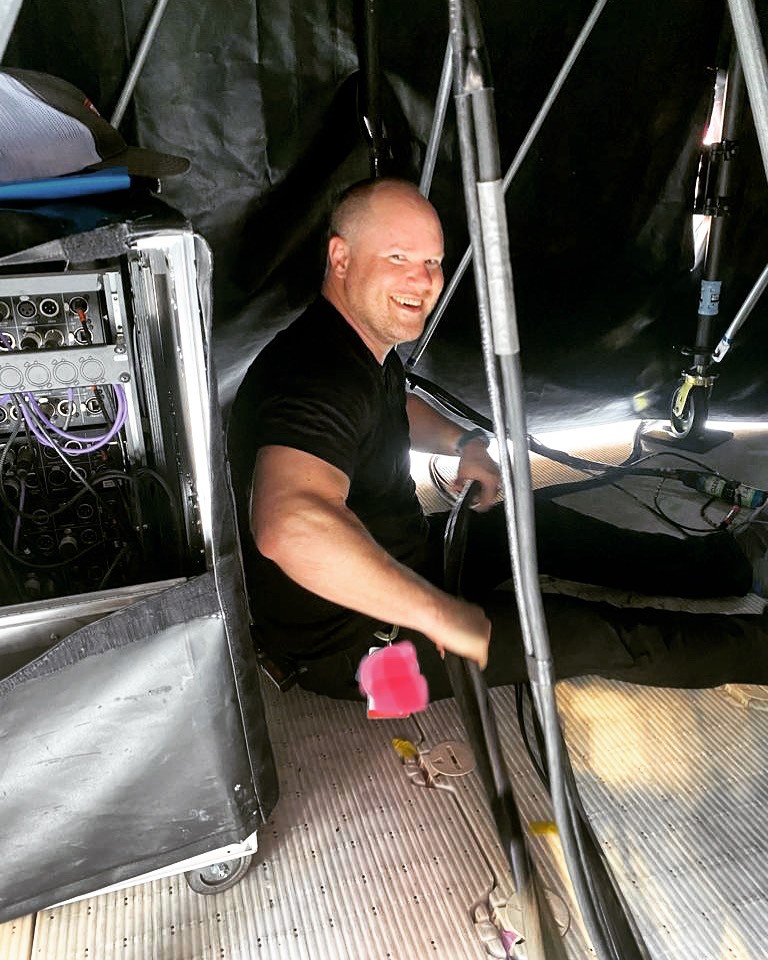
Stephen, love having you share your insights with us. Before we ask you more questions, maybe you can take a moment to introduce yourself to our readers who might have missed our earlier conversations?
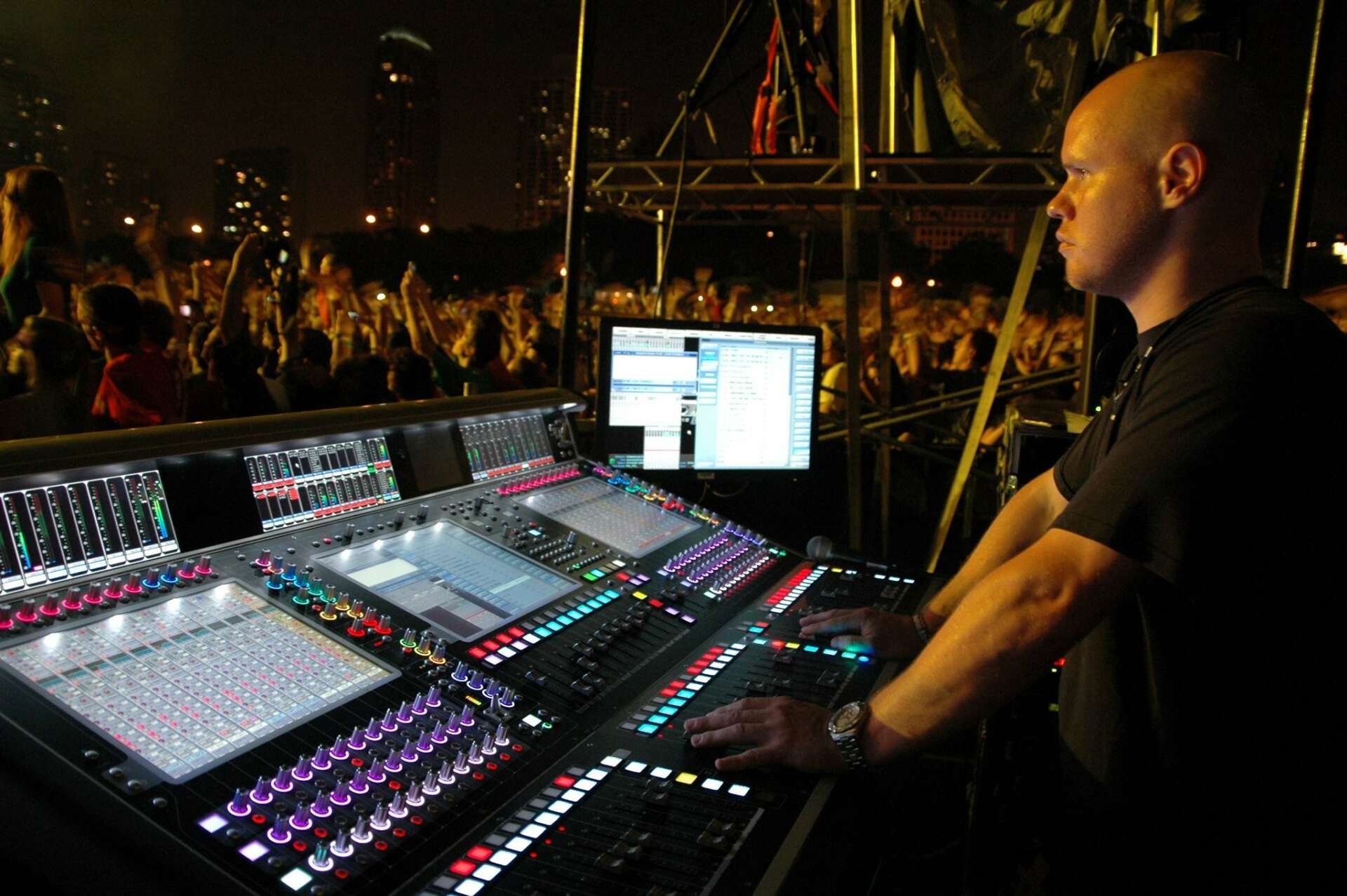
I started in the live sound and concert industry at the age of 19. Following a couple of summers of working at a local theme park in Ohio as a costumed character and pseudo-sound engineer I discovered a passion for sound engineering. My dad happened to find an advertisement for a tech school called Full Sail. Full Sail offered programs in the recording arts. live show production. film and video, and I believe 4 other entertainment industry disciplines at the time. I quickly decided this was the place for me. I chose to take the recording arts course. As part of the course, we were exposed to some show production classes, and I felt a little more connected to that sound of the sound industry. The entire course was 12 months long. Once I graduated I moved back home to Ohio and a couple of weeks later, with some placement assistance from Full Sail, I took my small resume and walked in the door of a local Ohio sound company called Eighth Day Sound. I first met the owner of the company Tom Arko. I told him I was there to see if they were hiring and to drop off a resume if they were. Tom interviewed me on the spot. I didn’t know much about the company at this point, but quickly learned that everyone there was treated like family, and on top of that the company was quickly becoming one of the largest companies in the industry. Keep in mind this was in 2000. There were not very many schools that provided a formal education for anything in this industry. Most of the people who worked at 8th day and in the industry in general went through a learn-as-you-go education. Many of them got their start working in clubs or with a friend’s band doing sound or lights or tuning guitars or in some cases all of the above. I was coming into the company with a somewhat formal education on all of the current technology in the industry. Despite having formal training and some advanced knowledge I had to start where they needed me. It turned out that was in the company warehouse testing and organizing cables, building racks of electronics, testing speakers and amplifiers… earning my place within the company, and hoping to get on tour. Eventually with the guidance of one of my first mentors in the industry, Bernarr I was getting my shot on tour. As a sound crew member on tour, we travel with the artist from city to city setting up the sound system for that day’s concert. Depending on the size of that tour, that can be in venues from clubs, to theaters, to arenas, to stadiums. My first tour was an arena tour and I was responsible for running power to all of our equipment and setting up the subs. I was also meant to learn how to hang the speakers so that on my next tour I could add that to my list of tasks. Touring is a fast-paced industry and very quickly it seems as if you are melting from one tour right into the next. Trying to learn as much as you can and advance with hopes of one day becoming the monitor engineer or front-of-house or FOH engineer. These two positions are what most people strive for. The job of the monitor engineer is to make sure the band members can hear what they need on stage in order to perform properly. The front-of-house engineer is responsible for mixing the band for the audience. Essentially it takes what the band is playing on stage and trying to make it sound close to the records for the audience. Both of the positions are supported by some very vital people on the sound crew. The FOH engineer is usually an extension of the system engineer who designs the sound system for the tour. It is imperative that they work hand in hand to achieve the best results. On stage, the monitor engineer typically works hand in hand with a monitor tech that is responsible for the layout of the stage inputs and outputs. Outputs can be wedges or most currently used, in-ear monitors. As part of the monitor tech position, they are sometimes required to do wireless frequency coordination so that all of the wireless microphones, guitars, and in-ears work in harmony. On bigger tours, this is an entirely separate position called RF tech or coordinator.
I wanted to give a description of those couple positions because being sound on tour does not work without those people. On bigger tours, there are also others that hang the speakers and help out where needed. No matter what, we all have to work as a team in order to be successful. That success extends to all of the other departments on the tour. We are all there for the same reason, to put on the best show possible for the artist we are working for. This sort of family atmosphere is what is the most attractive thing to me about our industry. For as many concerts as there are around the world, it’s a very small industry and chances are you know most of the people in it. The unique part is that eventually when you get to the top positions, you get to choose your family just as long as they want to work with you as well.
Currently, I am going into my 24th year in the industry. All of those years working for Eighth Day Sound which is now part of a larger company called Clair Global. I’ve chosen to stay with this one company simply because of Tom Arko. This man truly cares about the people that work for his company. Tom was one of the first to encourage and congratulate me when I told him that I was going to start Offstage Storge with a couple of other colleagues. There was no thought of “Oh no, am I going to lose one of my guys?’ Instead, there was a simple question, “Is there anything I can do to help you be successful?” That is the type of owner and boss I wanted to be. I wanted our storage company, as simple as it is to become the industry standard for quality, safe, and reliable storage. My business partners all wanted the same so we set out some guidelines of how to do that.
The very first thing is that the entertainment industry is a 24/7 business. We needed to accommodate that. We created an automated solution that allows our clients the access they need and the security they deserve. This alone was a game-changer. Our clients are the only ones who can access their equipment 24/7 with the knowledge that everything is still secure.
The next part to tackle was to provide assistance. We wanted to have at least one employee who could manage the warehouse and help any of our clients with their needs. This includes shipping and receiving, operating a forklift, organizing, etc. Our Warehouse Manager, Jeff has become the face of the company to our clients and I wouldn’t want it any other way.
Outside of our client base, we wanted to build mutually beneficial relationships with some other industry friends. For instance, we don’t do trucking but we do refer the people we trust to handle those tasks. Some clients also need labor to load and unload trucks. We work closely with the best local industry labor companies to assist with these needs.
Our industry lives and dies on work ethic and reputation. We built Offstsage Storage to excel in those areas by listening to the needs of our clients.
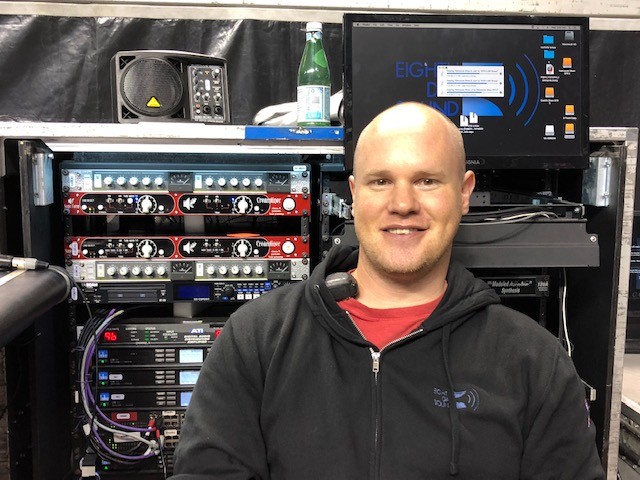
Can you open up about a time when you had a really close call with the business?
The most difficult part of our business is that we don’t make money unless we have a building with space to lease to our clients. We currently lease both of our buildings and believe it or not it was extremely difficult to get these landlords to understand our business model. Typically in leasing commercial property, the lessor will look at your financials and determine their risk of taking you on as a client. That risk usually comes out as a security deposit. The rule of thumb is the higher the risk, the more security deposit is required. That system does not work for us as a business. We don’t sell a product, we sell space and service. This means that we don’t have extra money lying around to do a 2 or 3-month security deposit. Essentially the more money you take from us now, the more likely I’m not going to be able to cover next month’s rent unless I magically fill the building with clients in that short time span. Fortunately, we worked with some very understanding property managers and they understood our stance. We still had to come up with the first month and at least 1 month of security which nearly cleared us out. We are 4 partners in this business that put what money we had aside to start the business. We had no business loans and were determined to continue without adding debt. This caused some very tense moments towards the end of the first few months as we were quite literally waiting for the client’s checks to clear in order to pay our rent. Fortunately, everything has worked out. We now have nearly 75,000 square feet of space between two buildings and we are at about 80% capacity.
Where do you think you get most of your clients from?
The best source of new clients for us is word of mouth. We have done no more than some very basic social media marketing on platforms like Instagram, Facebook, and Linked In. In our industry, reputation is everything and people will seek out the people they trust and like to work with. We are very fortunate in that respect.
Contact Info:
- Website: www.offstagestorage.com
- Instagram: @steveo014 @offstagestorage
- Facebook: http://www.facebook.com/offstagestorage
- Linkedin: https://www.linkedin.com/company/offstagestorage/