

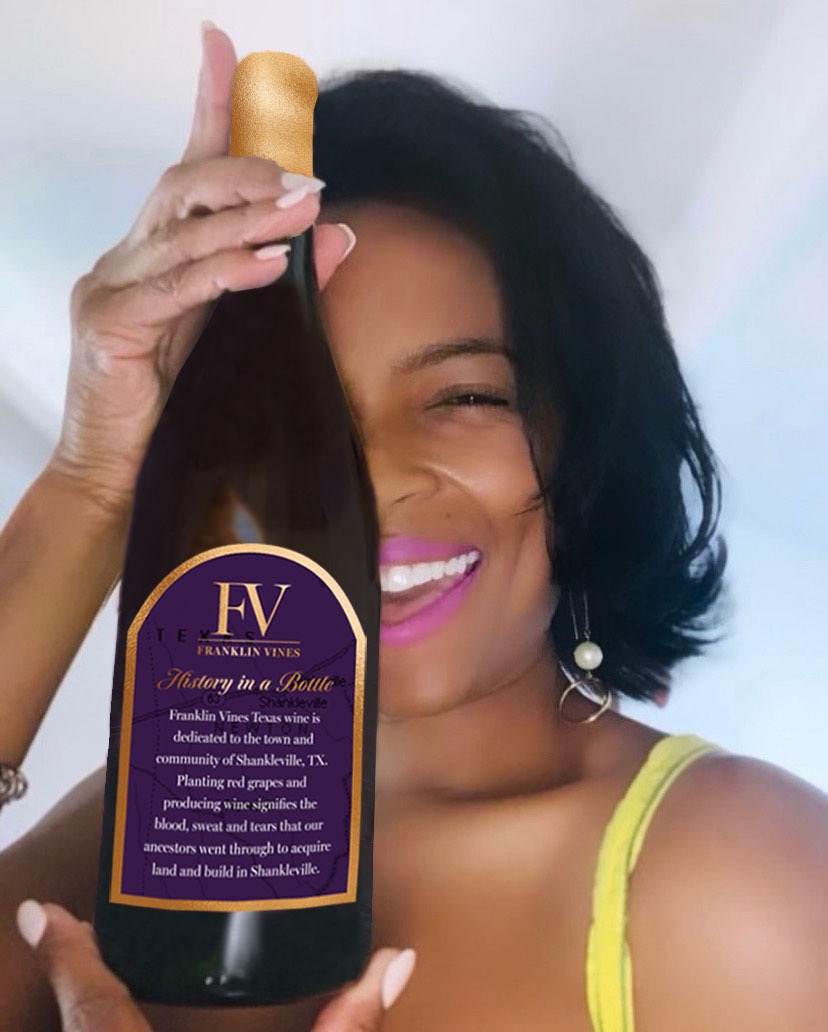

Alright – so today we’ve got the honor of introducing you to Stephanie Franklin. We think you’ll enjoy our conversation, we’ve shared it below.
Alright, Stephanie thanks for taking the time to share your stories and insights with us today. Coming up with the idea is so exciting, but then comes the hard part – executing. Too often the media ignores the execution part and goes from idea to success, skipping over the nitty, gritty details of executing in the early days. We think that’s a disservice both to the entrepreneurs who built something amazing as well as the public who isn’t getting a realistic picture of what it takes to succeed. So, we’d really appreciate if you could open up about your execution story – how did you go from idea to execution?
When the idea for Franklin Vines first came to me, it didn’t arrive as a polished business plan. It started as a feeling, a pull toward legacy, land, and purpose.
During the COVID pandemic, I was laid off from my corporate career, and for the first time in years, life became quiet enough for me to really ask myself what I wanted to build for the future. I had worked in both corporate America and the nonprofit sector, but I wanted to create something I was truly passionate about. Wine had already become an interest of mine, but during that season, I began to realize it could become something much bigger, a bridge between agriculture, history, culture, and economic empowerment.
The first step was education. I immersed myself in wine studies, enrolled in courses, attended conferences, and began earning certifications, including WSET and Specialist of Texas Wine certifications. While sitting in my WSET Level 3 class, I had a vision that completely changed the trajectory of my life, I could see myself building a winery/vineyard connected to my family’s land and history in Shankleville, Texas.
As a descendant of the founders of Shankleville, one of the oldest historically Black freedmen’s towns in Texas, I started thinking deeply about what it would mean to plant a vineyard on my family’s land. I knew there were very few African American women in winemaking, especially in Texas, and I felt called to create representation in an industry where we are rarely seen.
Shortly after that, I officially formed Franklin Vines. But I also knew passion alone wasn’t enough. Before I could ask anyone to take me seriously, I needed experience and credibility. That mindset led me to pursue internships, including in Napa Valley and another in Texas. Those experiences gave me hands-on exposure to harvest, cellar work, production, and the realities of the wine business.
At the same time, I was researching how to legally start a winery in Texas. That process involved forming the business, understanding licensing requirements, learning compliance laws, and figuring out financing. I didn’t come from generational wealth or own an established vineyard, so I had to be resourceful. I spent countless nights researching, networking, attending industry events, and introducing myself to people in spaces where I often felt like the only person who looked like me.
One of the biggest turning points came when I realized I didn’t have to wait until I owned a vineyard to begin producing wine. I learned about the custom crush model, which allowed me to source quality Texas grapes and produce wine through an established facility while I worked toward planting my own vineyard. That realization changed everything because it made the dream feel attainable instead of distant.
In 2022, I sourced Tannat grapes from the Texas High Plains and produced my inaugural vintage. Seeing my wine in a bottle for the first time was emotional because it represented years of learning, sacrifice, uncertainty, and faith. It was proof that the idea had moved beyond imagination and into reality.
Since officially launching Franklin Vines in July 2025, the journey has continued to exceed what once felt possible. My inaugural Tannat earned a silver medals at the San Francisco Chronicle Wine Competition and the Houston Livestock Show & Rodeo; Rodeo Uncorked Wine Competition, Gold medal at the International Women’s Wine Competition and a Bronze medal at TEXSOM. I was also honored as the 2026 Beverage Master by Black Women in Food, and the brand has been featured on Good Morning America, KPRC, and other media platforms highlighting both the wine and the historical significance of Shankleville. The City of Houston also proclaimed “Franklin Vines Day,” October 23rd, recognizing the work being done to preserve legacy through wine, agriculture, and cultural storytelling.
At the same time, I’m very honest about the fact that I’m still building and still learning. Winemaking is a lifelong craft, and I would never claim to know everything after a few internships and certifications. Those experiences gave me a foundation and the confidence to begin, but every harvest, conversation, class, and challenge continues to teach me something new. I think humility is important in this industry because wine constantly reminds you that there is always more to learn.
I’ve also learned that when you’re walking in purpose, the right opportunities and connections begin to meet you along the way. Looking back, so many moments in this journey, from internships to mentors to unexpected opportunities, arrived at exactly the right time.
What began as an idea during one of the hardest seasons of my life has now grown into an award-winning wine brand rooted in legacy, agriculture, and cultural preservation. And in many ways, I still feel like I’m only at the beginning of the journey. We’re not just planting vines building a legacy.
Because for me, Franklin Vines is about more than planting vines, it’s about building legacy.


As always, we appreciate you sharing your insights and we’ve got a few more questions for you, but before we get to all of that can you take a minute to introduce yourself and give our readers some of your background and context?
Stephanie L. Franklin is the founder, president, and CEO of Franklin Vines, an award-winning Texas wine brand rooted in legacy, agriculture, and cultural preservation. Franklin Vines is more than a wine company, it is a long-term vision centered around land, history, economic empowerment, and representation within the wine industry.
Stephanie is a direct descendant of her 3rd great-grandparents, Jim and Winnie Shankle, formerly enslaved individuals who founded Shankleville, Texas in 1867 following emancipation. Today, she is building on that very same ancestral land, including property passed down to her grandfather, Guyler Shankle, with the vision of developing a vineyard and winery that honors the past while creating opportunities for the future.
What makes Franklin Vines unique is that it sits at the intersection of wine, agriculture, heritage, and economic development. Stephanie’s vision extends far beyond producing award-winning wine. She is building an ecosystem centered around agriculture, cultural preservation, tourism, education, and community impact tied to the historic town of Shankleville. Her goal is to help preserve the history of one of Texas’ oldest historically Black freedmen’s towns while creating economic opportunity, jobs, agritourism, and generational wealth in a rural community with deep historical significance.
Stephanie is building Franklin Vines within an industry where representation remains extremely limited. Of the more than 11,000 wineries in the United States, less than 1% are Black-owned. At the same time, Texas has rapidly emerged as one of the most important wine regions in the country. Texas is now the fifth-largest wine-producing state in America, and Texas ranks as the second most-visited wine region in the nation behind Napa Valley.
Stephanie believes this creates an opportunity not simply to build a wine company, but to develop a legacy-driven ecosystem that merges agriculture, tourism, cultural preservation, education, and economic opportunity in a historically significant rural community.
Franklin Vines currently produces award-winning Texas wines, including its inaugural Tannat sourced from the Texas High Plains. Since launching in 2025, the brand has earned recognition at major wine competitions, including silver medals at the San Francisco Chronicle Wine Competition and Rodeo Uncorked! International Wine Competition, a gold medal at the International Women’s Wine Competition, and a bronze medal at TEXSOM. Stephanie was also honored as the 2026 Beverage Master by Black Women in Food.
Beyond the wine itself, Franklin Vines is rooted in storytelling and cultural preservation. Stephanie wants every bottle to serve as a conversation about Black agricultural history, land ownership, resilience, and legacy. She hopes the future vineyard will become not only a destination for wine, but also a place for education, cultural tourism, and community connection.
To help support that long-term vision, Franklin Vines launched its Founder’s Circle “Adopt a Vine” initiative, allowing supporters to directly contribute to the future planting and development of the vineyard in Shankleville. The initiative gives people an opportunity to become part of preserving history, honoring legacy, and helping build an agricultural and economic future on land tied to generations of family history and resilience.
Stephanie has been featured on Good Morning America, KPRC, and other media platforms highlighting both Franklin Vines and the historical importance of Shankleville. The City of Houston also proclaimed October 23rd as “Franklin Vines Day” in recognition of her work preserving history through wine and agriculture.
While Franklin Vines has already achieved meaningful milestones, Stephanie is very open about the fact that she is still building and learning. She believes winemaking is a lifelong craft that requires humility, patience, and continuous education. What she is creating is not an overnight success story, but a long-term legacy project designed to grow for generations.
At its core, Franklin Vines is about reclaiming narrative, preserving land, creating generational wealth, and building something meaningful on land her ancestors founded nearly 160 years ago. Stephanie often says Franklin Vines is not just planting vines, it is building legacy.


Can you talk to us about how you funded your business?
Franklin Vines was not built with large investors, generational wealth, or major financial backing. In the beginning, I funded much of the journey myself through personal savings while investing in wine education, certifications, conferences, travel, and internships because I knew credibility and knowledge were essential.
Looking back, I probably went about parts of it the wrong way. As entrepreneurs, we sometimes think we have to fund everything ourselves, but I’ve learned that your personal money is not supposed to carry the entire vision. That money needs to stay in the bank. Building something long-term requires strategy, partnerships, grants, sponsorships, investors, and community support.
As I learned more about the industry, I realized I wasn’t simply building a wine brand — I was building a long-term agricultural and cultural ecosystem tied to land, history, tourism, preservation, and economic opportunity. That type of vision requires significant capital and long-term planning.
One of the smartest decisions I made early on was utilizing the custom crush model, which allowed me to source Texas grapes and produce wine through an established facility while continuing to build toward the larger vision for Franklin Vines. That approach allowed me to launch the brand, establish credibility, and create momentum without waiting for every piece to already be in place.
Over time, support has come through networking, mentorship, media exposure, community support, and initiatives like the Franklin Vines Founder’s Circle “Adopt a Vine” program, which helps support the future planting and development vision tied to Shankleville.
Today, I’m continuing to explore grants, sponsorships, agricultural programs, partnerships, and aligned investors who believe in the larger mission of preserving history while creating economic opportunity, tourism, education, and generational impact through Franklin Vines.
i dont want it to read like i have the means because i dont i want the world to know that i’m open to investorswithout saying it. i think you nailed it here….
Franklin Vines was not built with large investors, generational wealth, or major financial backing. In the beginning, I funded much of the journey myself through personal savings while investing in wine education, certifications, conferences, travel, and internships because I knew credibility and knowledge were essential.
Looking back, I probably went about parts of it the wrong way. As entrepreneurs, we sometimes think we have to fund everything ourselves, but I’ve learned that your personal money is not supposed to carry the entire vision. That money needs to stay in the bank. Building something long-term requires strategy, partnerships, grants, sponsorships, investors, and community support.
As I learned more about the industry, I realized I wasn’t simply building a wine brand, I was building a long-term agricultural and cultural ecosystem tied to land, history, tourism, preservation, and economic opportunity. That type of vision requires significant capital and long-term planning.
Initiatives like the Franklin Vines Founder’s Circle “Adopt a Vine” program have helped create community support around the long-term vision of building an agricultural, cultural, and economic legacy connected to Shankleville.
Today, I’m continuing to explore grants, sponsorships, agricultural programs, strategic partnerships, and aligned investors who believe in the long-term vision of preserving history while creating economic opportunity, tourism, education, and generational impact through Franklin Vines.


Any insights you can share with us about how you built up your social media presence?
I built my audience by sharing the journey long before Franklin Vines became an award-winning brand. From the very beginning, I decided to let people grow with me in real time instead of waiting until everything looked perfect or fully established.
When I first had the vision for Franklin Vines, I started documenting everything — posting pictures from wine classes, certifications, internships, harvests, and industry events, along with photos of the land in Shankleville covered in wooded trees long before anything was planted. One of my mentors told me, “Let the people see you grow,” and that advice stayed with me. People weren’t just watching a brand develop; they were watching a legacy-driven vision tied to history, land, culture, and purpose slowly come to life.
I often say, “Louisiana made me, Texas raised me, and the vines saved me,” because wine helped me discover where I truly belonged. It gave me passion, direction, creativity, and a deeper understanding of what I believe I’m meant to do in this world. I think people connected with that authenticity and vulnerability.
What helped my audience grow organically was that I wasn’t only posting bottles of wine. I was sharing legacy, history, agriculture, cultural preservation, and the vision behind building something meaningful on land connected to my ancestors and the historic town of Shankleville. Over time, people became emotionally invested in the story and mission behind Franklin Vines.
Some people have been following me since the very beginning, before the awards, media recognition, and wine launches, and I’m incredibly grateful for that. I may not have the largest following on social media, but the community I do have is incredibly loyal and genuinely invested in the journey. There’s something special about people choosing to believe in your vision before the world fully sees it.
Media exposure through Good Morning America, KPRC, speaking engagements, and wine industry recognition also helped introduce new audiences to the brand, but social media gave people a place to continue following the journey in real time.
One thing I’ve learned is that people connect more with authenticity than perfection. I’ve always tried to be honest about the fact that I’m still building and learning. I don’t think you have to pretend to have everything figured out to inspire people.
My advice for anyone building a social media presence is to start before you feel ready and don’t be afraid to share the process. People love transformation stories, and audiences grow when they feel like they are part of the journey with you.
I would also encourage people to lean into what makes them unique instead of trying to copy everyone else online. For me, that was combining wine, history, agriculture, legacy, and cultural storytelling into one vision. What may feel different or unconventional at first can often become the very thing that sets you apart.
Most importantly, remember that social media should support your purpose, not replace it. The real foundation will always be your work, your relationships, your consistency, and the impact you’re creating beyond the screen.
Contact Info:
- Website: https://franklinvineswine.com/
- Instagram: @Franklin_vines https://www.instagram.com/FRANKLIN_VINES/
- Facebook: https://facebook.com/FranklinVines2020
- Linkedin: www.linkedin.com/in/ stephanielfranklin and Franklin Vines Wine
- Youtube: https://www.youtube.com/@LAmitieVino
- Other: Tiktok: @FranklinVines


