

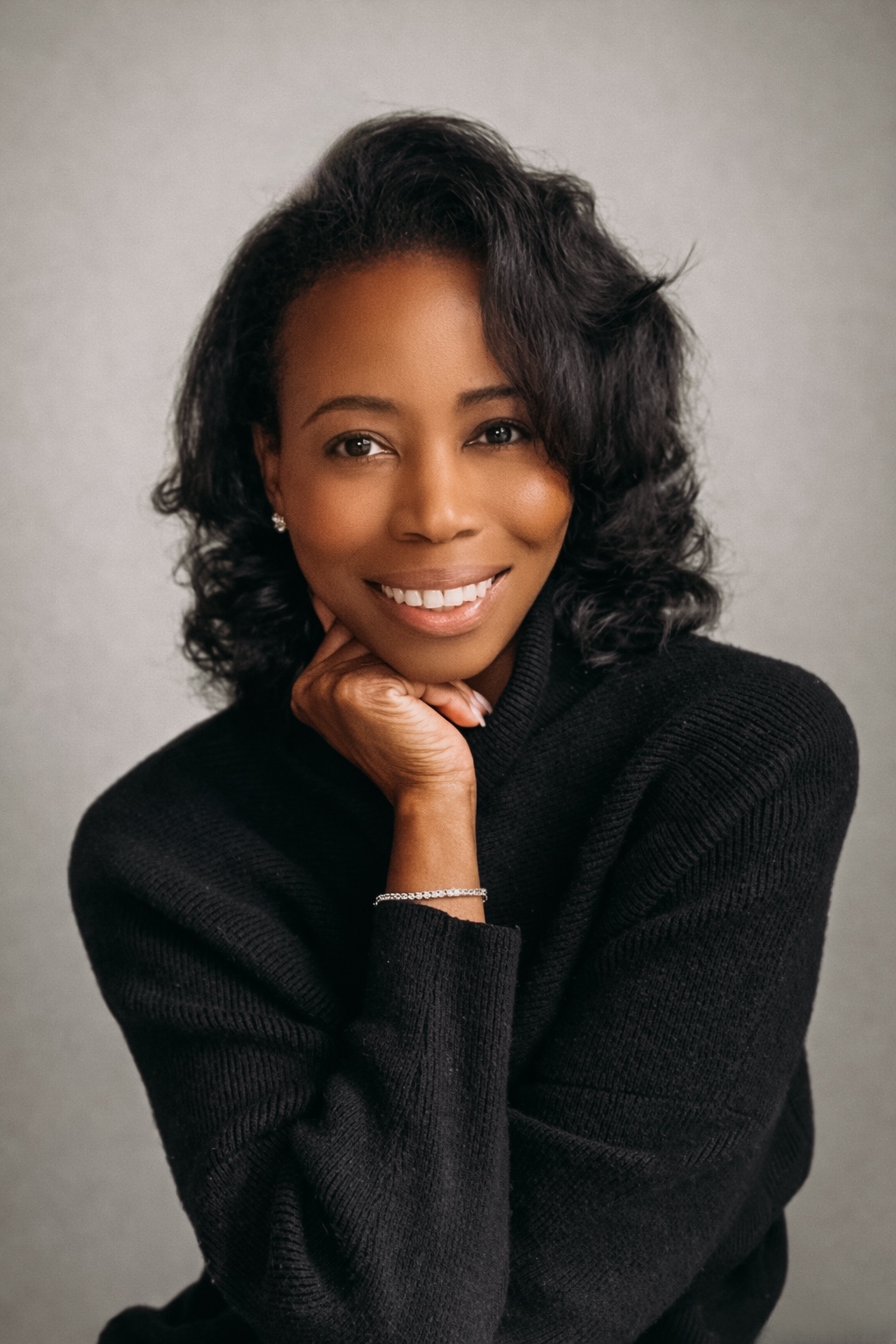

We were lucky to catch up with Starr Howard recently and have shared our conversation below.
Alright, Starr thanks for taking the time to share your stories and insights with us today. We’d love to have you retell us the story behind how you came up with the idea for your business, I think our audience would really enjoy hearing the backstory.
I have wanted to be a lawyer for as long as I can remember. That desire was a specific, burning sense of purpose. I wanted to advocate for people and I wanted to fight for those who could not fight for themselves. However, life has a way of rerouting you. Circumstances, fear, and maybe a little imposter syndrome, got in the way. As a result, that dream quietly sat on a shelf for years.
When I turned 40 something shifted. God dropped that dream right back in my spirit. Out of obedience, I had to explore it. Plus, I was not willing to keep deferring. I asked myself: What did I still want? Where did that original fire originate? Who can I serve? What brought me joy?
The answer: I have always loved sports deeply. Like so many people, I watched in real time as Colin Kaepernick kneeled and the entire sports world tilted on its axis. What struck me was not just the controversy, it was how exposed and unprotected he was. The systems around him were not built to protect him, they were built to manage him. That moment cracked something open in me. I saw with full clarity that athletes, especially Black athletes, especially women, especially those from underrepresented programs, were navigating enormous cultural, financial, and legal complexity, largely without advocates who truly had their backs.
I knew I was not going the traditional JD route, that ship had sailed for me, at least at the moment, but I wasn’t willing to let that stop me. I pursued my Masters of Law in Sports and Entertainment at USC to build real knowledge and real credibility. Then, I did the thing that scared me and excited me in equal measure: I founded XIII Collective Sports Group, LLC.
What I knew from the start was that I did not want to build just another sports agency. The industry was already full of those. What was missing was an agency built around the whole person; the athlete’s career now, their identity beyond the sport, and their future after the last game is played. I wanted to build something relational…an ecosystem.
So that is exactly what I built. XIII Collective offers financial education and tax resources, branding and marketing strategy, legal compliance and contract advisory, and perhaps most importantly, mental health services. All those services are delivered by Black women professionals. It means the athletes we serve are getting both expertise and people who understand their world, their pressures, and their culture, from the inside.
What gets me, is the meaning of the work. It is the idea that a young woman from an HBCU can walk into her NIL conversation, her contract negotiation, her first brand deal, and genuinely feel protected, informed and seen. As a result, she leaves in a better position than she arrived. That is the business I set out to build and that is the standard I hold us to every single day.

Starr , before we move on to more of these sorts of questions, can you take some time to bring our readers up to speed on you and what you do?
I am the Founder and CEO of XIII Collective Sports Group, LLC, a Black women-led athlete representation and NIL strategy agency. To be completely honest, my path here was anything but a straight line.
I have had a passion for advocacy my entire life. I grew up wanting to be a lawyer because I genuinely believed in fighting for people who needed someone in their corner. Life had other plans for a while, and I took some detours, but when I finally gave myself permission to come back to that calling, I came back with a clarity I could not have had any earlier. I pursued my Masters of Law at USC, dove deep into the world of sports, and built something I’m genuinely proud of.
What pushed me over the edge into this industry specifically was watching what happened in sports culture and seeing how athletes with enormous talent, cultural influence, and real value were still navigating their careers without the kind of protection and advocacy they deserved. I saw gaps everywhere, specifically, with young athletes from HBCU programs, women’s sports, and mid-major schools being overlooked. This was not because they lacked talent, but because no one had shown up for them the right way. That bothered me deeply and when something bothers you that much, you either look away or you do something about it, and I chose to do something about it.
XIII Collective Sports Group, LLC is a full-service athlete representation and NIL (Name, Image, and Likeness) strategy agency. We work with high school, college and professional athletes nationwide, and everything we do is rooted in three things: protection, education, and legacy.
On the service side, we handle athlete representation, NIL strategy development, contract review and risk assessment, brand deal negotiation, social media and brand alignment, and compliance education. What makes us different is that we also provide financial professional services to help the athletes think about their finances and start building wealth, tax professional services, and mental health services, all in house. We also have a network of amazing resources to assist with college prep, PR services, and real estate services. We measure success by whether every athlete who works with us leaves more informed, more protected, and better positioned than when they arrived. That is the standard.
We work with all athletes, but place specific focus on three athlete communities that have historically been underserved: HBCU athletes, women athletes, and high-performing athletes from mid-major and smaller college programs. These are communities full of incredible talent. These athletes are shaping culture, putting in elite work, and they deserve representation that actually sees them. Our philosophy is simple…overlooked does not mean unqualified.
One of the things I am most proud of is that every professional across our service ecosystem is a Black woman. That is deeply intentional. When an athlete sits across from our team, they are getting expertise AND lived experience. They are getting people who understand the pressures they face, the culture they move in, and the stakes involved from the inside. That combination is rare, and we believe it makes our representation richer and more genuine.
We also serve companies, big and small. We work with companies that want to build authentic, culturally relevant partnerships with athletes, and we manage that entire process to make sure it is aligned, compliant, accountable, and meaningful for both sides.
What I want people to know most is athletes, especially young athletes from communities that have been told to just be grateful for the opportunity or to just “shut up and dribble”, deserve strategy and protection. They deserve advocates who will not rush them into decisions, who will slow down, read the contract, ask the hard questions, and put their long-term wellbeing first. That is what we do every single day.
To anyone following our journey, we built XIII Collective because the gap was real and somebody had to fill it. We are here to build something that lasts, for athletes, for their families, and for the communities they represent. That is the work. Our mission is to serve, and it is just getting started.

Can you tell us about a time you’ve had to pivot?
The creation of XIII Collective is a pivot story in itself. It has been the most challenging chapter of my life. For over a decade, I built a career in procurement and contracts across oil and gas and tech, but there was always a deeper desire. At 40, I decided to pursue the dream I had carried since I was a kid that I kept talking myself out of. The dream started as law, but the more I sat with it, the more I realized what I was actually chasing was advocacy. The ability to fight for people who needed someone in their corner. That clarity has changed everything.
As a result, I started building the plan. I took the LSAT. I applied to law school. I pivoted to a Master of Law program. I found mentors in the industry. I was moving intentionally, at a deliberate pace; not rushing but building with purpose. I had a roadmap and I was following it….Then I got laid off.
I became one of more than 600,000, and counting, Black women who lost their jobs in that wave. Just like that, the leisurely, strategic timeline I had mapped out was no longer an option. What I had planned to be a measured transition became a fast track, and I was pushed into entrepreneurship in an unfamiliar industry, with no financial backing, and no roadmap for what came next.
I was entering a space that is predominantly white and predominantly male. I had deep transferable skills but no direct sports industry experience. I was starting a business from the ground up without the cushion of savings or investors, and I was doing it in the middle of a personal and professional identity shift that no one really prepares you for.
A lot of women, Black women specifically, know exactly what that intersection feels like. We are educated, fully capable and yet underestimated and over looked. Suddenly we are staring at a blank page that you have no choice but to write on. That is the reality of so many of our pivots. They do not happen in ideal conditions, they happen in disruption. They happen when something is taken from you and you have to decide, quickly, who you are going to be on the other side of it.
Pivots are daunting for everybody, but they are a particular kind of daunting when it feels like you are starting over at zero; when the industry doesn’t look like you, when the financial cushion is not there, when you are building the plane while flying it. That weight is real and I will not pretend otherwise. However, there is excitement in the pivot. The reward of building something that is entirely yours. The thrill of proving was that the ground zero moment was not the end of the story. It was just the most dramatic and scariest part of the beginning, and I enjoy a good thriller.

If you have multiple revenue streams in your business, would you mind opening up about what those streams are and how they fit together?
Yes. I heard an interview with Derrick Faulcon, founder and CEO of a donut shop with multiple locations and several offerings. Something he said stopped me in my tracks. He talked about mastering one thing and then finding the services and products that are a natural byproduct of that one thing. That stuck with me. I took that framework and started asking myself: what does that look like for a sports agency?
The answer we have started building is our Preferred Vendor Program. It is membership-based, and it is designed around alignment. We partner with vetted businesses and brands that share our values and the values of our athletes. Through the program, we create real branding and sponsorship opportunities, highlight both the businesses and our athletes, and build the kind of long-term relationships that go far beyond a one-off deal. NIL education and resources are baked into it as well, because we never want access to come without understanding. There are more benefits and perks to the program, but you will have to reach out to us to get the full picture, and trust me, it is worth the conversation.
What I love most about this approach is that it does not pull us away from our core mission. Every revenue stream we build is meant to serve the athletes and the community around them. That’s the blueprint we are following.
We are still building out the blueprint and exploring opportunities for other revenue streams. The options are endless and my vision has no bounds. I cannot wait to see where this goes.
Contact Info:
- Website: https://www.xiiicollectivesports.com
- Instagram: https://www.instagram.com/xiiicollectivesports/
- Facebook: https://www.facebook.com/profile.php?id=61552483567968
- Linkedin: @xiiicollectivesportsgroup
- Twitter: https://x.com/XIIISports
