

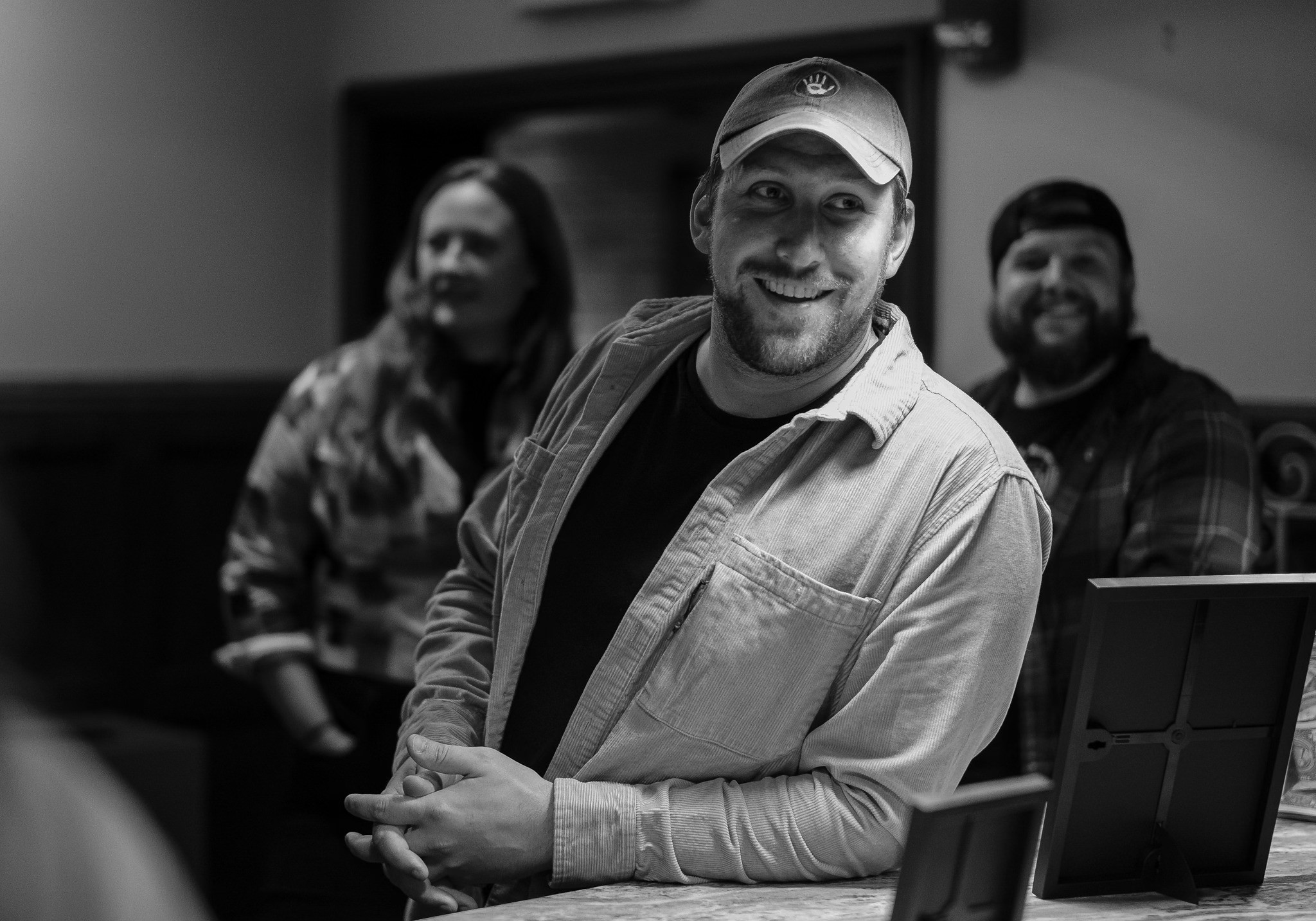

Alright – so today we’ve got the honor of introducing you to Spencer Sherry. We think you’ll enjoy our conversation, we’ve shared it below.
Hi Spencer, thanks for joining us today. One of our favorite things to hear about is stories around the nicest thing someone has done for someone else – what’s the nicest thing someone has ever done for you?
A few years after flunking out of my first attempt at higher education, I decided I wanted to make movies. In a move congruent with my demonstrated wisdom thus far, I enrolled at the University of Albany, knowing full well there was not a film program. They offered a Communications major and had some film electives, so I figured I’d pay the cheap state tuition, use the presumably state-of-the-art equipment they had available to make my own stuff, and hey – worst case scenario: I learn something. After almost two semesters of one purely theoretical film course each, and buying my own DSLR because the school camcorder from 2006 wasn’t cutting it, I was resigned to the fact that I would not be returning to the classroom in the fall. I admittedly, was a bad student. I had yet to learn discipline when it came to doing things I did not want to do (gen-eds), and if my body ever made it to a lecture hall desk, it left my mind behind (asleep).
The only ambition I had went into my film classes, and my professor knew it. A month before the end of the year, and therefore my college career, she invited an Assistant Director and Producer named Glen Trotiner up from New York City to give a presentation to the film classes on the Director’s Guild of America Training Program, the Board of which he served on. After hearing him talk about a path into the industry that was significantly more hands-on learning, I approached him afterwards and insisted upon taking the applicant test. He told me they didn’t open up until the fall but, perhaps noticing my desperation, gave me his email and told me to keep in touch. I did, and a few weeks later he told me he was starting a job on a Netflix film soon and if I wanted an entry-level Production Assistant job, he’d be willing to take me on full-time, even with no on-set experience. Provided I was able to work from NYC for seven weeks. Starting finals week.
So I “You can’t fire me, I quit”-ed from the old college try #2, and found a place to crash in Brooklyn.
When Glen had first offered it to me, he told me that they were hoping to make room for someone “green” and that I could learn as I go. No big deal. It wasn’t until weeks later, after questions about how I got there, whether or not I was a “must-hire”, and which producer my uncle was began to illuminate the truth: it was, in fact, a big deal to be staffed full-time on a film set if you’ve never been on one before. I was dead weight, and not only did the other poor, frustrated staff PAs have to do their stressful jobs, but they involuntarily were obligated to teach me mine at the same time. Glen took an unprecedented risk on me; not only by giving me my first opportunity, but ducking me under the velvet ropes so I didn’t have to wait in a line that can take years to get you to the door. Granted, if I was a bumbling liability for more than that first week, he absolutely could have offloaded me and never looked back. But I think that only goes to show that even a kind act that costs a person nothing could contain immeasurable worth to someone else. He taught me the value of wielding your influence and resources in a way that maximizes the good you can do for others, and that you should always give whatever you can.
Glen died a year before I could show him my first film. I now take every opportunity I can to talk to film students, and try to pay his kindness forward.
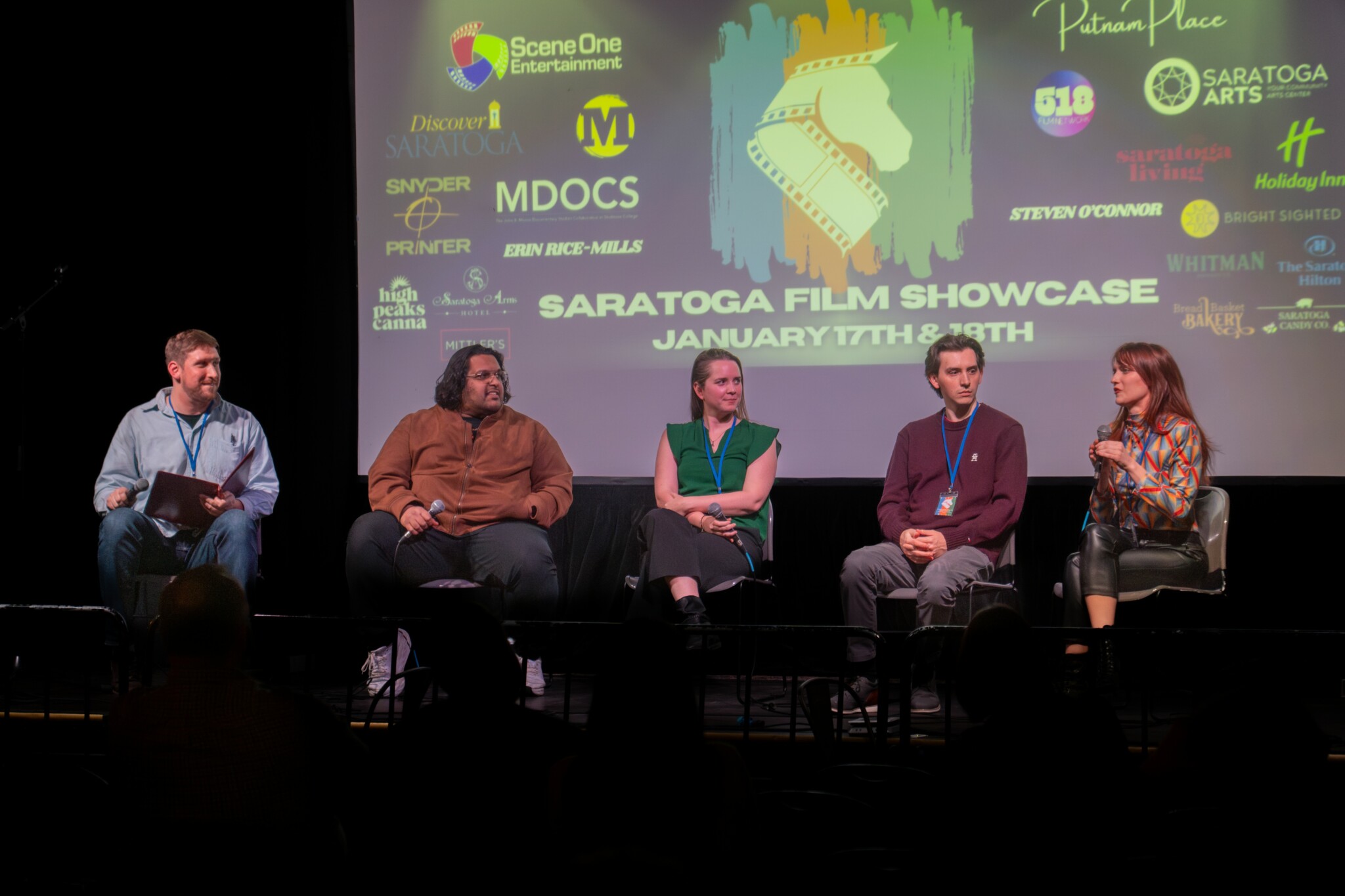
Awesome – so before we get into the rest of our questions, can you briefly introduce yourself to our readers.
The overarching definition of me would be “Producer” though of what, exactly, depends on the day. I’ve created independent films, both shorts and features. I’ve started my town’s film festival. I’ve designed and hosted my own Survivor-inspired competition on a island. I’ve thrown a fundraiser in a castle that I transformed into an escape room (without anyone realizing upon arrival). I’ve hosted comedy shows, disco dance parties, immersive art installations, panel discussions, creative galas, and hot wing eating competitions that feature hot sauce I’ve made from chili peppers I’ve grown. Point being: I am large, I contain multitudes.
Somewhere along the line my local nonprofit community arts center, Saratoga Arts, took notice of my efforts and offered me the position of Grants Coordinator. I now facilitate a regrant program where I give away a quarter-million dollars annually to local artists. I walk them through the application, ensuring they’re hitting all the marks, and work with them to craft the best proposal that they can. Last year I began serving as the Board President of another nonprofit, The 518 Film Network, that connects and supports filmmakers in our region. The throughline here is that I’m committed to influencing the expansion of creativity in my area, and to tap into the community to do so. Art, like business, isn’t self-sustaining; and if you’re not engaged with your environment and the people therein, you’re not going to be able to reach your potential as an artist. I do my best to connect creatives to each other as well as their audience, because the more art becomes a culture, the less it becomes a competition.
In your view, what can society to do to best support artists, creatives and a thriving creative ecosystem?
Talk to each other. Seek out opportunities to connect with artists, buy two tickets, and bring a friend. Shake the hand of the creator and ask them a question about the work. Remember their name and tell everyone you see for the next few days about the experience you had and why you liked it. YOU are the community, so build those connections and make the creative effort lasting by keeping the conversation about it going long after it’s over.
What do you think is the goal or mission that drives your creative journey?
Everything I produce aims to give the audience the feeling of experiencing something singular. I want to explore the blending of disciplines, to defy genre, and to make art something that the audience engages with rather than simply witnesses. I want my efforts bring people together to share in those experiences, and serve to to create conversation and culture around them. Like a story that breaks your heart, or a grand light show spectacle, or a magician who’s just made a coin disappear before your eyes – I think in an increasingly online world, we need shared wonderment now more than ever. I hope people walk out of my productions saying “I’ve never been to anything like that before”, and are inspired to share those sentiments with their community.
Contact Info:
- Instagram: @themonkeyofficialfilm
Image Credits
Richard Lovrich
Zach Skowronek