



We recently connected with Simeon Khazin and have shared our conversation below.
Simeon, looking forward to hearing all of your stories today. How did you come up with the idea for your business?
There was no typical aha moment that everyone is expecting. I have been in the banking equipment business for about 20 years. As cash is becoming obsolete, even though the business is by no means over yet, it is not a very vibrant sector. One of my business partners on the Chinese side of things got involved in restructuring a Smart Lock factory. After a while, she invited me to become one of the partners, and I found it to be appealing enough, so I did. The decision to join was made not only because it’s a vibrant, growing category with good prospects, but also the team I was joining. I already knew that person for 13-15 years, knew her style, believed in her ability to execute, so that played a very big role in me deciding to join the partnership.
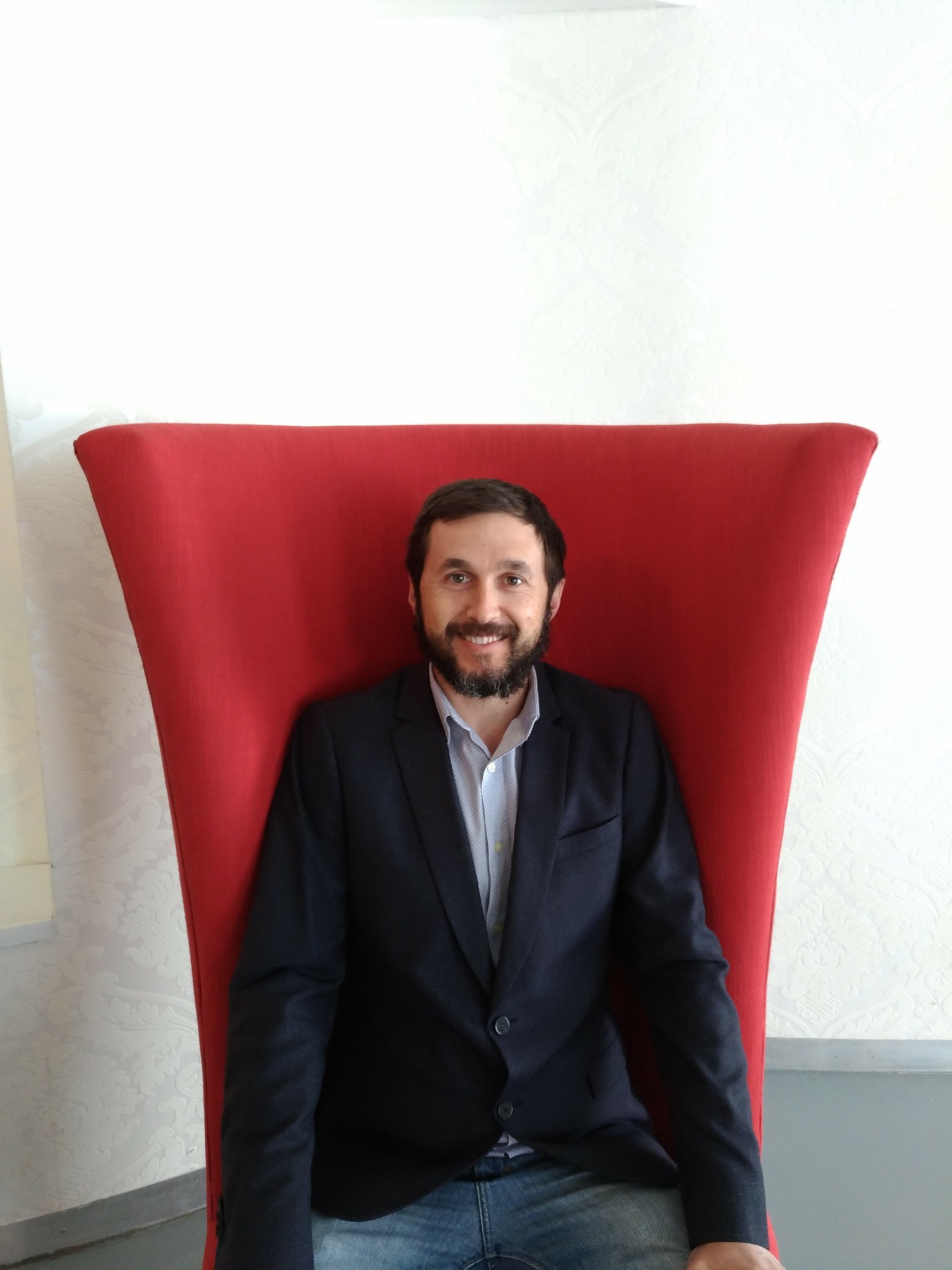
Simeon, before we move on to more of these sorts of questions, can you take some time to bring our readers up to speed on you and what you do?
I was born in Moscow in 1978 and my family immigrated to the United States, to Chicago, in 1995 when I was 16 years old. I went straight to college as I finished high school back in Russia. Never quite lost my accent as a result. Maybe just lack of musical ear.
I had business inclinations from a very early age, not that I acted on them but as long as I remember I was fantasizing about doing business. Of course in the Soviet Union and Russia in early 90s that was not possible as I was still a teenager among other things.
As soon as I had a chance I started doing business, tried different kinds of projects, none of which suited me very well. Ranging from disastrous to moderately successful. And I think what I learned in those first few years was about myself (still learning) and what kind of business is fitting for my style and personality. At some point, and this was my project number 3, I was cashing a cheque in my bank (still at priject #2) and I saw this currency counting machine behind the bank counter and I started wondering where one could buy one if one wanted one and I started looking around and I didn’t see many places and the ones I saw were quite expensive. So I thought, “You know what? Let me try to see if I can find a good supplier for this.” And so I got my first pallet (don’t remember maybe 50 units). And I managed to resell it and then 50 units became 100 units, then 200. Then gradually my parents’ basement got filled up. In that sense, it didn’t start in a garage (the townhouse simply didn’t have one); it was the basement.
And then gradually from just reselling this equipment, the company started offering services: repairs, maintenance, cleaning, etc. Over the years, the equipment we’ve been working with has become increasingly complex to the point that now we are somewhere between a hardware business and a technology business, because lots of our hardware requires integration with middleware, or directly with the the client, be it bank, cash in transit operation, or a cannabis dispensary.
So despite my best efforts, I ended up in a technology business. This is something I actively didn’t want to happen (the irony), but in the end, I’m enjoying it enough. And then from the banking equipment it has become smart locks which is probably 70% technology and 30% hardware. It’s a very technology-intensive business.
So here I am, twenty years later.
Let’s talk about resilience next – do you have a story you can share with us?
I have plenty of such stories. During 2006-7 real estate crisis I went from being worth 200K to negative. My business partner at the time skipped town, owing a lot of money to a lot of people. It’s been 3 months since he stopped making payments on our jointly owned properties. The state of the market didn’t help. I narrowly avoided bankruptcy.
Can you tell us about a time you’ve had to pivot?
Pivoting is what one has to do all the time. Even though I have been in the same industry for 20 years, the company has not always looked the same. For the first 10 years or so we were more of an e-commerce company – very lean and profitable. We didn’t need an office even, only warehouse space. But at some point it became apparent that this model has run its course. We had to become a real supplier for the banking (and other) industry, which meant that now I needed technical staff, a service center, etc etc. Within two years the company has become unrecognizable. We still have the e-commerce component to our business, but it ceased to be defining.
And then came the smart locks. The amount of cash in circulation is not growing. I still expect this business to be viable and us being able to compete successfully with bigger players. But it was also time to diversify and future-proof the business. That’s how we went into the smart locks, which in many ways is a similar business. It’s also security-driven, but it’s not security of cash; it’s security of premises. All the integrations, they’re not the same, but there are a lot of similarities. This is bound to change our business completely in the time to come .
Contact Info:
- Website: https://daltonlocks.com/
- Instagram: https://www.instagram.com/daltonlocks/
- Linkedin: https://www.linkedin.com/company/106597794
- Twitter: https://x.com/DaltonLocks
- Youtube: https://www.youtube.com/@DaltonSmartLocks