



Alright – so today we’ve got the honor of introducing you to Shandon Gould. We think you’ll enjoy our conversation, we’ve shared it below.
Shandon, looking forward to hearing all of your stories today. How did you learn to do what you do? Knowing what you know now, what could you have done to speed up your learning process? What skills do you think were most essential? What obstacles stood in the way of learning more?
I was adopted and raised by my maternal grandparents. My grandfather is Japanese and was born and raised in Hawaii and my grandmother is South Korean. The first time I experimented in origami was actually in elementary school. Someone showed me how to make a swan and my mind was blown. After school I excitedly showed my piece to my grandmother and explained how this was made from one sheet of paper. I remember she looked at it and I asked if she knew how to do this.
She told me to grab some notebook paper.
We sat on the floor at our Korean dining table and she showed me how to make an origami shirt, pants, and jumping frog. This was a big day for me. My grandparents worked hard, a lot, and having this time to bond and learn about my culture and also have a glimpse into my grandmothers past was a blessing I will never forget.
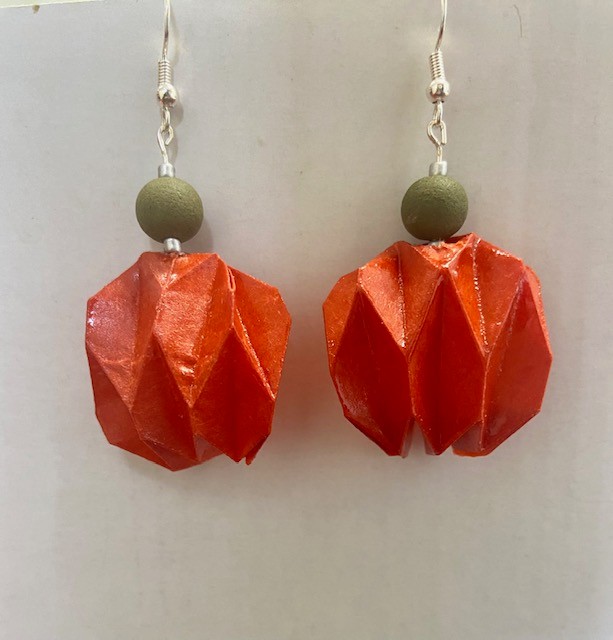
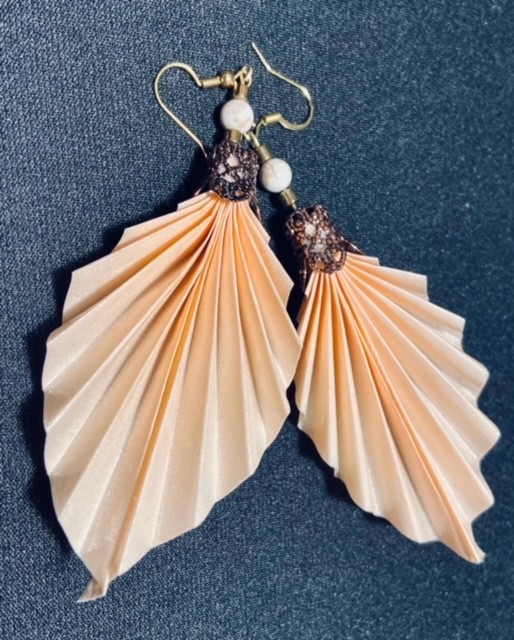
Luckily, I didn’t forget how to do the majority of the techniques and folds that were taught to me. In order to turn this art into wearable jewelry I had to learn what designs would translate well at a smaller size. Unfortunately this process does take a bit longer and smaller tools would be needed to create tiny creases. Finding a way to cure/treat the origami paper after it is folded was another learning process. I wanted the origami piece to last, even if one was caught in the rain. The only real obstacle in this is actually time. Many pieces that are made are one of a kind due to how long it takes from initial fold to construction of the earring itself. I work full time during the week as a Medical Billing/Coding Specialist, I am a mother of two amazing teens (one who is graduating this year from high school), and the proud wife of an amazing musician. I am working on setting time aside to learn more techniques to take my skills to the next level.


Great, appreciate you sharing that with us. Before we ask you to share more of your insights, can you take a moment to introduce yourself and how you got to where you are today to our readers
My name is Shandon Gould and I am from South Carolina. I currently work full time as a Medical Billing/Coding Specialist who was also doing some art pieces on the side for my husband for his albums. Earlier this year I found a box of origami paper that was gifted to me by a friend and started to fold little swans and flowers and then something clicked. I wondered if it was possible to take this little piece and turn it into a pair of earrings. I started experimenting with different designs and folding them as small as possible, grabbed a quick earring kit at the local store, and asked my good friend for some tips on earring assembly and boom!
After that I was devoted to researching techniques to properly treat the paper and also find quality origami paper to use. Not all origami paper is the same. Most of the paper used is either Kami (standard origami paper) or Tant. Each piece takes about 3 days to make-from first fold to final completion of earring.
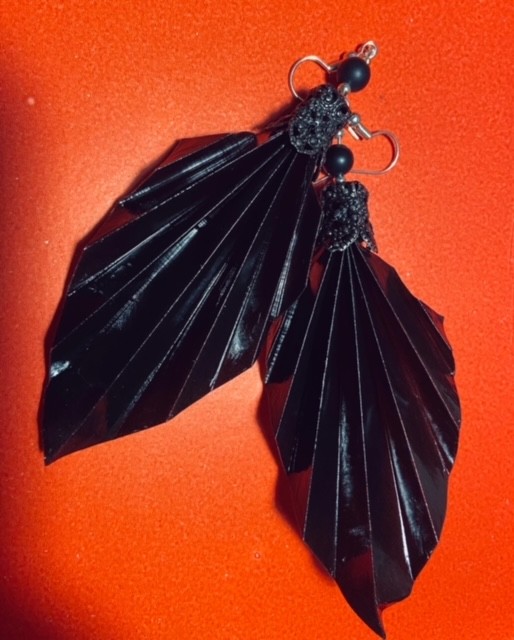
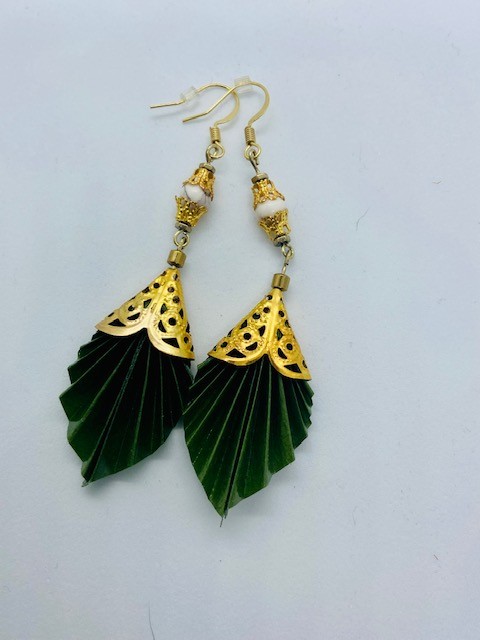
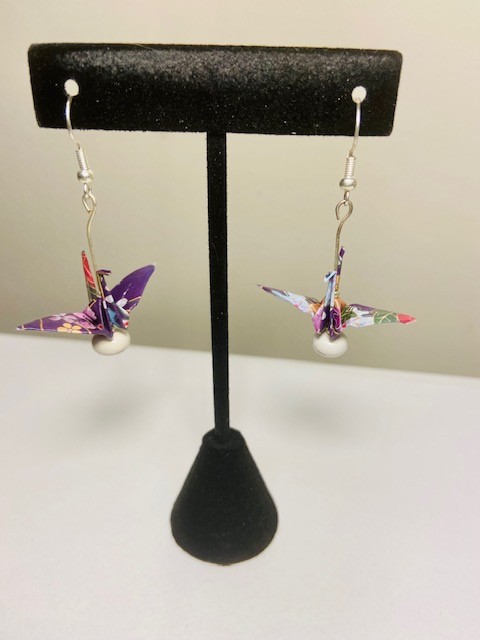
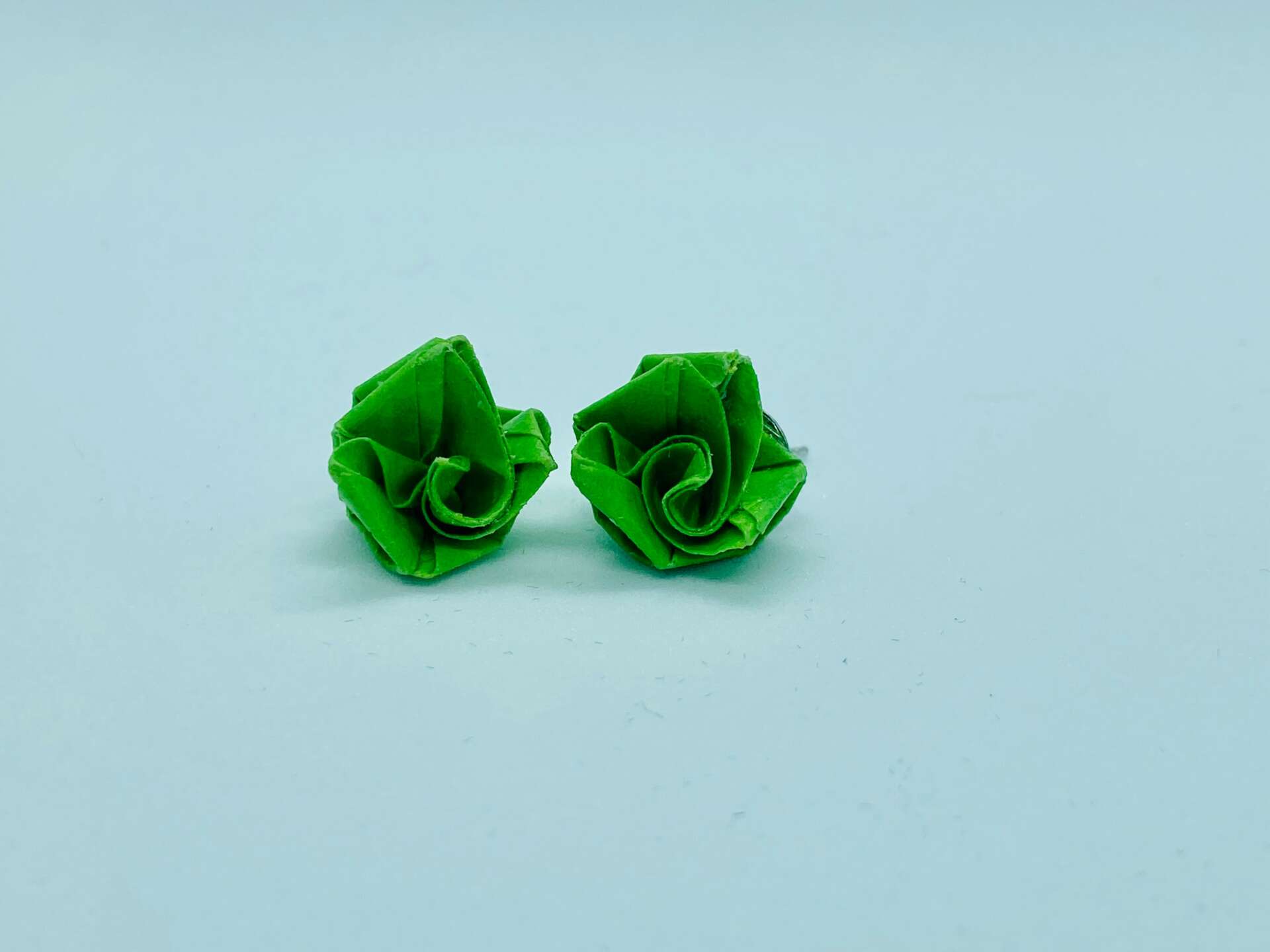
Tiny Folds Origami provides light weight, durable, origami art earrings in a wide variety of prints and designs. Each piece is one of a kind.
In addition to earrings, I also make origami flowers that are wire wrapped on gold plated stems for accent pieces around your home. They can be used as a center piece or stick into your favorite indoor plant to add some color during the months when your plant doesn’t produce flowers.
A few months back I was blessed with the opportunity to create hangable wall origami art for a couple who were celebrating their one year wedding anniversary. The traditional gift is paper.
I am proud of the fact that each piece I create is a wearable light weight statement piece. You will take off your shoes before you take off these earrings.
We often hear about learning lessons – but just as important is unlearning lessons. Have you ever had to unlearn a lesson?
I think the hardest lesson anyone who is selling their craft is learning your worth. Pricing an item you created isn’t easy. It’s not just including supplies, but also including your time. Its factoring in cost of display supplies if you participate in markets on the weekend, vendor fees, time spent creating content for social media, etc.
I had to learn that this is something I am unable to do by myself. I am beyond blessed because I have help from my children and my husband. Thank you to my friends who I run to when I am not sure about an idea.
Its tempting to sell for a lower price, but you shouldn’t do it…unless you are trying to clear out older merch to make way for a new season of designs.
How did you build your audience on social media?
I give all credit to my daughter, Tori, for helping to not only create, but also make content for the social media sites. I didn’t view myself as “old” until I tried to make a Tik Tok.
She helps make content that showcases any new pieces that we made prior to its debut on our site or in public as a vendor. We make it a point to tag any markets that we will be at and also share and encourage our followers to share our posts.
Recently, we started offering a discount to customers that post our product on their social media page. We just ask that you tag Tiny Folds Origami in your picture, for proof, and we will send you a discount code to use on your next purchase.
It is great feeling that your company can grow based on word of mouth instead of having to pay for AD boost on social media pages.
Contact Info:
- Website: https://tiny-folds-origami.square.site/
- Instagram: Tiny_Folds_Origami
- Facebook: TinyFoldsOrigamiSC
- Other: Tik Tok: Tiny_Folds_Origami
Image Credits
Tori Lesesne Blake Lesesne