



We’re excited to introduce you to the always interesting and insightful Serena Potter. We hope you’ll enjoy our conversation with Serena below.
Hi Serena , thanks for joining us today. Are you happy as a creative professional? Do you sometimes wonder what it would be like to work for someone else?
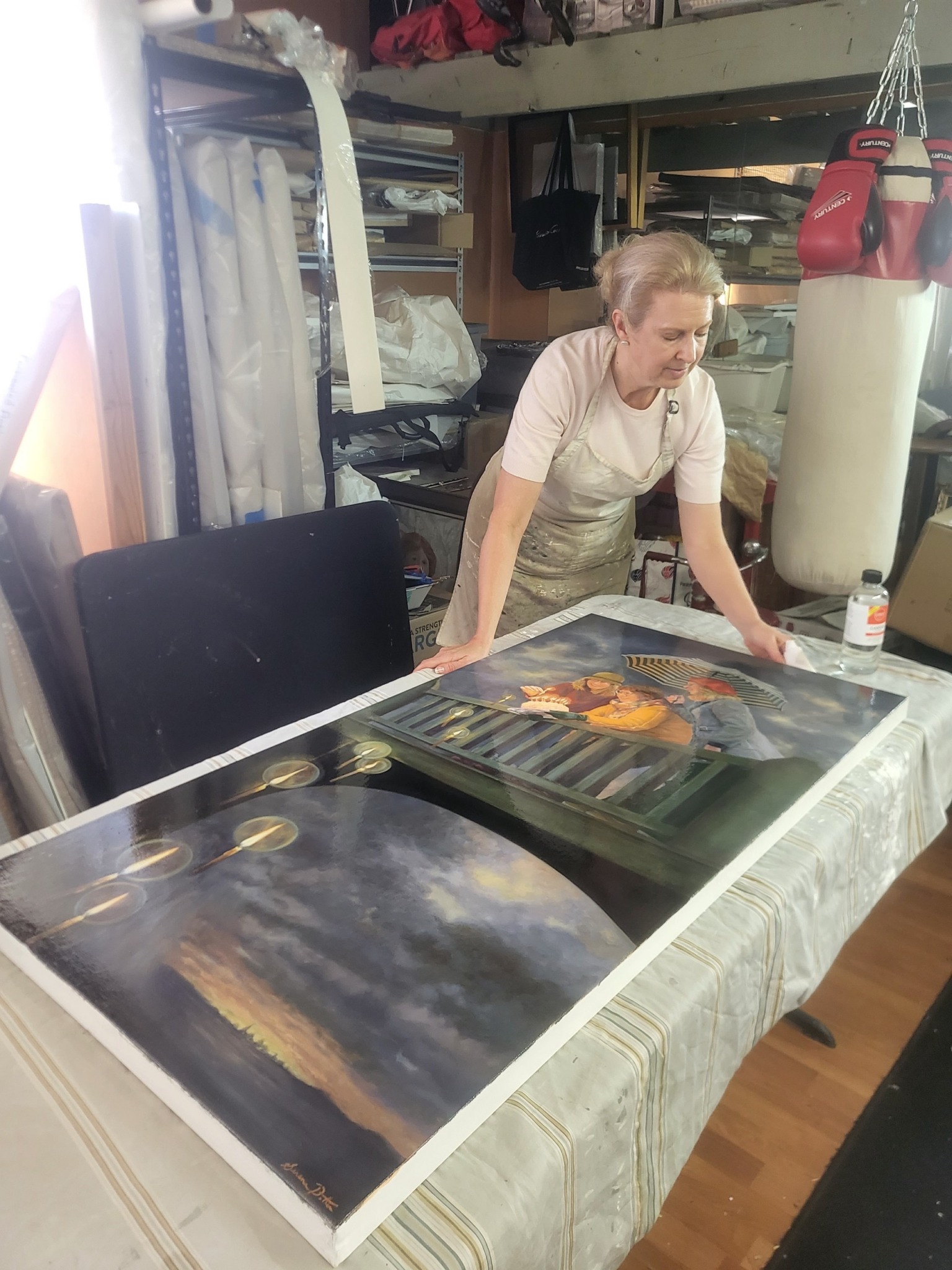
In recent years I have found myself reflecting on how fortunate I am to be an artist. Making art is not just something I do, it is who I am. Being an artist gives an adult permission to have fun, to play, to be silly, to explore, as a means of trying to make sense of our experience, to process physical and emotional pain, to share joy and wonder, to create modern mythologies. Am I happier as an artist? I have not had a full time job as something else (I worked in retail management right out of college, anyone remember Mediaplay?) since my 20’s, so don’t have a lot to compare it to, but I am generally content. I like the routine of my life. My husband and I both work from home, so we go out to our favorite coffee shop every morning, will talk through our plans for the day, current projects, or painting ideas, or our next travel, or our goals, or our girls or what we are reading, or just check in and ask, are we happy? Then we head out to walk a trail, run errands, or keep appointments, head to the gym or pilates, come home, make lunch, then he goes to his office and I go to the studio. We meet up again for dinner and walk the neighborhood, chat with neighbors or their dogs or cats. Some evenings I’m out at art events, artist gatherings, or teaching online. My studio time is my refuge. I can’t imagine not creating. Have I been tempted to get a full time job with a salary? Sure. I live in Southern California, who hasn’t dreamed of a steady income and the financial stability that comes with it? I started adjunct teaching after graduating with my MFA. When I’d hear of a full time position opening there was the part of me that would think “should I go for it?”. I am a good teacher and I like teaching, but ultimately the answer has been no. I have never set out to teach for the sake of teaching. It was always a means to provide the room for me to create without an agenda, to not have the pressure to sell. Well, during the pandemic, more and more schools were desperate for teachers willing to teach online, something I’d done for ten years for National University, so I said yes, and took on extra teaching jobs, not knowing, when the galleries would be open again, or when we’d be able to meet and exhibit art in person again. By 2022 though, I decided, I had to have my studio time back, I was miserable and stressed out. So I decided, now or never, just paint. I had more time to show up at events, to enjoy my art community, and opportunities came my way. I had set a goal that in a years time I would sell enough work to replace the lost income from teaching and I met my goal, and then some. Life as an artist is inconsistent. You have to be flexible with finances, plan ahead, save, be smart with money. I still teach online part time, one class. It provides just enough of a parachute. Having a supportive partner is also so important. I am very fortunate to have found someone who understands my need for space, my creative moods and cycles. Someone who has no problem with me putting on a beard for an art open, or encouraging people to throw eggs at me.
Great, appreciate you sharing that with us. Before we ask you to share more of your insights, can you take a moment to introduce yourself and how you got to where you are today to our readers.
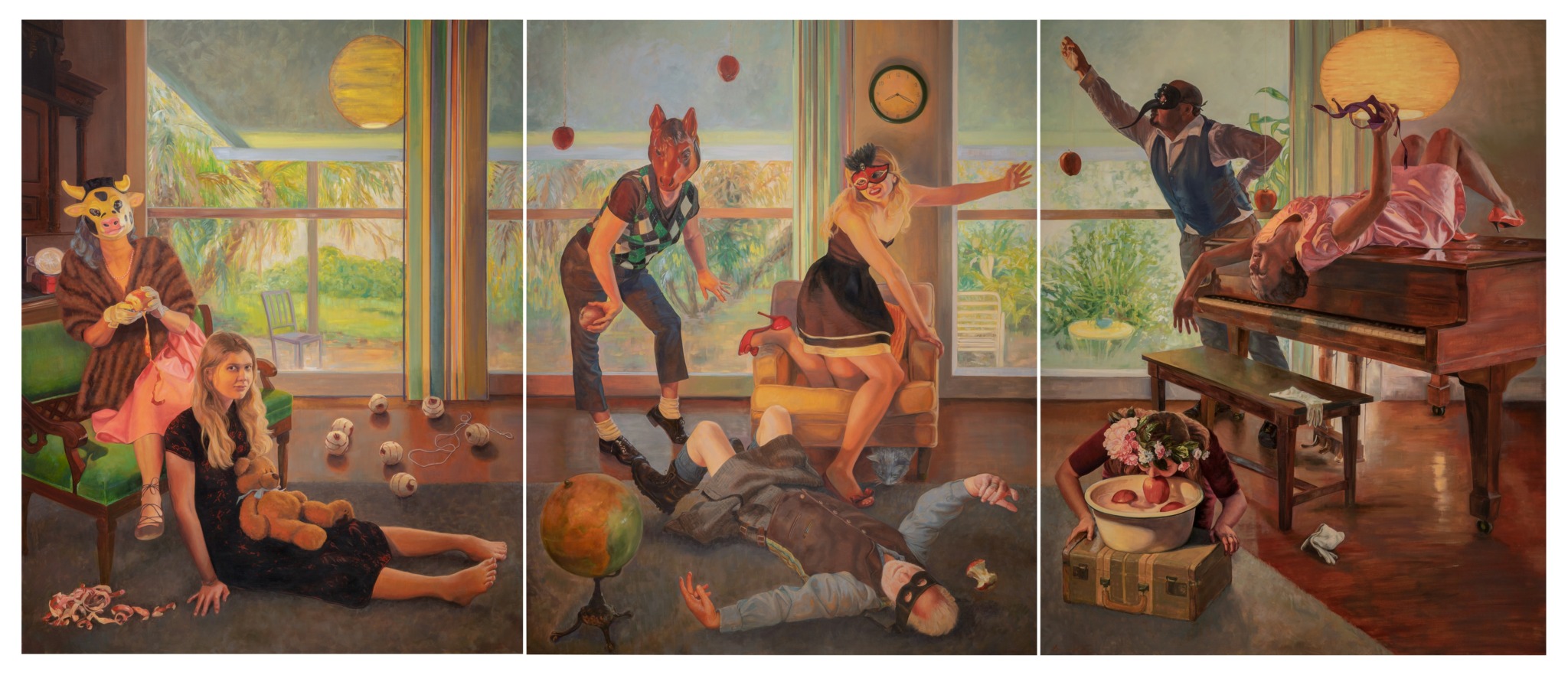
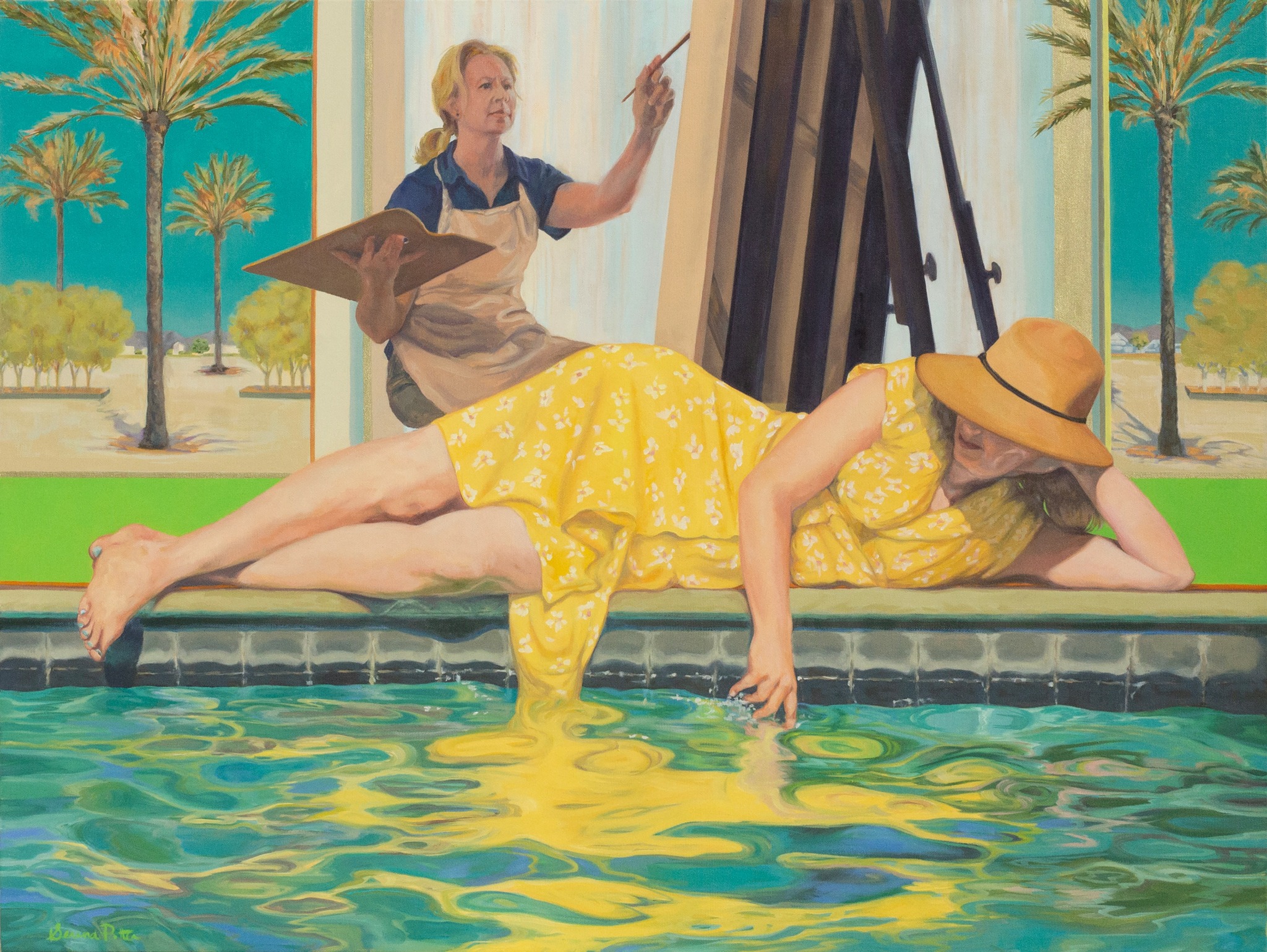
I am an artist who is best known for figurative narrative oil paintings and mixed media charcoal drawings. My work tends to be realism with elements of the surreal and abstraction. I paint people in situations that tell a layered story. They often include myself, and people I know as actors in situations I’ve imagined. There is a retro American Illustrator quality to a lot of my work, using colors and costumes or props that allude to past decades, though will have narratives that ground us in relevant contemporary experience. For example, in 2021 I create a twelve foot wide triptych depicting two men (my husband and a friend), myself and my daughters, in vintage inspired clothing, and halloween masks at a party. There are apples hanging from above, on strings, inviting the party goers to try to bite them, there were apples in a barrel, one character, arms behind her back, in the act of grabbing an apple by the stem with her teeth. There is a woman in a mink stole, and cow mask, seated on a velvet bench in the act of peeling apples, a pile of red ribbon peal, stacked at her feet. There is another character draped over the piano mask in hand, reaching with the other, a man in vest and plague mask reaching as well. Eight figures in total, a horse, and a cow and kilted man, make up a beautifully painted, candy colored, weird, slightly off, improbable, party scene. My work is inspired mostly by my experience and trying to make sense of it. I always start by asking “what am I feeling right now?”. What is it that I need to work out or respond to? The imagery or narrative comes from many different directions, things I’ve read or watched, poetry, music, travel, observing closely. I love history, old movies, historic architecture and travel. I love to think about those who came before us and what influence they. may have had on who we are now, who I am now, on our experience. Invariably people respond to the work, see their own stories there. At lease, this is my goal. This is what really motivates me. If I can help someone else slow down, look closely, ask questions and find their own shared experience there, then I’ve been successful. With each project I set up certain challenges, to push myself in new directions. Each painting or drawing is very much a one off. It does not require a series to help inform the one. This can be challenging for a traditional gallery that is looking for a product that is consistent in style or content. I am told though, that there is a thread that ties my work together, that there is a consistent visual language even if the content varies. There is a lot of humor and irony in my work and my process. I use it as a means to test the boundaries of convention.
Let’s talk about resilience next – do you have a story you can share with us?
When I was in my early 30’s I contracted the Parvo B19 virus though my daughter’s nursery school. It left me with what today would be the equivalent of something like Long Covid, though they don’t have a name for what I had so just labeled it CFS, or ME. For seven years I battled debilitating symptoms that put me in bed for most of my day. Doctors really had little to offer, other than drugs that never did much but put me to sleep. I missed out on so much of my young daughter’s lives, on family life. I began to feel like a non person, unable to participate daily living. During this time though, I clung to my art. For months at a time I might only have one hour a day with enough energy to paint, so I started little 5×7″ or 8 x 10″ oil paintings , just one a day, of random things around me: a bowl of mazo ball soup, a pair of platform shoes, a daffodil in a Coke can. This small act helped me feel just a little bit human. Finally, after seven years I was introduced to a naturopath, who helped me to improve my situation. My energy came back, my brain fog lifted, my pain levels eased up and I thought, this is my chance. I wanted to go back to school. I applied to Laguna College of Art and Design and was accepted to their MFA program. At this point I was living in Lake Arrowhead, and had not driven a car in over a year. I had no idea if my improved health would last. My husband and I did a test drive down there to see if I could handle the drive, with the understanding that he would help out as needed. I started school and didn’t tell anyone of my health issues. I was so afraid of being judged or misunderstood. I was so afraid I could not cut it. By the end of the first semester, I came to realized everyone had something that was challenging them. No one cared about my thing, there was no judgement. Starting the program, I had no idea that I even had anything to paint about, but slowly it dawned on me, that my health struggles were exactly what I needed to paint about, and an MFA was the perfect time to explore that. I kept at it. I made the drive, sometimes sleeping on the couch in my studio, sometimes getting a hotel if the roads were bad, but I did it. I graduated with a body of work that was about my illness. I made wonderful friends and community, I learned that hey, I could teach as well and was pretty good at it. I learned to trust my inner voice and follow through with my ideas and if I didn’t yet know the means the paint the idea, I’d work it out. I still have health issues, but I’ve learned to manage them. There are times I have to stay home, feel the FOMO, listen to my body, eat my veggies, meditate, try the next thing. I get frightened that the next flare up will be a big one, but I have learned to wait it out, step back, eventually recovery comes. There are seasons for showing up and seasons for hiding in my studio and my process.
Is there something you think non-creatives will struggle to understand about your journey as a creative? Maybe you can provide some insight – you never know who might benefit from the enlightenment.
I’ve made choices in my life that a rational, non creative person might consider imprudent. My husband and I moved to England with a three year old and a six week old baby, with only a couple thousand dollars in the bank, so he could go to grad school. There were quite a few people in our lives who felt we were dreamers and that real people didn’t pack up their babies and move to England for an expensive degree in English Literature. It was challenging sure, but also the best experience we could have had. Later we moved those kids again, from California to New Hampshire, with again, no money, so he could start adjunct teaching. In each place I connected with artists, and the art community, becoming head of the artist association in Norwich England while there, getting involved in the NH Plein Air painters when there. Leaping again, when I decided to drive down a mountain to the beach so I could go to grad school. It is these choices, leaps of faith though, that have helped me to expand my knowledge of the arts and artists, the world, and my abilities. Sometimes you just have to jump without knowing where you are going to land and learn to trust that one way or another it will work out. Trust in yourself but also in the people around you. Trust in the importance of creating community wherever you are. Art is not a solitary process. Even though a painter spends a lot of time in the studio on their own, they still need a network of support outside of the studio. I am so grateful for the wonderful people I have met along the way who have helped me and my family. I have also learned that there is no room for the word failure in my vocabulary. Everything is process, experience and informs what comes next. I am looking forward to the next adventure.
Contact Info:
- Website: https://serenapotter.com
- Instagram: https://www.instagram.com/serena_muse/
- Facebook: https://www.facebook.com/serena.potter.35/
- Linkedin: https://www.linkedin.com/in/serena-potter-379709a/
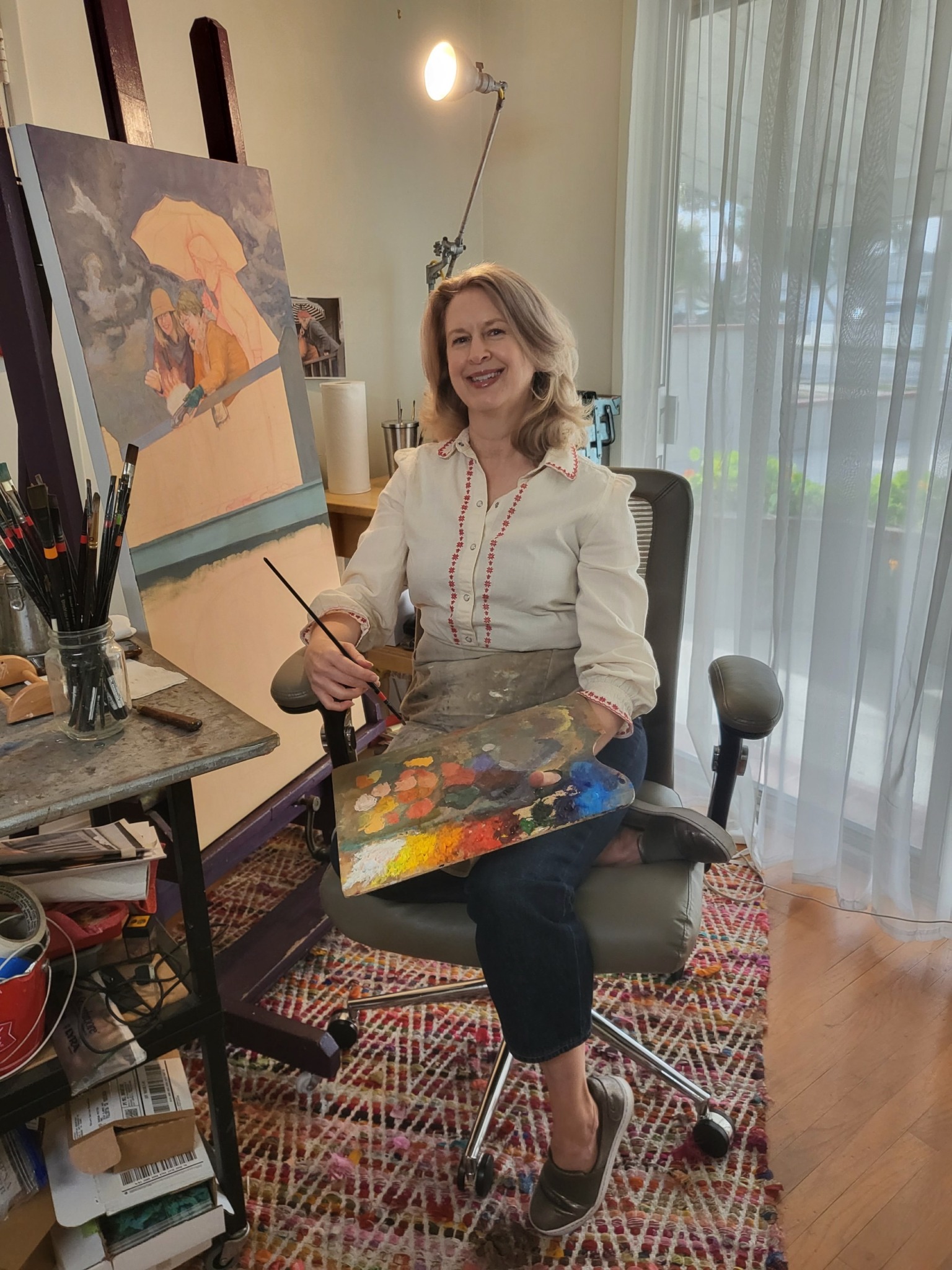
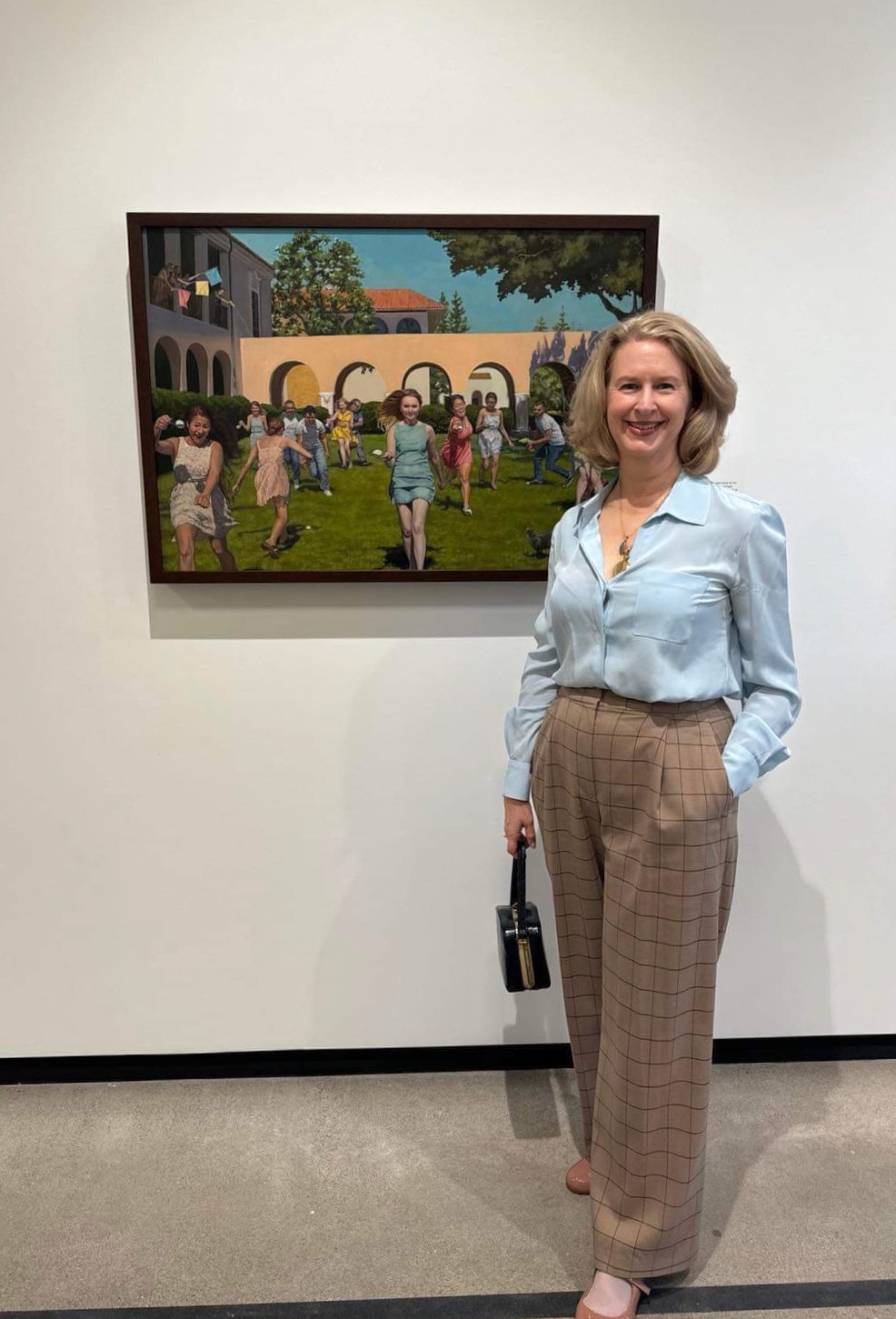
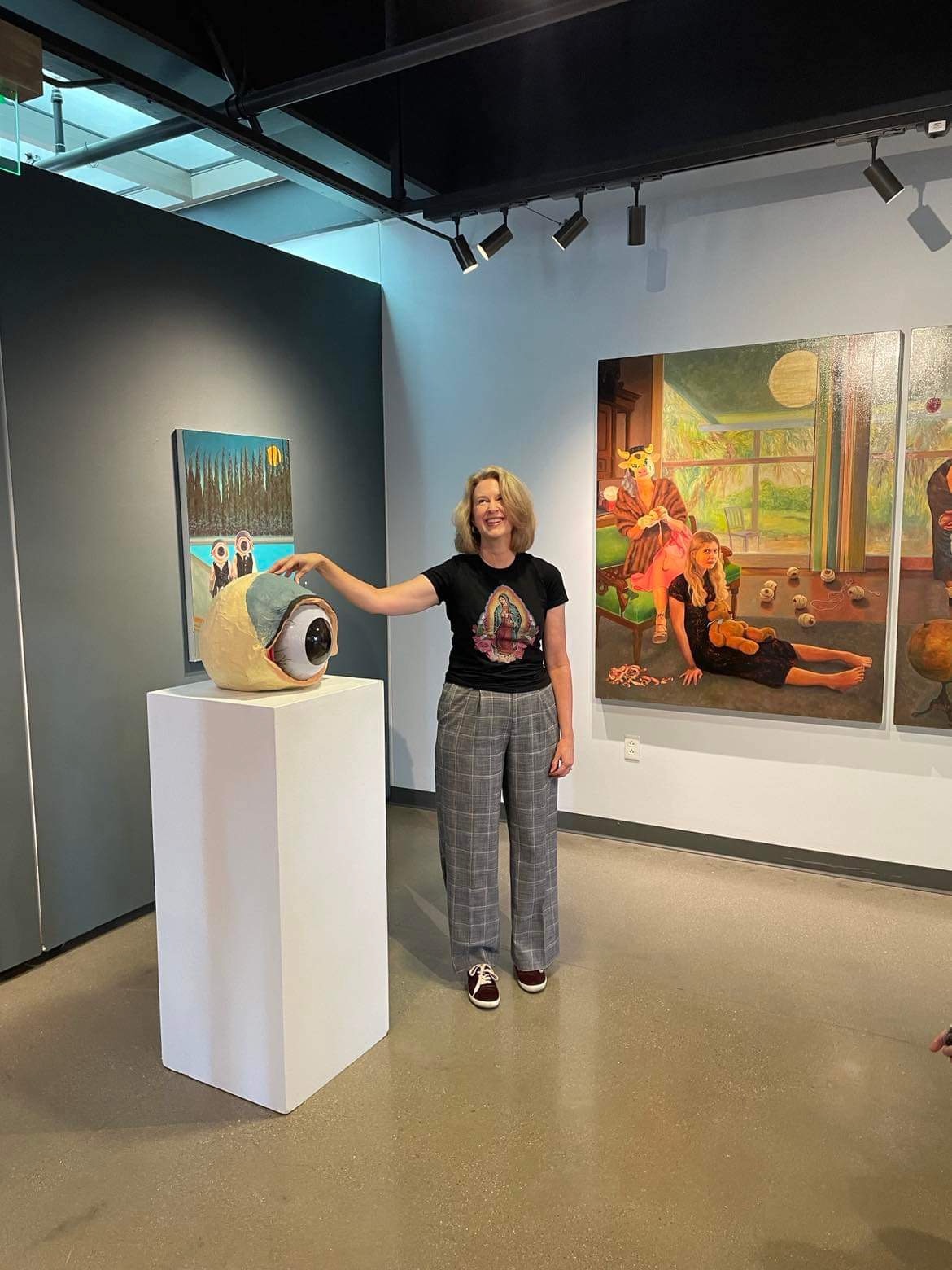
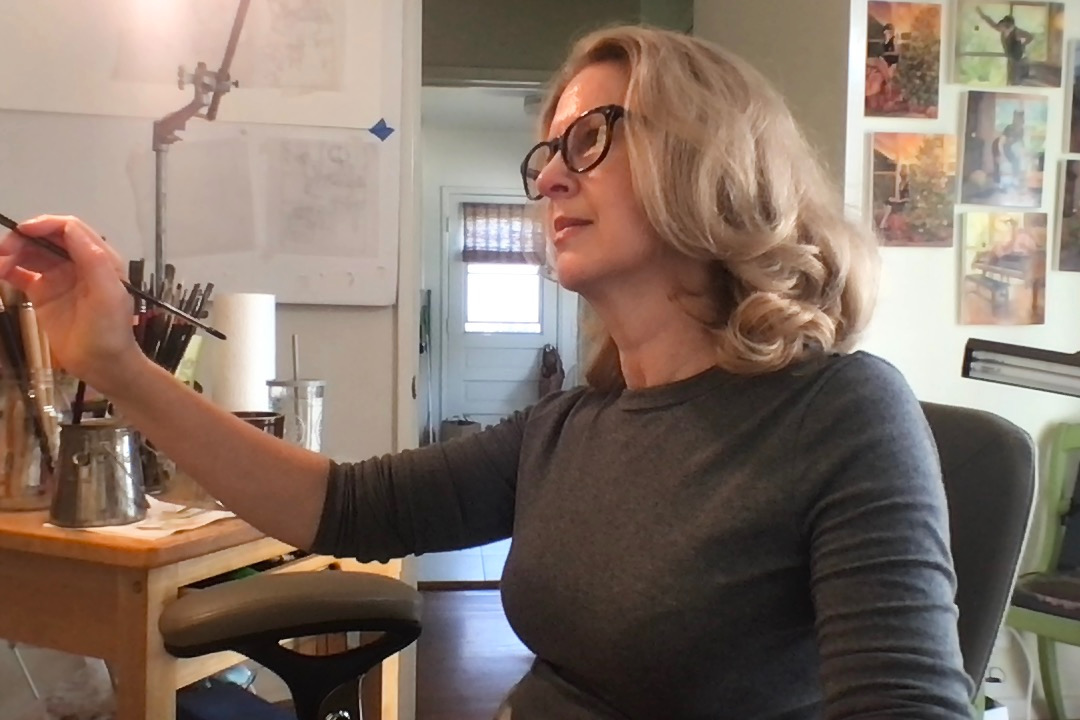
Image Credits
Tony Pinto