

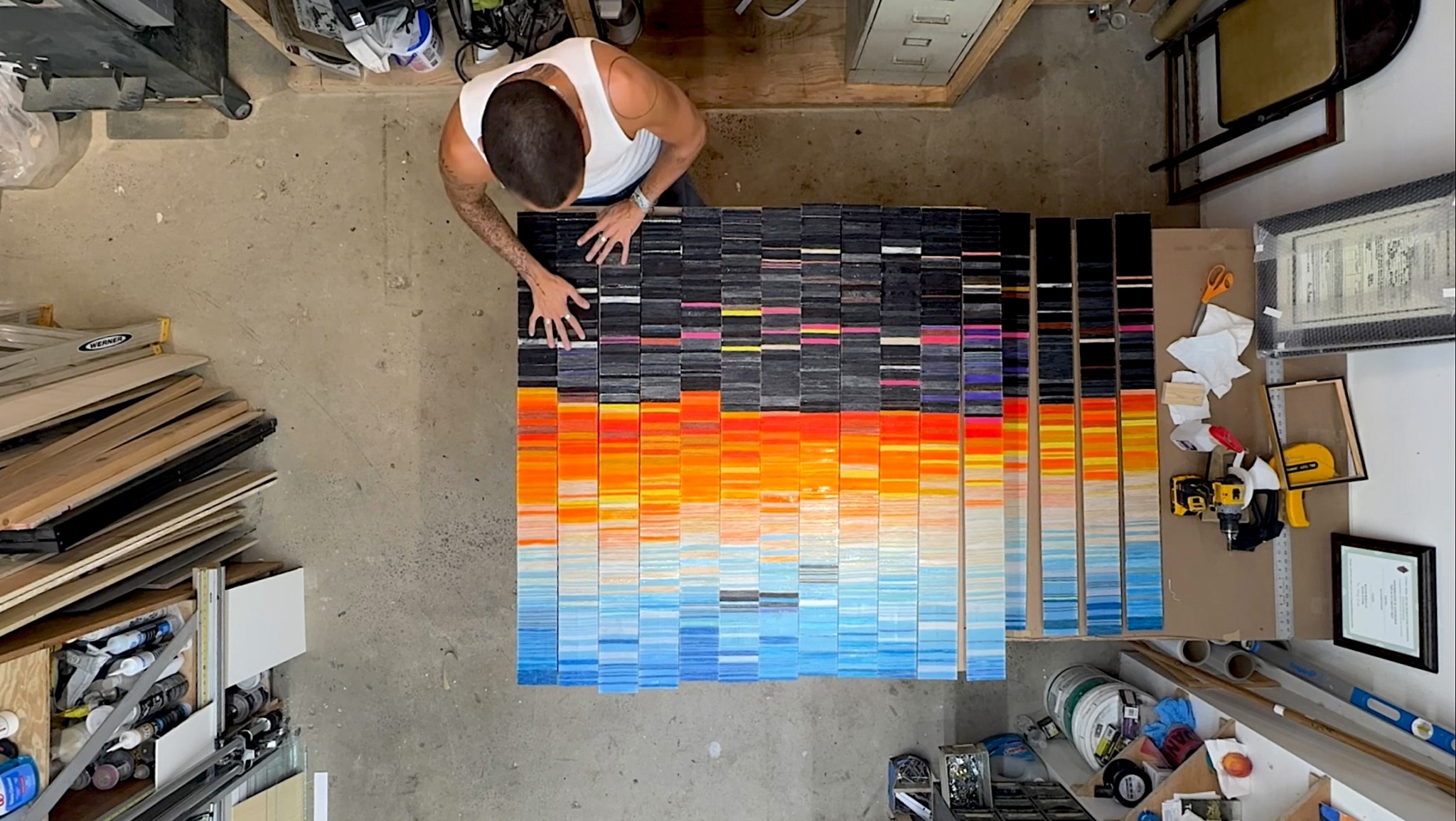

We caught up with the brilliant and insightful Sebastien Courty a few weeks ago and have shared our conversation below.
Sebastien, looking forward to hearing all of your stories today. We’d love to hear about a project that you’ve worked on that’s meant a lot to you.
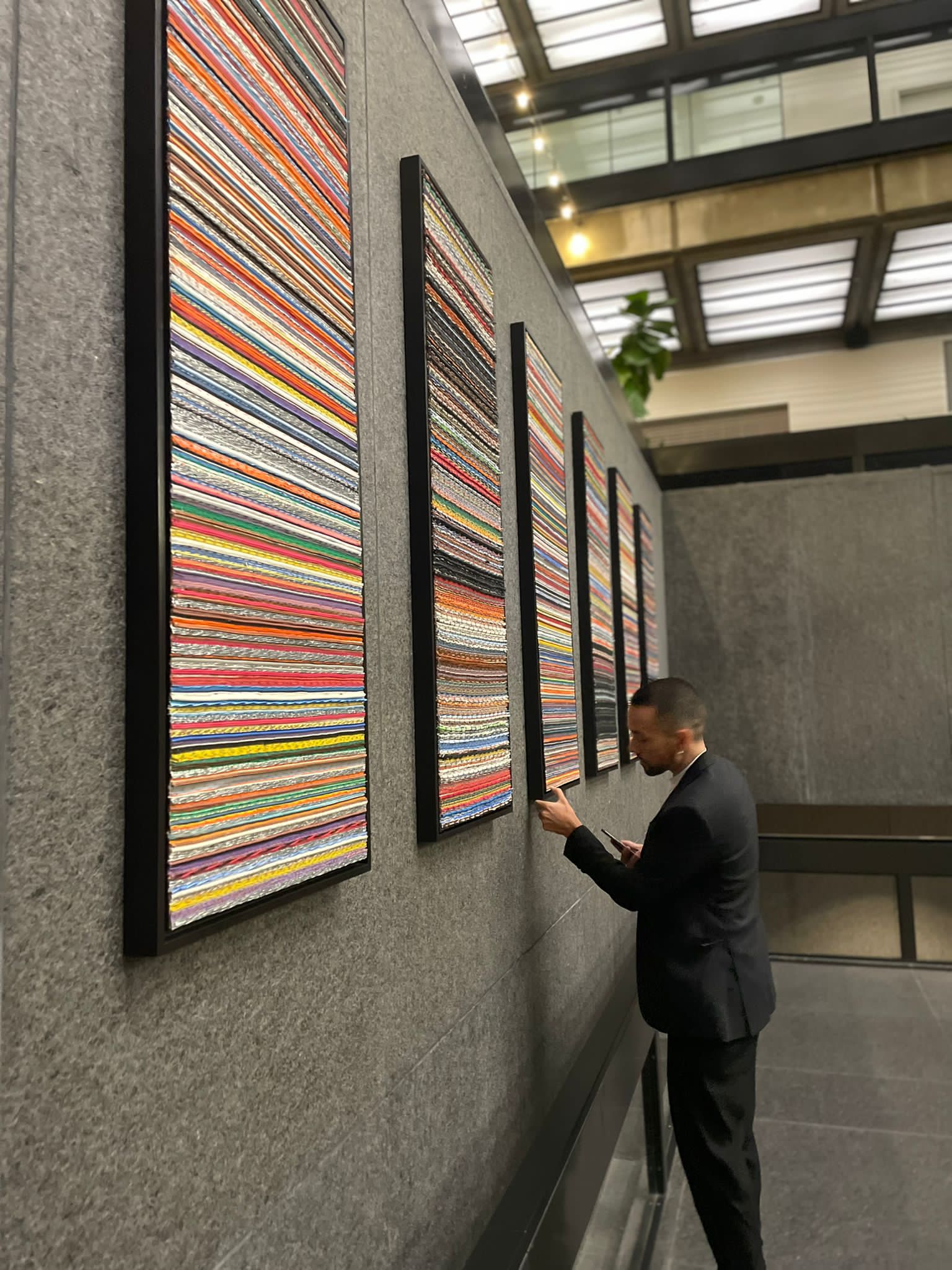
One of the most meaningful projects I have worked on is The Fabric of Bell, a permanent installation created for the Bell Works campus in Holmdel, New Jersey. More than any other project, it embodies the core principles that define my artistic practice: repurposing, sustainability, storytelling, and a deep connection to place.
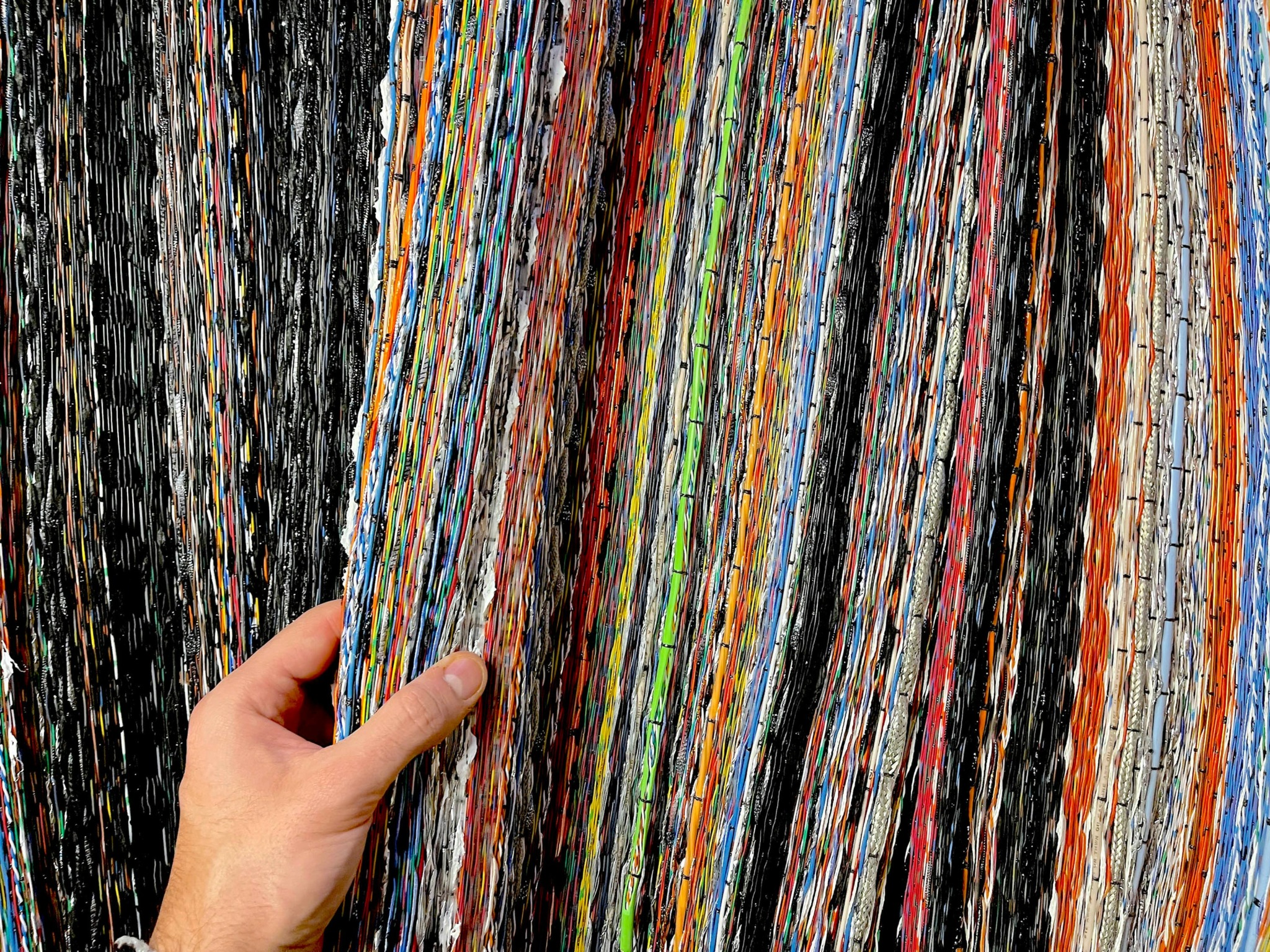
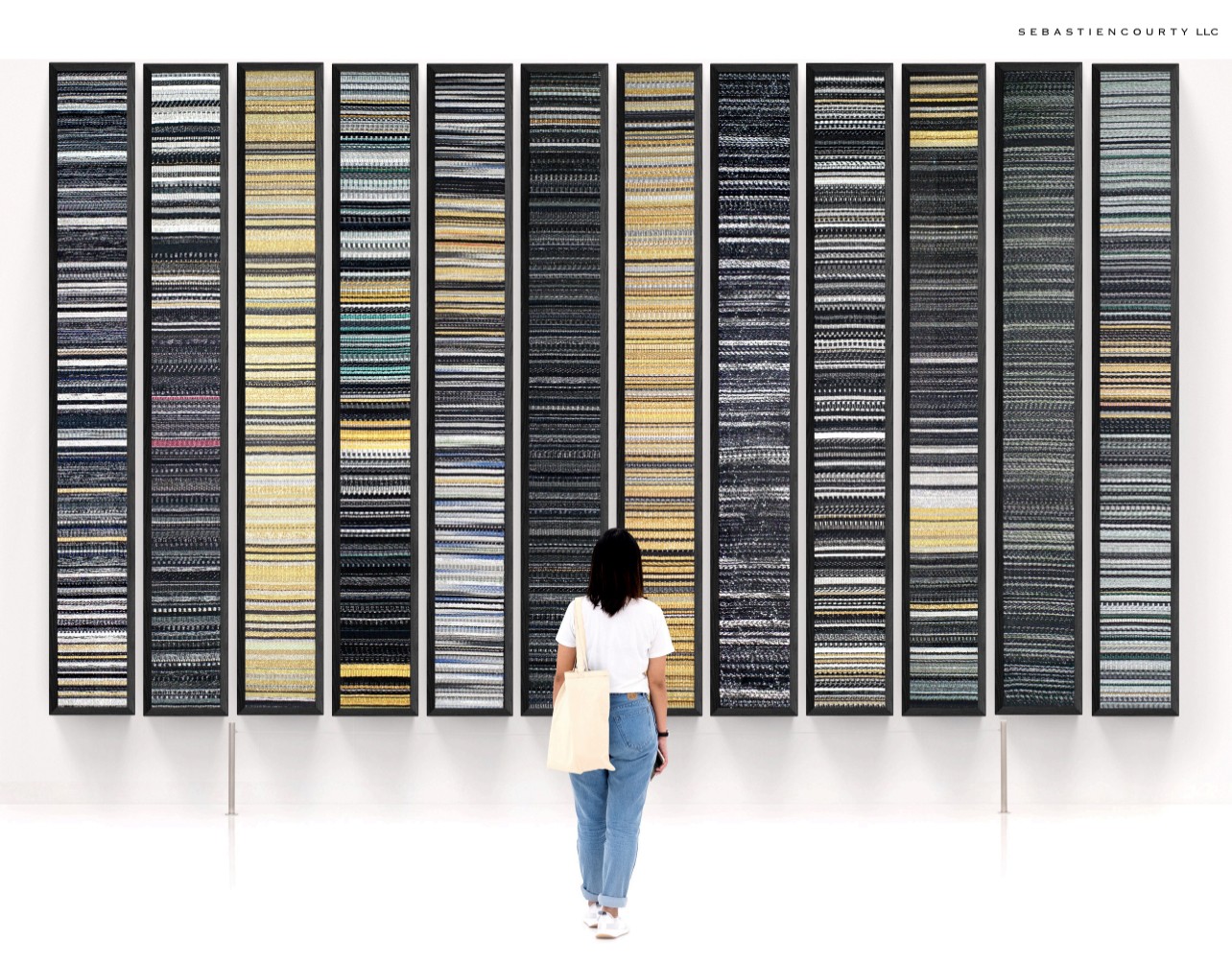
The Fabric of Bell perfectly illustrates this philosophy. During the redevelopment of the former Bell Labs campus into what is now Bell Works, I was given access to communication cables and technological materials that had been removed from the building and were destined for disposal. Rather than allowing these remnants of innovation to disappear, I incorporated them into a series of eight large-scale woven panels, each one commemorating one of the eight Nobel Prizes awarded to Bell Labs researchers.
The installation was conceived as a bridge between the site’s remarkable scientific legacy and its contemporary identity as a thriving “Metroburb.” Handwoven entirely from reclaimed materials harvested during the building’s transformation, the work celebrates both innovation and renewal. The colorful cables, once hidden in the building’s infrastructure, were meticulously intertwined to create a visual language that echoes the interconnected nature of communication, discovery, and human ingenuity.
Equally important was the opportunity to create a dialogue with the architecture itself. Designed to integrate seamlessly with Eero Saarinen’s iconic modernist structure, the installation draws subtle inspiration from Bauhaus principles while maintaining a contemporary textile vocabulary. The result is a work that honors the past while embracing the future—a physical manifestation of transformation, both material and cultural.
What makes this project especially meaningful to me is that it demonstrates how art can preserve memory, celebrate innovation, and promote sustainability simultaneously. It transformed discarded remnants of one of the world’s most influential research institutions into a new cultural landmark, allowing the history of Bell Labs to remain woven into the fabric of Bell Works itself.
Awesome – so before we get into the rest of our questions, can you briefly introduce yourself to our readers.
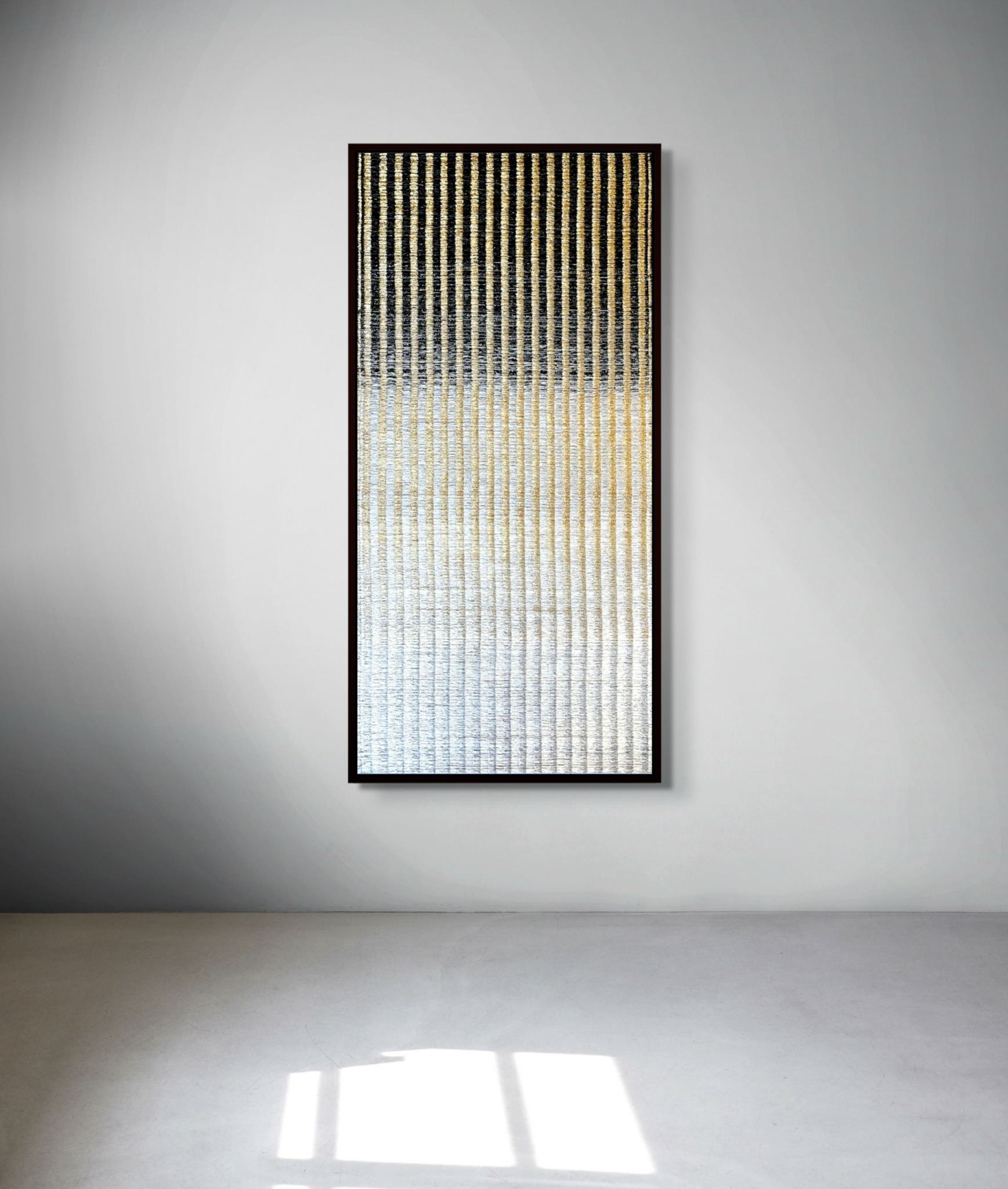
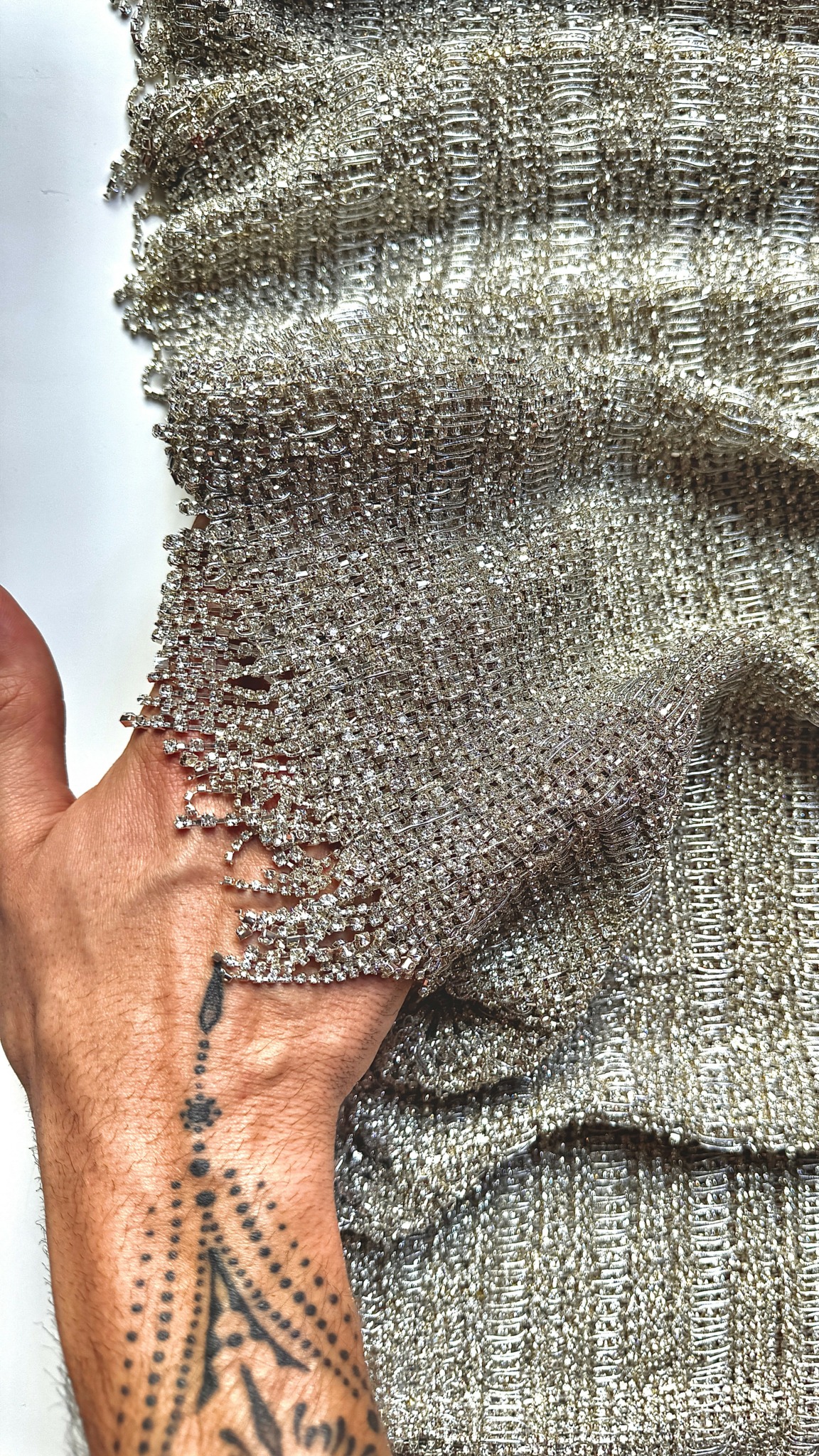
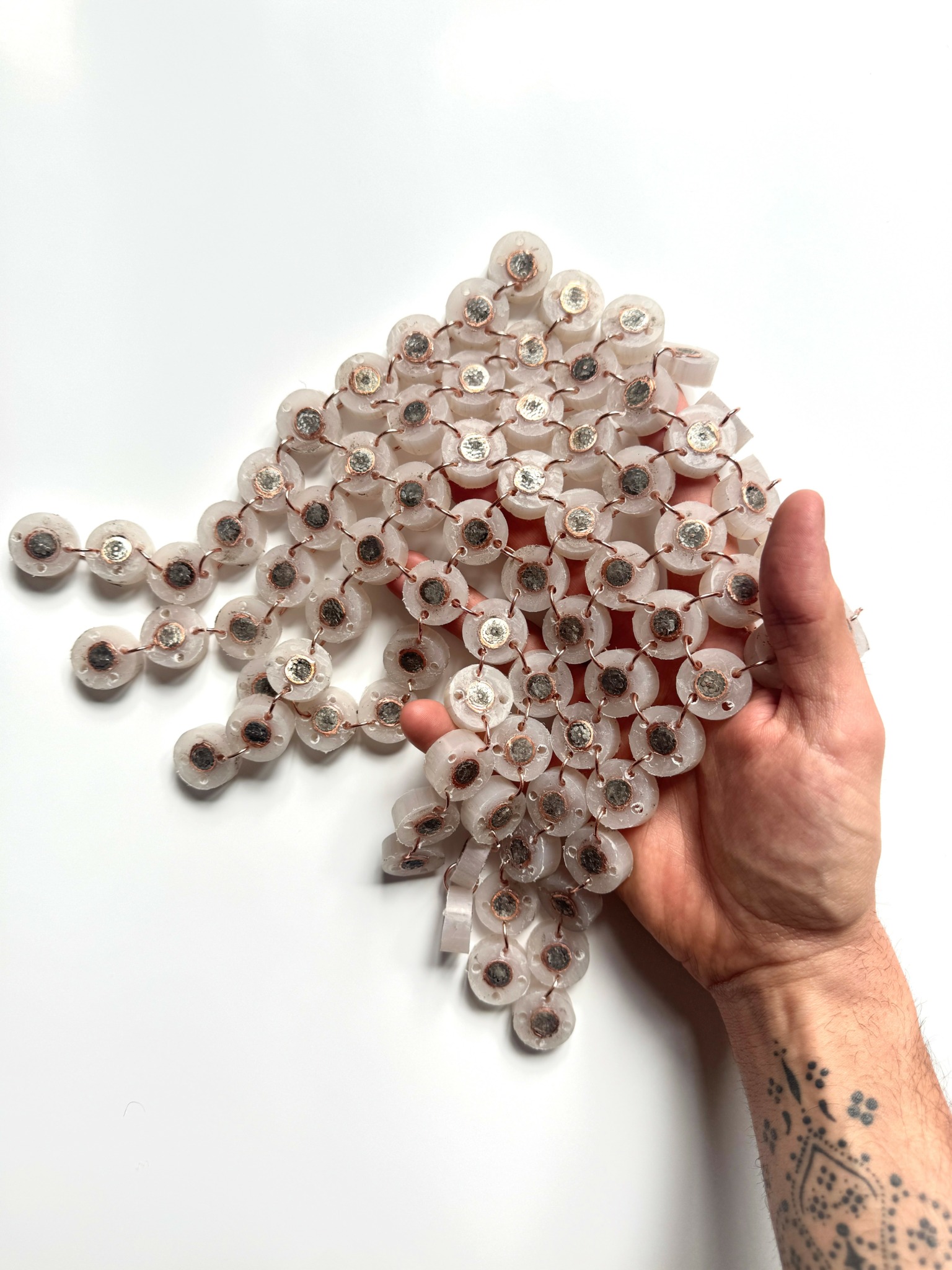
I am a contemporary fiber artist whose practice expands traditional textile techniques into large-scale works that exist between textile art, sculpture, architectural intervention, and installation. Based in New York, I create wall-based and freestanding artworks using hand-weaving, braiding, embroidery, and my signature thread-drawing technique. Through these processes, I reinterpret ancestral methods of making using unconventional materials such as recycled aluminum, discarded glass, rubber, copper wire, silver thread, precious metals, handmade ceramics, and salvaged industrial components.
My path into this field was driven by a lifelong desire to draw “outside the lines.” What began as an early fascination with materials and craftsmanship evolved into a practice centered on experimentation, transformation, and the relationship between art and architecture. I have always been interested in challenging assumptions—particularly the idea that textile art must be soft, fragile, or confined to traditional fibers. Instead, I use weaving and textile-based processes as a language capable of durability, monumentality, and spatial presence.
A significant part of my work involves creating site-responsive installations and public artworks that reflect the history, culture, and identity of a place. I collaborate with architects, developers, institutions, corporations, and private collectors to create works that integrate seamlessly into their environments while telling meaningful stories. Whether I am working with reclaimed fiber optic cables from Bell Labs, salvaged architectural materials, or precious metals, my goal is to transform materials into narratives that connect people to a space and to one another.
What sets my work apart is my commitment to sustainability and material reinvention. The act of giving new life to discarded materials is not simply a component of my practice—it is its foundation. I am continually drawn to projects that challenge me to transform forgotten, damaged, or overlooked objects into something meaningful. Whether sourced from a historic building, an industrial site, or everyday surroundings, these materials carry memories and histories that can be woven into new narratives. The process of reimagining their potential is both intellectually stimulating and deeply rewarding. There is something profoundly satisfying about elevating what was once considered waste into an object of beauty, purpose, and cultural significance.
Ultimately, I want people to understand that my work is about connection—between people and place, past and present, industry and craft, the discarded and the precious. Through weaving, I seek to reveal hidden stories, create dialogue, and demonstrate that beauty and value can emerge from the most unexpected sources.
Can you tell us about a time you’ve had to pivot?
One of the most important lessons I have learned as both a business owner and an artist is that pivoting is not an occasional event—it is a constant part of the creative process. Whether I am refining my artist statement, reassessing my position within the art market, adjusting my business strategy, or redefining my goals for future projects, I am continually rethinking and evolving my practice.
Pivoting can be uncomfortable because it often feels like starting over. It requires questioning assumptions, challenging long-held beliefs, and being willing to reshape how you present yourself and your work. Yet I have come to see this process not as a setback, but as an essential part of growth. Reinvention, adaptation, and continuous learning are at the heart of what it means to be a creative professional.
A recent example occurred this year through several public art and gallery opportunities that did not unfold as expected. In some cases, there was a disconnect between how I understood and presented my work and how selection committees interpreted it. As a contemporary fiber artist whose practice incorporates a wide range of materials beyond traditional fibers—including metals, industrial remnants, ceramics, glass, and salvaged architectural components—my work often exists outside conventional categories. This can make it both distinctive and challenging to communicate clearly.
Those experiences prompted me to take a step back and reconsider not the work itself, but the language surrounding it. I realized that creating compelling art is only one part of the equation; being able to articulate its purpose, context, and significance is equally important. Since then, I have invested considerable time refining my artist statements, project narratives, and presentation materials to ensure they communicate my intentions with greater clarity and precision.
What emerged from this pivot was a deeper understanding of the importance of communication. The challenge was not changing who I am as an artist, but finding more effective ways to connect audiences, curators, and selection panels with the ideas embedded in the work. That process strengthened both my artistic practice and my business.
Today, I view every challenge, rejection, or misunderstanding as an opportunity to refine my approach. The ability to adapt without compromising my vision has become one of the most valuable skills in my career. Creativity is not only about making art—it is also about continuously finding new ways to see, explain, and share that work with the world.
Is there a particular goal or mission driving your creative journey?
A central mission driving my creative journey is to expand the public’s understanding of what fiber art can be. Despite the growing visibility and appreciation of textile-based practices in the contemporary art world, there remains a common misconception that fiber art is fragile, decorative, or limited to domestic settings. Through my work, I aim to demonstrate that textile art can be durable, monumental, and perfectly suited for public spaces, architectural environments, and long-term installations.
Much of my practice is dedicated to challenging these assumptions. By working with unconventional materials such as recycled metals, industrial components, fiber optic cables, glass, ceramics, and precious metals, I seek to push the boundaries of what people expect from weaving and textile processes. I want audiences, architects, developers, and institutions to recognize that fiber-based works can possess the same permanence, structural integrity, and visual impact as more traditional forms of public art.
An equally important part of that mission is communication. I have come to realize that creating the work is only half of the challenge; the other half is making the process, materials, and intentions accessible and understandable. For many people, the term “fiber art” immediately evokes certain expectations that do not necessarily align with my practice. Therefore, I continuously work to present my ideas with clarity, helping viewers understand not only what they are seeing but also the innovation, craftsmanship, and conceptual thinking behind each piece.
The challenge of being a contemporary fiber artist is very real. While the field continues to gain recognition, it is still often misunderstood. Yet I see that challenge as an opportunity—an opportunity to advocate for the medium, broaden perceptions, and contribute to its evolution within contemporary art, public art, and architecture.
Ultimately, my greatest motivation is much simpler: I genuinely love what I do. The process of transforming materials, telling stories through weaving, and creating meaningful connections between people and place brings me a profound sense of fulfillment. Every project presents new possibilities for discovery, problem-solving, and growth. That sense of purpose, pride, and curiosity is what continues to drive my work forward.
Contact Info:
- Website: https://www.sebastiencourty.com
- Instagram: https://www.instagram.com/sebastiencourty/
- Facebook: https://www.facebook.com/sebastiencourtydesigner/
- Linkedin: https://www.linkedin.com/in/sebastien-courty-b1a17964/
- Youtube: https://www.youtube.com/watch?v=9r8Y7Nl1_Bs
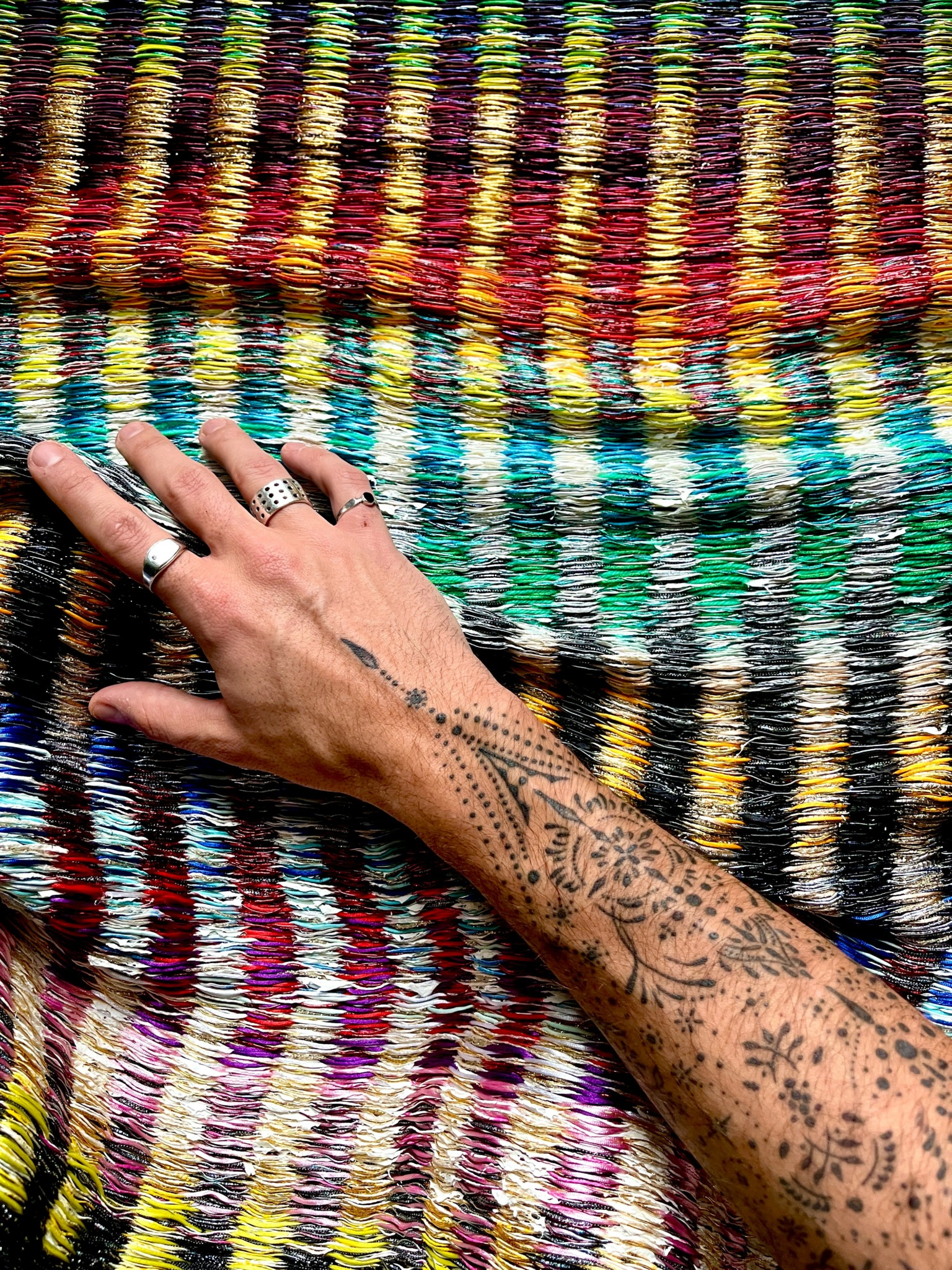
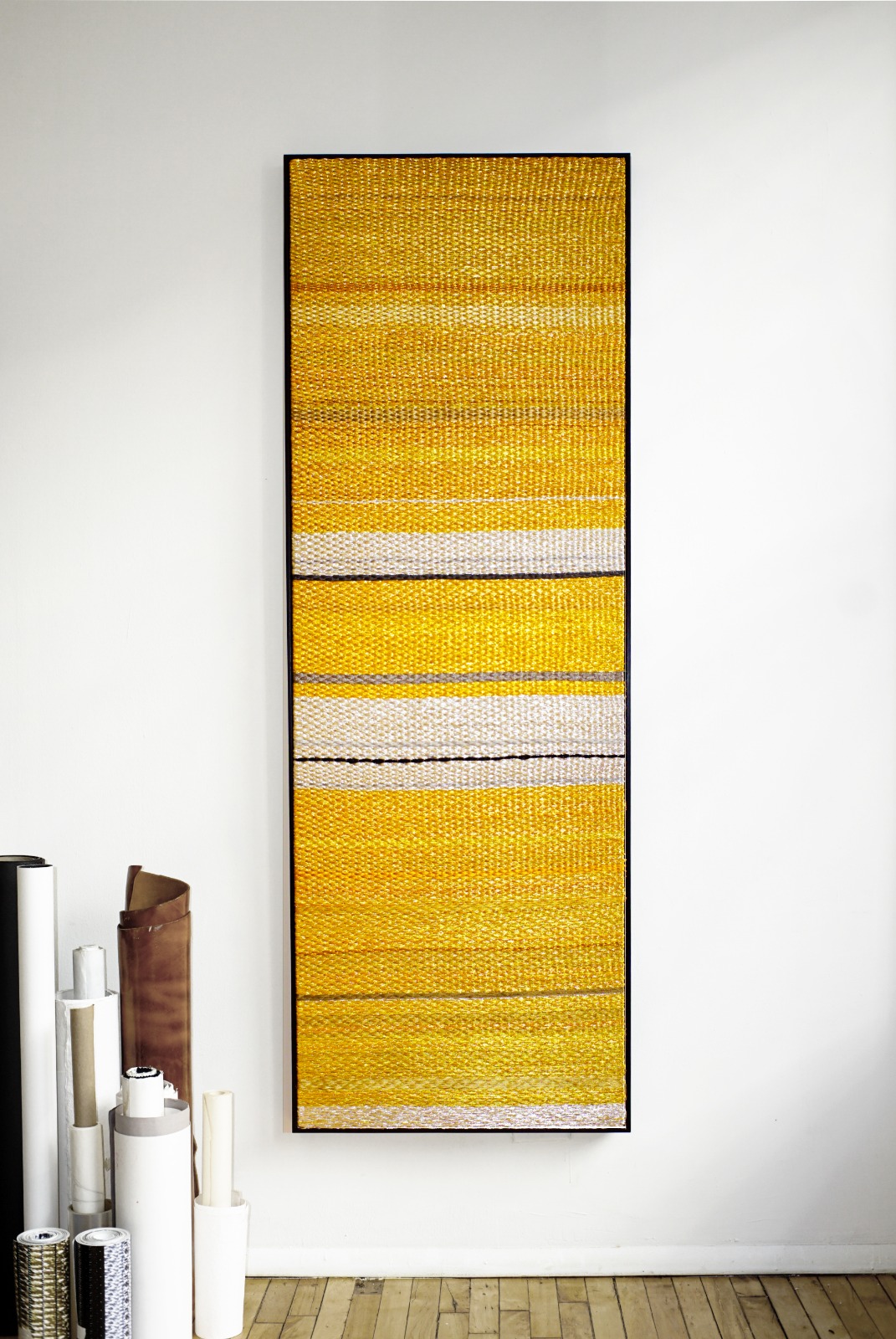
Image Credits
Sebastien Courty LLC