



Alright – so today we’ve got the honor of introducing you to Sean Robert Gerberich. We think you’ll enjoy our conversation, we’ve shared it below.
Sean Robert, appreciate you joining us today. Learning the craft is often a unique journey from every creative – we’d love to hear about your journey and if knowing what you know now, you would have done anything differently to speed up the learning process.
I learned to do what I do by pretending that I didn’t know I had no idea what I was doing. I would practice as if I was working on something that already existed. I would, then, be merely living through the past of a completed process, seeing it through to fruition. In this way, it is not me that could have sped up my learning process because it is not just mine. I am simultaneous with the natural experience of my immediate environment, the memory of which lives to unfold what it means for me to have learned in virtue of it.
There is no essential value in the rate at which learning happens, but much within the moments of insight that mark every peak of intelligent participation in the being of a student in your craft. These are the times to be proud of and reflect upon as a demonstration of your dedication, as a performance of the confidence you deceive yourself into thinking you had to have.
The most essential skill is double, patience and persistence. Patience is about having faith in the growing character of your endeavor, in its pace and its presentation. Patience is what keeps you next to the vision no matter where you are in relation to it. It is a form of faith in oneself. Quite akin to that of a trust in tomorrow, for you always know it to be coming, but never the specific way in which it will.
Persistence is about retaining a continuity of attentiveness toward your own veering off the path. You are always moving forward, inevitably, but it is with every minute self-adjustment that your distinct style of expression finds its form. It is not in the great, but the smallest of changes, that the most of who you are comes into what you do. To be persistent is the simplest way to learn because it doesn’t deal with getting to some certain point. It is how you keep from genuine distraction, how you never give up on the way there.


Awesome – so before we get into the rest of our questions, can you briefly introduce yourself to our readers.
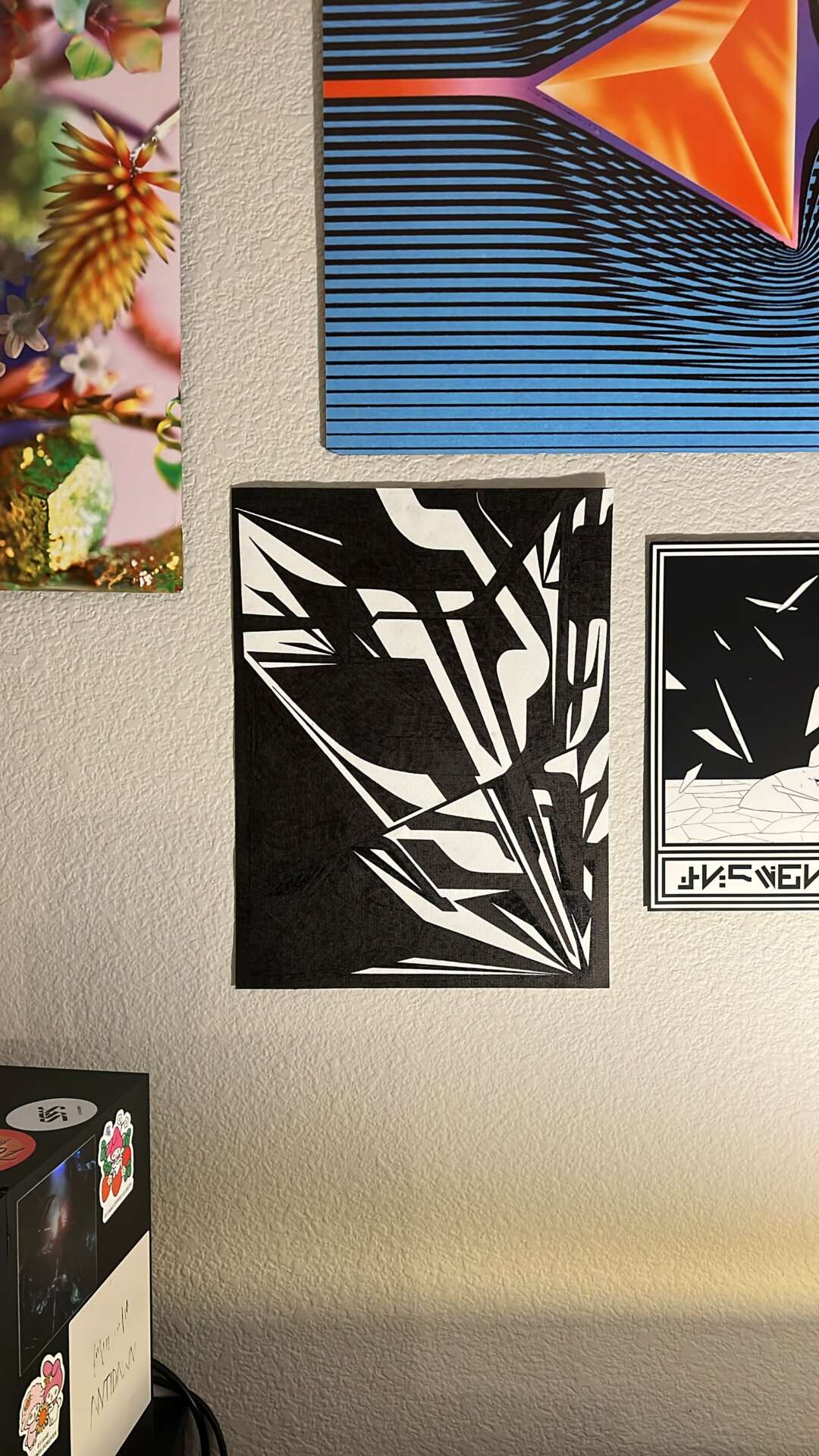
I got into art by creating, and I stay in art by continuing to. It is the fact that I cannot stop creating that I find myself where I am today. It all happened slowly, but what is slow tends to happen most fully, dragging with it even the stubborn and overly secure. There is no one thing to do or have happen that launches you into the space you wish to be other than engaging in the craft integral to it. Everything stems from and all value derives from the fundamentally relevant process. You want to get into art? Create art! You want to get into film? Write scripts, make movies! You want to get into working out? Get yourself to sweat!
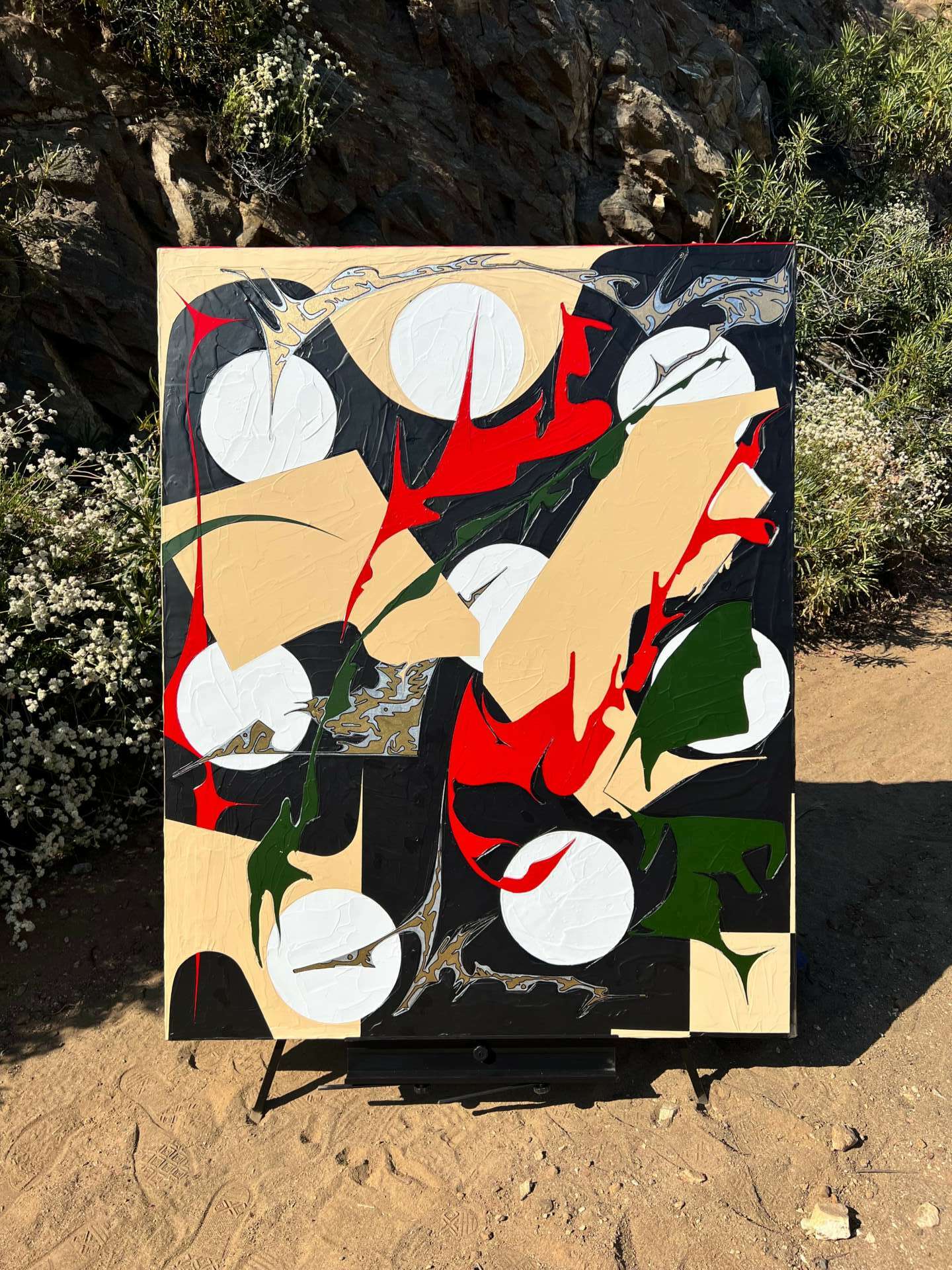
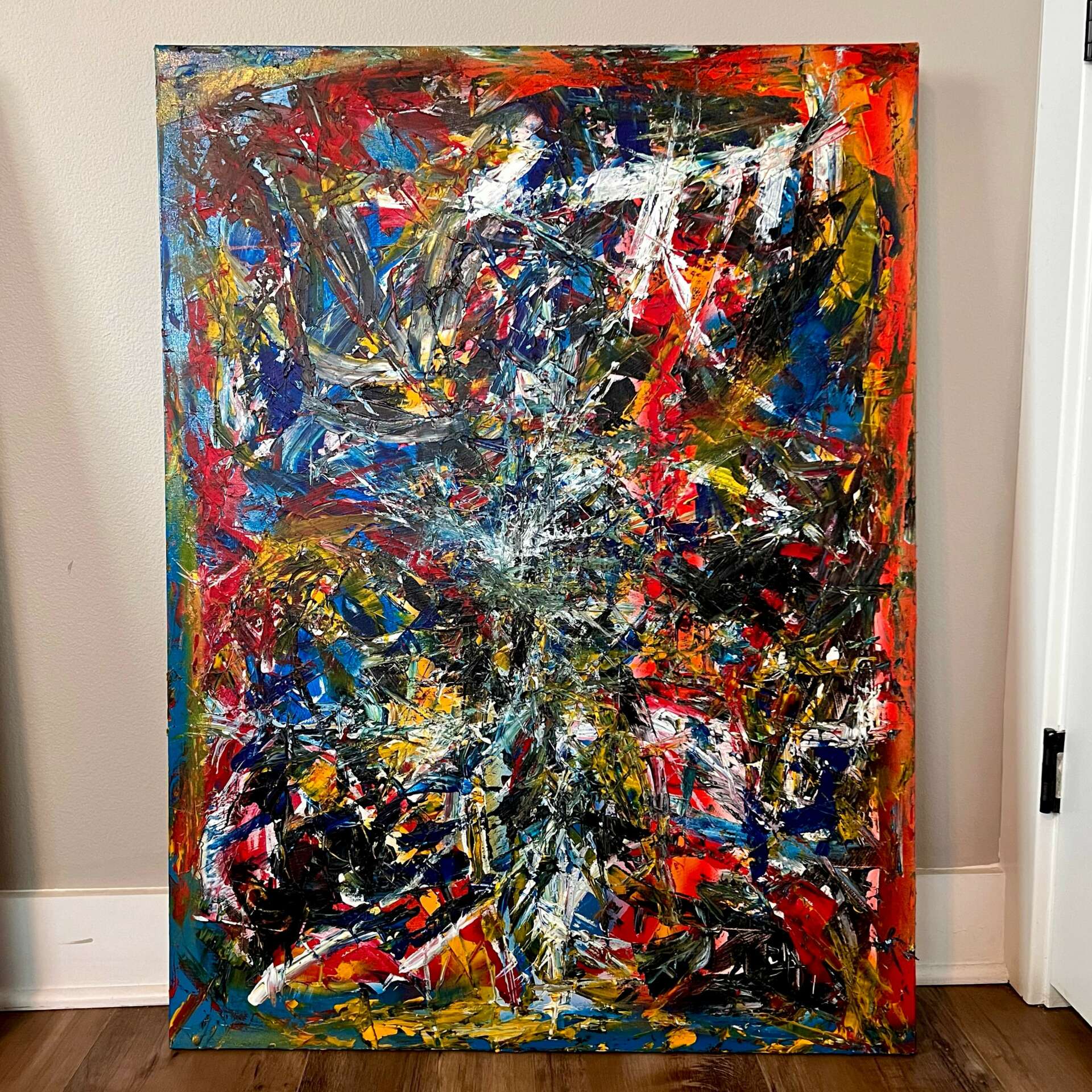
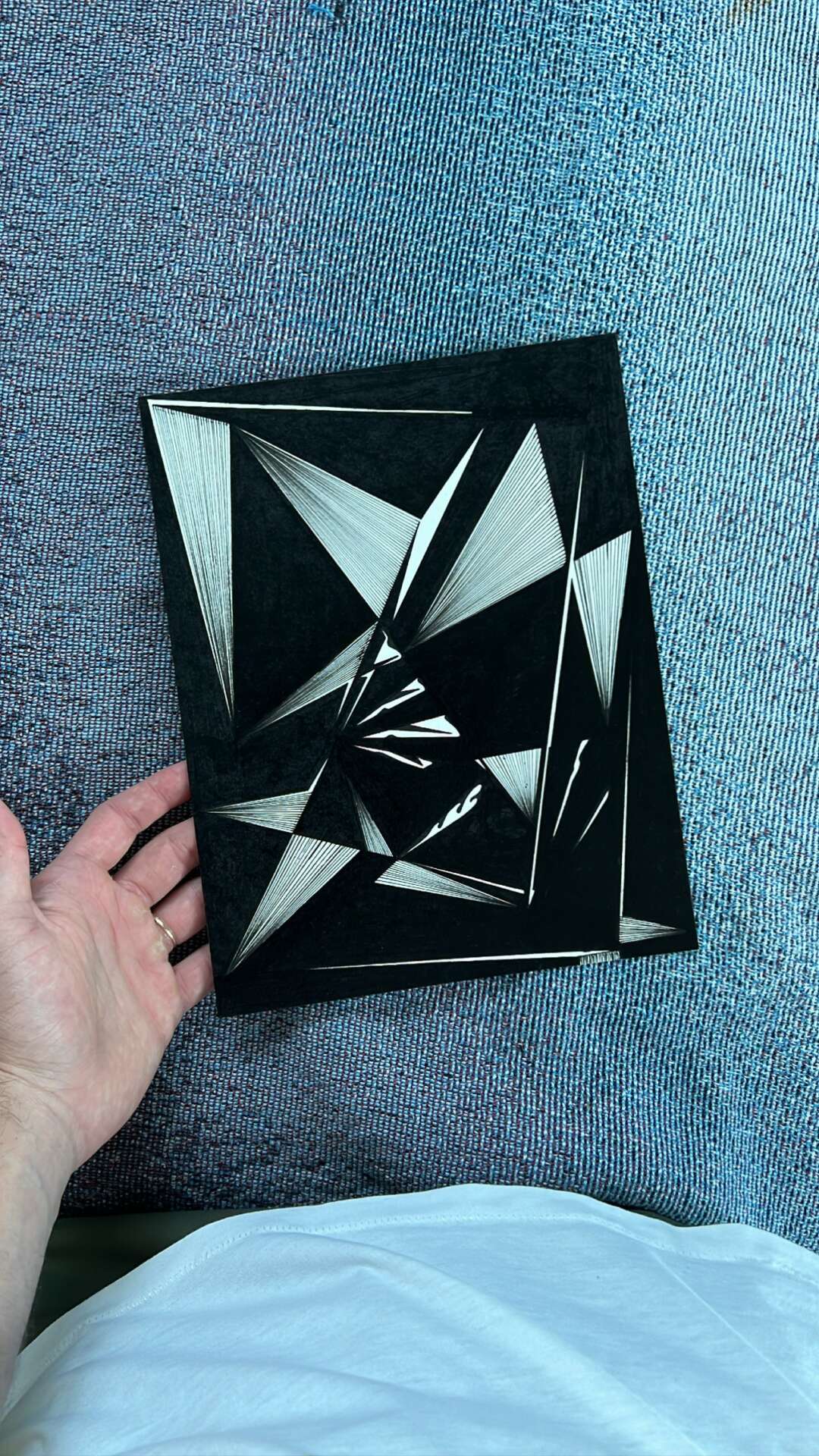
What sets me apart from others is the passion I put into my work. No piece of mine becomes in the same fashion, nor does one resemble another too closely. My deepest intention with respect to my practice, therefore, is the evolution of execution. I say evolution and not growth because I think growth is inherent in the former, yet secondary to it. All evolution is growth, but not all growth is evolution. I want my work to represent not just who I am, but the self I am turning into.
If you purchase a piece of mine or commission me to create something specifically for you, you will have absolute certainty that there is no one else with anything like it. You will have confidence that I did not just adhere to a formula and recreate something that already exists, giving you a mere version of it. Connecting with another person is the deepest and most powerful mode of existence we can experience. At the end of the day my art is how I enter into that special modality. There is truly nothing like the intimate entanglement of one soul and another, as they navigate through what the art in between comes to mean.
Lastly, I am entirely self taught in my art practice. Everything that lives through my work is a threefold synthesis, originating in the observation of nature, mutating as I sense my body over time, and culminating in the Intellect where I am made aware of each next step. My focus is to create artworks that speak to the intensity of emotional experience as I believe such to be the thread weaving our differences into sameness. My work strives to have an immediate impact by boldly piercing the viewer, and leaving one in a state of unexpected curiosity. My desire is to demonstrate the truth of the idea that even in the wildly distinct and disparate, one can identify a piece of themselves, a part of their life, a purpose for tomorrow, no matter how small, no matter how quiet, no matter how simple.

Are there any books, videos, essays or other resources that have significantly impacted your management and entrepreneurial thinking and philosophy?
I studied Philosophy and Psychology in school, the two fields backbone my intellectual interest, and therefore my creative approach. I am always reading to keep myself both inspired and questioning, but from the many works I have read there are three I would like to mention as they are truly incredible instances of developed thinking. I will leave you with a quote from each.
The first is Alfred North Whitehead’s magnum opus, ‘Process and Reality’, which serves as the most fleshed out expression of his, ‘philosophy of organism’. What I love most about Whitehead is his insistence on the ‘event’ or ‘occasion’ as most fundamental, given it is the fabric underlying any experience of what we call ‘feeling’. I find it compelling because he roots all things in the experience of our environment, and not just some ideality constructed purely out of Intellect… “consciousness arises by reason of intellectual feeling, and in proportion to the variety and intensity of such feelings.” (Whi, PR, 267).
The second is from one of my favorite psychologists, Carl Jung, referencing a chapter from the Book of Habakkuk in the Bible (Habakkuk 2 : 3), “For still the vision awaits its time… If it seem slow, wait for it” (Carl G. Jung, Aion, 60). This interpretation of the scripture relates very closely to how I spoke of patience earlier. In that, you cannot change the time of any given thing, the time being the moment or duration during which it becomes what it really is. Even when slow, things are happening fast from a different frame of reference. Know your perspective is limited, and that its always best to let nature tell the time.
Lastly, I want to make you aware of the brilliant, Rick Rubin, who has worked alongside artists of all sorts, painters, musicians, writers, you name it. Earlier this year he published his first official book, ‘’The Creative Act: A Way of Being’’, and on page 43 he gives a beautiful definition of ‘practice’ as, “the embodiment of an approach to a concept”. This understanding is amazing because it turns practice into the instantiation of your vision (the concept) as it nears fruition. I feel it helps one fully capture the real substance of continual practice. How practice makes the goal to which it is directed, by moving toward it it is made all the more real, time and time again.

What can society do to ensure an environment that’s helpful to artists and creatives?
Besides purchasing art and funding creativity in general of course, I think the most important thing for society to do is slow down. I say that because it is through giving genuine attention to the art you love and the creatives that move you that causes the most powerful of ripple effects. As social media and electronics have egregiously altered our patterns of attention, I see that we have often forget the characters, creators, celebrities, etc., that we follow online are real people with just as complex of lives as our own. I think the word, ‘sonder’, is just what I am looking for. Society ought push themselves to remember how we share in the living complexity, especially since the diversity that comes out of it is precisely what unites us. When we hold this angle on others, art comes to the fore as if God willed it; as the color, the openness, as the space made for light to be. It is our orientation toward the things we value that comprises half of what they become. Holding art as important, as enough to slow down for, is one way that society can support not only artists and creatives, but all those around them. Art brings people together, and when people bring people together to participate in art, it feels like everyone is there.
Contact Info:
- Website: https://seanrobertgerberich.com/
- Instagram: @seanrobert.g
- Linkedin: https://www.linkedin.com/in/sean-gerberich?utm_source=share&utm_campaign=share_via&utm_content=profile&utm_medium=ios_app
- Youtube: https://youtu.be/4XDCW9dhfVs?si=PHEQIMIHSi8LHnBK
Image Credits
All images photographed by me