

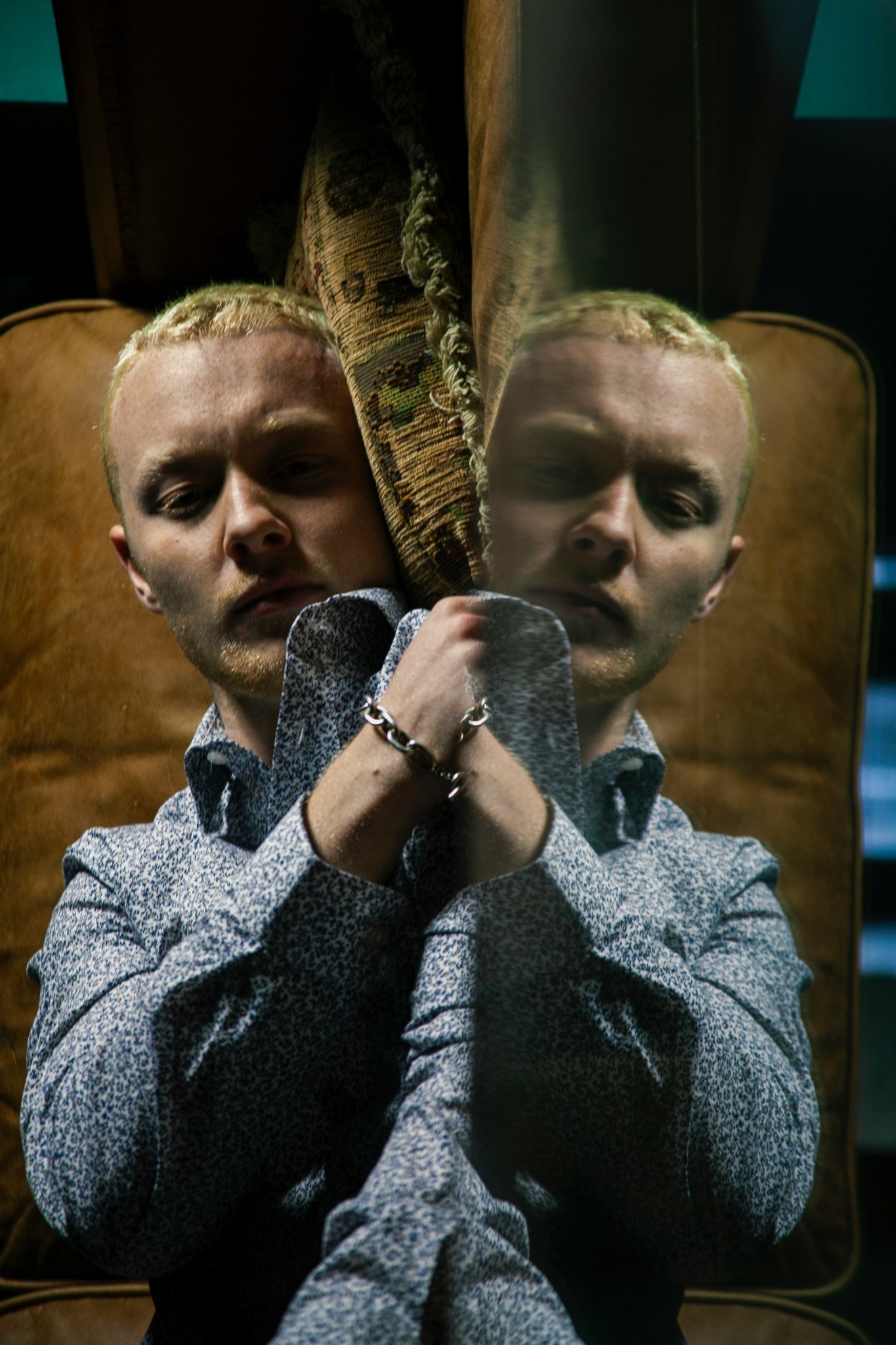

We were lucky to catch up with Sean Carlo Martini recently and have shared our conversation below.
Sean Carlo, thanks for joining us, excited to have you contributing your stories and insights. Can you talk to us about how you learned to do what you do?
Questions. I will never cease to consider myself a student of the game. Anyone who knows me knows that when I’m around another creative, I tend to dive deep into the rabbit hole — it can be so eye-opening to explore how other people think and work. There seems to be an unspoken stigma that curiosity nowadays is synonymous with ignorance. I feel like it’s quite the contrary. I have no shame wearing curiosity on my sleeve.
The way I see it, a good director can’t go without knowing how to communicate with every department effectively. People ask me what my strong-suit is as a director, but I’m not the biggest fan of that question. I don’t inherently agree with the idea of an “actor’s director” or a “camera-oriented director.” Of course everyone has strengths and weaknesses, but just as you wouldn’t have the head chef of a restaurant’s expertise limited to salad-making, I think the role of a director is completely undermined if most of their energy is streamlined into only one or two departments. The basis of my curiosity is to become as well-rounded as possible.
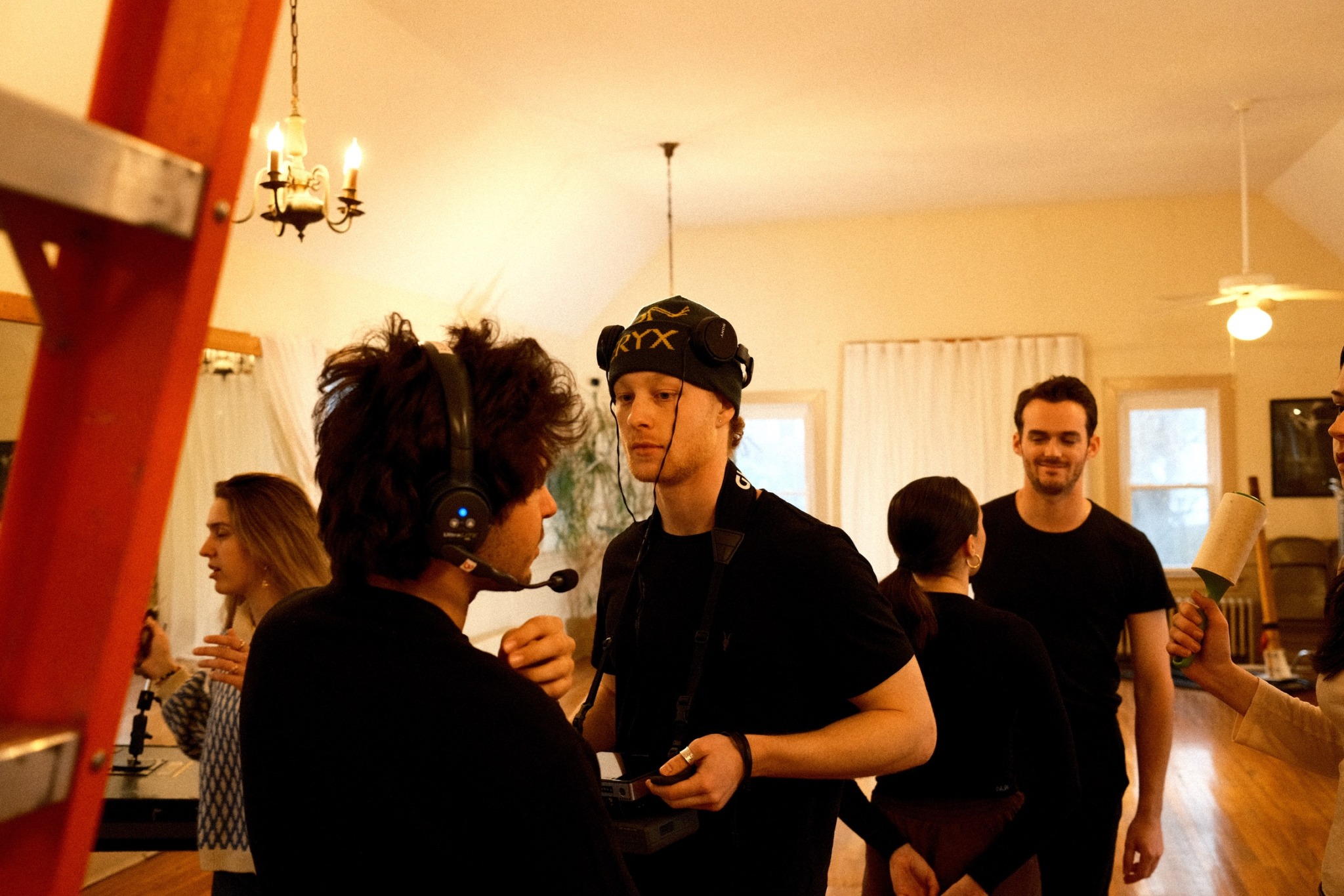
So when I’m on set, in the editing lab, or on the recording stage, I expect to learn as much from my team as they might from me. I think that we are all in it to become better storytellers. So what is collaboration if not bettering each other? In my experience, the greatest obstacle a creative faces is themselves. Whether that’s hitting a writer’s block, mustering the courage to ask about unfamiliar equipment, or simply recognizing your mistakes. Something I do is keep a list for every production that I have directed which tracks the challenges that arose and my greatest takeaways from them.
Awesome – so before we get into the rest of our questions, can you briefly introduce yourself to our readers.
Absolutely. For those unfamiliar, my name is Sean Carlo Martini and I am a writer/director for scripted film and television. I was born and raised in the heart of Los Angeles, and have been surrounded by the entertainment industry for my whole life, so I figure my passion for storytelling began well before I was even conscious of it. There was a time when I was a kid when I literally wouldn’t leave the house unless I was wearing a Spider-Man costume. I’ve since outgrown that habit, but what stuck with me was something a bit more intelligible. It wasn’t the big worlds or special effects in the movies I loved that really hit me—it was the characters. Coming from a family and close network of actors, I suppose it’s this performative language that I first gravitated toward. Being drawn to characters that feel close to home; evocative enough to exist beyond the silver-screen. Sometimes it’s as simple as a glance caught on camera or a music cue at just the right moment, and suddenly you feel bound to them. That’s what I’ve come to love about filmmaking: the chance to shape these little flashes of authenticity. The kind that stay with you. The kind that help us make a bit more sense of ourselves—even if that journey starts with a little boy in a Spider-Man suit, staring at himself in the mirror every morning.
The aesthetic of my work blends a commercial, Hollywood sensibility with gritty, independent flavors. As much as my time in LA has solidified a fondness for production value, the years I spent in New York instilled in me both an innovative palate and appreciation of the classical art forms. My work extends across genres, so even though my films can’t be contained within an umbrella category, it’s safe to say they find their cohesion thematically. Similar, I guess, to how David Fincher’s Se7en and The Social Network fall to either side of the tonal spectrum, yet are both undeniably Fincher. The stories I tell tend to be unanimously grounded in high stakes, characters’ resilience, and the challenging of personal beliefs as a direct consequence of attaining their goal. It’s also worth noting that my first love of black and white photography, especially the work of my friend, the great Brian Bowen-Smith, continues to serve as a key source of inspiration.
When I look back on my career thus far, I am most proud of how much I have grown as a creative. And in tandem, how much I have grown as a person. At sixteen years-old, I promised myself that I’d commit to this lifestyle and never turn back. The professional world has shown me that this path is not for the faint of heart. Long hours and copious amounts of stress aren’t exactly how I was once hoping to spend my Saturday afternoons. But the end result that culminates all the blood, sweat, and tears often exceeds the ability to articulate just how rewarding it feels. That’s what keeps me coming back time and time again.
Is there mission driving your creative journey?
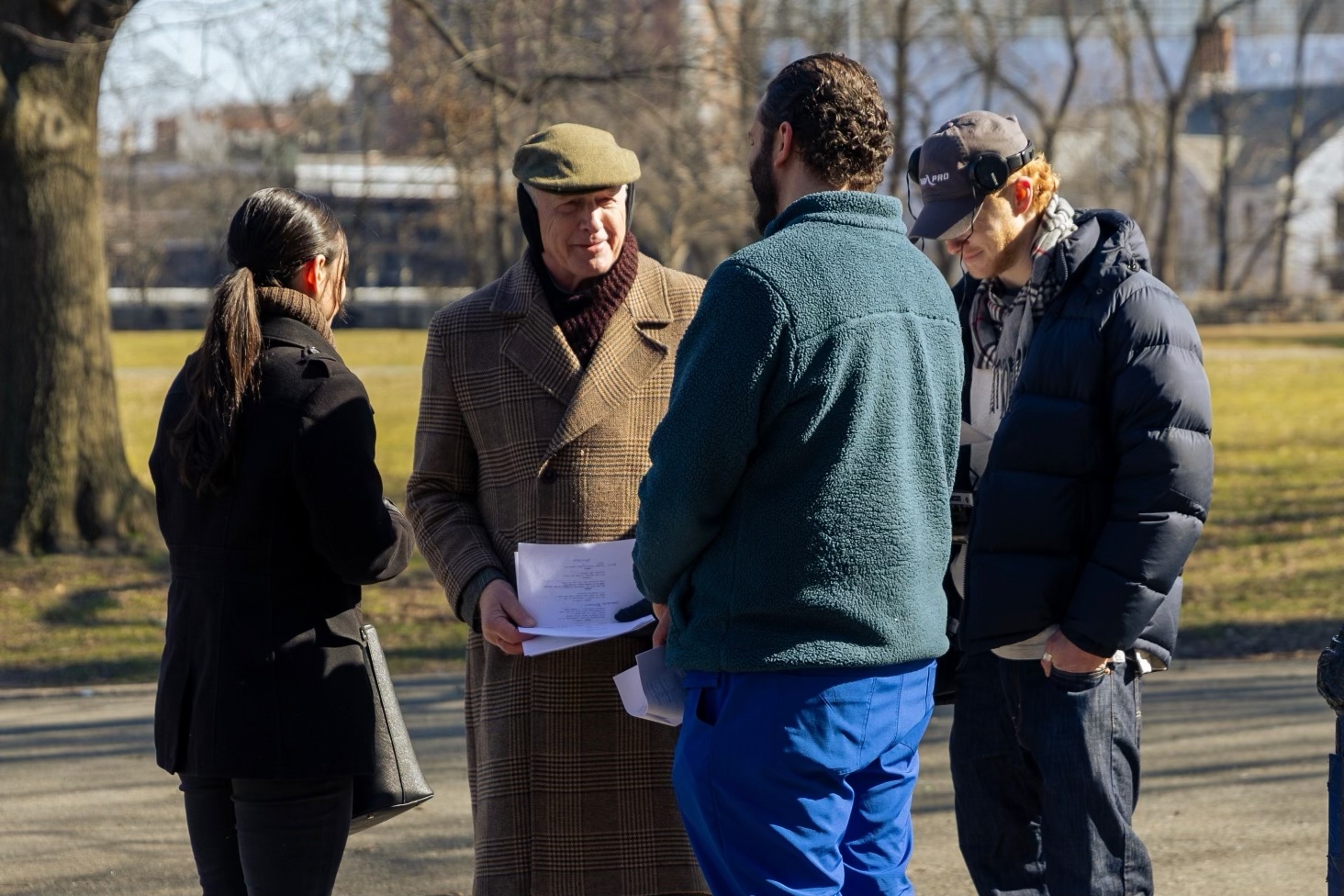
Whether I’m directing a western or a thriller, I’ve come to understand the entire craft of filmmaking as an exercise in empathy. For me, listening to the words on the page is just as important as writing them. Hearing out my cast and crew is just as important as giving them direction. And when it comes to working with actors, you must will yourself to understand the psychology of each character, even if the motivation as written goes against your better judgement. So before countless script revisions, the “actions,” and the “cuts,” I will always put my best foot forward with a sense of compassion. I don’t know how else one might resonate with a story if it isn’t conceptualized from a place of honest humanity.
Is there something you think non-creatives will struggle to understand about your journey as a creative?
I think that above all, it can be difficult to understand the schedule of a creative. Working in the morning, for a half-hour in the afternoon, and then up all night before the cycle repeats itself. These windows of efficiency can be so sporadic. The way I see it, being an artist is a full time job, meaning that even when you are not working, you’re still working. I’d go so far as to say that the periods of removal are equally as if not more important than the production itself. For example, I might be out for dinner and come across a person who reminds me of a character I’m writing, and then log it in my phone immediately. Or a line of dialogue I hear in passing. Yet on the flip, there will be days where I sit down to a script and walk away without having more than a page written, but still consider it a great session. It can be odd to think of productivity this way, especially if no tangible progress has been made, or if it’s incremental at best. But in times of doubt, I remind myself that every inch toward the final product is an inch that counts.
For me, the work of a creative shares a symbiotic relationship with his or her sense of awareness. I believe it is our responsibility as artists to reflect the surrounding world in whatever way we see fit. But this lens that distinguishes one creator from the next is only made possible if we remain open to the impressions of each passing moment. The more we accumulate through lived experience, the more our perception of the world is constructed accordingly. As painstakingly simple as that sounds, this is one of the beauties of our profession: it’s directly correlated with our lives. A mentor of mine, Sam McCurdy, once told me that style is a reflection of your personality, which I think perfectly encapsulates the spirit of what I’m after here. In accepting the highs, lows, and all else life has to offer, the potential for creation remains endless. Who knows, the next Godfather trilogy might be born from a brief encounter with a stranger you cross paths with on the street.
Contact Info:
- Instagram: https://www.instagram.com/seancarlomartini/
- Linkedin: https://www.linkedin.com/in/sean-carlo-martini-556575290/
- Other: IMDb: https://www.imdb.com/name/nm11052083/


Image Credits
Adison James, Malcom Tom, Joanna Leigh, Antonio Marroquin, James Blakely