

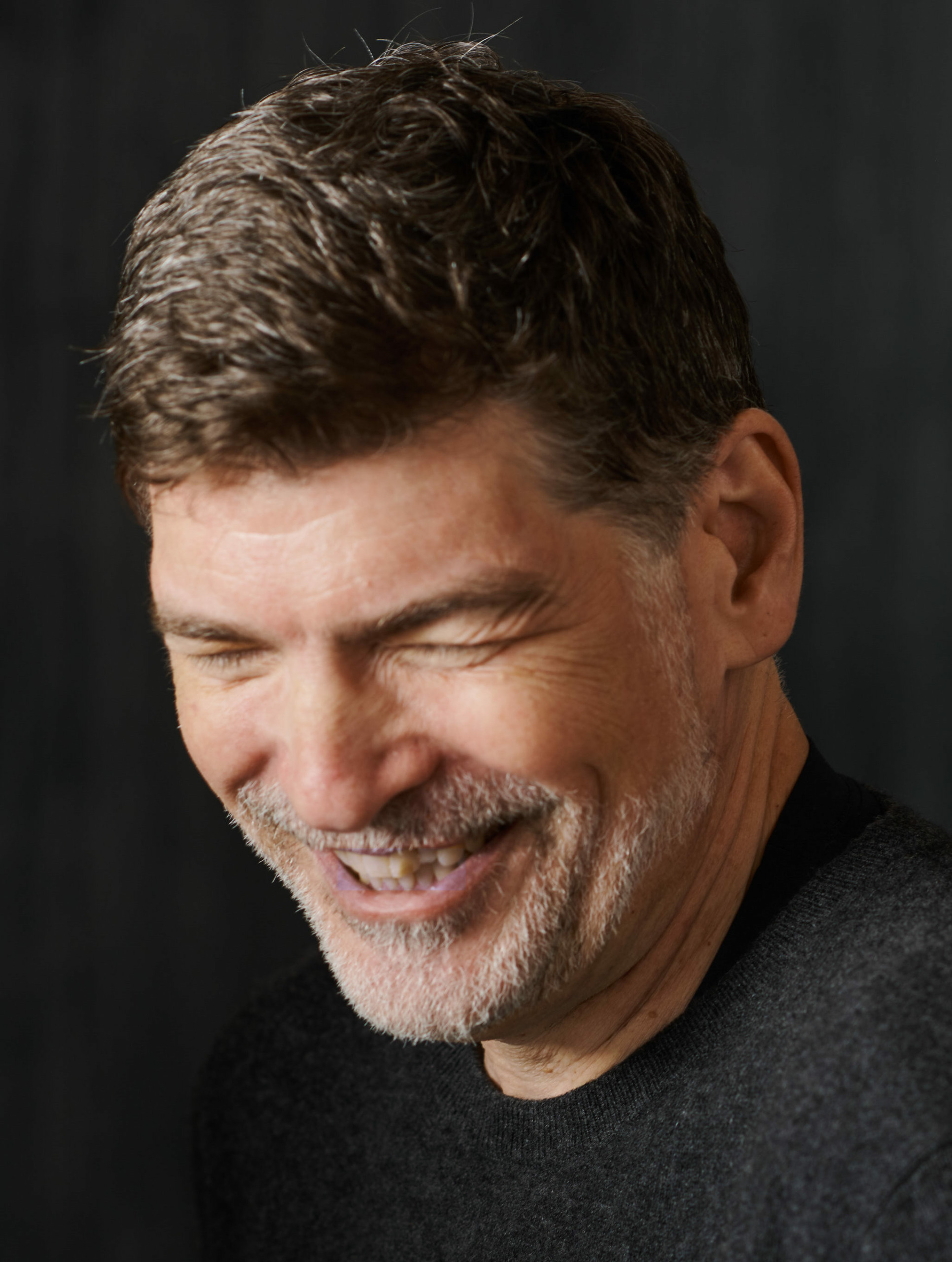

We recently connected with Scott Bowman and have shared our conversation below.
Scott, appreciate you joining us today. What’s something you believe that most people in your industry (or in general) disagree with?
I’m a business and life coach and it’s my job to help people realize and achieve new ambitions, capacities and self expression. But there is a shadow to the self-development world that I’ve always found very challenging. A foundation of this work is the belief or the agreement that we can all become more fulfilled, more productive, more able, wealthier, healthier, more tan, more enlightened, better parents, leaders, creators, trail-blazers… ‘better’ for want of a better word. We can all become better. I think that’s almost always objectively true and I don’t hear much argument with that.
But there is a very faint line between “You can do better” and “You really should do better,” and I think a lot of coaching and self-development work is sold on the other side of that line. It’s easy to evoke our insecurities and comparisons to paragons, and our culture lionizes and worships ‘the best’ as if it’s a reasonable ambition to be the best anything in a world of 8 billion people. Being ‘the best’ is a terrible ambition, a terrible goal.
So many of my clients start with this drive – “I should be better, I NEED to be better, I MUST BE BETTER.” And yes, they can get better – that’s not the issue. The problem is that the need masks a missing, a void of self-acceptance, self-love, serentiy, true comfort in their own skin. No amount of ‘better’ or achievement or even being the best will fill that void. If it’s not addressed, not met with compassion, empathy, care and love that pain will always be there and every accomplishment will be hollow and momentary.
From the place of deep self-acceptance, truly embracing your limitations, your humanity, your body, your mammal-ness, from there we get to grow and improve and expand because it is more fun, more interesting, more alive, more expansive… because it’s a blast. Becoming is a blast.
You don’t need to be a better person. You are actually fine just as you are, just like this. You don’t need to be the best – virtually no one is. There is nothing about yourself that needs to be improved, changed, modified or deleted. You are fine – not perfect, nothing is – but fine. You are worthy of love exactly as you are. And if you can’t say that you love yourself, just as you are, with a straight face and mean it – then that’s the place to start.
Great, appreciate you sharing that with us. Before we ask you to share more of your insights, can you take a moment to introduce yourself and how you got to where you are today to our readers.
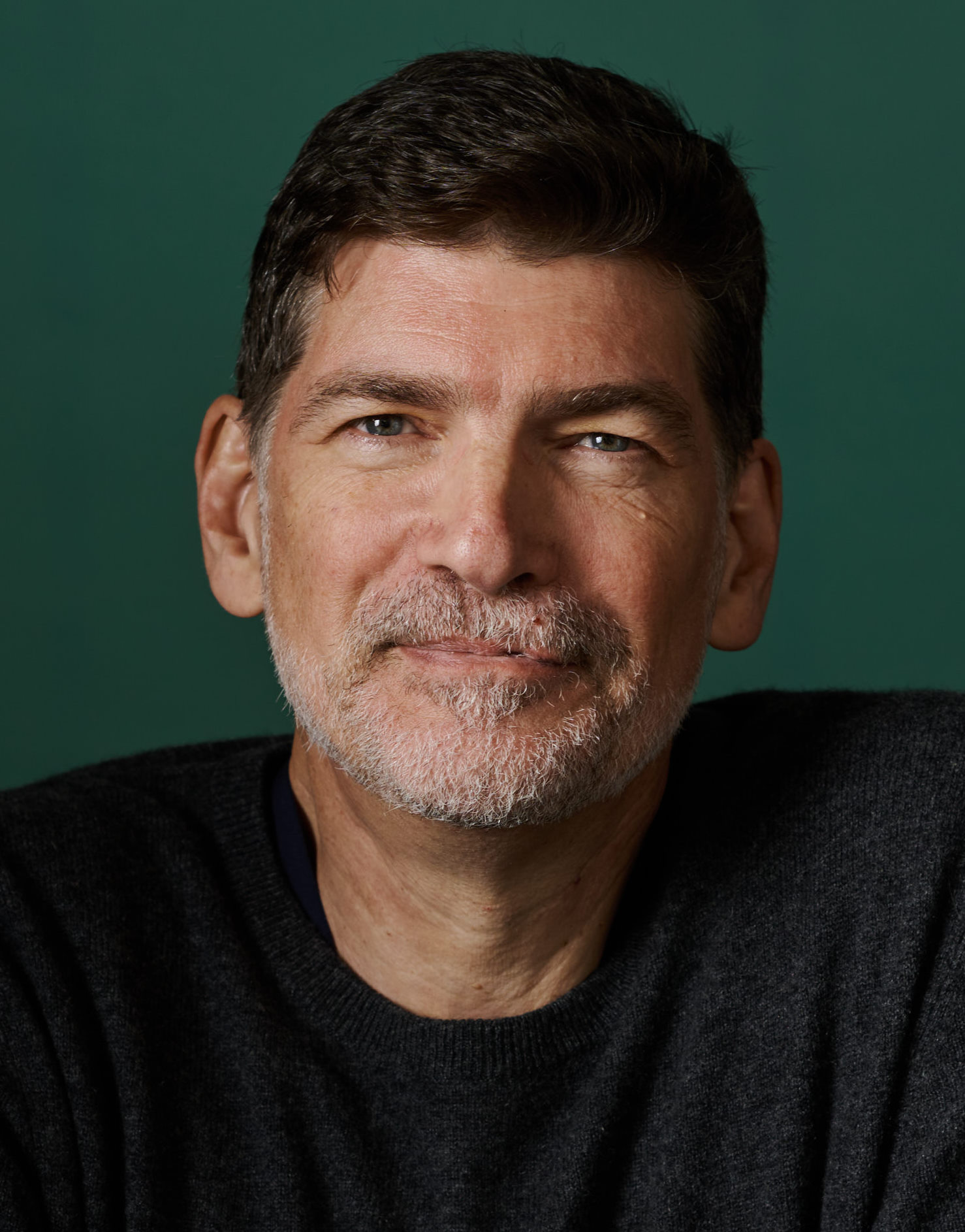
I got my first experience coaching in a communications course. I was part of a team of coaches supporting participants in high-stakes communications. We called them ‘conversations you can’t come back from.’ I got to support over a hundred people in having the most important conversations in their lives, which was thrilling and felt like the best use of me. I just had no idea of how to pursue it. It took me about 8 years to find myself in a circumstance that allowed me to begin coaching professionally and make that transition.
Professionally my background was in marketing and sales in small businesses, mostly startups. During one of these, building an office supply company, I also started pursuing yoga and took three teaching certifications in a row that year. That training was extremely traditional, focusing on right living, mindfulness and service, and it infected my management style. So building the customer service and sales teams for the business became the place where I practiced and developed my yoga. Seeing how most of us, spend most of our days at work, and if we’re not at work we’re getting to work, or getting ready for work, or getting home from work, or recovering from work, or trying like hell to do something, anything other than work, it became clear to me that if you are not happy in your work you are committing some kind of sin.
I’m aware of the privilege that’s implied here and that we don’t all have the luxury to choose our work, whether fulfilling or backbreaking or monotonous. But as Ekhart Tolle said, if you don’t like a situation there are three possibilities; change it, accept it completely, or leave – “all else is madness.” There is dignity in all work, and I say that as someone who once scrubbed toilets for a living. The pain is in the non-acceptance.
From here I enrolled in an MBA program focused on sustainble business. It was the first program of it’s kind to fully integrate sustainability into all the course work, and I also joined the staff as director of marketing and student recruitment. I would have lengthy conversations with potential students, all of whom wanted their work to mean something, to make a difference, and we would figure out together whether this was the right path for them. I enrolled in that school thinking that my mission was to save the world. I really wanted to save the world. Turns out my mission is to help the person in front of me.
A few years later, as a result of my mens group (another community in which I got to explore coaching and supporting men in transition) I found myself in an email marketing role in a coaching company that focused on heart-centered service providers. I got my start business coaching there and haven’t looked back.
I work mostly one on one, but also offer mastermind groups. I love working with new leaders and business owners who are expanding their businesses. Common challenges are crisis of confidence, overwhelm, finding authentic leadership and organizing for action and results. But I come to these things a bit oddly I think.
I work a lot with self-acceptance and embracing those rejected parts of us, those that separate us and those that we all share. Only then can we find inner integrity and inner calm, understanding the turbulence of the mind for what it is. This makes it possible to bring real compassion and empathy both to our employees and customers but also within. These are the most effective ways of finding authentic self-expression, leadership and life satisfaction. And that’s what I’m striving for with all my clients.
A client whose story really demonstrates this – we were working on whether she should change her career – I asked her what she was good at, and she couldn’t tell me. I happened to know this was a very accomplished and formidable woman. So I gave her an assignment, to make sure she couldn’t be heard or disturbed and to speak out loud what she was good at to an empty room at night.
She couldn’t do it. But it was the way she couldn’t do it that had me. She tried. She tried over and over. She tried in the shower, she tried in the car, she tried while walking in the woods. Clearly this was the entrance and the key opportunity in our work together. She became someone who could own her brilliance, almost casually, and knew her value. She had been working in a toxic, abusive workplace. That became unthinkable to her. She found a nonprofit that was deeply meaningful to her, pitched them on her value and created the job she was looking for.
I am most satisfied with my work when my clients discover in themselves capabilities and power they did not know they possess – when they are genuinely proud of themselves and the people they lead.
How do you keep your team’s morale high?
One of my mentors once told me ‘Use every brain in the room – they are your most powerful (and most expensive) resource.’ Ten years before that another mentor of mine, Mike, showed me an amazing practical application of this idea. He called it ‘the idea board.’
The notion was simple; there was a cork board and if you wrote an idea on a postit, put your name on it and pinned it on the board, he’d give you a dollar. Didn’t matter whether it was a stupid idea, a joke, a complaint dressed up as an idea or something genuinely thoughtful. At the end of the month he’d give you an dollar for every idea you put up there. And if it was a really good idea, he’d give you $100.
It became part of our monthly staff meetings – we’d close out the meetings by reading all the ideas and paying them out. There would be some $5 ideas and some $10 or $20 ideas and usually one or two $100 ideas. Riley would always walk away with $20 or $30 bucks for dumb ideas and jokes but they were really fun in the meeting. No ideas were criticized.
When we had a $100 idea Mike would say “That’s fantastic! That’s a $100 idea – go do it.” And give them the power to enact it and make it happen. What followed was a really turned on and motivated employee whose feedback and thinking were valued publicly and financially and earned them the trust and stature to take on new responsibility, which they did with verve and pride.
One of those ideas saved us $14,000 in shipping that year. Another became a business that made $3,000,000 its first year – and is still running strong 25 years later. There were lots and lots of fantastic and valuable ideas that caused us to change, add and eliminate systems and processes of all kinds.
It made clear to me that the best people to critique your systems are the ones who are tasked with enacting them. They know far better than you what works and doesn’t work at the ground level in your business.
Also they are capable, creative people – even if they’re not. Even those who struggle in their role and might be ‘bad employees’ are creative and capable in other ways.
Find ways to engage, invite and value broad-spectrum participation and creativity of everyone on your team. What you’ll see is people offering and drifting toward their best strengths. Not only will you profit from their contributions, but you will get to know them by how they think and what they offer, and they will feel seen, valued and motivated by this.
This doesn’t have to be complicated, it can be done in their one-on-ones with whoever they report to, but their does need to be genuine interest, acceptance and validation to work.
Are there any books, videos, essays or other resources that have significantly impacted your management and entrepreneurial thinking and philosophy?
One of the most significant influences on my coaching and on my management style would have to be yoga. Teaching yoga trained me in a fantastic context for holding space while someone acquires awareness and skill, and it’s very much a part of how I coach.
If I were teaching you yoga I’d start by putting your body in a weird and awkward position. This would have several virtues right away. One would be that you would become present – because if you were thinking of something else you’d fall over. Another would be that you would become aware of something uncomfortable.
I would direct you to breath into the area of discomfort, expanding it and moving into it as you inhale, releasing and relaxing it as you exhale. It’s a very simple process. The results of doing this regularly and systematically are that you are more relaxed, flexible, stronger, healthier, calmer, more resiliant, present and joyful.
I do the same thing as a coach, it’s just the position you’re in is a position in your business, not a position with your body. Other than that, all the steps are the same.
When you are managing people, one of the most challenging and useful skills is to be able to hold space for their discomfort, help them become aware of what that discomfort is, and help them find their own agency, strength and flexibility as they work with that discomfort.
Too often we see discomfort as a problem and something that shouldn’t be there. Managers get upset or bothered at their employees bringing ‘problems’ to them because they believe their role is to fix all the problems. In this frame every problem is taking time away from the goal.
But really what we’re doing is developing people, and through developing people we create robust and effective systems. Every problem is an opportunity to add power and awareness to someone. If you can see your employee’s discomforts like yoga poses it become possible to suggest things like ‘what happens if you turn your foot out a bit? and reach out with your right hand…’ and help your people use their experience to find their strength and flexibility.
Contact Info:
- Website: https://thesoulsadventure.com
- Linkedin: https://www.linkedin.com/in/bowman-scott/
Image Credits
Steve Peixotto