


We caught up with the brilliant and insightful Sarah Knouse a few weeks ago and have shared our conversation below.
Sarah, thanks for joining us, excited to have you contributing your stories and insights. How did you learn to do what you do? Knowing what you know now, what could you have done to speed up your learning process? What skills do you think were most essential? What obstacles stood in the way of learning more?
I received my BFA and MFA degrees in sculpture from Pennsylvania State University and City University of New York Hunter College, respectively. Along the way I was fortunate enough to partake in a two-year period of post-baccalaureate teaching and research at Bucknell University, combined with several artist residency opportunities such as the Virginia Commonwealth University’s summer studio program in Sculpture and Extended Media.
Taking part in so many wonderful programs and residencies that value skills of calculated risk-taking and experimentation with diverse media has certainly been a vital part of my education and training. At each of these programs I was taught new sculptural skills such as welding, wood working, figure sculpting, 3D digital design, and more. Among these many sculptural methodologies, I remain most transfixed by the field of casting and mold making. Like me, I think most sculptors are inherently interested in learning new material languages. The realm of casting and mold making provided me with the opportunity to manipulate my own originally sculpted or found forms, and to translate these objects into new or experimental types of media. I’ve always been drawn to the artistic discipline of sculpture because it is inclusive of many different creative processes and media. I deeply relish the feeling that I’ll never fully master one skillset – there is always so much more to learn.
Awesome – so before we get into the rest of our questions, can you briefly introduce yourself to our readers.
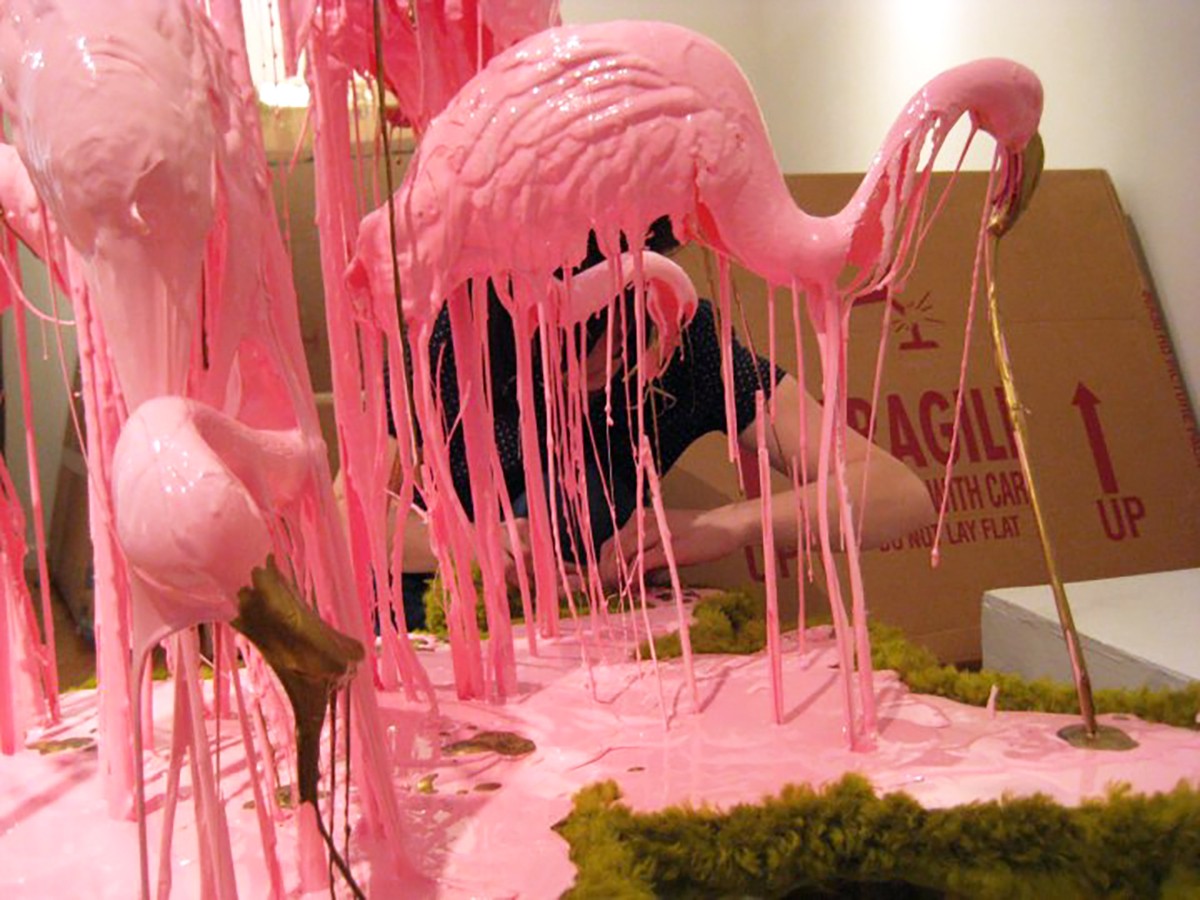
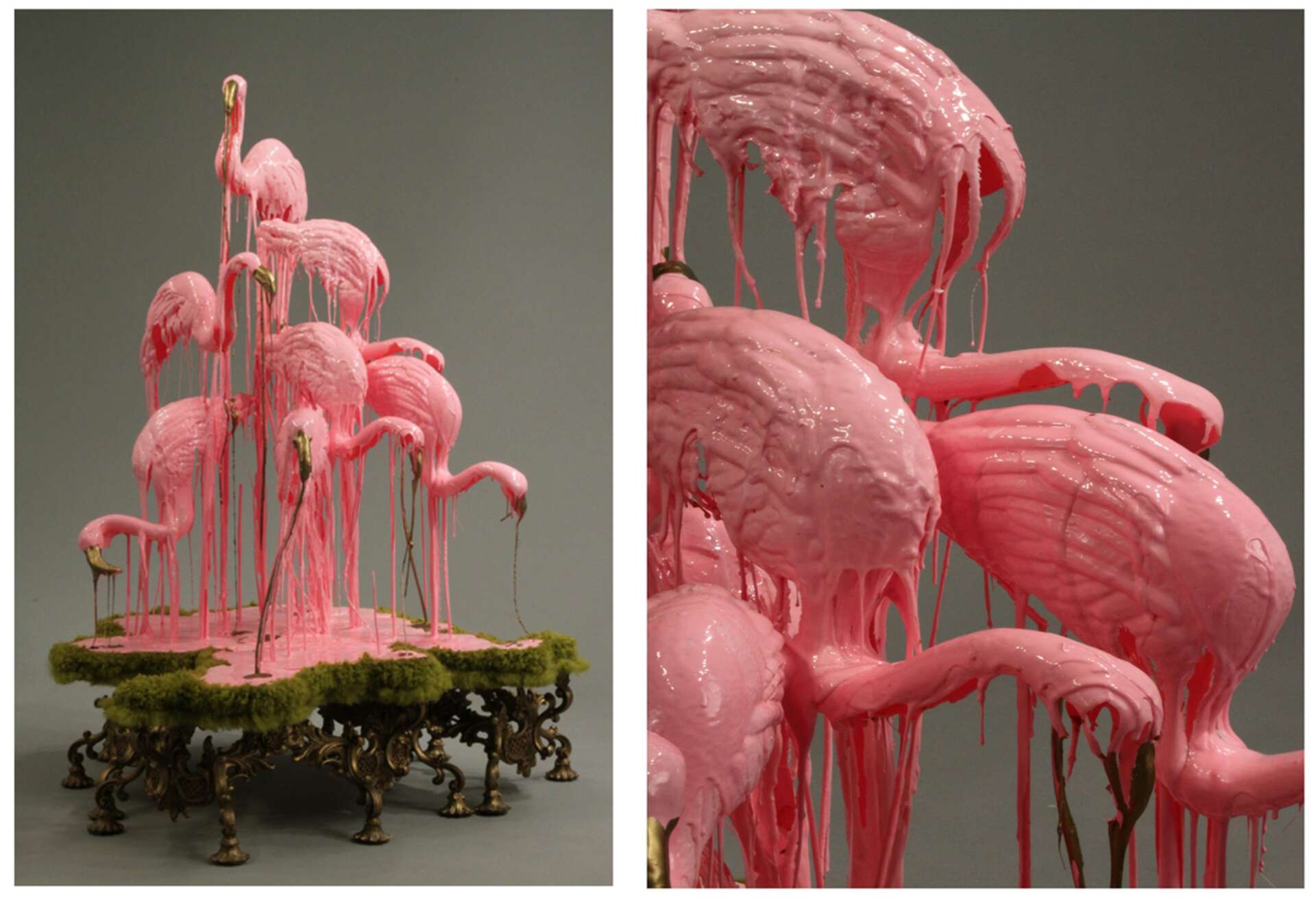
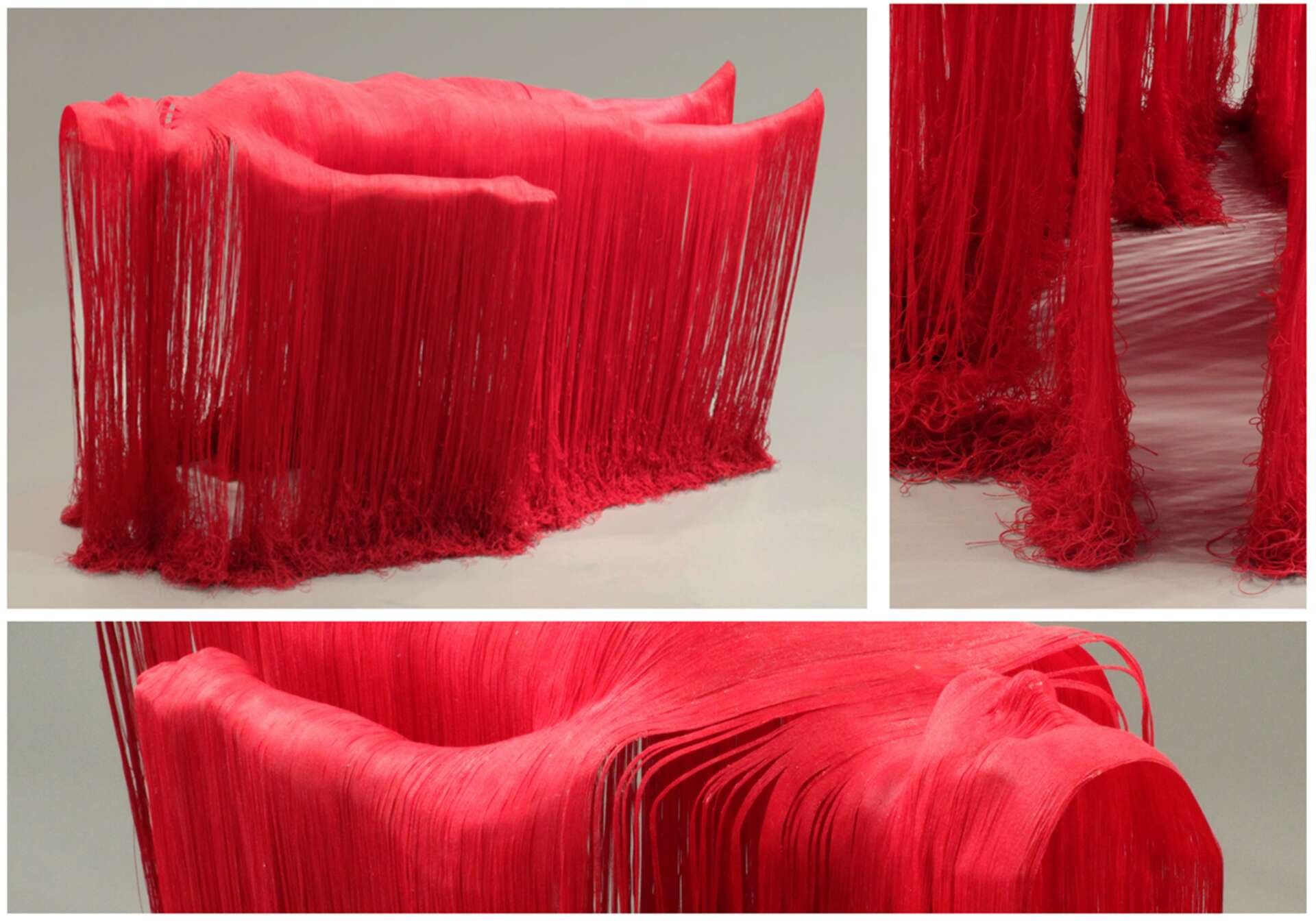
I am an artist and arts educator who has exhibited on an international scale. I am known for my sculptural works, which exhibit a sense of material transformation. On a visual level, my sculptures are often described as ephemeral or surreal. Crochet thread rises from a doily and becomes the delicate apparition of an animal or body, standing in space. Plastic flamingos drip and melt in a grotesque, baroque manner. Woven wicker on the seat of an antique chair blossoms upward into a plume of smoke.
On a conceptual level, I find that I am most often weaving fantasies (either borrowed or my own) out of commonplace materials, or manipulating the visual languages of decorative objects found in the household environment: plastics, vinyl siding, thread, doilies, furniture, etc. In this way, I like to embellish and explore themes of ornamentation and superficial grandeur as they occur at a domestic scale.
Much of the inspiration for my pieces is drawn from my experiences as a faux-finish painter and interior design assistant in the suburbs of Philadelphia. Working briefly in the field of interior design fostered my sense of intrigue with the relationships that we as individuals cultivate with our private spaces and possessions. My role in the field of interior design allowed me to work daily in what I came to think of as “the theater of the home.” Using paint and plaster to author new histories and mount a sort of artificial set design within my clients’ houses began to feel a bit like lucid dreaming to me. I am curious about the place where these constructed reveries make contact with real life. My sculptures express a sense of desire and occasional humor that I feel often accompanies such spectacle.
What’s the most rewarding aspect of being creative in your experience?
The fundamental pleasure and challenge of my creative practice is bringing tangible objects into existence that previously did not occupy physical space in the world. For me, there’s always been something inherently exciting about sharing space with an imposing or inviting work of sculpture. Beyond that, I do take a special delight in using traditional “crafting” materials in more architectural capacities. Some examples of this include building large, rigid forms with seemingly benign crochet thread, wicker caning, and the like. I’m also occasionally lucky enough to meet viewers of my sculptures who have a strong connection with the media I’ve used to construct a given piece. A crocheted doily is rarely just that- it typically carries with it a host of meaningful sense memories or narratives, which become a part of the piece for each viewer. I’m always deeply touched when someone tells me how the materials or processes I’m using have held uniquely profound meaning for them.


Can you tell us about a time you’ve had to pivot?
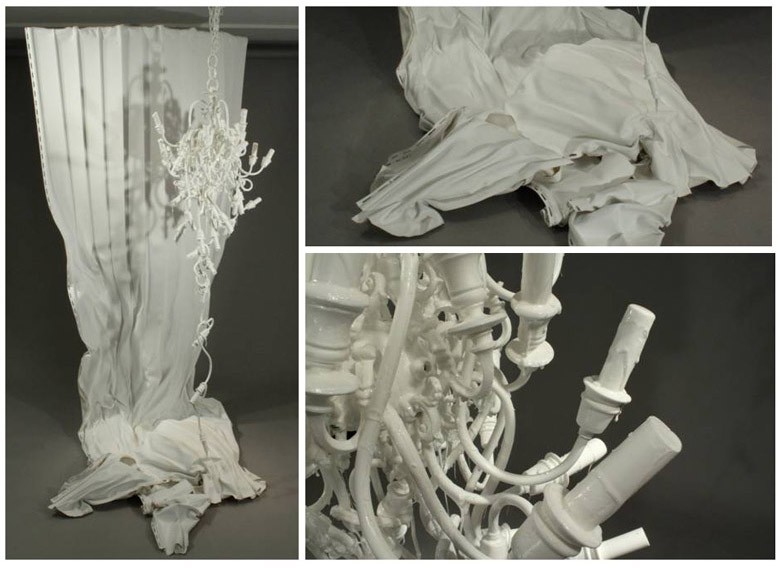
There was a period in my career during which I was very interested in making sculptures that blurred the line between “fine art” and “functional/desirable home furnishing object.” I was making moving wallpaper, melting chandeliers, and the like. Around this time, I’d made a pair of leopard-shaped lamps that seemed too functional to be considered fine art, and too outrageous to be considered for their utility in the home. Not feeling I was finished with these sculptures, I very hesitantly featured them as part of an open studio event in New York City, where I was living and working. To my shock, I received a handful of offers to buy the pieces, and interest from a representative of an internationally renowned fine art auction house to sell the leopard lamps on my behalf. I thought I had produced works that had successfully subverted some of the pre-existent boundaries in the art world, when in fact, I’d played right into a pre-existing system of commerce. This caused a large shift in my thinking every time I entered the studio to design a new sculpture. From there on out I decided to design many of my works as though I was a “mad cap interior designer” rather than exclusively operating from the perspective of a fine artist. This shift in perspective has brought me quite a bit more ease and playfulness in my studio practice.
Contact Info:
- Website: www.sarahknouse.com
Image Credits
Sarah Knouse