

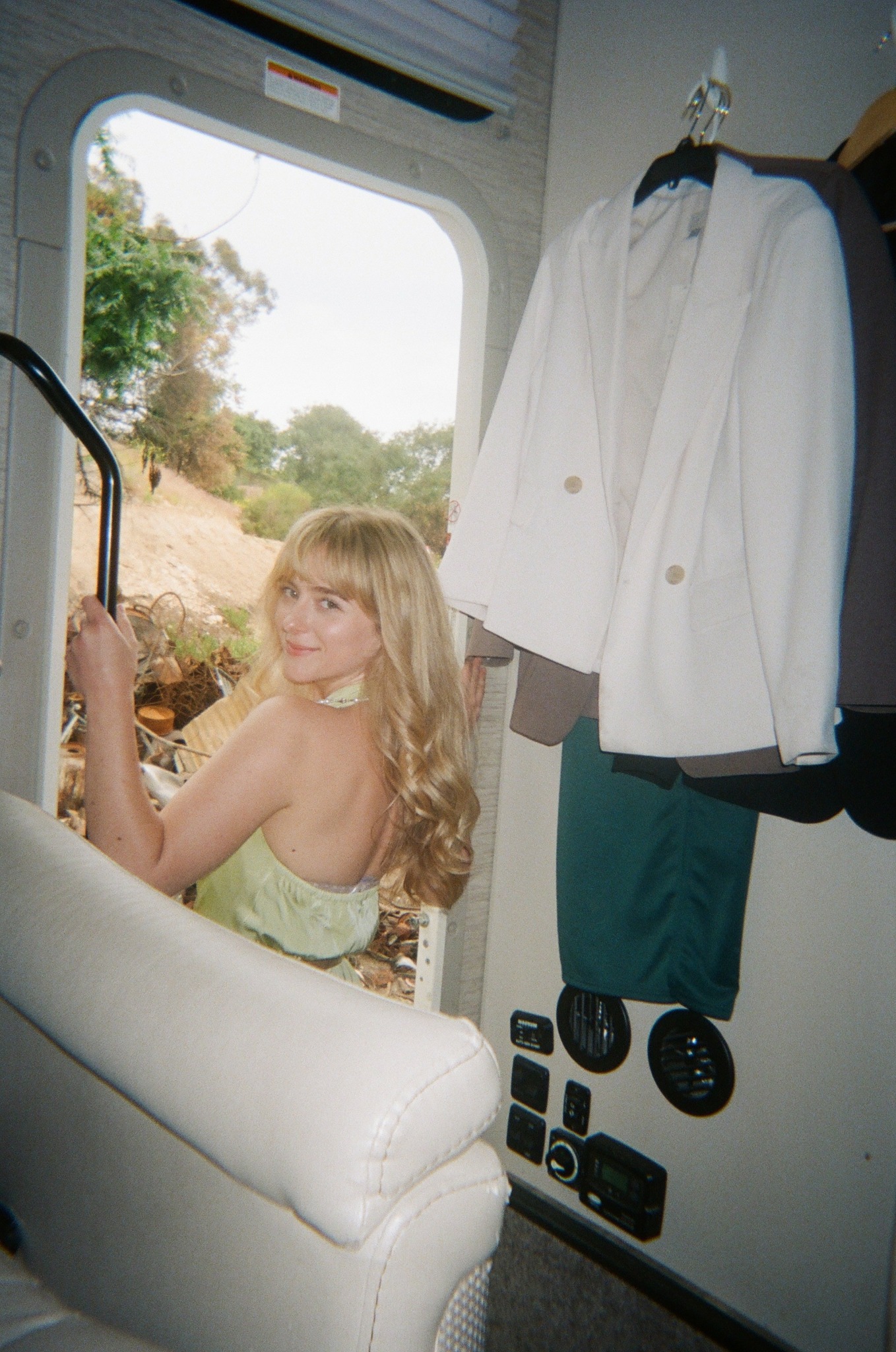

We caught up with the brilliant and insightful Sarah-Grace Donnelly a few weeks ago and have shared our conversation below.
Hi Sarah-Grace, thanks for joining us today. How did you learn to do what you do? Knowing what you know now, what could you have done to speed up your learning process? What skills do you think were most essential? What obstacles stood in the way of learning more?
Studying the craft of acting is a tricky thing. It’s not like music, where you can run your scales every day and know you’ll see improvement from repetition. Acting doesn’t really work that way—it’s more nuanced, more subjective. For me, the time I’ve spent learning this craft has completely changed my life, both personally and artistically. And it hasn’t been a short journey.
Technically, I started studying acting in second grade, when I was placed in a theater program as a way to deal with the seemingly endless energy I had. I grew up doing theater and commercials, but my real training began in high school. I attended the New Orleans Center for Creative Arts (NOCCA), and it was there I realized that acting wasn’t just something you did for fun—there was actually a technical way to study it. My first mentor, Silas Cooper, introduced me to the Meisner technique.
This philosophy puts all the focus on the other person, and it teaches you to find your own perspective as a kind of litmus test when building a character. As Cooper used to say, “If it ain’t personal, it ain’t no good.” During this time, I started to discover my own personal voice. I realized acting didn’t have to remain just a dream—I could actually build a career out of it.
By college, I found myself at a crossroads. I was midway through my junior year in a BFA program at The New School in New York, studying Drama with a minor in Dance. I had put in years of work and money, but still I didn’t feel like I was getting the training I needed. I was distracted by the hustle and glitter of the city. I had some wonderful internships, met some truly amazing artists, but deep down I knew something was missing. I was frustrated with myself, feeling like I had worked harder, felt more dedication, when I was at NOCCA compared to how I was feeling then. I knew something had to change. I needed to reconnect with my foundation—to come back to my technique if I wanted to grow into the best actor I could be.
That’s when I found The William Esper Studio, one of the most authentic Meisner programs in the world. After just ten pages of Esper’s book, I knew I had to be there. At the studio, I studied with Bruce McCarty and finally found my true artistic voice. I learned how to really work off another person, and how to find joy in creating something out of nothing. I was taught how to access the subconscious parts of myself and to bring my own truth into the work. To go back to my earlier comparison, it was like finally having a tool to rehearse acting the way a musician rehearses her scales.
More than anything, Esper gave me confidence. There is nothing more freeing than really knowing what you’re doing because of the countless hours you’ve already put in. Even when I’m handed a piece of text I don’t immediately connect with, I can always fall back on my training. I know I can bring honesty, perspective, and myself to the table.
Like I said, this hasn’t been a short journey—but I wouldn’t want it to be. They say it takes 10,000 hours of practice to master a skill. Maybe I’m getting close to that number now. But even if I cross it, I know I’ll keep training, keep searching, keep learning—because for me, that’s the whole point. Acting may never be as straightforward as running scales, but that’s exactly what makes it worth loving.

Sarah-Grace, before we move on to more of these sorts of questions, can you take some time to bring our readers up to speed on you and what you do?
Hi :) I’m Sarah-Grace. I’m a New Orleans–born actor, writer, and dancer. I grew up doing theater and commercials, and by my teenage years I was branching out into film and television. A lot of my artistic foundation was built in high school, where I began working professionally in Shakespeare productions. It was there that I fell in love with the classics—the rhythm of the language, the timelessness of the stories—and I knew acting was what I wanted to dedicate my life to.
After high school I moved to New York City, where I trained, studied, and began my professional career. I’ve spent eight years there, and in that time I learned not only the craft of acting, but also the discipline and persistence it takes to survive in this industry. I’ve had the privilege of working consistently on Saturday Night Live from seasons 47–49, and I’ve built a career that spans both stage and screen. At the end of the day, I’m a hustler—I can’t stop working, and I’m always looking for the next opportunity to grow.
In the last year and a half, I’ve found myself leading in the new wave of vertical dramas. I’ve filmed fifteen of them so far, shooting in New York, Los Angeles, Lithuania, and China. It’s been wild, honestly, and I love being part of something so fresh and fast-growing. Vertical storytelling challenges you to think differently about how you connect with an audience, and I thrive in that.
At the same time, the stage will always be home for me. This past summer I played Hermia in A Midsummer Night’s Dream in a regional production, and that’s something I’m really proud of. Shakespeare has a way of grounding me—of reminding me where I came from and why I fell in love with this craft in the first place.
After eight years in New York, I’m now making the move to LA to take things to the next level. I think what sets me apart isn’t just the range of what I’ve done—classics, film/TV, sketch comedy, verticals—but the fact that I keep showing up. I’m persistent, yes, but I’m also learning all the time. This industry tests you constantly, and if I’ve built anything, it’s the resilience to keep going.
What I want people to know about me is simple: I love this work. Whether it’s a stage, a set, or a scrappy rehearsal room, I’m all in. Acting has given me so much—purpose, community, a way of seeing the world—and as long as I get the chance, I’ll keep chasing it.
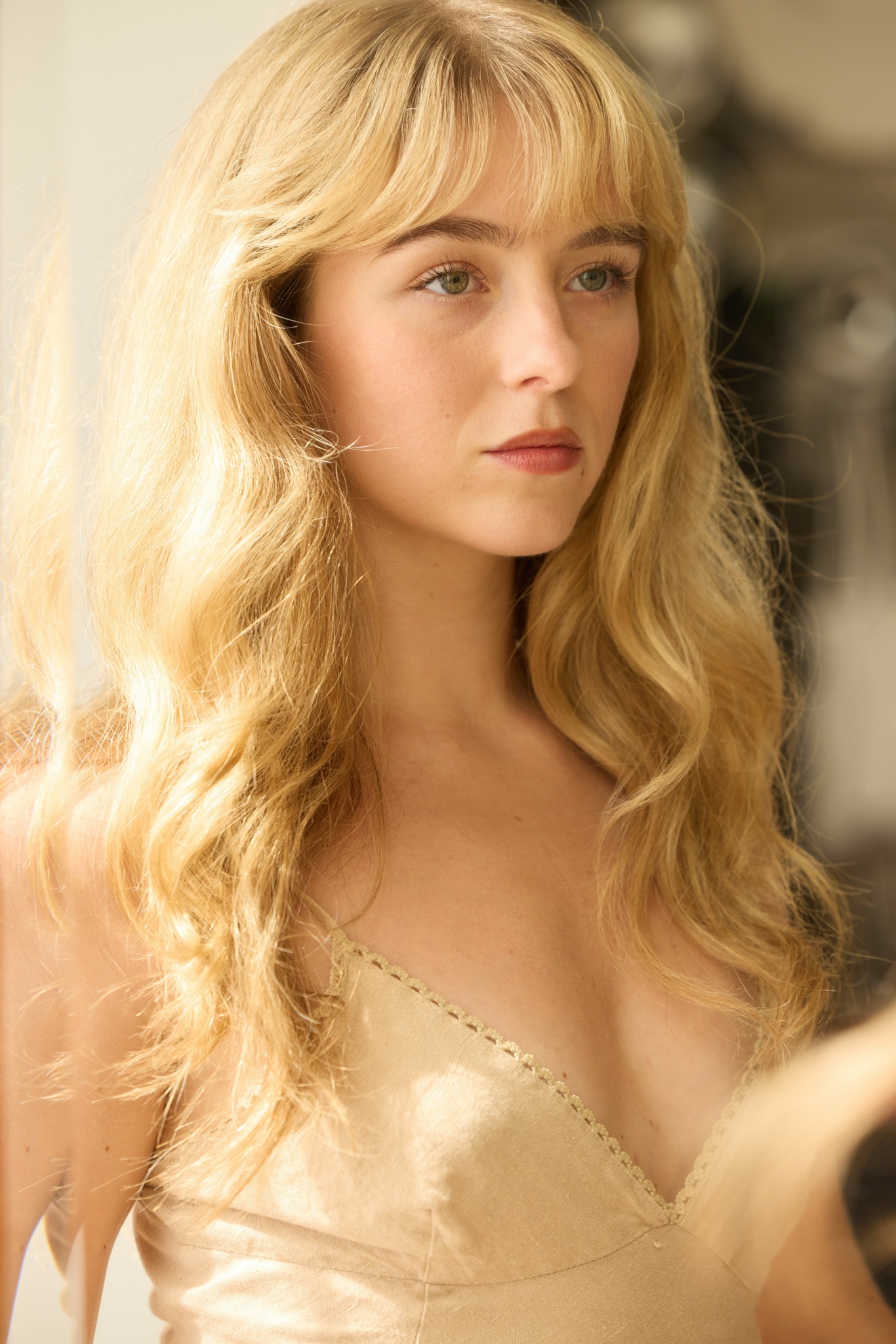
Can you share a story from your journey that illustrates your resilience?
Growing up, it was just my mom and me. No siblings, and not much extended family close to help—just the two of us. Money was tight, and I quickly learned that nothing in life was handed to me. When I told my mom I wanted to be an actor, she wasn’t thrilled, understandably so. She was scared for me, worried I’d struggle the way she had. She wanted me to have stability—our whole family works in aviation, and she had her heart set on me becoming a pilot.
Deciding to pursue acting professionally in high school was not easy. At home, there wasn’t a lot of support at first, just fear and skepticism, for good reason. And when I moved to New York City at eighteen to follow this dream, I had basically no financial support from anyone. I was completely on my own.
Everything I’ve done in my life, I’ve had to fight for. Every opportunity, every role, every step forward has been earned. Looking back, overcoming those early circumstances—growing up with very limited resources, with a single mom, and going after something no one thought was “safe”—has been one of my greatest triumphs. It taught me resilience, grit, and how to trust myself even when no one else did.
That persistence, that refusal to quit, is still the foundation of how I approach my work today. Every project, every stage, every set—it’s all built on the same drive that carried me out of New Orleans and into a career I’ve fought so hard for.
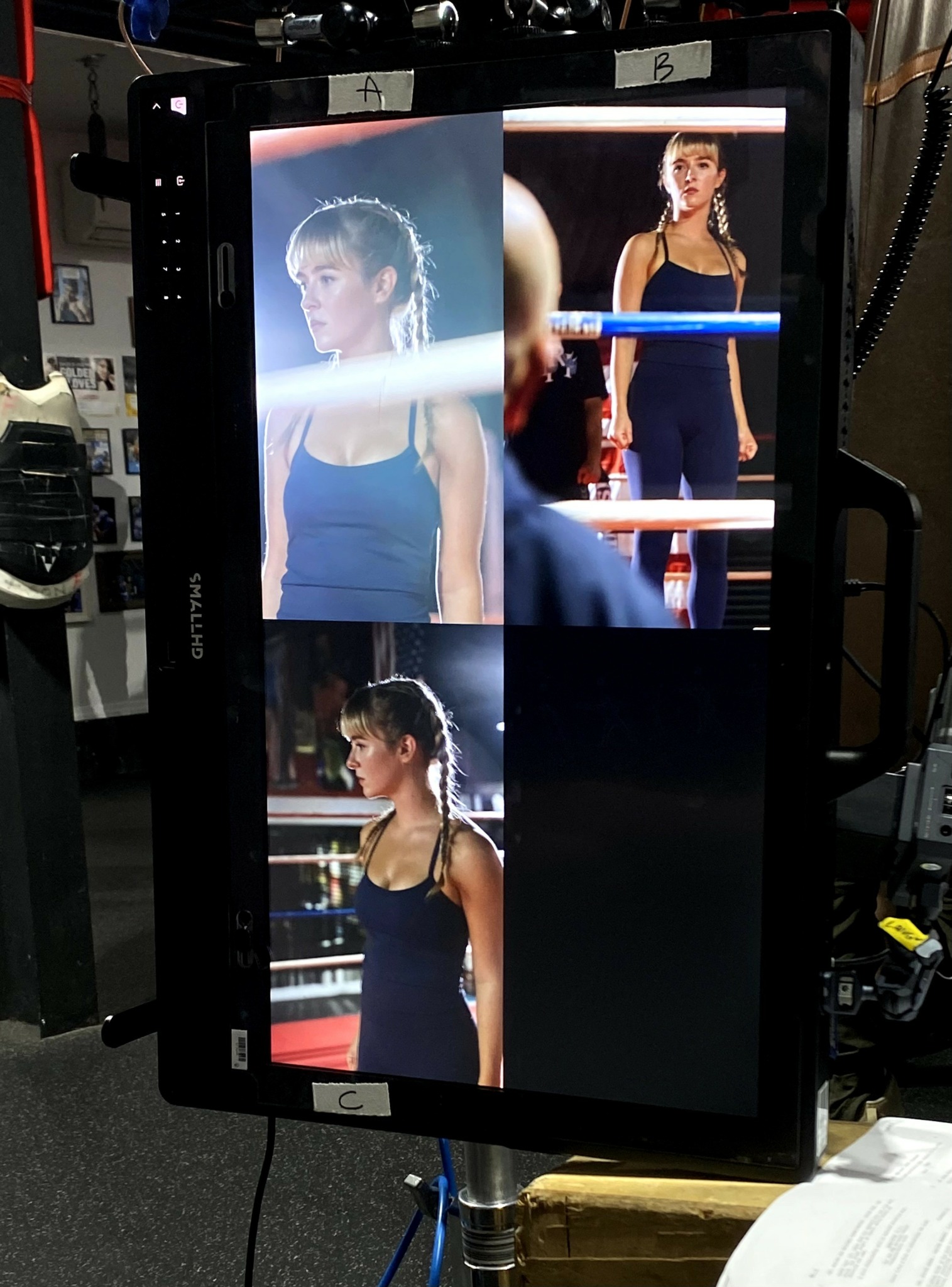
Are there any books, videos, essays or other resources that have significantly impacted your management and entrepreneurial thinking and philosophy?
There are a few works that have shaped how I think about not just my craft, but also how I manage myself and my career. Zen and the Art of Archery by Eugen Herrigel was one of the first that hit me hard. It taught me about patience, discipline, and the idea that mastery is something you surrender to—it doesn’t come from forcing results, but from showing up with presence, again and again.
Eva Le Gallienne’s The Mystic in the Theatre: Eleonora Duse opened my eyes to what it means to live and breathe your art with total devotion. It’s not just a profession, it’s a way of being. That idea keeps me grounded when I’m working, even in moments when the business side feels overwhelming.
From William Esper and Damon DiMarco’s The Actor’s Art and Craft, one line has always stuck with me: “Truth is the blood of art. Without truth a piece of art fails to touch the human spirit.” That’s become a kind of north star for me—not just in acting, but in how I move through this industry. If I’m not being honest, with myself or my work, then none of it matters.
And then there’s Martha Graham’s letter to Agnes de Mille. I come back to it constantly, especially the part about the “blessed unrest.” That reminder—that you don’t have to believe in yourself all the time, that your job is just to keep the channel open—has saved me more than once. The idea that there will always be this restless dissatisfaction, and that it’s not a flaw but the very thing that makes you alive as an artist, completely reshaped how I carry myself.
All of these works together have built the philosophy I try to live by: stay disciplined, stay devoted, stay truthful, and don’t fight the unrest. Instead, let it push you forward
Contact Info:
- Instagram: @sarahgraceee
- Other: IMDB :https://www.imdb.com/name/nm9919641/


Image Credits
Paul Smith
Todd Estrin
Brittney Werner
Saturday Night Live NBC
A Christmas Party