



We’re excited to introduce you to the always interesting and insightful Sarah Boltwala-Mesina. We hope you’ll enjoy our conversation with Sarah below.
Hi Sarah, thanks for joining us today. Risk taking is something we’re really interested in and we’d love to hear the story of a risk you’ve taken.
An intern once said to me “Why isn’t this a thing?”. The ‘thing’ she was referring to was ‘composting’ and what she was trying to say is that why isn’t there a career path for soil builders like there is for farmers and plumbers and landscapers? Looking back that question encapsulates my work and the risk I took dumping my career in corporate finance and diving instead into the dumpster itself to find my life’s purpose.
We have so many careers that allow us to be engaged consumers. As a society we offer many careers when it comes to making things, packaging them, convincing people to buy them and then actually selling them. But the road abruptly dead ends when it comes to careers that allow us to extract value from those items at the end of their life, reuse them, resource and recycle them so the energy and economic value embedded in those items keeps circulating through our economy and our biosphere.
What I’m trying to do is build that back end of the closed loop with fulfilling careers and respectable livelihoods. Starting with composting I’m building a waste recovery network of micro entrepreneurs who extract economic value from waste, alter the fabric of our lifestyle, strengthen community resilience and heal our planet.
Imagine an AirBnB style network of resource hubs vying for your discards because they are raw materials for them. Imagine opening up an app to see not what’s on sale today but instead a list of artists, businesses and neighbors who need your glass, plastic film and foodscraps because they have a unique project or recipe to make. As outrageous as this sounds its not that far fetched. We just need a few more entrepreneurs willing to step away from the world that’s filling the dumpster and into the dumpster itself so we can apply their passion and ingenuity to build new pathways that allow discards to flow through neighborhood backroads rather than the highway that ends at the landfills.
Sarah, love having you share your insights with us. Before we ask you more questions, maybe you can take a moment to introduce yourself to our readers who might have missed our earlier conversations?
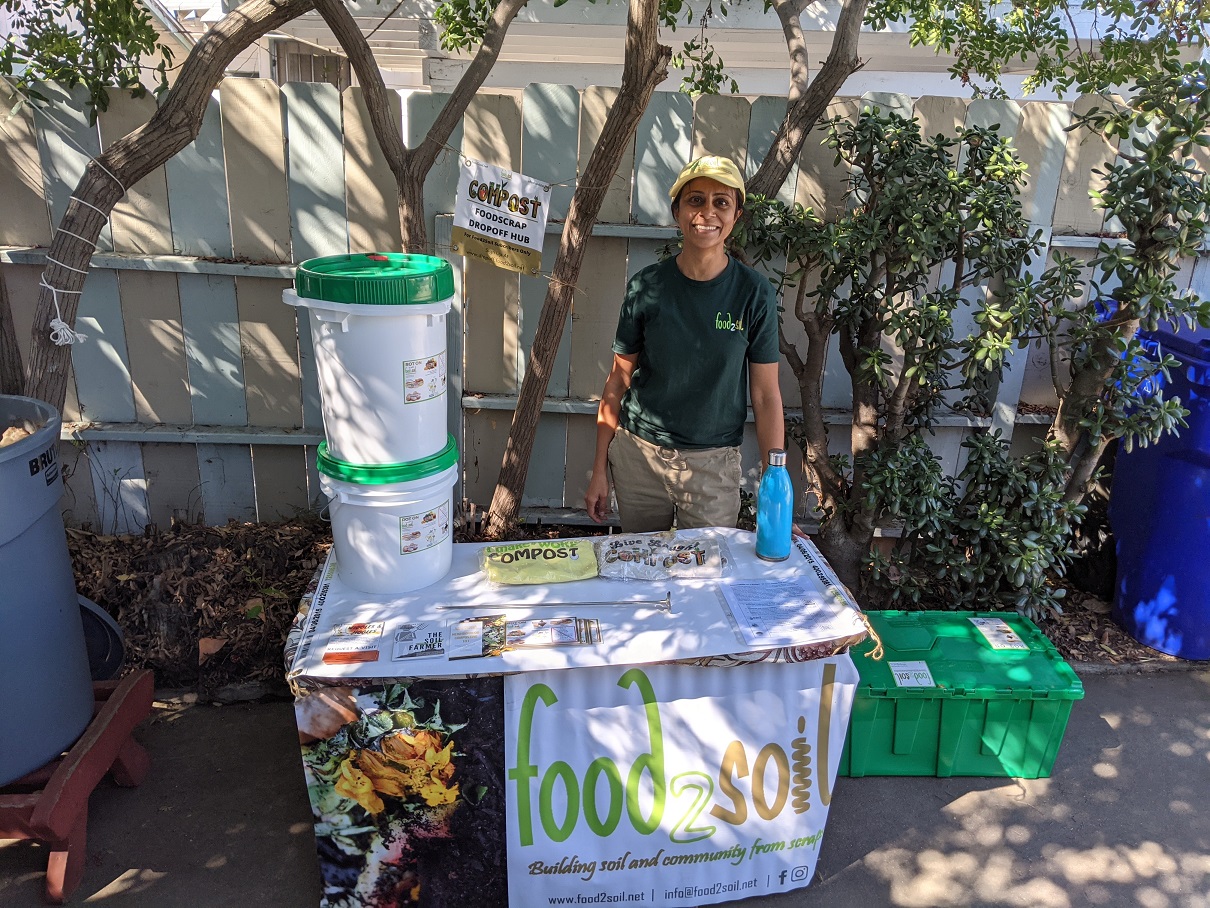
I am the founder and Executive Director of Inika Small Earth, Inc. Inika is a nonprofit incubator for ideas that transform waste into resources for the circular economy. Most people know me through Food2Soil which is a community composting collective, fondly known as San Diego’s Neighborhood Composter.
Food2Soil started an an outlaw in 2015 with 10 buckets of scraps collected every week from a restaurant, transported in the trunk of my car for composting at a community garden a couple blocks away. Today the network comprises 600 members all over San Diego, 18 dropoff hubs and 7 compost hubs that collect, transport and compost two tons of scraps every week. We are no longer an outlaw. Our work has allowed policy makers (state and local) to look for ways that officially make room for community composting. We’ve done this purely through our passion, grit and savings without relying on grants, subsidies or outside capital.
What sets us apart is that we want to scale at our own terms, with capital we build from our operations (not borrowed from outside), through investments we make in our business in the form of our sweat and ingenuity. We are owners, managers and employees all at once.
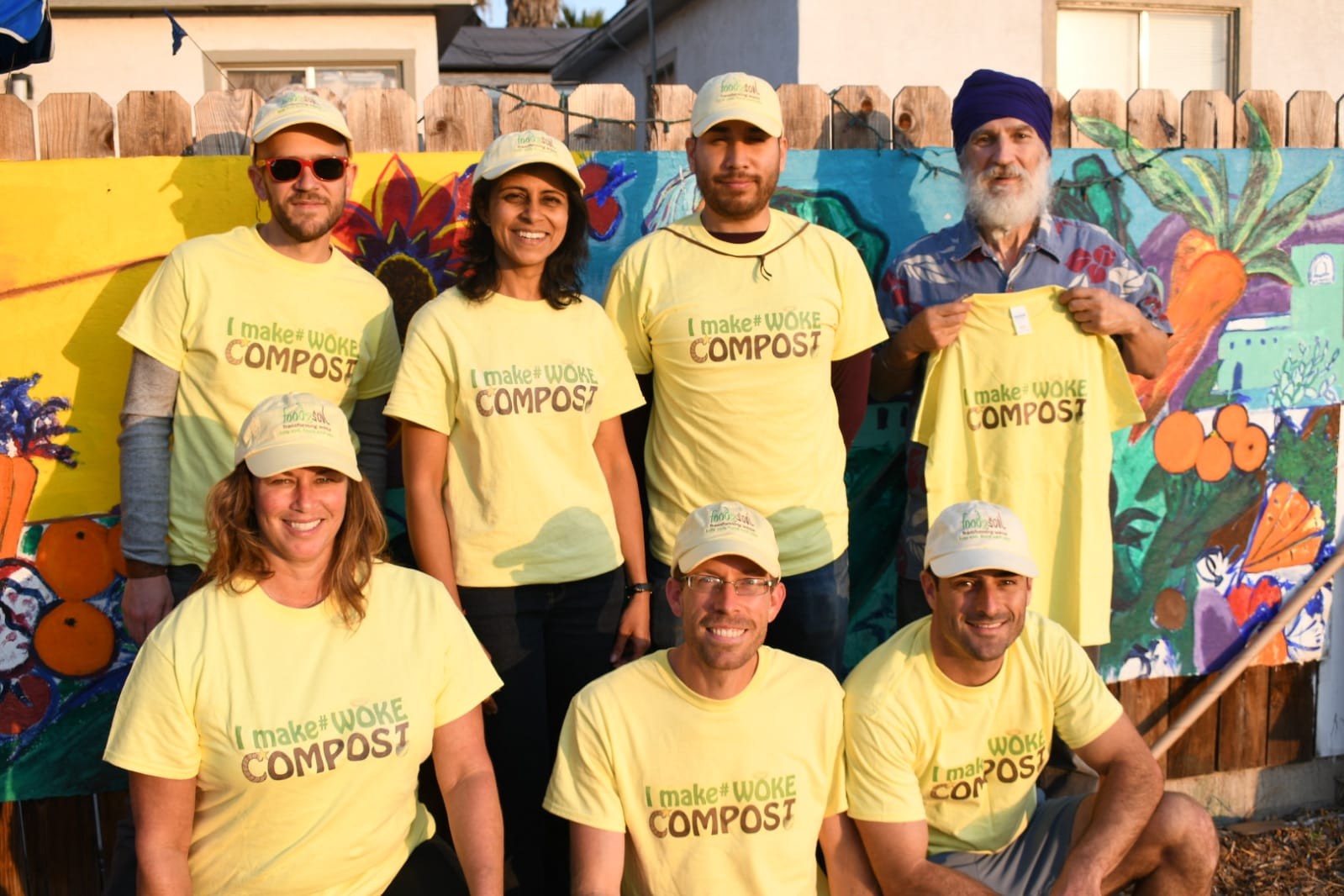
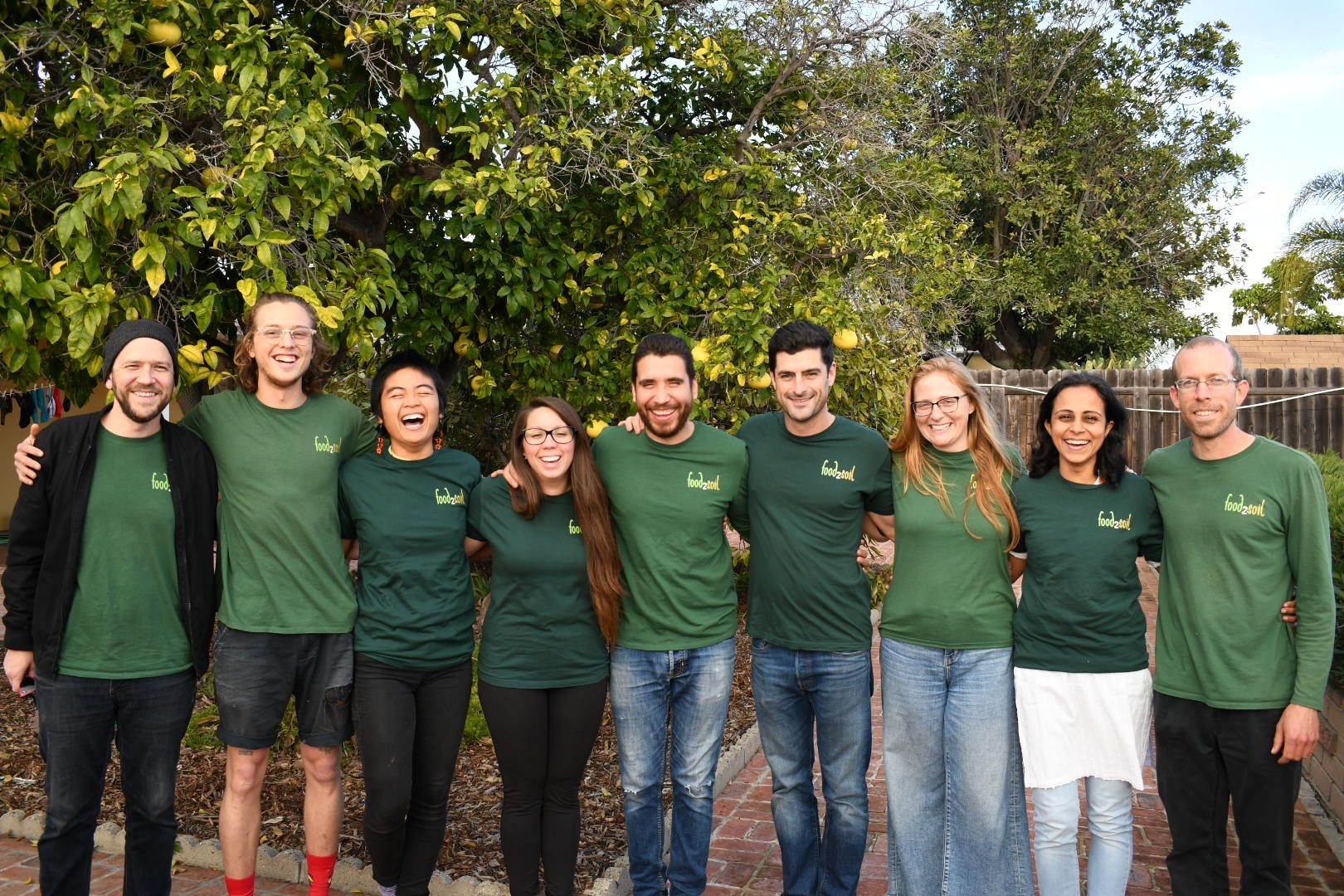
What we are most proud about is the spirit of the people that work and participate in our collective. We are a group of very grounded folks with the courage to walk our talk. We come from all walks of life, from all parts of the world, comfortably juggling second careers as farmers, scientists, entrepreneurs and artists. What binds us is our passion to build an alternate model that is pragmatic, inclusive and empowers the individual to take charge of their footprint and their community.
What’s a lesson you had to unlearn and what’s the backstory?
In business school I learnt certain principles of what a successful business should look like. They were largely one size fits all types of concepts such as leveraging an idea with debt or outside investment, scaling up quickly to fulfill the ROI expectations of these investors and building vertical hierarchical structures of management and accountability to aide this fast scaling. These are fine principles if profit is your only goal and you are able to filter out the social and environmental costs that are embedded in the ‘business as usual’ way companies operate and grow.
But there was a quiet voice inside me that was urging me to build something different. I wanted to build a business where the workers were also owners and managers, not just on paper but for real. A business that is ‘abundant’ in the way nature is – where output always exceeds input and the energy of the organisation flows easefully and naturally towards what is next and important without external pressures. A business that grows organically from the surplus it generates from its operations (and not from an external injection of investment) because the hard earned operational surplus is the best driver for deciding where it needs to be invested next and how the business can continue meeting its cusstomers’ needs. I wanted to work in a place (for my own sake) that had soul and trust, where everyone was there because they had carved a role for themselves and no one had to prove to someone that they were doing their job and performing at their best.
Building this organization was going to be difficult. I didn’t have a vocabulary to explain what I was trying to. How do you build this utopian organisation without quickly pushing it into chaos and anarchy? The universe must have known that I needed help and it miraculously threw the book ‘Reinventing Organisations’ (author Frederick Laloux) into my lap. This book is my bible, my friend and my guide. It not only gave me the vocabulary to describe the organisation of my dreams, it also gave me the blocks to start laying its foundation. Holacratic teal organisations are always a work in progress just like the human beings who become a part of it. And the timing with which it came into my consciousness is something I’ll always cherish forever.
In a nutshell here’s what I relearnt (excerpted from Reinventing Organisations) about building and managing a company that turned everything I was taught at business school on its head.
– People are systematically considered to be good. They are reliable, self-motivated, trustworthy and intelligent.
– There is no performance without happiness. To be happy, we need to be motivated. To be motivated, we need to be responsible. To be responsible we must understand why and for whom we work, and be free to decide how.
– Value is created on the shop floor. Shop floor operators craft the products; the CEO and staff at best serve to support them, at worst are costly distractions. In Food2Soil’s context the shop floor operators are the Soil Farmers. Composting is what creates value and the Soil Farmers are the drivers of Food2Soil’s economic engine. The back-office staff, managers, administrators and consultants are there to support the Soil Farmers and therefore take orders from the shop floor.
How will you build a business from dirt and scraps that is still relevant to contemporary society?
What I shared above is how we operate internally or in other words how we manage the ‘back of the house’. What I want to share next is how we position ourselves to the outside world or how we operate ‘in the front of the house’.
Reviving community composting and giving it a makeover so it is accepted back into our neighborhoods, in people’s front and backyards, and, on church and school lots has been quite a journey. In a phrase we are obsessed with how to make composting ‘attractive’ if not quite sexy. Remember that recycling food waste through animals or in soil was a practice woven into our daily lives about a 100 years ago. The industrial revolution and subsequent disconnection from living off the land, the onset of two income households where basic tasks such as cooking, cleaning and gardening had to be given up or outsourced all led to a collective amnesia on composting, reuse and recycling overall.
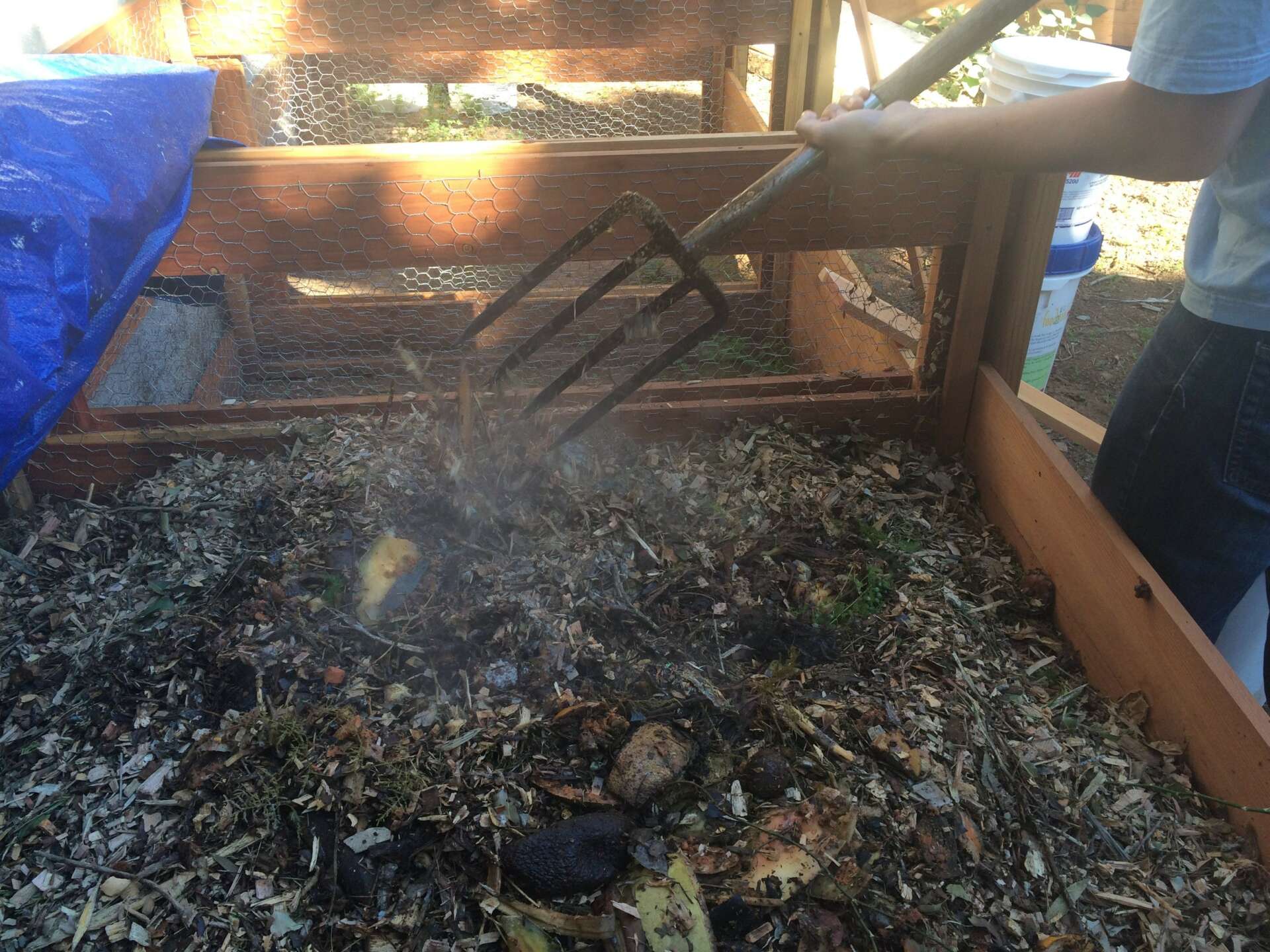
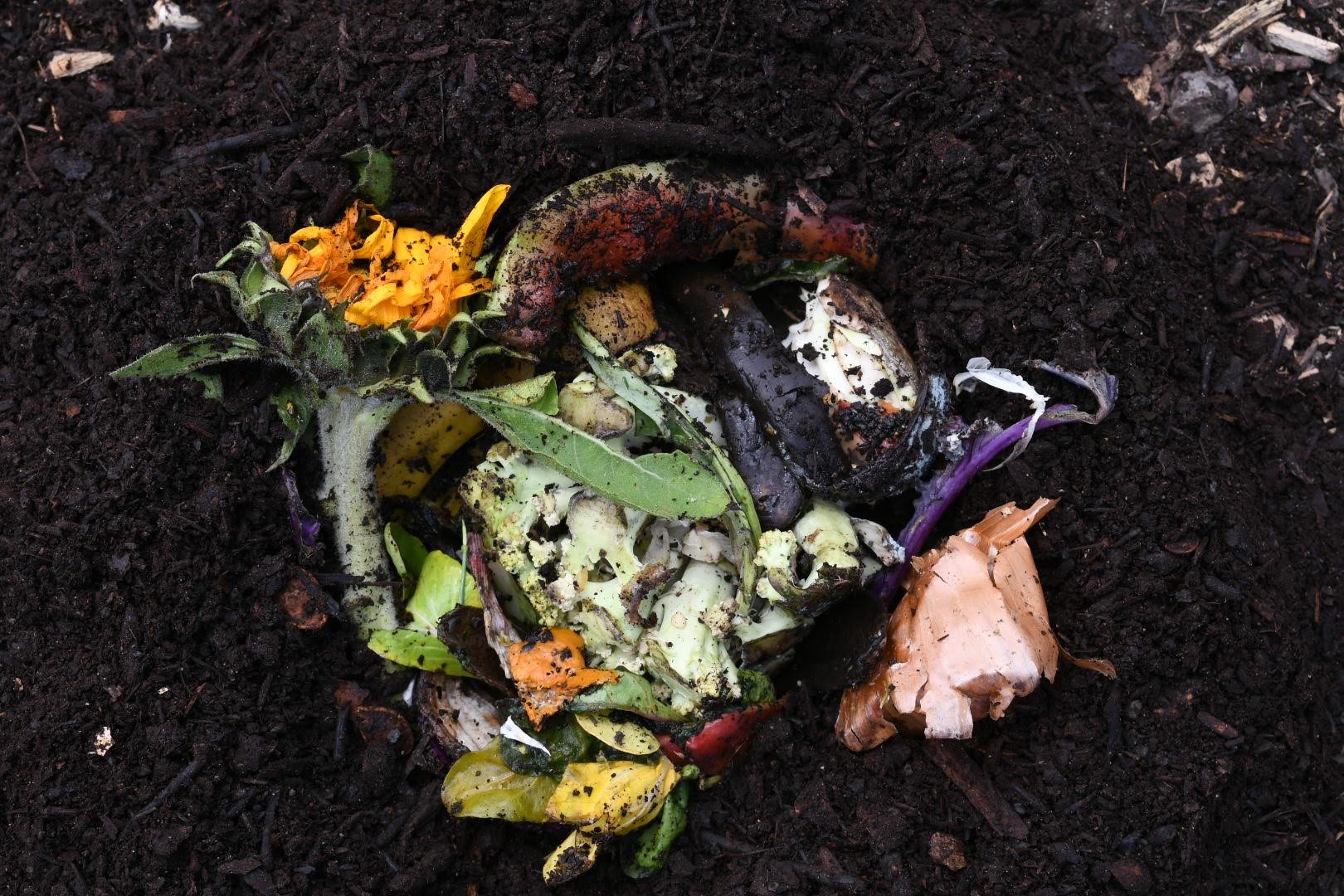
To make composting trendy again we had to think out of the box. As composters we are wired slightly differently to begin with. What others see as stinky rotting food, we see as colorful scraps that whiff of a cafe (coffee grounds), deli (onions, lettuce, bread) and juicebar (citrus). We wake up excited to turn hot piles as the morning sun rises and smell the soil as it finishes its transformation from scraps. But satiating our souls from this process and being fulfilled through it isn’t enough. We have to be able to tell this story of how we feel, what we see and smell in a way that others can relate to.
We do this through photographs, murals, artwork and guess what….through apps! Yes, we use apps to keep track of the scraps dropped off at our hubs and take pulse of what’s happening in our compost piles. We share this with our members through apps which capture the temperature of our piles, activity of our hubs, photographs of creatures we see in the piles, and scorecards that inform our members of their composting footprint, bucket by bucket of foodscraps dropped . We don’t want the world to go back to composting, we want to update composting so it steps forward to matche our urban lifestyles and expectations.
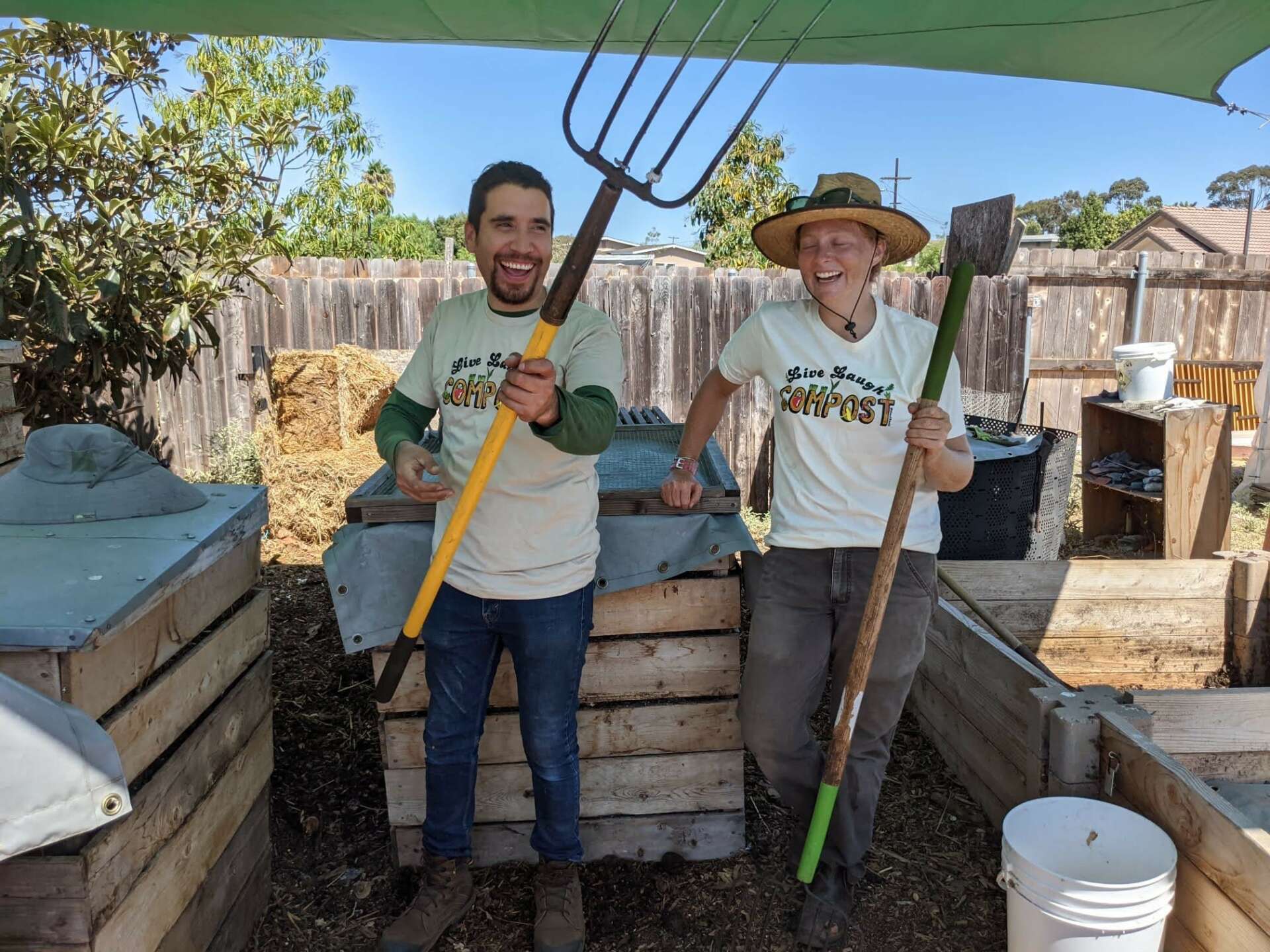
Live- Laugh and Compost is our mantra and we proudly wear it on our sleeves and our shovels!
Contact Info:
- Website: www.food2soil.net
- Instagram: food2soil
- Facebook: food2soil
- Linkedin: food2soil
- Youtube: Food2Soil – San Diego’s Neighborhood Composter
Image Credits
Omez Mesina