

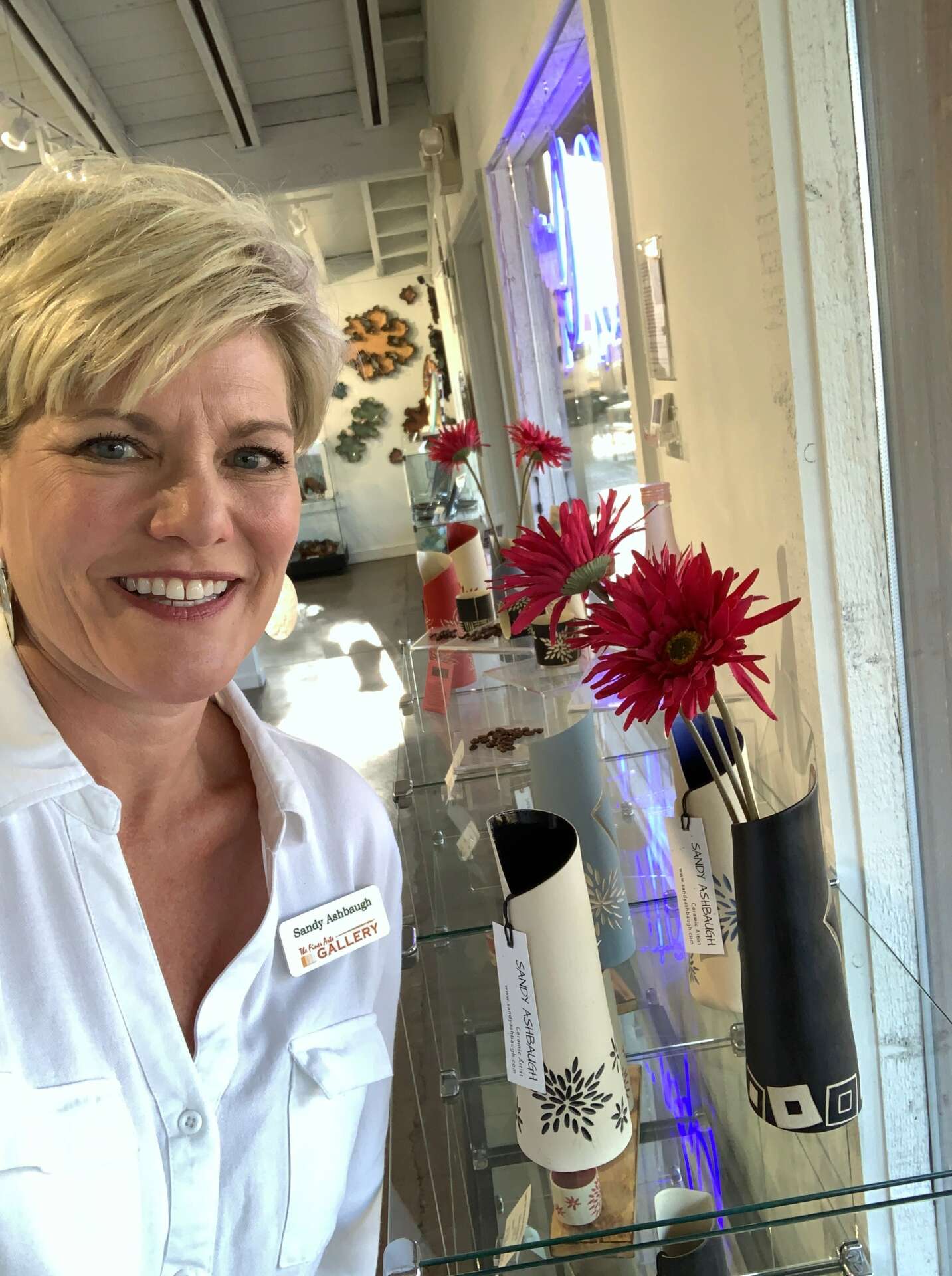

We recently connected with Sandy Ashbaugh and have shared our conversation below.
Sandy, thanks for taking the time to share your stories with us today Can you talk to us about how you learned to do what you do?
I’ve learned how to work with clay exclusively through in-person instruction. First, at Florida Atlantic University (Boca Raton, FL), where I obtained my BFA in Ceramics, then for fifteen years with various professors at my local community college, CGCC (Chandler, AZ). About five years ago, I made the move to open my own private studio and even though I really miss the impromptu critiques and community of the the college studio, I knew it was time to go it alone.
Ceramics is a complex and multi-faceted medium. There’s the initial learning process of manipulating the clay, via throwing on the wheel or through hand building, then there’s the glazing process. Most artists seem to be drawn to one or the other. I love both. Coming up with a unique shape and finish is a challenge.
I think that learning from a variety of instructors can help speed up the learning process, since they will often share their own tricks of the trade. In my opinion, learning how to think critically by analyzing form and function, as well as being open to the possibilities that a work may have, is an essential skill to have. Not having access to glaze chemicals and a kiln are two of the main obstacles when working in clay.
Sandy, love having you share your insights with us. Before we ask you more questions, maybe you can take a moment to introduce yourself to our readers who might have missed our earlier conversations?
I was introduced to ceramics while in college. Learning how to mold and sculpt clay and then glaze in the Raku style hooked me. It’s an exciting and artistic way to glaze ceramic work!
Raku is based on a Japanese way of firing, where glaze is applied to a bisqued piece of clay, put into a special kiln, then fired to approximately 1700 degrees Fahrenheit for about an hour. The exciting and dangerous part is pulling the piece out of the kiln, red hot, with tongs and placing it into combustable material. The flames react with the glaze and produce organic designs. This produces artistic, not food safe glazes. My work has been published in “500 Raku” by Lark Crafts.
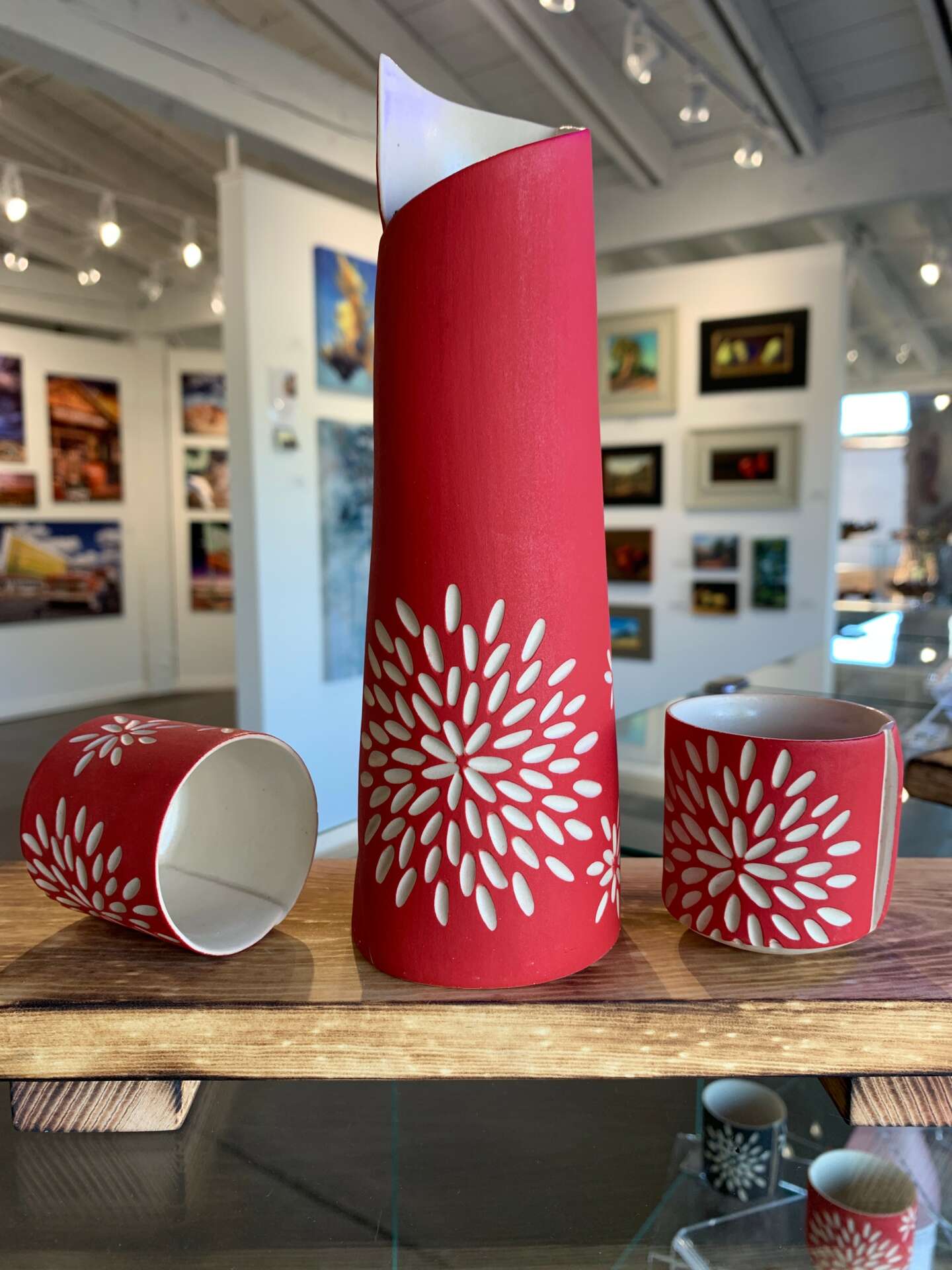
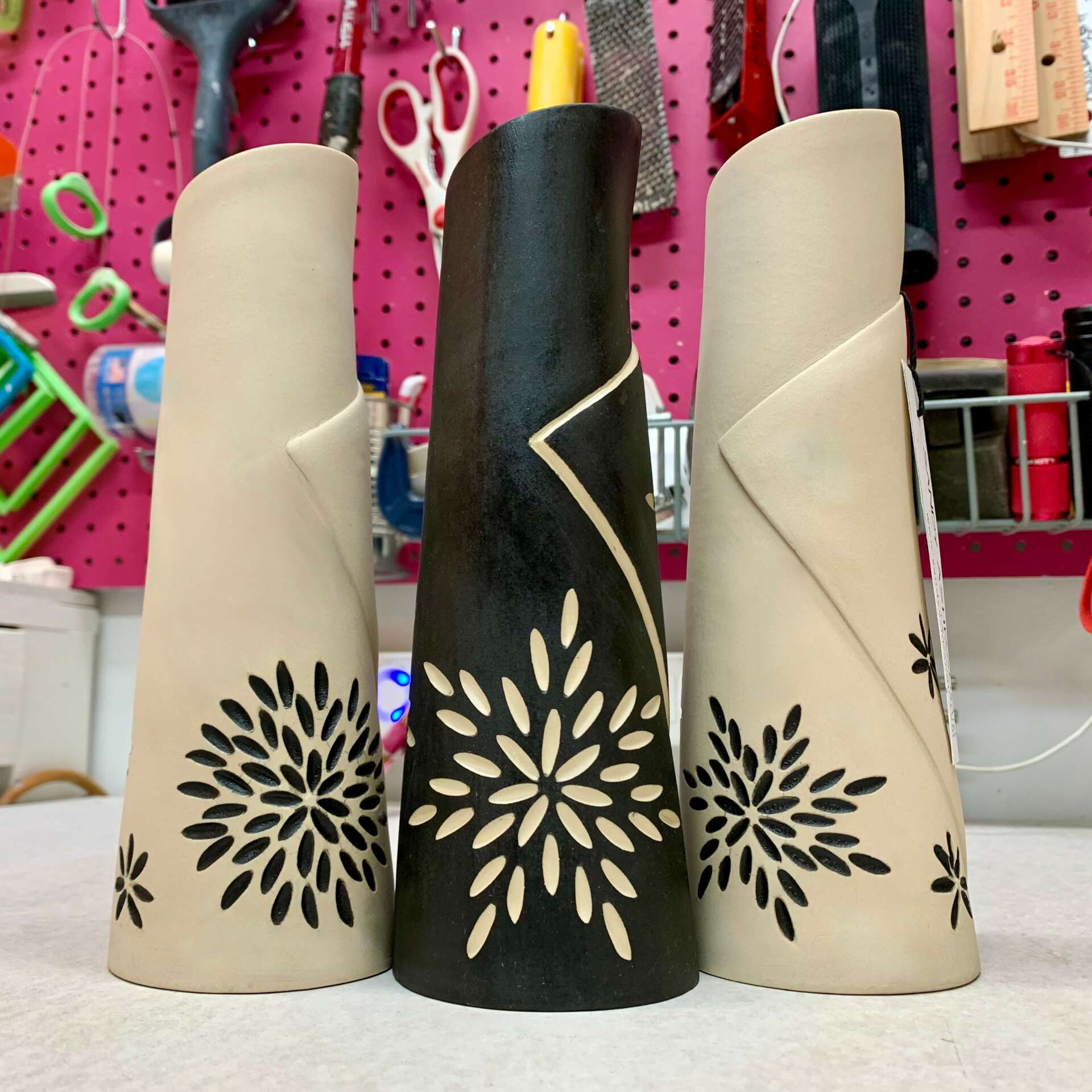
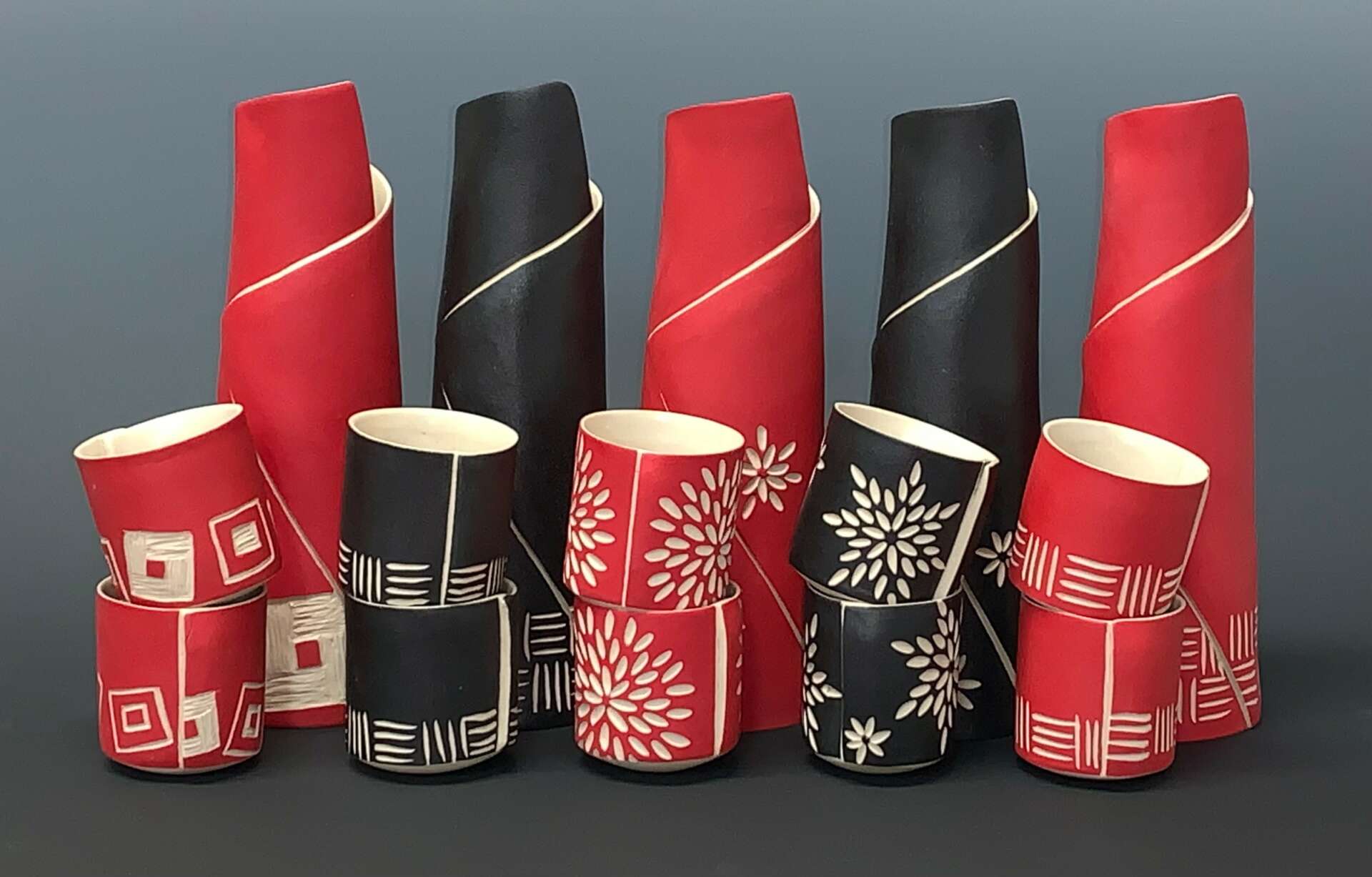
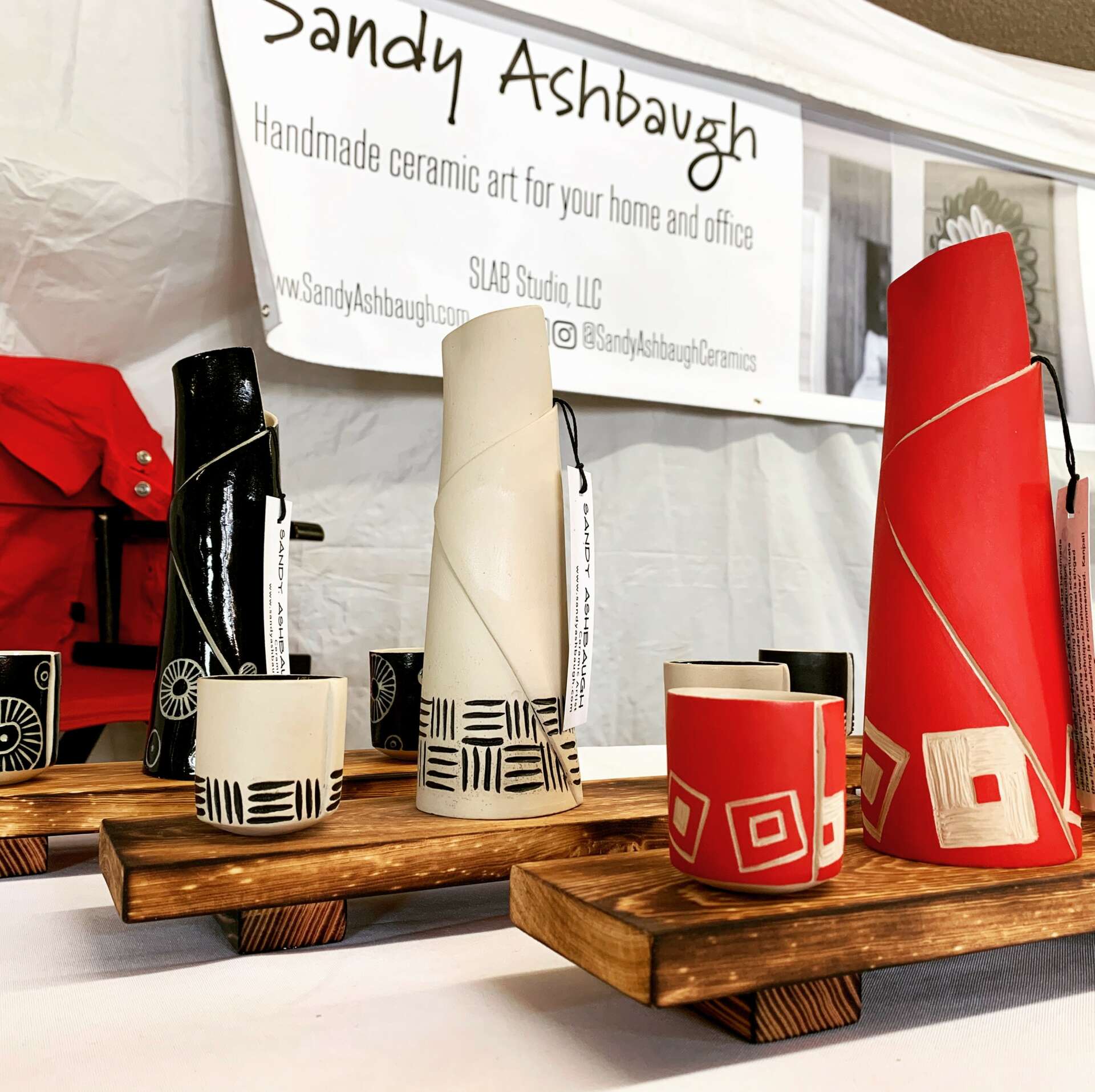
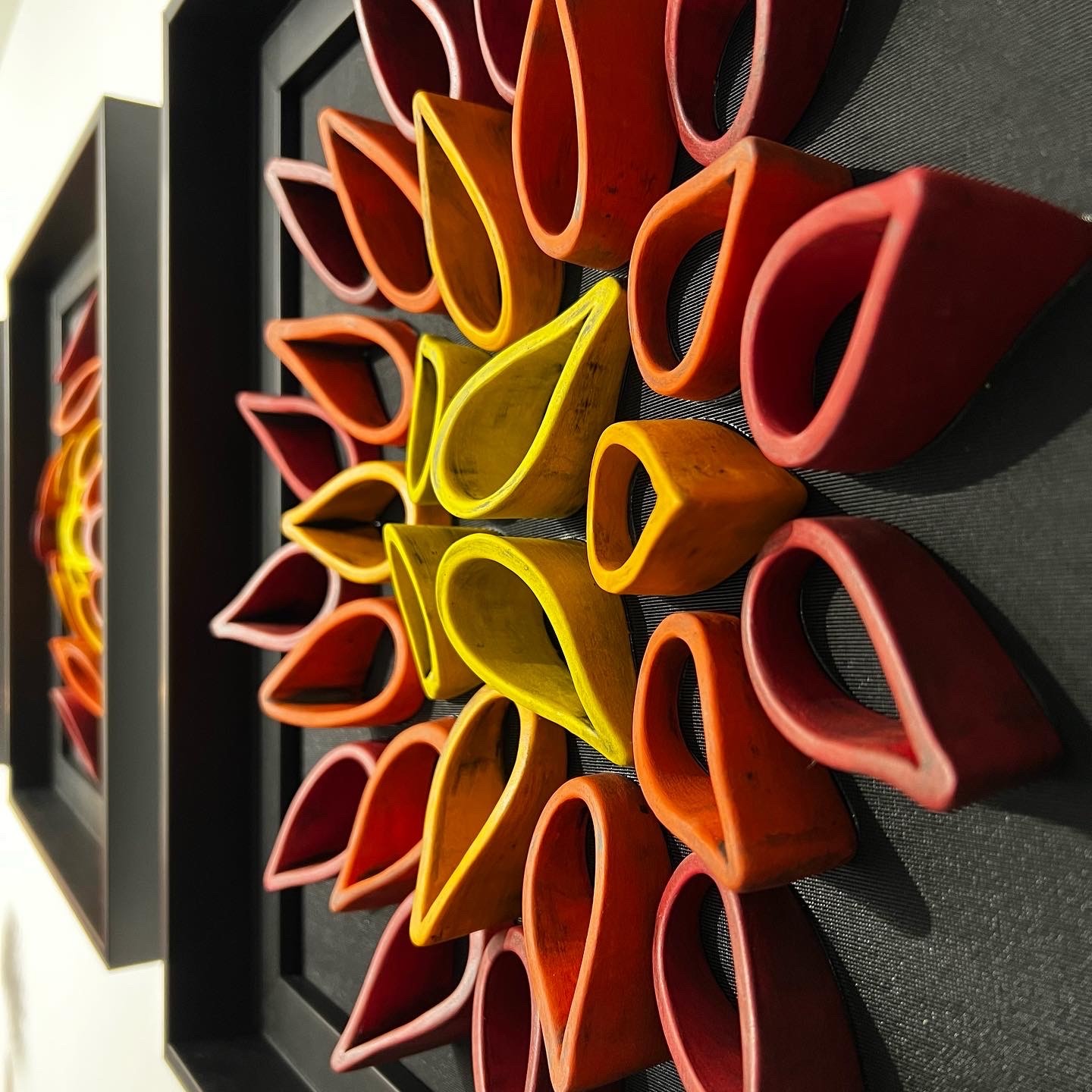
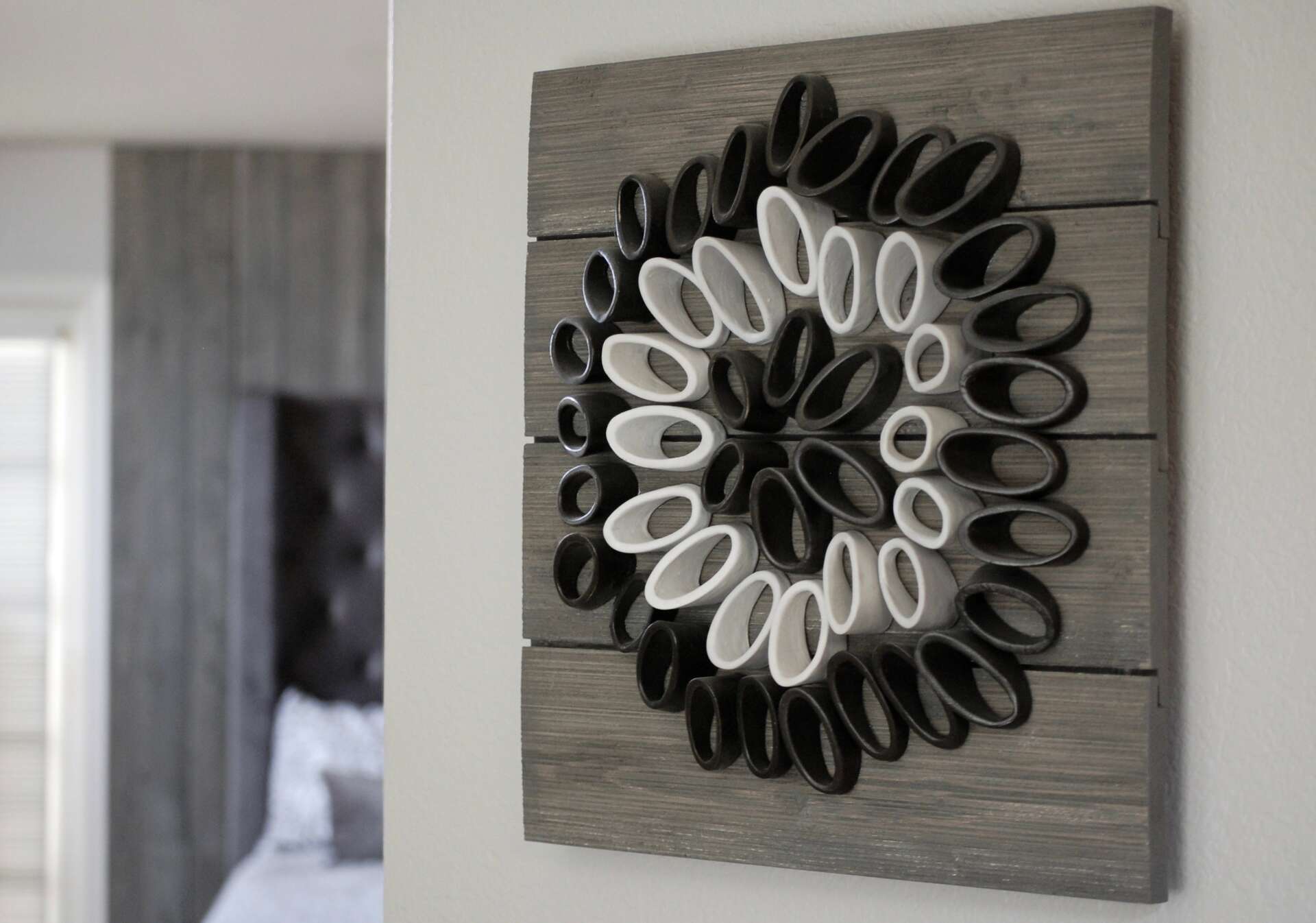
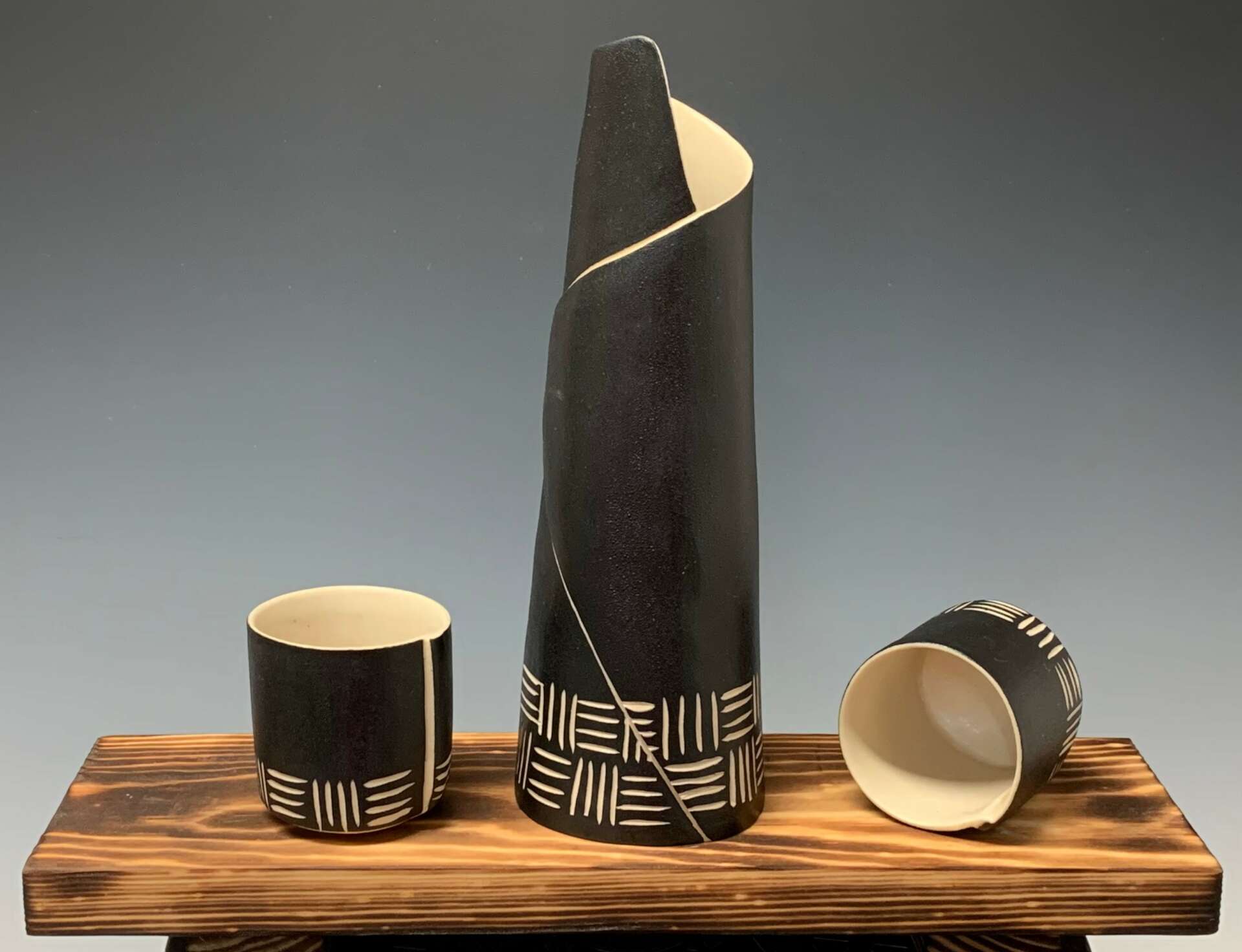
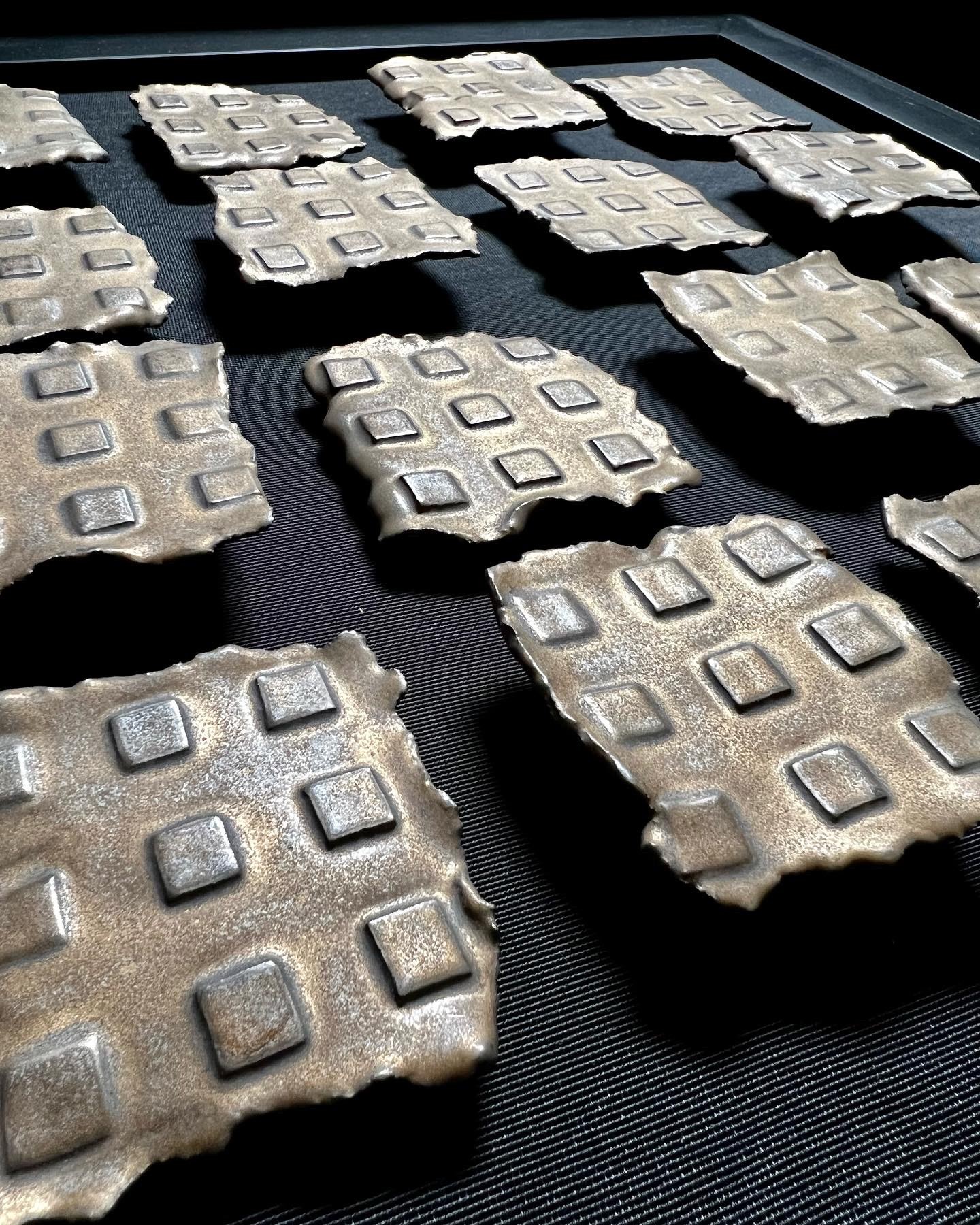
Designing a unique series of vessels or wall mounted pieces is my personal challenge. How to make an ordinary object extraordinary? A tweak of an angle, an interesting glaze or even a special purpose for a vessel is my goal. A lidded vessel with twigs woven into the top, a saké set or vase made by folding clay or extruded pieces mounted into a frame and hung on the wall are all examples of my artistic approach.
Last year I was invited to place my work into The Finer Arts Gallery, which is located in Cave Creek, Arizona. I’m able to showcase both my functional vessel forms, as well as my sculptural wall pieces. It’s such a vibrant art community! In the past, I’ve participated in various outdoor shows and studio tours throughout Arizona, including the Arizona State University, Ceramic Research Center Ceramic Tour, Superstition Artists Studio Tour, San Tan Artists Guild and Ocotillo Artists Group shows.
Summertime in Arizona is considered the “off-season” for art, so this is the best time for me to experiment with new ideas. It’s also a time to get plenty of artwork made for the Fall, and to prepare for the Sonoran Arts League, Hidden in the Hills Studio Tour. This is a prestigious and long running studio tour held in the Cave Creek, Carefree and N. Scottsdale area. Patrons can plan their visits to see the studios of working artists of a range of mediums. I’ll be a guest at Studio #20, at 26420 N 82nd St, Scottsdale, AZ 85255, along with four other extremely talented artists. This takes place the last two weekends in November.
What can society do to ensure an environment that’s helpful to artists and creatives?
I love that there is a movement to shop small and support local! Small businesses are the backbone of this country and artists’ businesses are no exception. Art is very subjective, but if people are willing to learn about the artist and their process, they’ll begin to understand why people create.
Not all art is expensive. There are many levels of art and fine craft with corresponding prices. I would encourage those who want to surround themselves with art, to seek out shows, studio tours, galleries and support your local artisans. So many online options for purchasing art are available now too.
Apprenticeships and mentorships would be a great way to introduce newer artists to the business of art so that they might have the opportunity to thrive.
Is there something you think non-creatives will struggle to understand about your journey as a creative? Maybe you can provide some insight – you never know who might benefit from the enlightenment.
So many creatives learn how to make art on a part time basis, in between their day job or other aspects of life because they’re told that they can’t make any money as an artist, including me. They aren’t hired by a company, taught the company rules and given opportunities to make mistakes on the company’s dime, because there generally aren’t – to my knowledge – companies that hire artists after art school like one would hire an accountant or plumber. If you find one let me know!
It takes years to establish an artist’s voice, or style and there’s no substitute for time spent in the studio. Finding the right avenue for sales, marketing yourself when you’d rather be creating art and doing paperwork all takes time away from the creative process. Art is still a business like anything else.
Contact Info:
- Website: https://sandyashbaugh.com
- Instagram: https://www.instagram.com/sandyashbaughceramics/
- Facebook: https://www.facebook.com/SandyAshbaughCeramics
Image Credits
Photos courtesy of the artist