

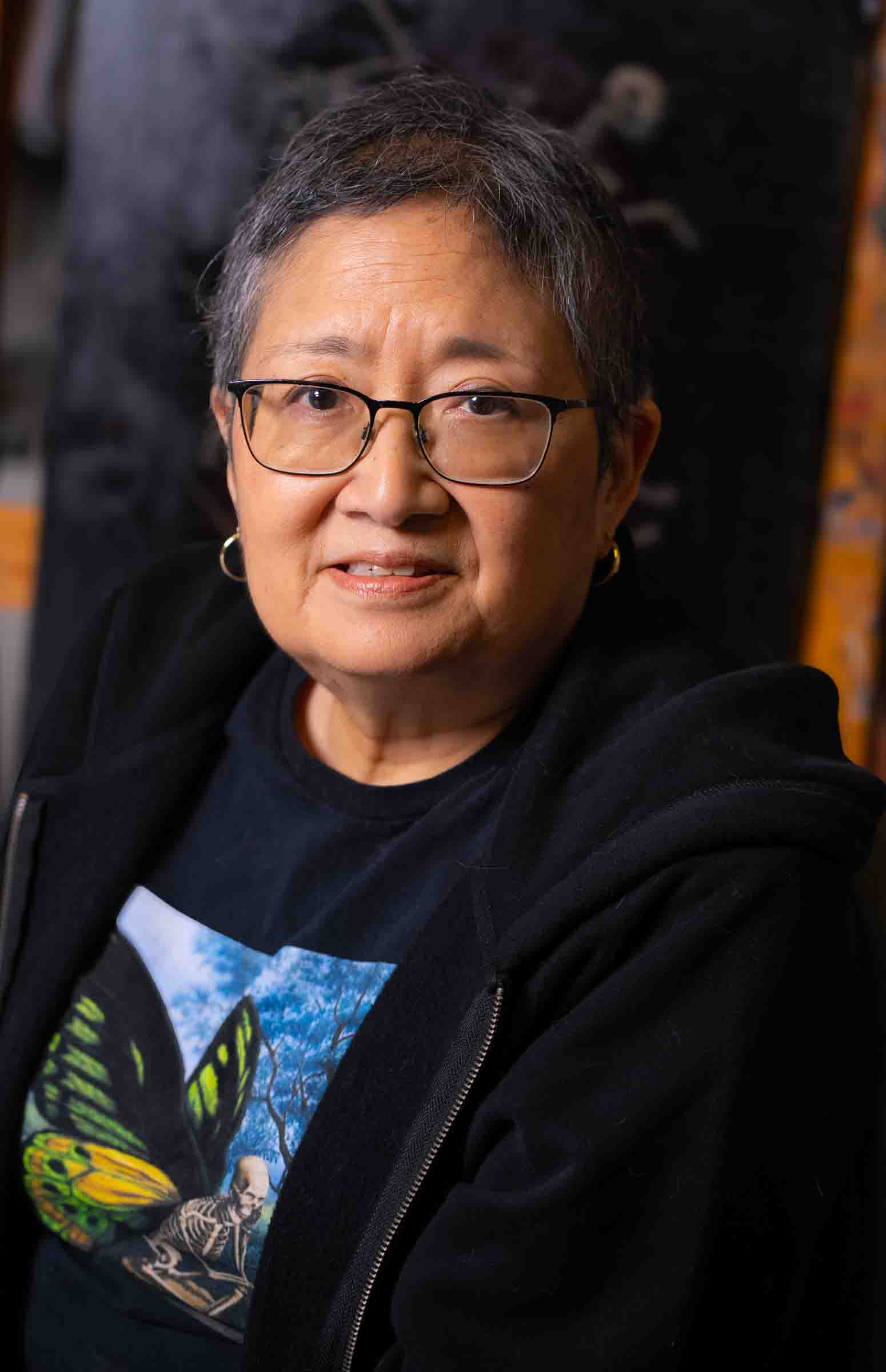

We recently connected with Sandra Yagi and have shared our conversation below.
Sandra, thanks for taking the time to share your stories with us today When did you first know you wanted to pursue a creative/artistic path professionally?
I loved drawing from a very young age. I drew pictures on the margins of books and any blank paper I could get my hands on, including the cover page of my mother’s Buddhist Hymn book. My mother is very artistic, plays classical piano and draws and paints as a hobby. She showed me how to draw cats and encouraged creative activities. I also collected insects and enjoyed observing nature, and to this day it inspires me artistically. A real treat was when my father, who was an engineer, brought back loads of used computer paper from his job. My siblings and I spent hours drawing comics, football players and animals on the blank side of each sheet. I mainly drew cartoon characters, such as Popeye, and lots of animals. I was known for being good at art at school. While I was in elementary school, my uncle and aunt encouraged my drawing and painting. They framed a number of my watercolor and early oil paintings, and their children still have these old works hanging in their homes. In high school, I discovered Salvador Dali and tried to create strange worlds in watercolor. I incorporated my love of zoology, and won a prize for painting an enormous housefly (very accurately rendered) in a Dali-esque desert landscape. While in high school, I fantasized about being an artist living in a loft on the west coast. This is when the desire to become an artist as a vocation took hold of me.
As always, we appreciate you sharing your insights and we’ve got a few more questions for you, but before we get to all of that can you take a minute to introduce yourself and give our readers some of your back background and context?
I was always drawing through my teenage and early adult years. However, my father was very firm that I should study a subject that would be practical (that is, with a good earning potential). We had many heated discussions about it. I think my father pushed me towards a “practical” education because of his experience as a child being imprisoned in a concentration camp for Japanese Americans during WWII. He constantly was seeking stability and a life free of poverty, and those priorities became engrained into me. As a result, when it comes to finances, I’m a risk averse person. I decided to study business administration in college and was unable to do much with my art during those years of study. I did take a lot of elective courses in life drawing though. After college, I had a career at a major multinational banking company, working in commercial credit risk management. One weekend afternoon I was sitting at a coffeehouse sketching people, and I ran into an older woman artist who encouraged me to not wait to pursue my dream of being an artist. She was a sculptor, and she had waited until it was very late to pursue her dream….she was in her sixties when she retired to pursue her art, but she found she didn’t have the stamina and energy to be fully engaged in it. This rekindled in me the desire to do art. These feelings resurfaced and I realized that I was meant to be an artist, and that I would have deep regret at the end of my life if I didn’t pursue art to the best of my ability. I immediately enrolled in continuing education classes in drawing, watercolor and pastel at Otis Parson in LA and started painting on the weekends. My work at this time was very traditional, that is, still life and landscapes. After my employer relocated me to San Francisco, I absorbed creative energy from the environment and also began to show my work at art fairs. I made a major commitment to my art career when I rented an art studio so that I could pursue oil painting. I also connected with other artists in the Bay area and made many supportive friends in the arts community. This is when my art shifted away from traditional subject matter and focused on topics that I wanted to explore with a dark surrealistic viewpoint. I continued to work weekdays at my day job, but spent evenings and every weekend in my studio. I declined several promotions and corporate career opportunities so that I could maintain a lower stress level at work and allow some freedom to paint during my weekends and evenings. In 2007, I was able to leave that job and pursue my art career full time.
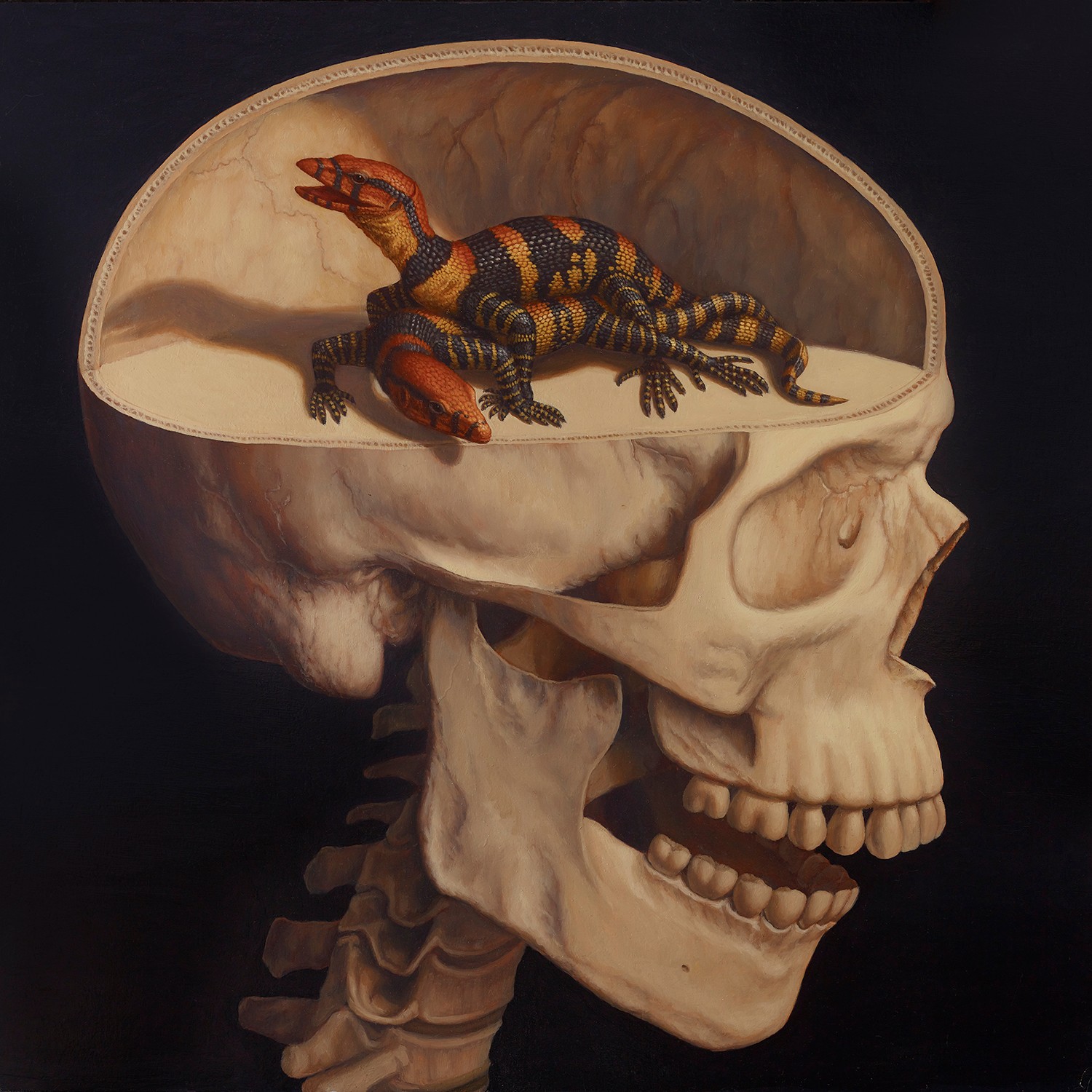
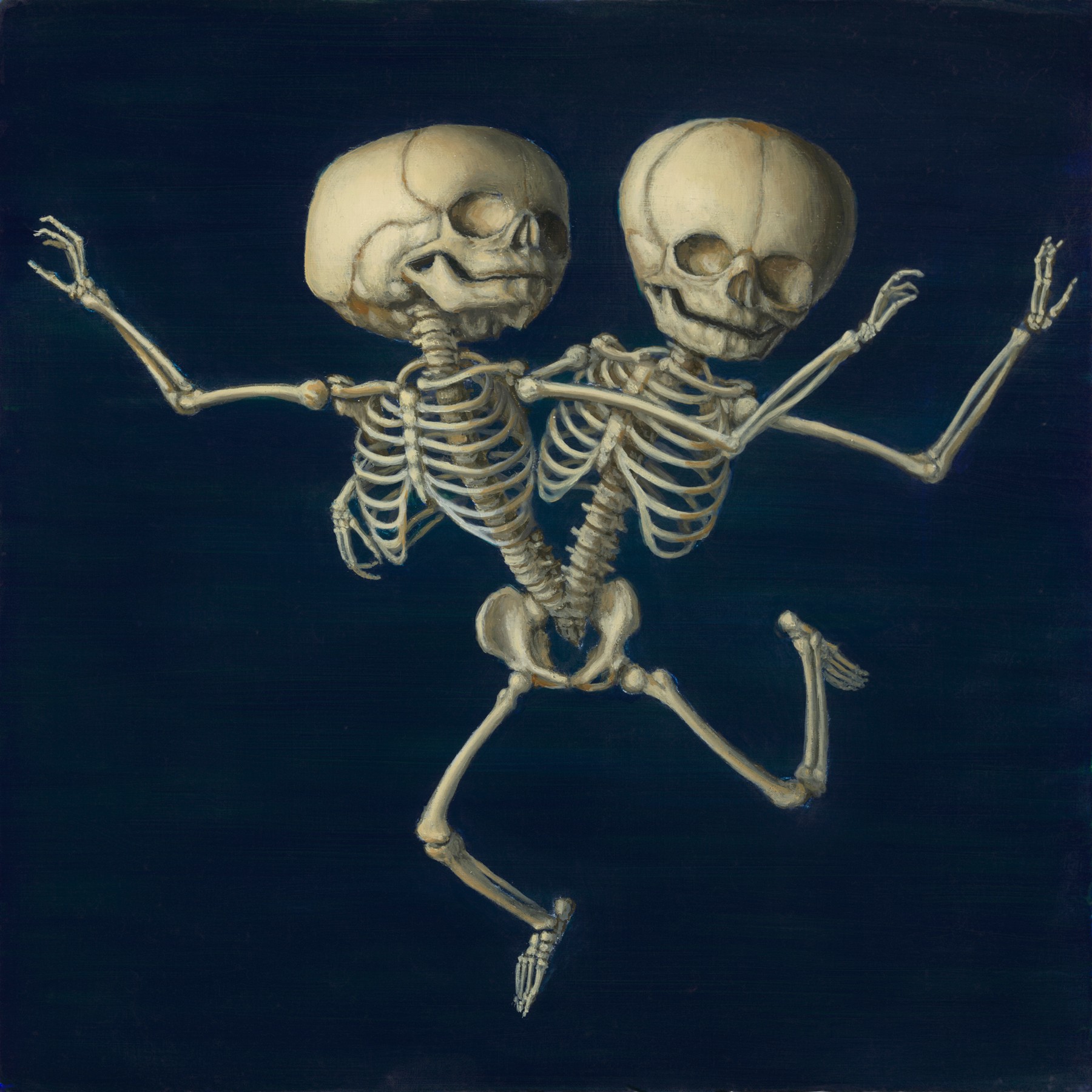
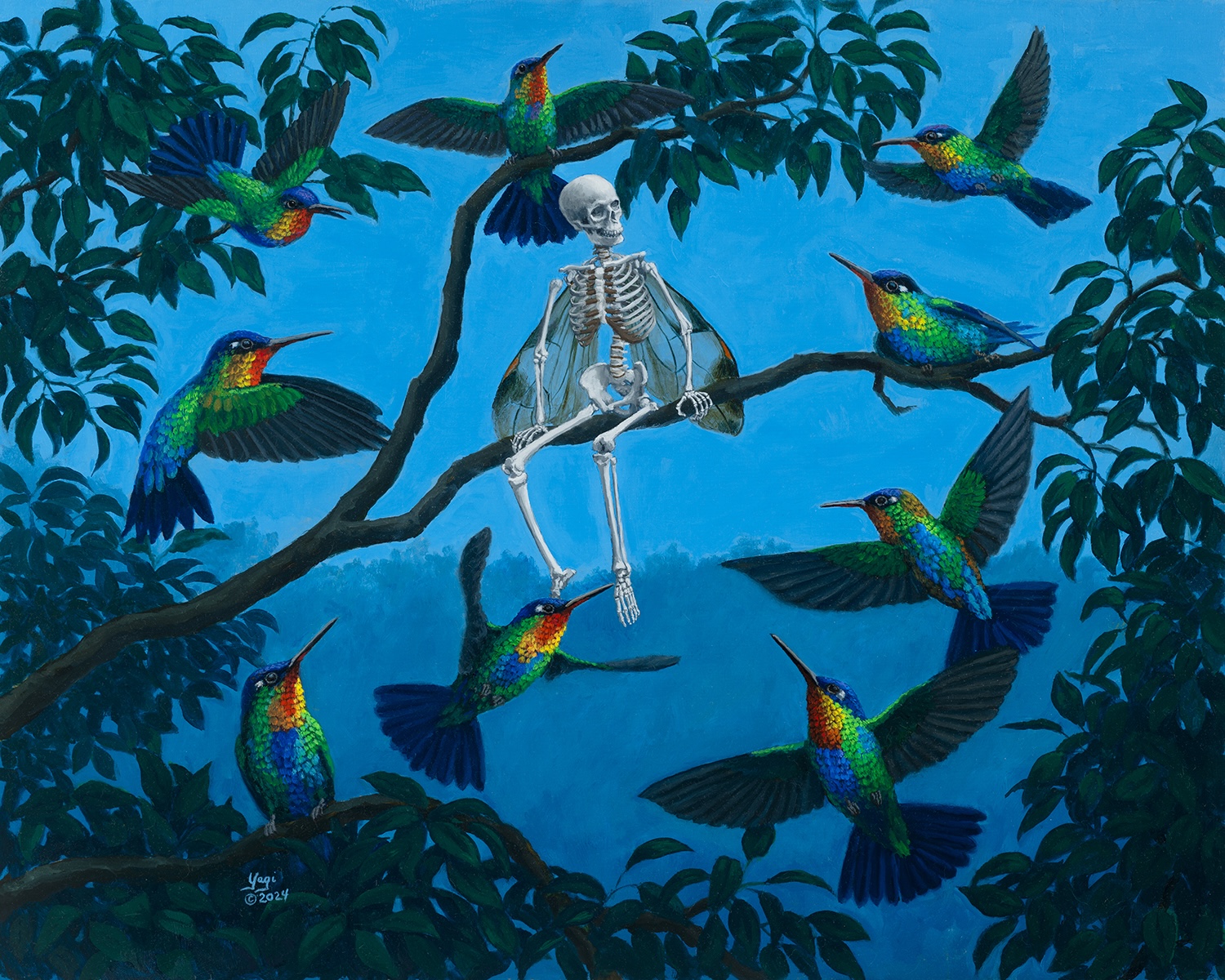
Being an artist has been very fulfilling. I have numerous collectors who enjoy the imagery and meaning in my oil and watercolor paintings. While I occasionally do commissions, I am grateful that I can paint what I believe in and on my own terms. My art often explores the subject of mortality, an area that many people try to avoid thinking about. I use the skeleton as a symbol of mortality, and also use it as a representation of human impact on the environment. I incorporate vivid colors of nature into my work, so that it can convey messages about a serious subject while providing beauty for the eye. I thoroughly enjoy contemporary art, such as Takashi Murakami and William Kentridge. Much of my inspiration comes from looking at the work of old masters.
My viewpoint is rooted in logic and science, I explore themes such as mortality, mythology and our impact on the natural world.
I have several bodies of work :
· Work using anatomy to address human psychology and behavior, and mortality
· Work addressing the impact of humans on the natural world and the tragedy of species extinction.
· Work exploring mythology. Recently I have enjoyed exploring the world of Japanese Yokai, a class of supernaturalentities and spirits in Japanese folklore, which can be seen as personifications of “supernatural or unaccountable phenomena..”
I work in oil painting, watercolor, gouache and pen and ink.
I aim to try to improve my skills on a continuing basis. I attend life drawing sessions to draw the nude model, I constantly learn via online painting courses, and I recently learned how to use digital drawing tools (on an iPad using Procreate) to develop studies and compositions which will lead to a final painting.
We’d love to hear your thoughts on NFTs. (Note: this is for education/entertainment purposes only, readers should not construe this as advice)
I tried to understand the value of NFTs, and why anyone would want to acquire one. In my mind, there is nothing that can replace the materiality of a real tangible painting. This especially holds true for oil paints. The paint leaves a texture on the surface. The oil that binds the pigment provides transparency, and an artist can thinly layer transparent colors over another color, that creates a brilliance that cannot be replicated on a computer screen. I’ve been approached by persons purporting to want to convert my work to an NFT for sale, but I refuse to do this. I do make limited edition giclee prints for people who cannot afford an original painting. Even this type of reproduction is superior to a digital file. The print itself is large enough to show details, though it lacks the glow that an oil painting has. Sadly, I think NFTs are merely a fad, with people chasing it to make a quick buck.
In your view, what can society to do to best support artists, creatives and a thriving creative ecosystem?
Firstly, Do not purchase images, text or film made solely with Artificial Intelligence. Such products lack the direct input of an human expressing emotion. AI is best used for repetitive tasks that require precision, such as sorting through data to determine correlations, comparing data sets, etc. When used to generate images or text (purpotedly “art”) It just regurgitates what it scrapes from the internet. AI doesn’t feel the melancholy that I feel when I paint a skeleton, representing mortality, contemplating existence. So please, don’t purchase or contract to use AI to create “art”, don’t go to movies with an AI created actor.
Secondly, help creatives by adding to their income stream so that they can continue to create. Purchase their art or literature, allow them to work part time at a day job with predicable hours so that they can devote time to their art, donate to non profit organizations that assist artists. Society should provide programs or guaranteed minimum stipends so that creatives can focus on their art without the stress of worrying about shelter and food. More grant opportunities would help in this regard.
Thirdly, push for policies that enable the establishment of spaces where creatives can live and work with below market rent. Making cities more affordable for the working class will also help artists. This allows a city to retain its creative community, which in the long run contributes to the well being of the entire community’s economy. It helps drive tourism, nightlife, and creates a vibrant and interesting community rather than one that is sterile lifeless, and non diverse.
Contact Info:
- Website: https://sandrayagi.com/
- Instagram: @sandra_yagi
- Facebook: https://www.facebook.com/people/Sandra-Yagi-Art/100050262139079/
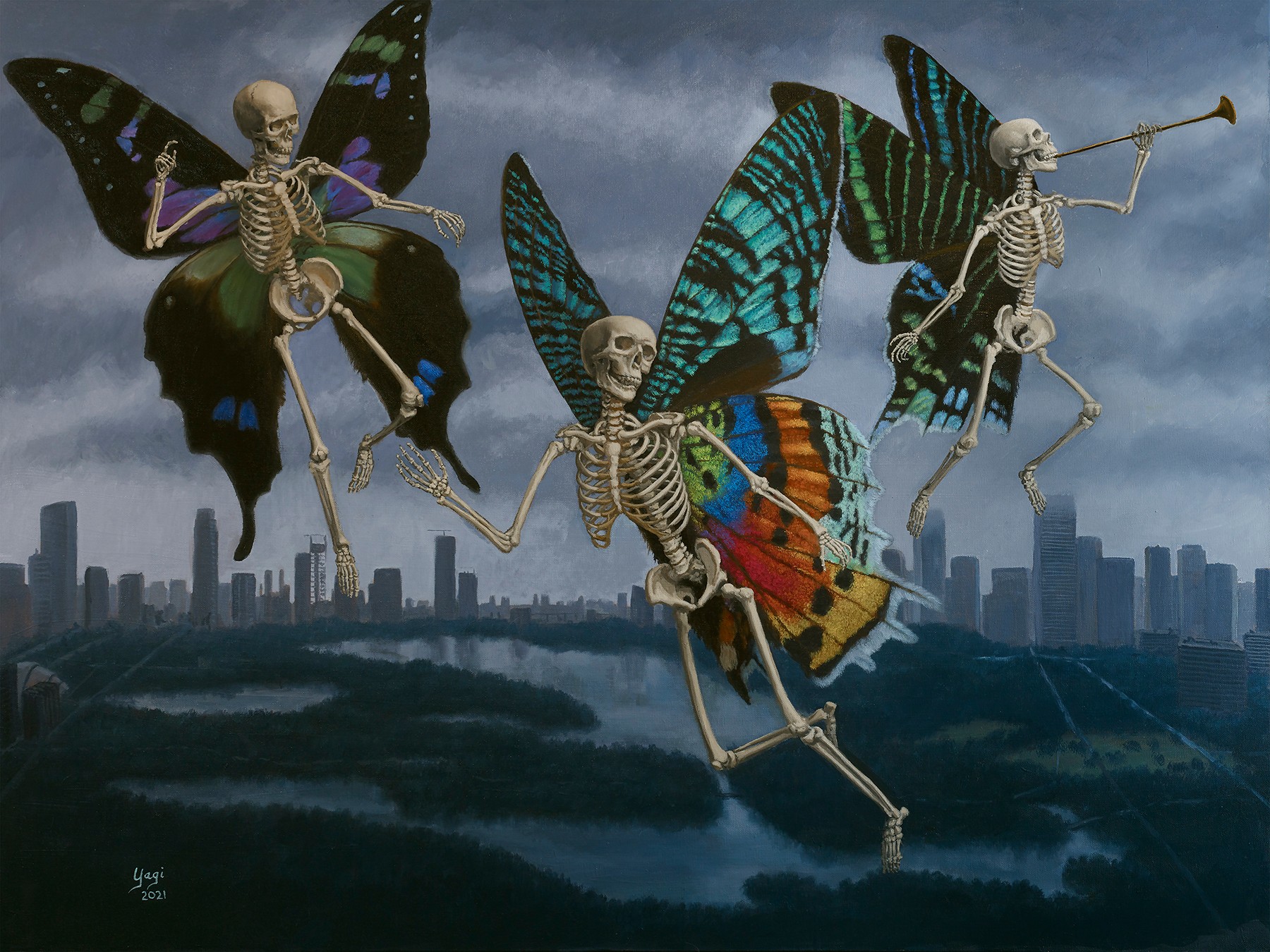

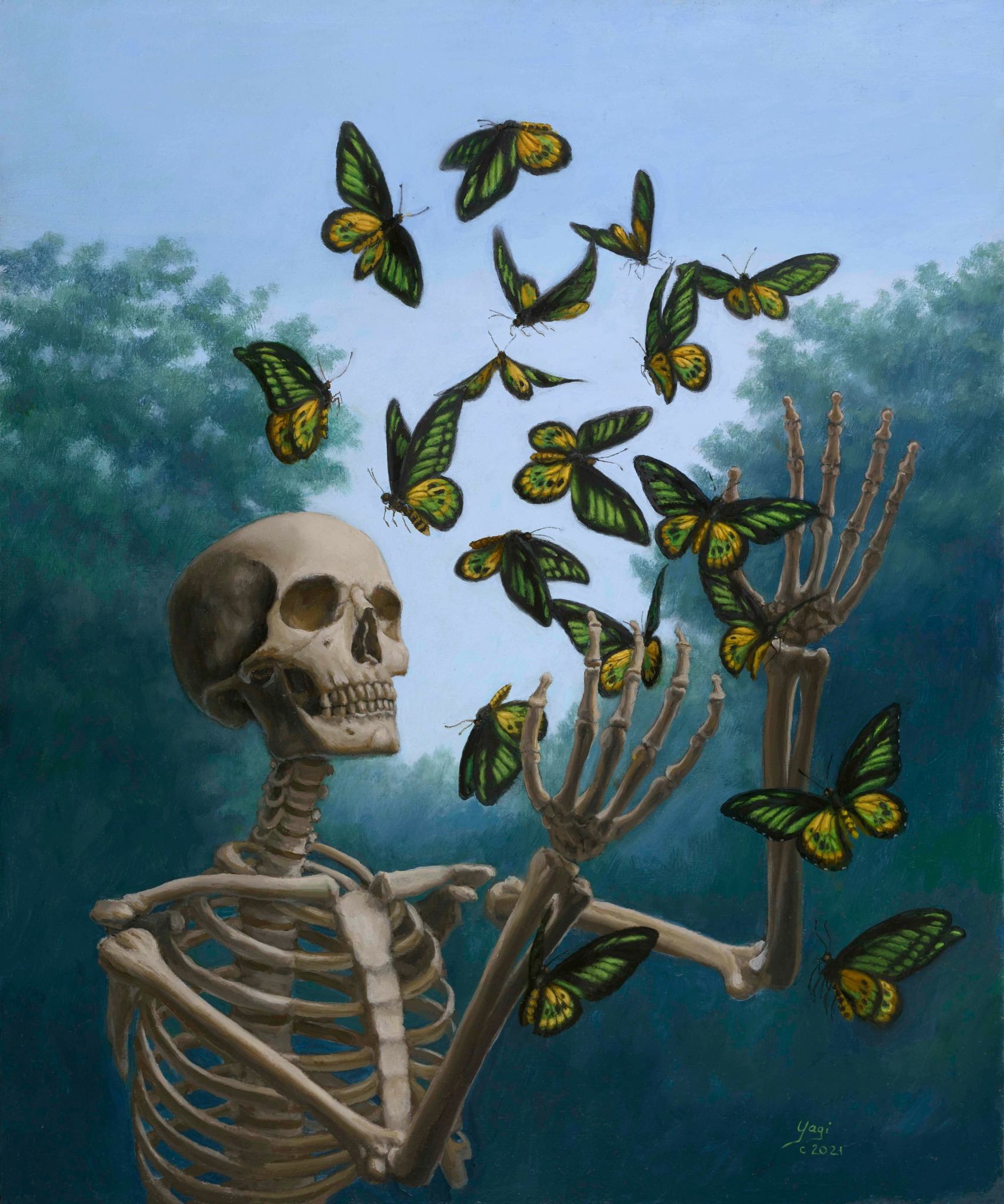
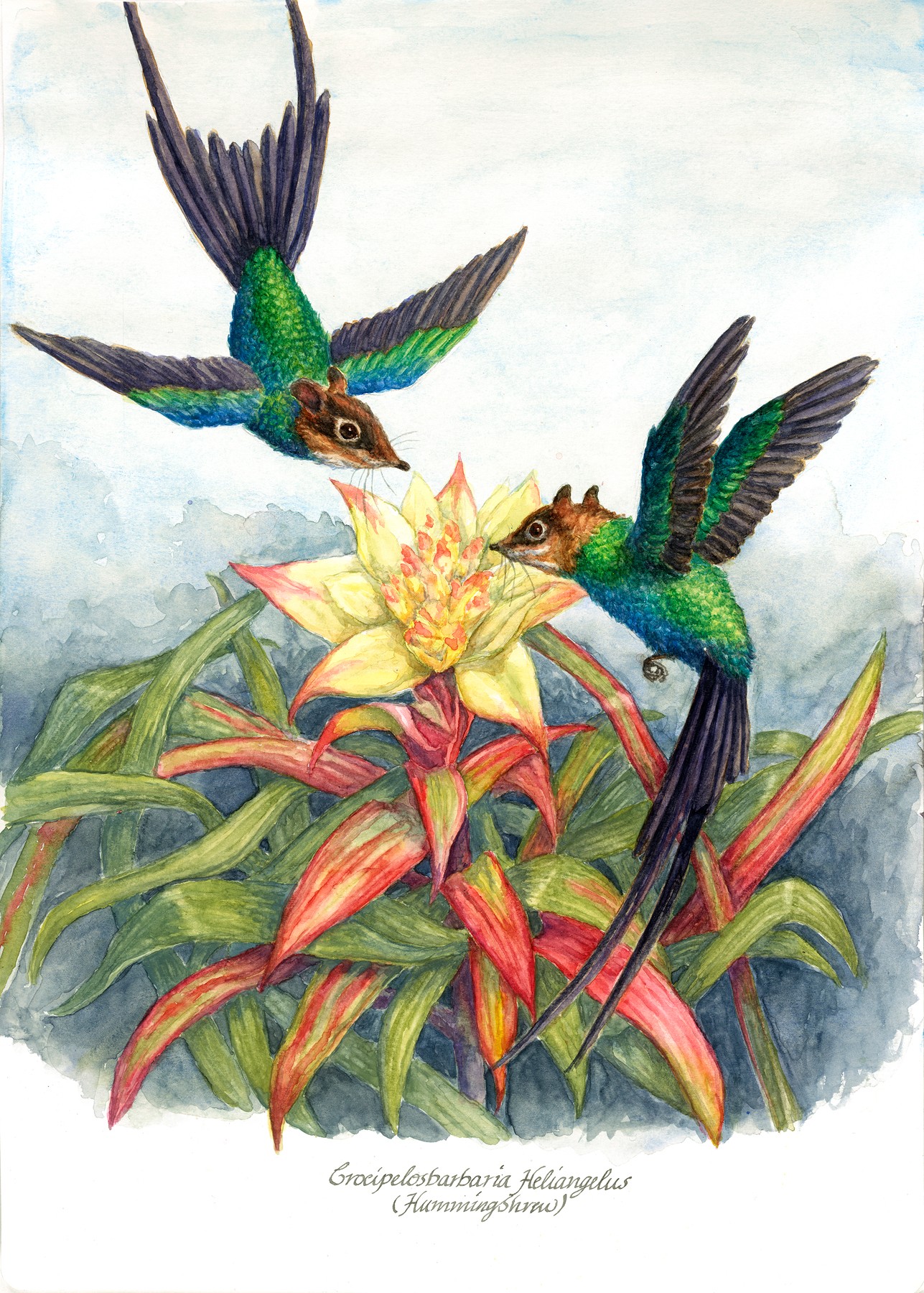
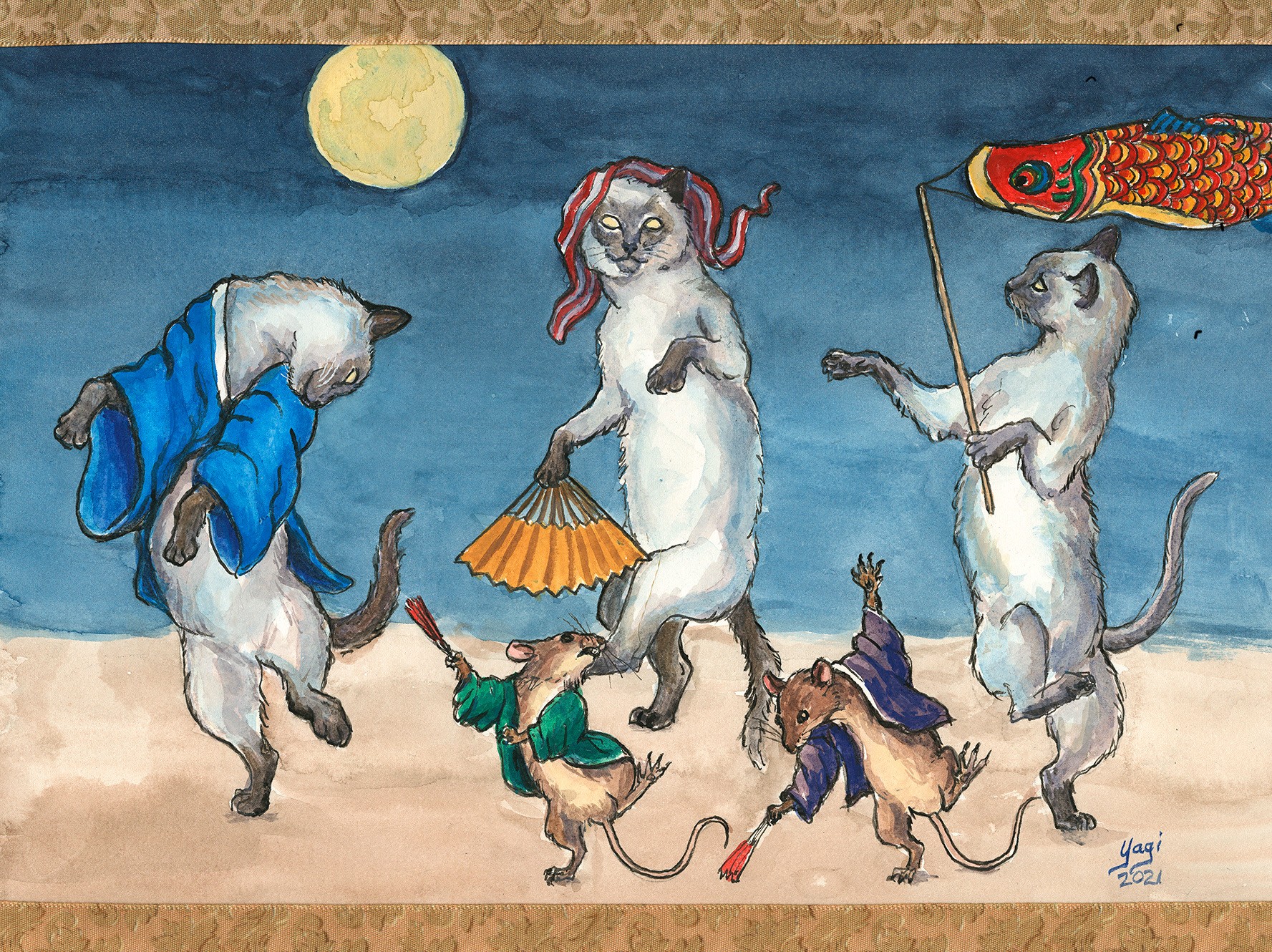
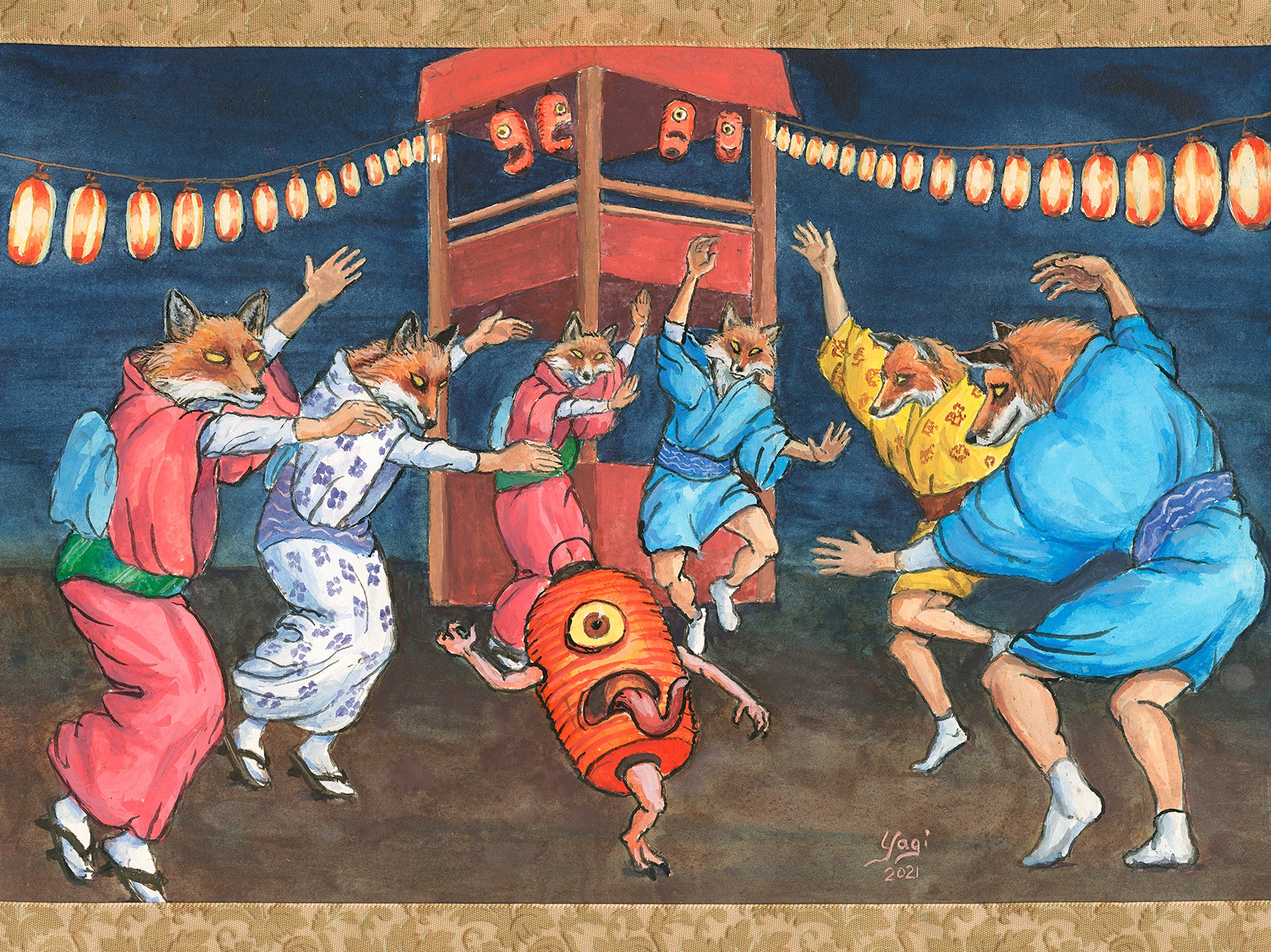
Image Credits
Portrait is by Bob Hsiang