


We were lucky to catch up with Salem Daniel recently and have shared our conversation below.
Salem, appreciate you joining us today. Looking back on your career, have you ever worked with a great leader or boss? We’d love to hear about the experience and what you think made them such a great leader.
Fresh out of film school, I moved to Brooklyn and landed my first freelance office PA gig on the Viceland show My House. I had great supervisors on this project, and in many ways, it was my dream job at the time. Giselle Bailey, who was our Senior Producer, wasn’t someone I worked very closely with, but overtime we built a rapport, and I learned that she frequented Ethiopia to visit family, which was a surprise because that’s where I’m from, so we had this unexpected thing in common. When My House wrapped, I ended up moving to LA a few months later, and we didn’t really stay in touch although we followed each other on social media. Fast forward to 2021, mid-pandemic, I had been laid off from a production company, and I was trying to make the most of this time by producing and directing passion projects with friends. One day, Giselle DM’d me and asked me what I’d been working on and asked to schedule a call. After I told her more about my passion projects, she offered to bring me on as associate producer for a project she was directing, and the timing was honestly an answered prayer because this was a time when there was still no work coming out of the pandemic but unemployment had also dried up. After a string of PA gigs in LA, it was surreal to have someone reach out because they trusted my creativity and not just logistical skills. At first I had the worst case of imposter syndrome, but over time I realized she had seen something in me that I just hadn’t seen in myself yet.
Being a Black woman in this industry, you can often get overlooked when there are opportunities for promotions, and it is so easy to be pigeonholed as “the rockstar PA.” Being good at your job, in this instance, can be more of a curse than a blessing, and that was honestly my experience prior to being reconnected with Giselle. It was almost strange that I didn’t have to prove myself to her, because she already knew why she hired me– we had a similar eye, and she felt she could trust my taste and intuition. That was the first time I was paid for my ideas rather than physical labor, and it was incredibly validating and affirming to know that they were not only welcomed, but also valued. She put me in positions on shoots that were at times intimidating but I also knew I could deliver and I just had to step up to the plate. By the time we were working on our third project together, we had developed a shorthand and she also knew more about my own aspirations to direct. This led to a mentee/mentor dynamic where I could reach out and ask for advice about my own ideas for projects. She was always and still remains to be so generous with her time and knowledge. My most recent project New Flowers which is currently in post, is actually a byproduct of our relationship in many ways. I sent her a post about a particular community I was excited about, and she really encouraged me to tell this story as a filmmaker if the subject matter resonated so much. Within a year, I had secured funding through a grant from The Film Fund, and one year after that, I’d wrapped production. New Flowers is project that feels so true to who I am as a person and as a storyteller, and I’m so grateful I had someone in my corner to cheer me on and guide me along the way.
As always, we appreciate you sharing your insights and we’ve got a few more questions for you, but before we get to all of that can you take a minute to introduce yourself and give our readers some of your back background and context?
I’m a first generation Ethiopian American, and growing up in a multicultural community, film played a big role in conveying cultural concepts with ease that might otherwise get lost in translation. There’s an immediacy about visual mediums that transcends language barriers. As I reached adulthood, I became drawn to a career as a filmmaker because of this. It seemed like the most impactful tool for affecting change. I often experienced life as an outsider, being too American for my Ethiopian peers, and too Ethiopian for my American counterparts. Even my Blackness was in question. What I perceived as an obstacle early in my journey evolved into a superpower of sorts because I realized I could also easily move in and out of different cultures in a way that would allow me to act as a bridge between these different worlds I called home. And what better tool to use than cinema? As a filmmaker today, I find that I’m most drawn to stories that explore the interplay of culture, migration, and socio-political dynamics that shape one’s identity. I’m especially drawn to Pan-African stories that explore personal introspection as a means of navigating the external world. Such themes are prevalent in “New Flowers,” a documentary about a collective of Ethiopian skater girls forging their own path, and “God Is A Black Woman,” a poetic documentary I co-directed with Iantha Richardson that showcases the spiritual journeys of Black women through a sequence of tableaux, archival, poetry and portraiture.
We often hear about learning lessons – but just as important is unlearning lessons. Have you ever had to unlearn a lesson?
This idea of leading the creative process of filmmaking with marketability and navigating the industry with a business first mindset is one that I had to unlearn in the last year or two. As I come to know myself better, I’m realizing that I am an artist first and that the only way to truly be fulfilled as an artist is to create for yourself first and foremost. A part of this is being okay with abandoning certain ideas around routine or planning out the next few quarters and which projects to roll out when. When inspiration strikes, it’s best to take the path of least resistance and just flow with those emotions and ideas and see what is created as a result. Surrender. It’s not something you can schedule. I had two projects lined up for development in 2025 yet the project I’m currently feeling most aligned with is something I shelved 2 years ago. I had to create more free time in my day to really just follow the ideas and inspiration. Sometimes it’s going to the park and freewriting. Other times it’s driving with a really good playlist and parking somewhere with a view to jot down ideas in my notes app. But it’s not me sitting in front of my laptop which is something I might typically associate with being productive. We’re not robots, and as artists especially, so much of our work is tied to emotion which is something we cannot control. What we can control is where and how we express those emotions. So it’s really just about surrendering to those emotions and then transmuting it to some medium of work that best expresses what you want to say.
Is there mission driving your creative journey?
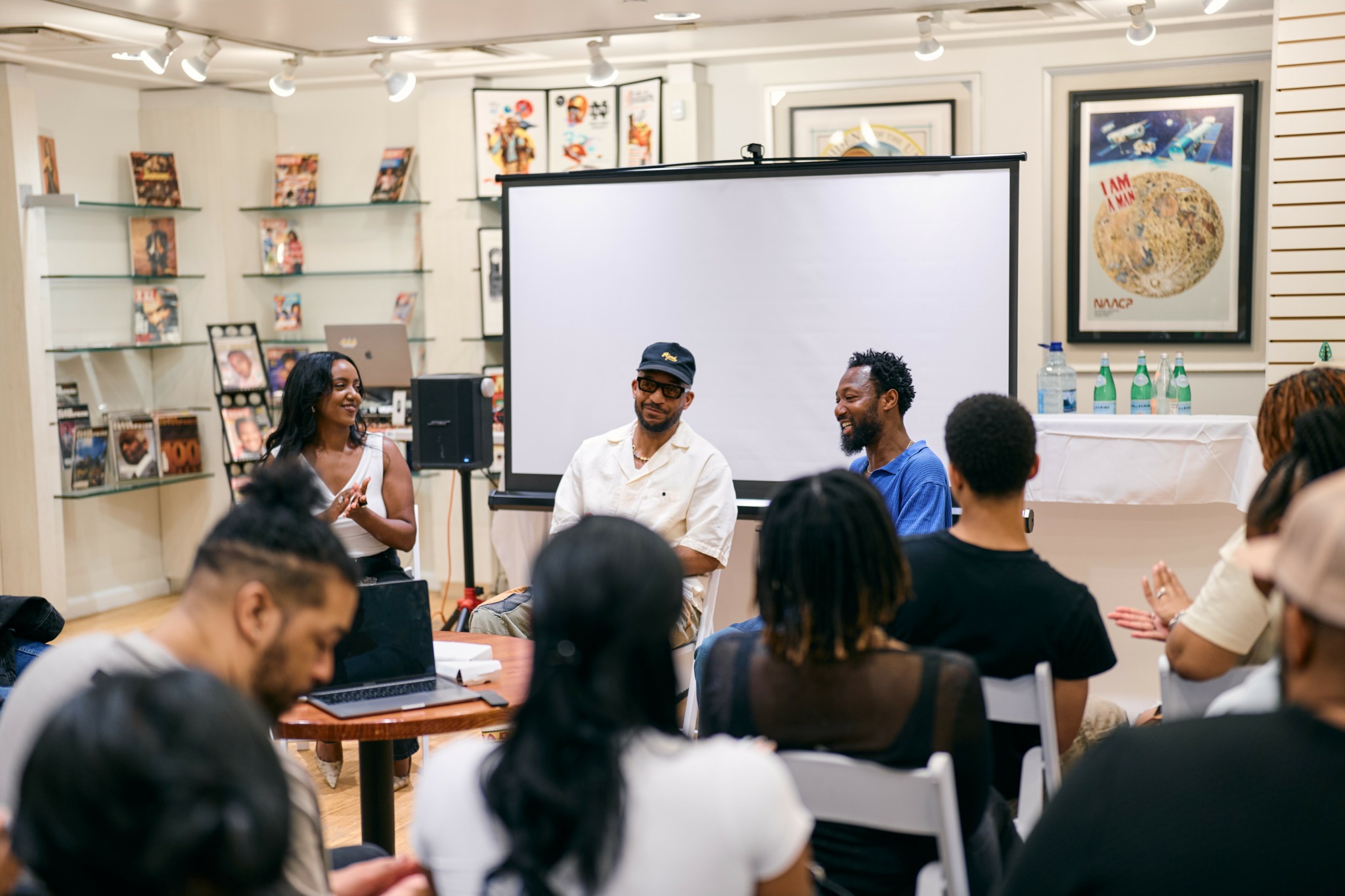
In 2023, I launched Cushy Collective whose mission is to promote pan African collaboration in the visual arts by curating safe spaces where artists from Africa and the diaspora can develop their craft, showcase work and build community. We partner with other organizations in the community such as Black Image Center, NuAfrica and 2591 to offer programming, communal spaces and resources.
Whether it’s as a storyteller or cultural curator, there’s a deep desire to bring the diaspora together that drives me. I’ve learned from my own lived experiences as well as my academic studies that the strategy of divide and conquer is fundamental to colonization and oppression. Therefore, unity is the antidote. Film and media have played such a huge role in the proliferation of negative stereotypes of Black people, whether it’s depicting Africans as devolved, starving, or savage, or Black Americans as innately criminal, these representations are exported, disseminated and are often the first impressions we have of one another. But In the words of Kwame Nkrumah, we must unite, or we perish.
I would argue that in terms of influence, art precedes policy in our society. We are molding the minds of future policymakers with our creative output. So creating spaces for artists from the African diaspora to learn, engage and create with this mission of unity and honest self-representation in mind will influence how the global Black family understands one another for generations to come.
Contact Info:
- Website: www.salemdaniel.com; www.cushycollective.org
- Instagram: @diasapienne, @cushycollective
- Linkedin: https://www.linkedin.com/in/salemdaniel/
Image Credits
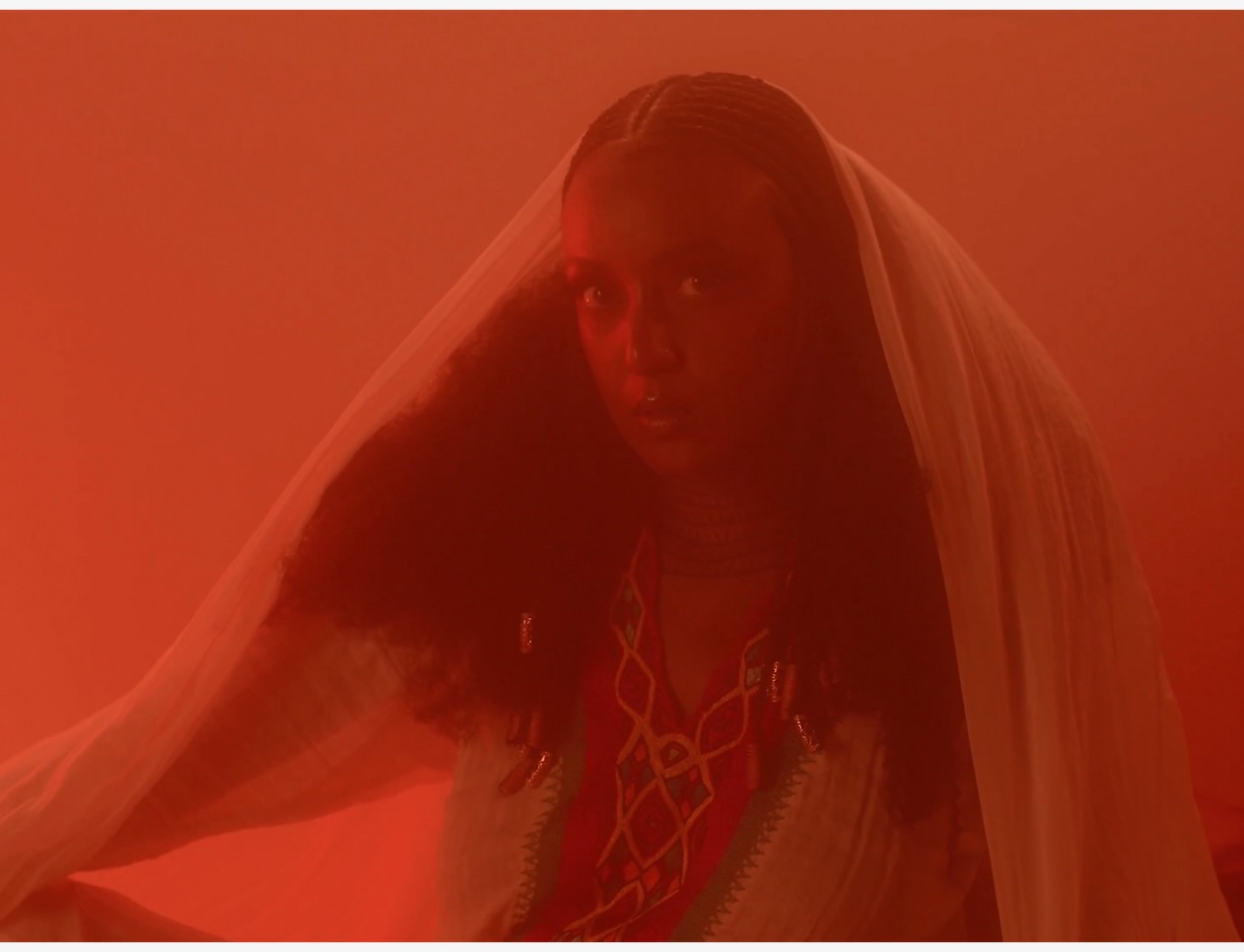
A still from “God is a Black Woman.” Cinematography by Briana Monet. (for feature image)