

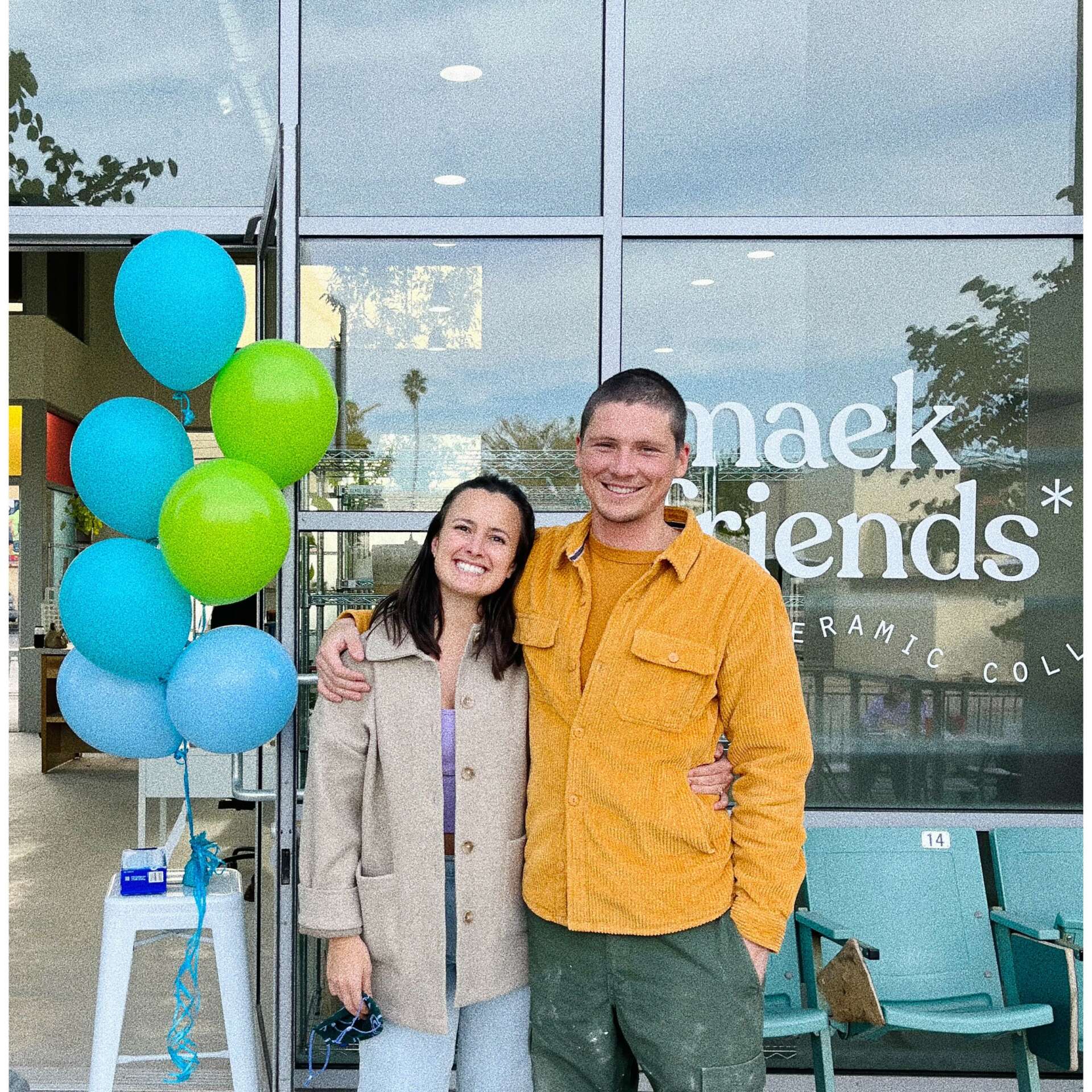

We caught up with the brilliant and insightful Ryan & Michaela Shoemaker a few weeks ago and have shared our conversation below.
Hi Ryan & Michaela, thanks for joining us today. It’s always helpful to hear about times when someone’s had to take a risk – how did they think through the decision, why did they take the risk, and what ended up happening. We’d love to hear about a risk you’ve taken.
In 2017, When Michaela and I started our Pottery Studio (Maek Ceramics), we had no industry experience, just a few ceramics classes and youthful ambition. I had been studying philosophy and art in school and was frustrated by the ratio of information I had learned compared to my ability to act on it. I didn’t want to “sell out” and get a job that didn’t align with my ideals, I wasn’t ready to commit to more school, and it would more than likely take years for me to develop a sustainable income as a fine artist. Fortunately Michaela had just finished a masters in business and we had both been able to sell some pots in the previous year, so we decided to spend a season putting our shared skills to the test. We bought a kiln that didn’t work (a story for another time), used Michaela’s wheel, and spent thousands of hours over the next year in her parents barn throwing, trimming, and glazing–all the while paying minimums on student loans.
I recommend that anyone with big ideas and a healthy dose of angst go find a small business to work at. Marketing, supply chain, HR, client relations etc, can all become vessels to test whether a person’s ideals can meet the real world and find a path forward, (one can often paint a pretty accurate portrait of a small business owner with these factors alone). In the year 2022 the ways and rate at which we receive information can leave us swirling in a virtual bog, but when you have to show up at work and wear all these hats there’s an opportunity to distill the realism in your worldview. Almost 5 years later, we can hardly give a full account of the soaring highs and disastrous lows in our wake. A marriage, a couple moves, repeatedly depleted savings accounts, and three websites don’t even begin to tell the story, and I won’t lie we have made concessions along the way, But we have learned so much from this process.
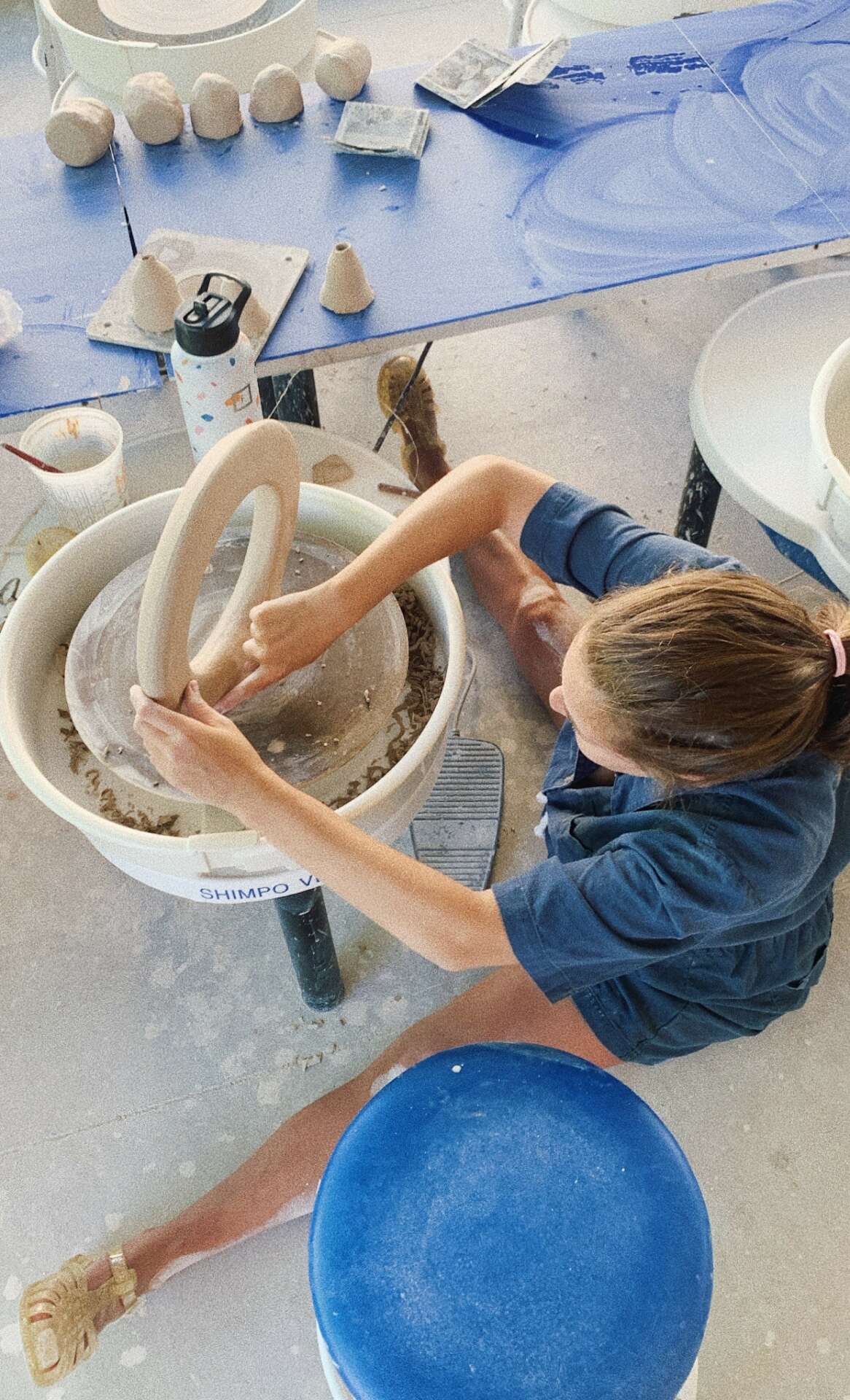
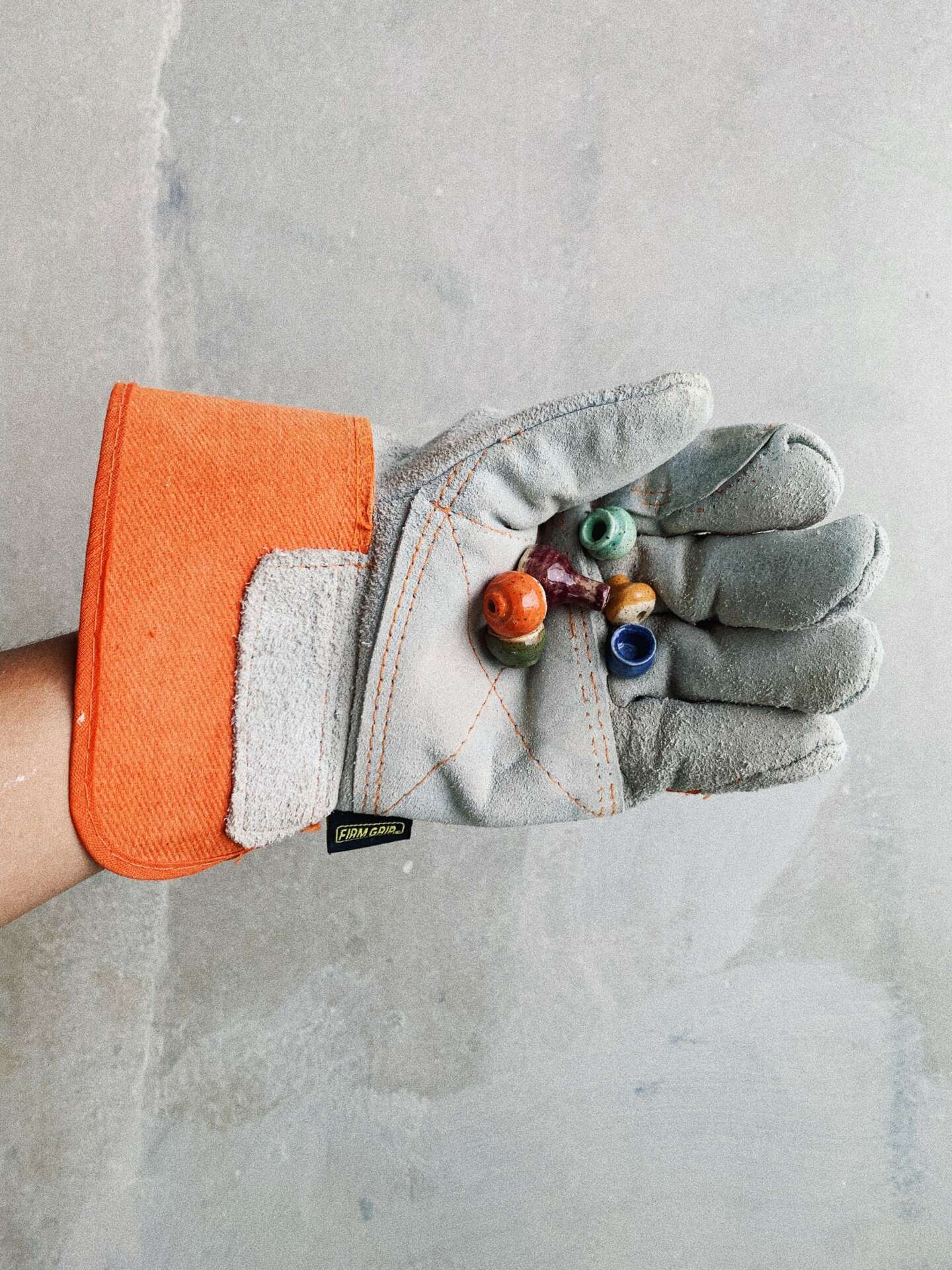
All the while the potters’ wheel became our forge, like a refining fire casting and recasting us with its centering mandate. No phones, no multi-tasking, no rushing. You can’t pretend your way through wheel-thrown pottery. It was this practice that under-girded our life and worldview and gave us the wherewithal to approach the world (until it ruined our backs). Ultimately we realized that this practice, with its magnetic and timeless attraction, was what we really wanted to share with people, it was so much more valuable to us than a thumb cup or an oil bottle could convey.
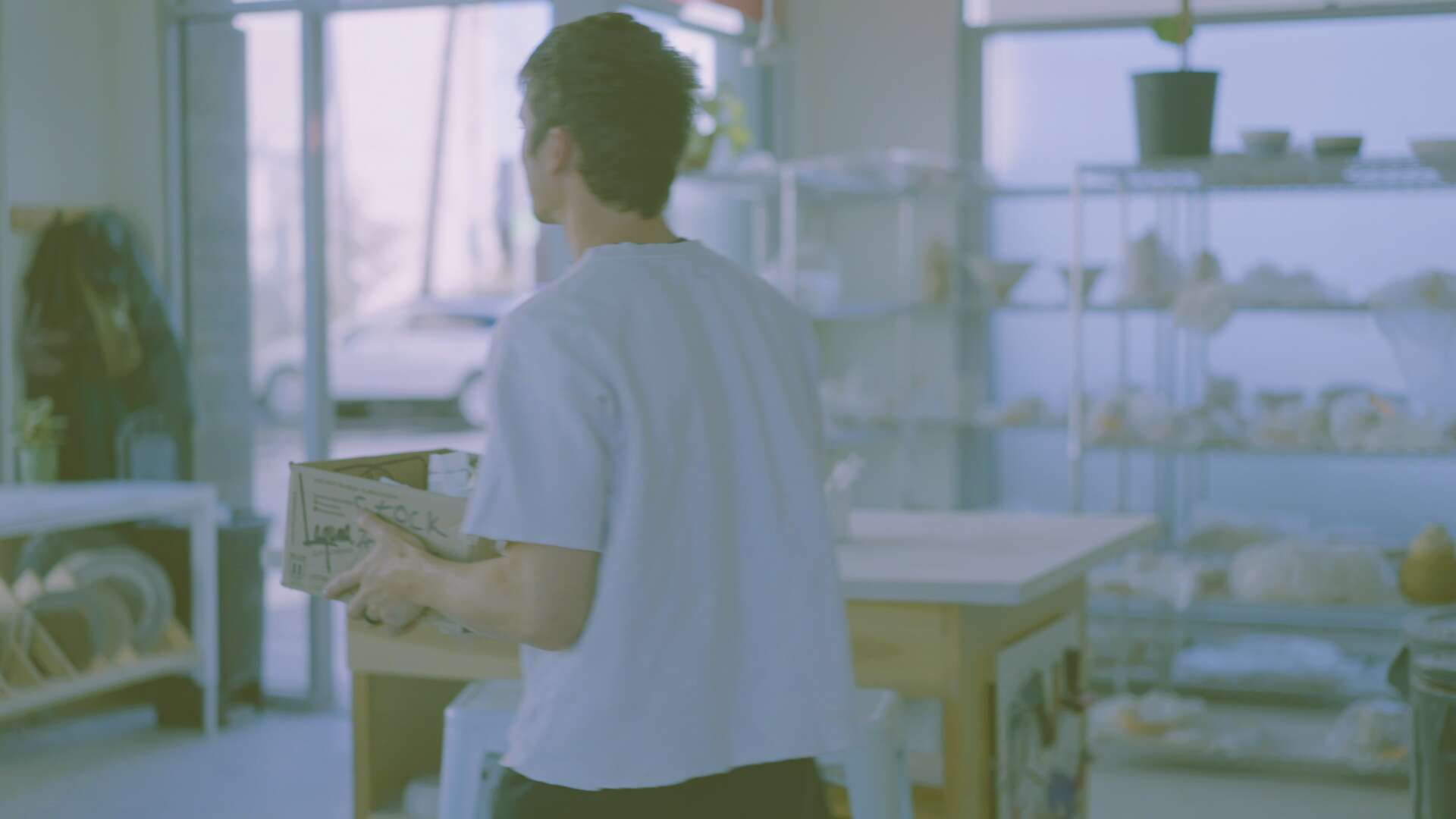
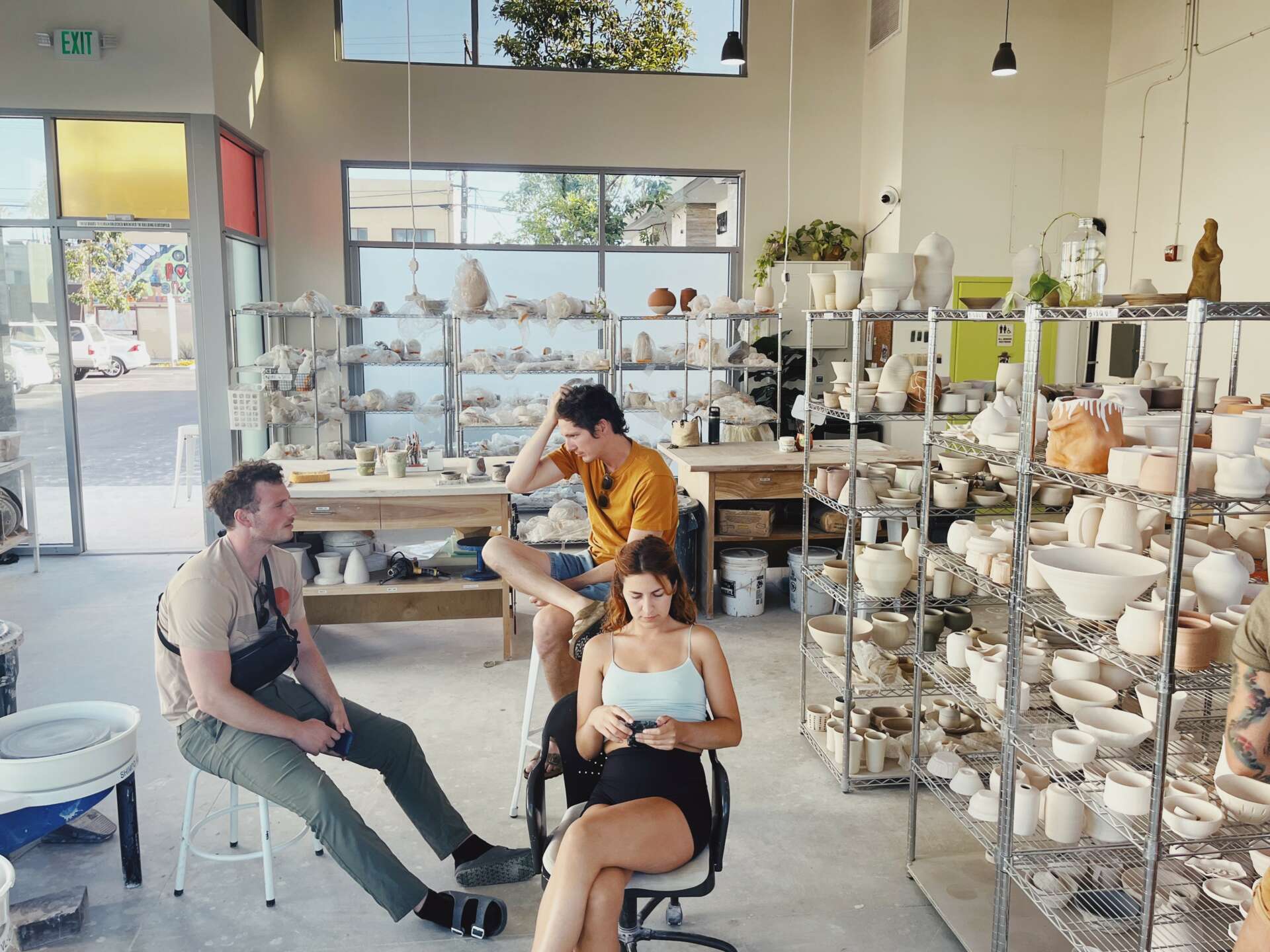
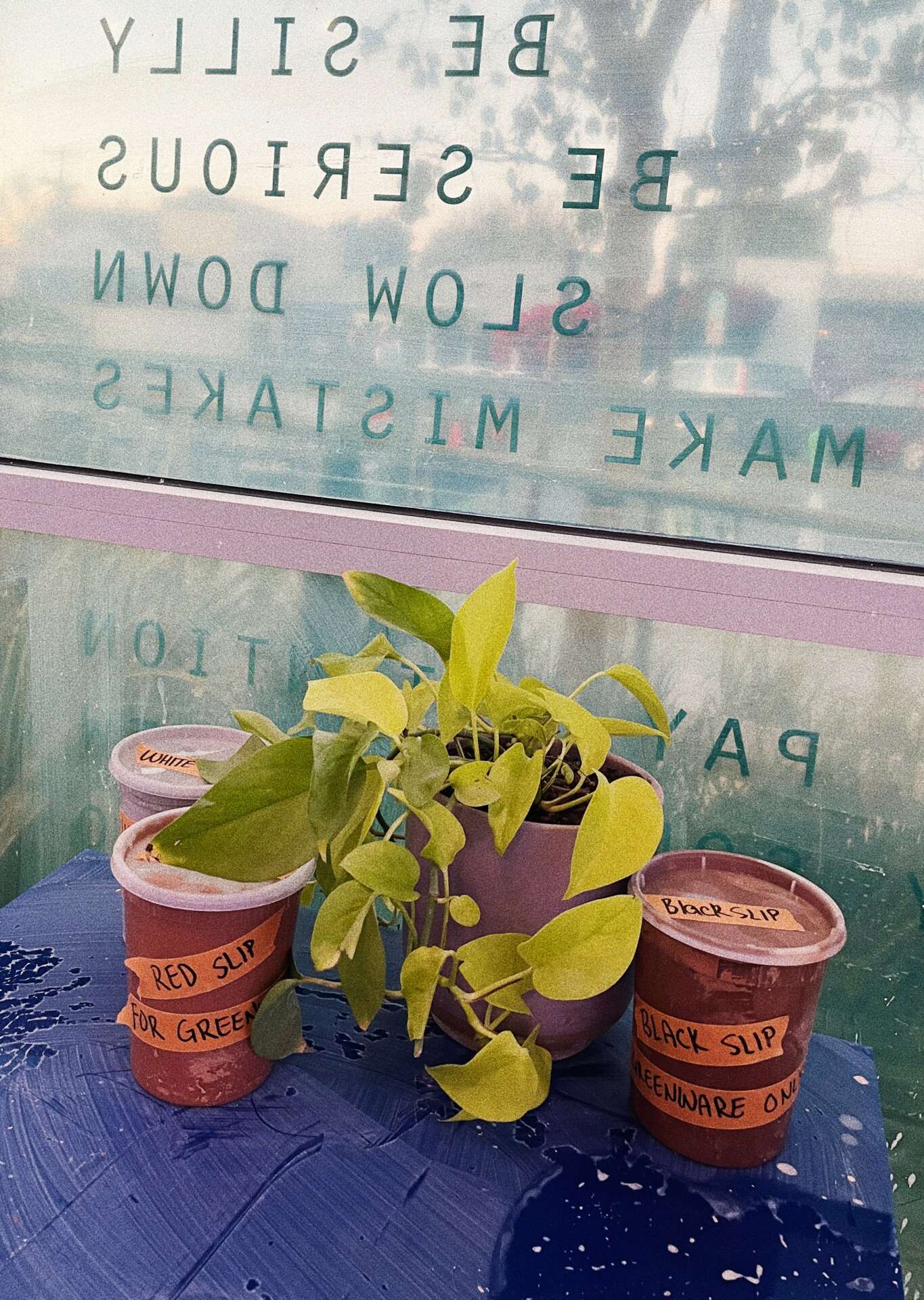
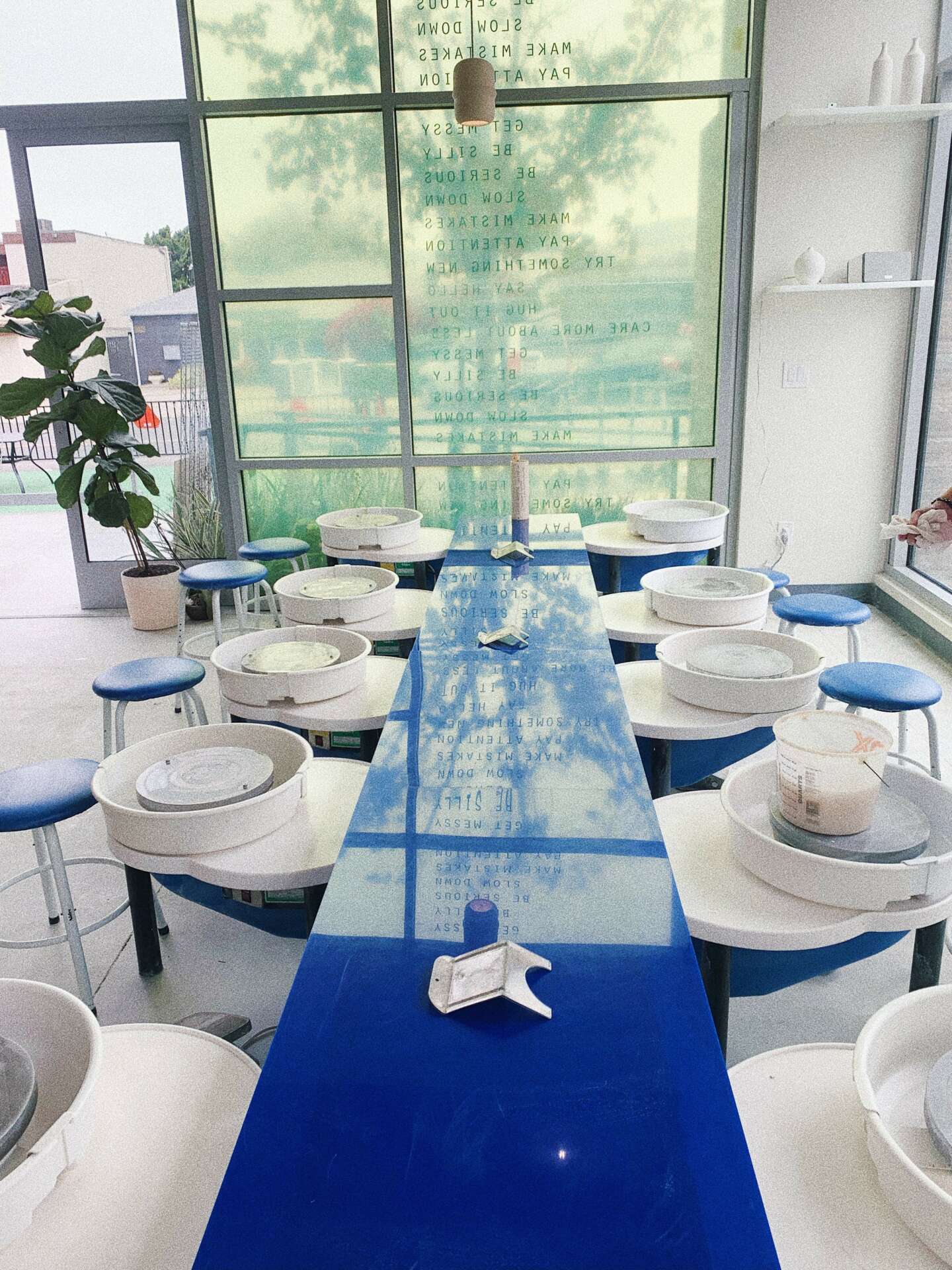
So in January 2020 we signed a lease on what would become Maek Friends Ceramic Collective. A shared artist studio where folks could come find their own pottery practice. Little did we know what the next two years would hold, and we literally spent every last thing we had on this space both emotionally and financially and ended up paying rent for over a year before we were able to open. But in January this year we were able to open the doors to the public and we couldn’t be happier with the response we are receiving. Ultimately, when you’re trying to sell something with low fiscal value to your clients in this marketplace you have to take risks, we got lots of funny looks from family and friends when we told them what we were working on, but at the end of the day, our quirky brand slogan since day one really does ring true, sometimes we all need a little reminder to “care more about less”.

What can society do to ensure an environment that’s helpful to artists and creatives?
I think there’s a lot of hype around what it means to be “a creative” and it’s given a much different weight than creativity as a value or practice. In part, I think that the way money is inextricably connected to success makes us think there has to be a literal payoff for one’s explicit creative endeavors to be called “a creative” and I know at face value its easy to be like “no way, creativity is a capability we all have and you just gotta get out the easel and try” and sure, that’s true but I’d love to present a more macro take.
No matter your world view or belief about origins there is a fundamental creativity that is essential to being human. Whether your God created the world in a few hours and you were made in their image or humanity evolved from little sea-worms and invented tools and dump trucks and the internet, creativity is inextricable from the way people have always framed the “how” of human development. Creativity is a powerful force in our world and encompasses so many skills, careers and feats of humanity, so much so, it’s often framed as a world-shifting force opening up new pathways and paradigms. But because of that, moment to moment it’s easy to lose sight of the ways we create our world every day, and in some ways, by glorifying the massive feats of creativity, we rob ourselves of the small improvisations and generative actions we take every day.
To see the world around us as made up of creatives it takes optimism. It requires benevolence to care for and curate those creatives, because, just like anything else in this genre, creativity takes practice and commitment to develop. But when developed it becomes a non-negotiable aspect of business, construction, engineering, agriculture, and education. The biggest obstacle, in my opinion, which prevents us from seeing the people around us as creatives are the forces which work to consolidate those practices, forcing folks out of generative work and into rutted out, simplistic survival patterns. Things like amazon, social media, and corporate market manipulation obscure the sacred yet mundane creative endeavors that laid the foundation for our day to day lives.
So in order to maintain a thriving creative ecosystem seek out the people and products who’s origins and processes you can witness, be inspired by the electrician who brings power seamlessly from the grid to the kiln with copper and conduit, celebrate the neighbor who makes a meal from their raised garden bed in the side yard–even though it would have been much cheaper (all things considered) to go to the store. Support the coffee shop who managed to bring green beans from their friend’s micro lot in Guatemala to your cup for a miniscule 3$. Creativity is thriving, all we have to do is make a decision to see it, and partner with it.
tl:dr Don’t shop at amazon unless its the only place that has what you need.
Are there any books, videos, essays or other resources that have significantly impacted your management and entrepreneurial thinking and philosophy?
I’m gonna give two really polar answers here, not just because Michaela and I have opposite approaches to running a company, but because the cynergy of those two worldviews coming together has been the main factor in the best decisions we have made professionally.
I read an essay for a philosophy class by Martin Heidegger called The Question Concerning Technology. It’s open source at this point, and if you’re ready for a dense mid-20th century warning about global commerce this is the read for you. Heidegger makes the case that the more we remove ourselves from the origins of our products via equipment, mechanical instruments, and super-market style purchasing, the more we will turn people and planet into inventory (he calls it “standing reserve”) seeing them as simply data on the spreadsheet that we must manipulate to keep in stock. The quote that sticks with me to this day is: (forgive his lack of gender neutrality)
“As soon as what is unconcealed no longer concerns man even as object, but exclusively as standing-reserve, a man in the midst of objectlessness is nothing but the orderer of the standing reserve, then he comes to the very brink of a precipitous fall; that is, he comes to the point where he himself will have to be taken as standing reserve. Meanwhile man, precisely as the one so threatened, exalts himself, and postures as lord of the earth. In this way the illusion comes to prevail that everything man encounters exists only insofar as it is his construct. This illusion in turn gives rise to one final delusion.. It seems as though man everywhere and always encounters only himself.”
On the other hand, we got a lot of really mediocre business book recommendations, so we kind of stopped taking them seriously, but by the time we had gotten our fourth or tenth rec for a book called The E-myth we decided to check it out. It’s a quick read, and it’s dead simple–even though its implications are not. It basically states that there are three types of people it takes to start a company, and even though it seems like they contradict each other, they come together to create an ecosystem under which a business can thrive. It helped us lean into our strengths and divide tasks accordingly, it also provided a logic for how to approach our disagreements.
Also, a quick obligatory shoutout for Braiding Sweetgrass by Robin Wall Kimmerer, it changed our lives. Read it, then tell all your friends.
Contact Info:
- Website: MaekFriends.com
- Instagram: @maek.friends