We’re excited to introduce you to the always interesting and insightful Ruoxi Hua. We hope you’ll enjoy our conversation with Ruoxi below.
Hi Ruoxi, thanks for joining us today. Are you happy as a creative professional? Do you sometimes wonder what it would be like to work for someone else?
I studied biology in college because my family would like me to work in research facilities or pharmaceutical companies after school. However, I later realized that my true passion lies within art and so I insisted becoming an artist instead. There are certainly many challenges that comes with being an artist: overcoming obstacles in studio practice, living with higher uncertainty and less stable income during early career, having the perseverance to keep on working. Additionally, I think one of the biggest misconception of an artistic career is that it is constantly filled with novelty and excitement of creation compared to the tedious monotony of an “office job.” In fact, the excitement and freshness of new works are so fleeting that they are quickly replaced by the routine labor of executing the work, which can be very frustrating sometimes. A few years ago, when these upsetting situations arose, I would ask myself wether if I would be better off if I chose to stick to studying biology, but now I realize that these frustrating moments are part of being an artist.
So am I happy as an artist? I would not say I am happy if it means amusement, excitement, or satisfaction (they happen, of course), but I would say I am happy because I feel fulfilled. I have had the fortune to hear from many mid-career and late-career artists, and when asked why they choose to become artists, their universal answer is that because they do not have a choice, because there is an urge inside of them telling them they will be the happiest (or some would say least miserable) when they are creating art.
Great, appreciate you sharing that with us. Before we ask you to share more of your insights, can you take a moment to introduce yourself and how you got to where you are today to our readers.
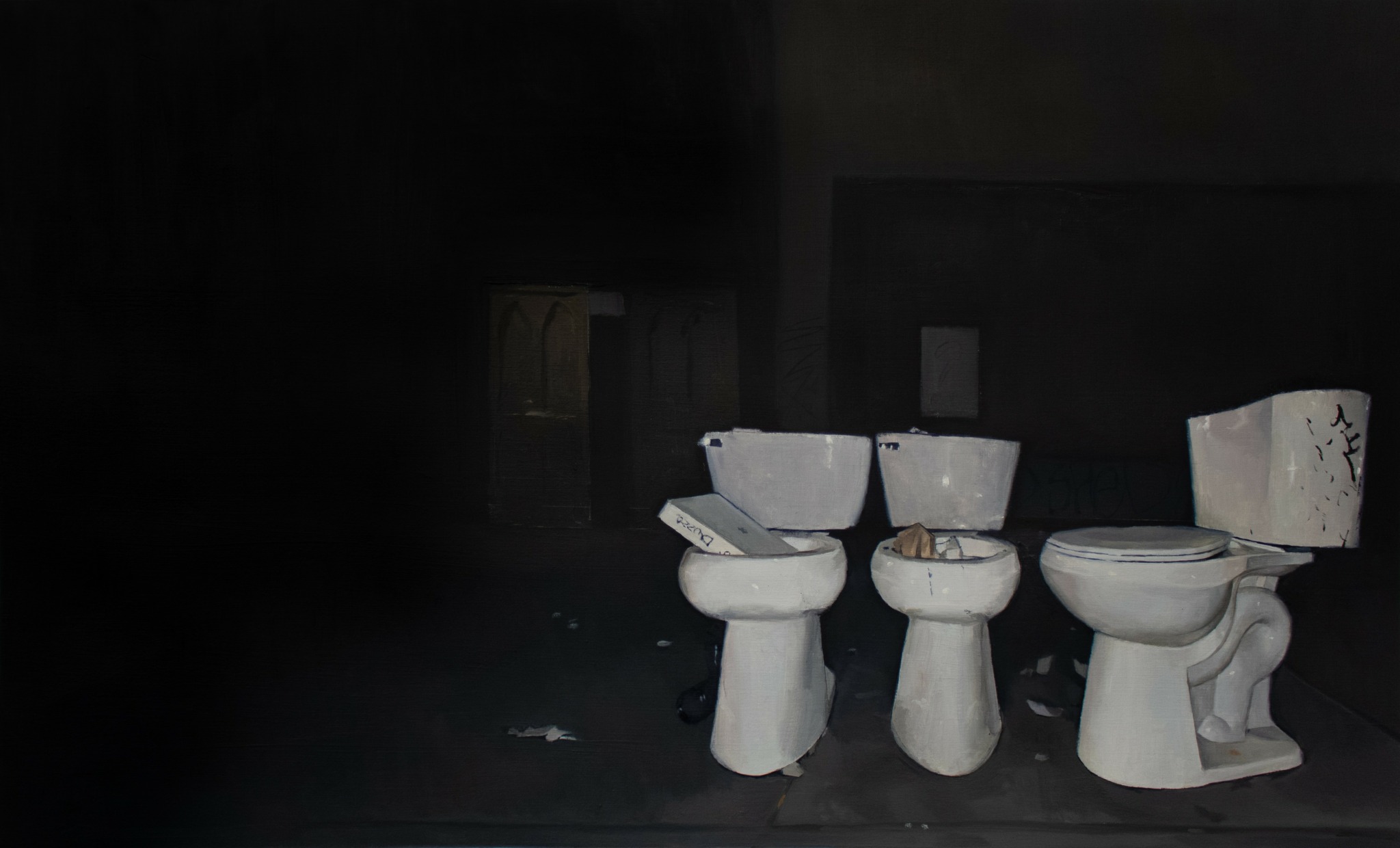
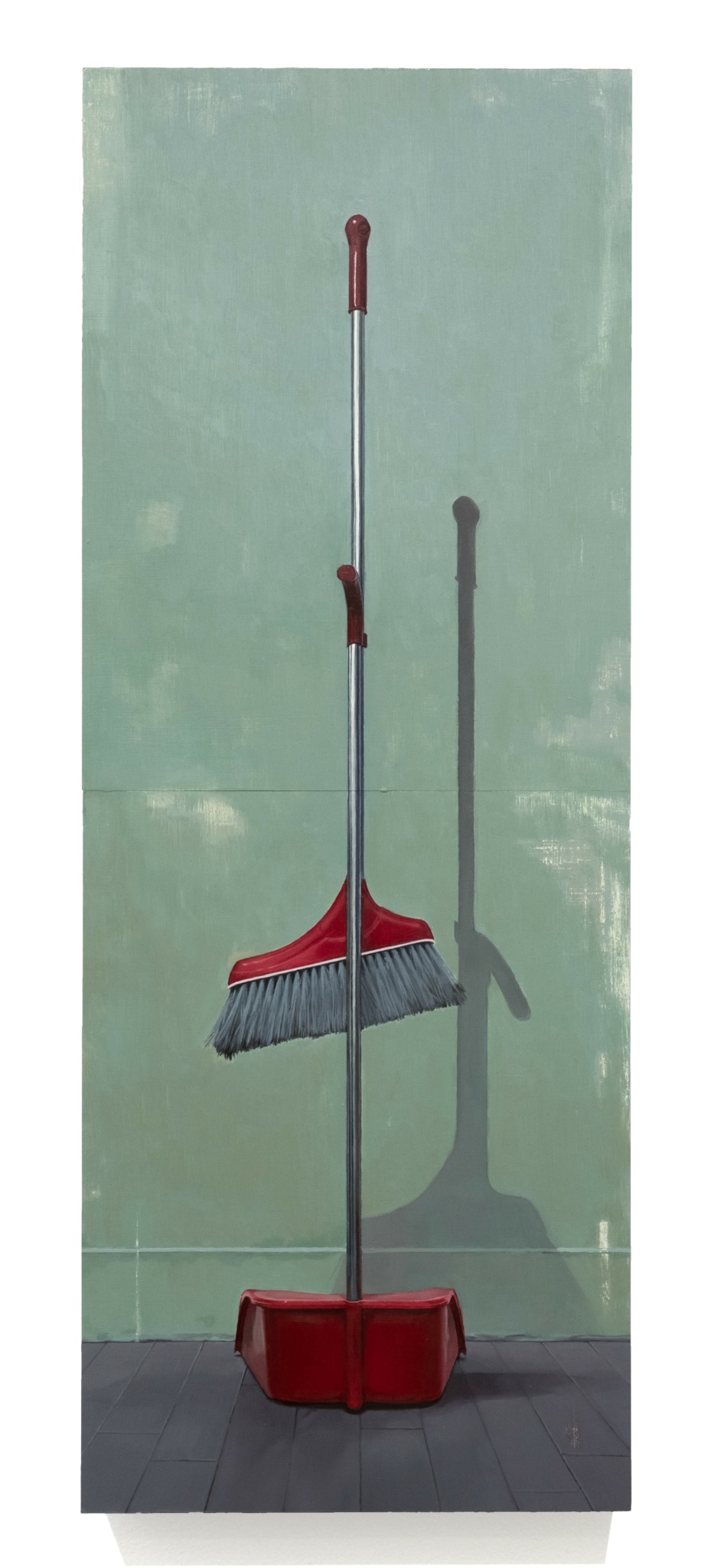
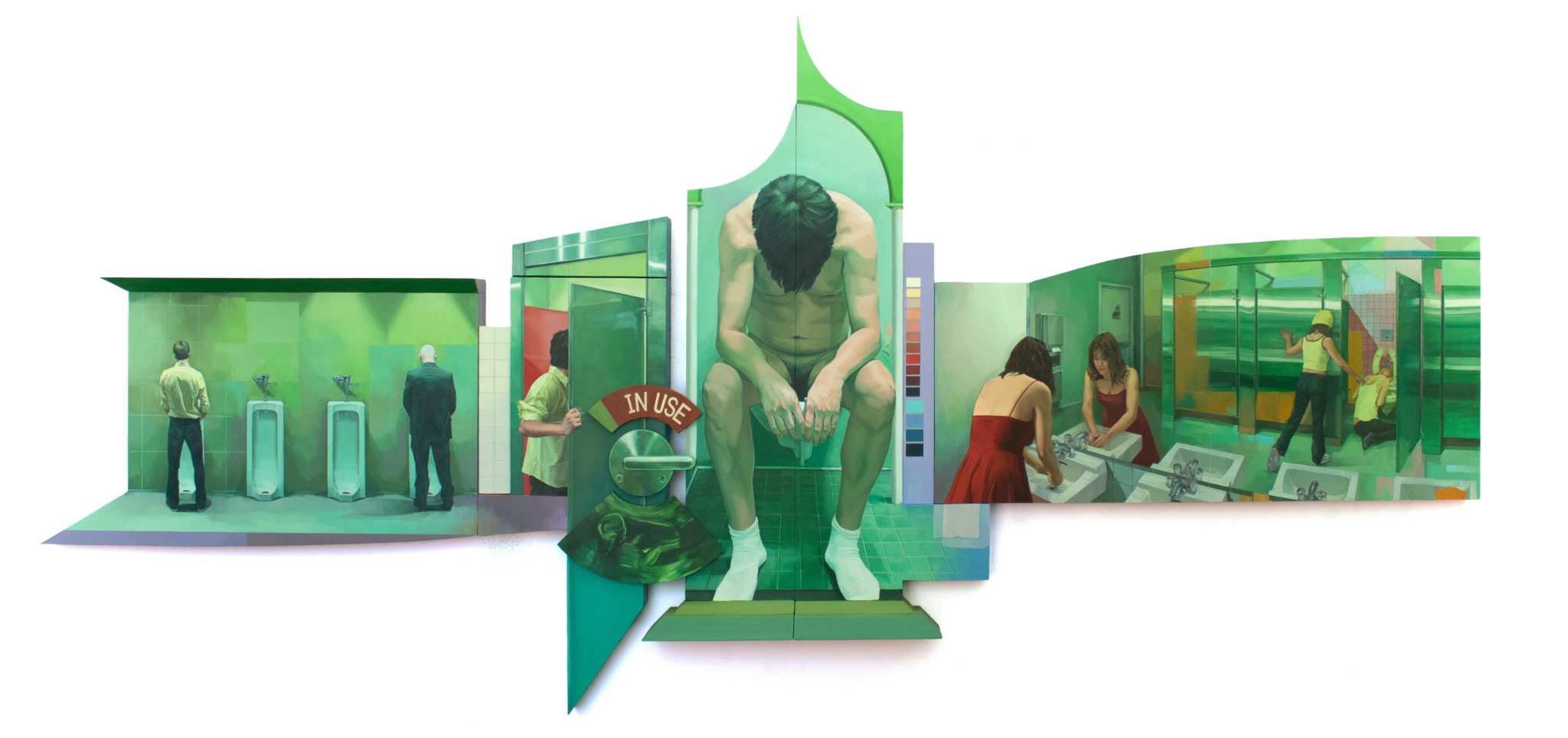
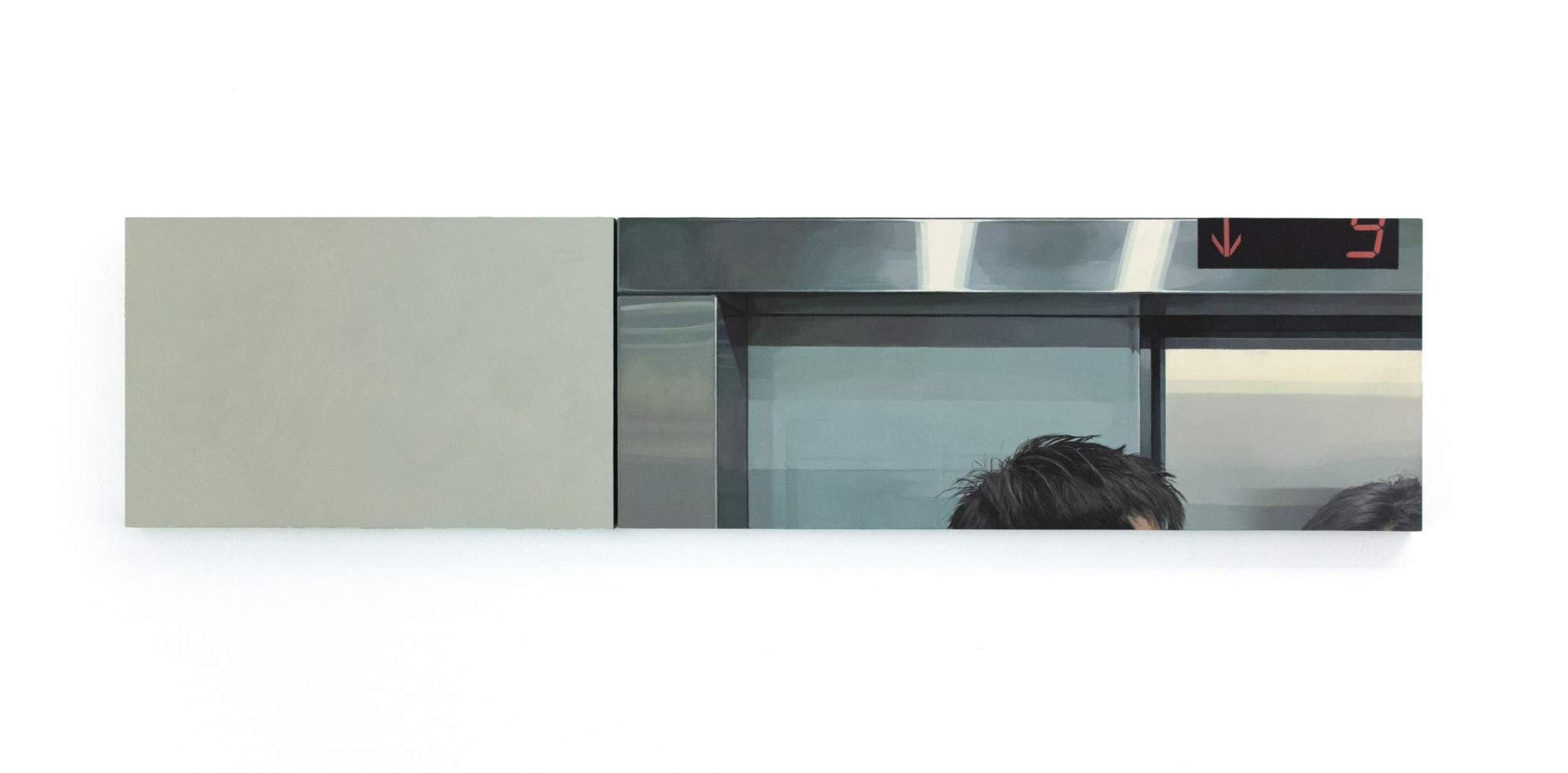
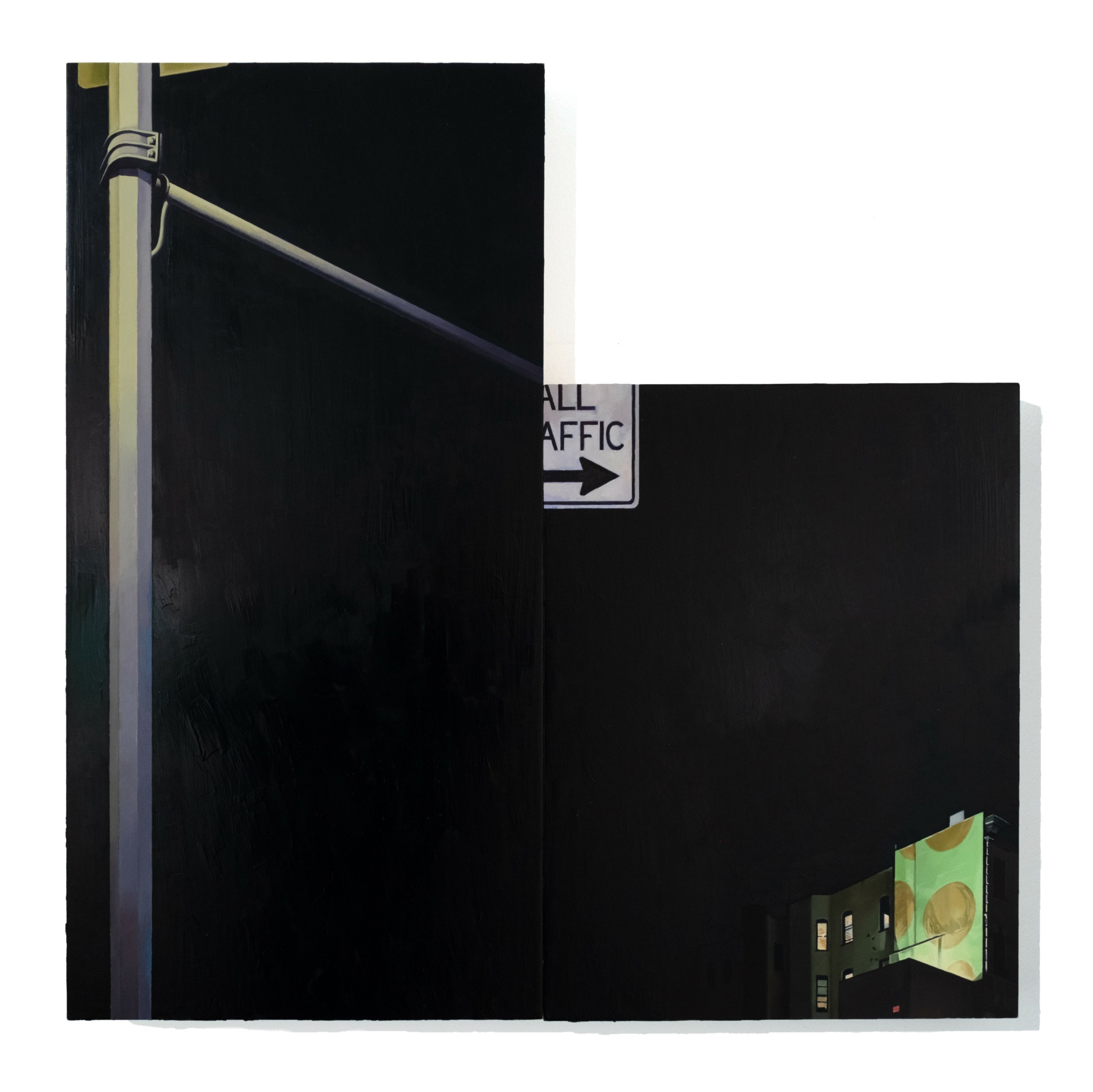
I am an artist whose current work consists of a series of paintings on wood panels which focus on disregarded places in urban environments.
Inspired by my experience of living by myself for almost 7 years in a foreign country, I became intrigued by the concept of “non-places,” places where people remain anonymous, not belonging, and therefore estranged. These places are common and necessary to function in society: side streets, alley ways, public bathrooms, subway stations, parking lots, grocery stores, etc. However, as I pass through them routinely every day, it becomes clearer to me that these spaces are built for maximal function and minimal aesthetics. They are used for efficient transportation, efficient consumption, and even efficient excretion. Carefully observing and analyzing these spaces gives me the feeling as if I am trapped in a maze, both in time and space — everywhere looks identical and indifferent, as if there may be no escape. The spaces I encounter often feel devoid of personality, defined by their sheer mundaneness.
In order to recreate this sense of bleakness that I feel navigating through non-places, I depict artificial subjects in my painting, including landscapes, interiors, still lifes, and lifeless figures based on accurate observations. It is my intention to share a cold gleam of mundanity that emphasizes industrial, inorganic, and ultimately inhuman nature. I explore my relationship with these spaces through the tools of composition, light, and texture, fragmenting the pictorial space with composite wood panels as well as the geometric division of colors. In addition, playing with extreme cropping hints my location in space relative to the subject. By doing so, it implies a sense of time, but also excludes a lot of information and leaves questions and curiosities about my subjects. Through fragmentation and incompleteness of non-spaces I depict, I want to block full psychological access to my paintings, raise confusion and capture the maze-like quality that I see.
What do you find most rewarding about being a creative?
As I mentioned earlier, for me the biggest reward of being an artist is fulfillment. This fulfillment comes simply from being able to materialize what you genuinely want to express, not to mention that the process itself is very meditative and therapeutic. When I am feeling down, I still go to my studio and paint, and after a few hours of work I usually feel better.
Apart from that, there are certainly many other rewarding moments. For example, when people spend time with my works, they give meanings to those works. When I was in college, I spent an entire month working on a very complex painting. The process was full of blockages and I felt stressful and exhausted. However, a year later, when I got to exhibit that painting, someone approached me during the opening and told me she spent five minutes just staring at my painting. I did not know what my painting made her feel or think, but at the moment I was reassured that my month-long effort was worth it.
Are there any books, videos or other content that you feel have meaningfully impacted your thinking?
When I was in college, one of my professors assigned the book Art and Fear by Bayles and Orland. The book talks about different perils an artist might face in their career: creative blockage, self-doubt, criticisms from others, not being recognized by major institutions, technical and conceptual difficulties, etc. Reading the book is not an easy experience to me, as it forces me to confront directly with all these fear-inducing situations that I have encounter or may encounter in the future. The book does not tell me that everything will be fine – it tells me something better: how to live with my fears and still have the wisdom and resilience to keep working. “The biggest failure for an artist is quitting.” Later on, I went through a lot of self-doubt and anxiety about the future of my artistic career. Every time when that happened, I thought about what was written in that book and tried to convince myself that it was better to be working rather than sitting around while worrying about the future
Contact Info:
- Website: https://www.ruoxhuastudio.com
- Instagram: https://www.instagram.com/bullockbefriendingbard/
- Linkedin: https://www.linkedin.com/in/ruoxi-hua/