


We’re excited to introduce you to the always interesting and insightful Ron Podmore. We hope you’ll enjoy our conversation with Ron below.
Ron, appreciate you joining us today. We’d love to hear the backstory behind a risk you’ve taken – whether big or small, walk us through what it was like and how it ultimately turned out.
I was a young man attending college and soon to be graduating with my first degree; an Associate of Arts with a direct link to a regional university. Today, we might call that two-year degree a “Direct Transfer Agreement” that allows students to transfer to a larger university as a third year/junior with declared major. Embedded in that two year degree was several courses I took in film and television editing; a visual medium that captured my eye since I have a moderate profound hearing loss. I enjoyed taking the courses, yet my. parents encouraged me to continue my coursework; eventually I transferred to a large university, graduating with a degree in teaching.
I settled into my new career, eventually teaching high school students a variety of subjects, from Math, (World Languages, in this case, a new language called American Sign Language) Social Studies, being IEP Case Manager for students with physical and/or intellectual disabilities. My career reached limitations too; although I was a highly respected teacher, recognized for my instruction with multiple awards including a PBS Golden Apple, becoming nationally board certified and even served on the highly coveted position to rewrite standards for future nationally board certified teachers. Yet, despite earning credentials to become a licensed headmaster/principal, in those days, DEI simply wasn’t a concept and I was often overlooked, including nearly a dozen times with my own school district.
I opted to leave the field of education at age 56 despite knowing that I’ve still roughly 9 years until I”m eligible for Medicare. Walking away from the field of education at the peak of my instructional career mystified everyone around me yet I saw too many teachers who reach the medicare age, only to be six feet under six months later. I’d rather be six feet above.
Around 2014, I started noticing an influx of undocumented migrants entering my classroom. Many of these students had literally walked or hidden on La Beastia (industrial rain transportation from Southern Mexico to the USA border). Regardless. of your opinions, these students were in my classroom. Many came from the Central American countries of Guatemala, El Salvador or Honduras. Almost all secretly left their families, travelled to the USA with the intent of working to provide for their families at home. Eager learners they recognized the gift of public education and were determined to maximize their potential.
One young man asked me about my university degrees and what my courses I took towards my credentials. He narrowed in on my Associate of Arts degree and was intrigued with the television/film editing courses I took way back in 1987, shortly after electricity was invented and during the analog era. As he absorbed English at a lightening fast speed, he was also the first to inquire what I knew of his home country. I was honest; I didn’t even know where his home country was. (In this case, it was Guatemala, most populous Central American and next country after Mexico. He suggested that I reach beyond the daily diatribes of what was being shown nightly on the American news cycle and even go as far as visiting his home country.
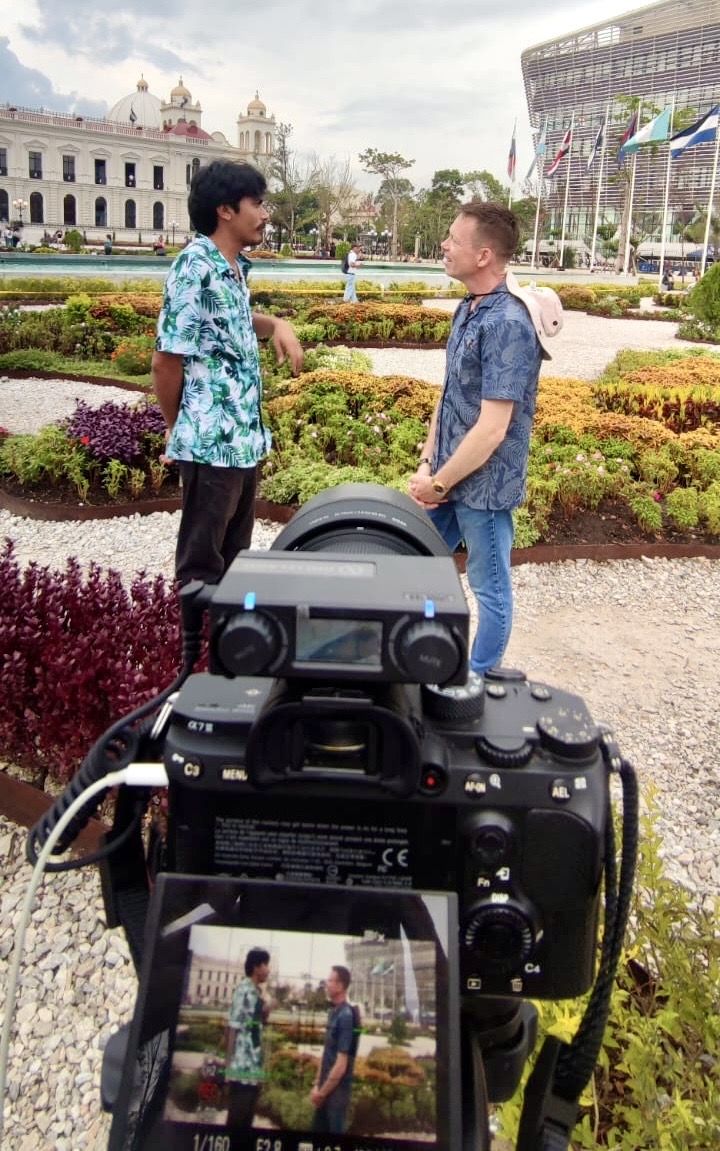
Armed with a borrowed hand-held camera; I ventured into a land that was transformative, both culturally and a sense of purpose. I spent four days filming; and upon return, pieced a short half-hour episode, uploading it and provided this young man and his Central American students to showcase the best of their country. By the end of the week, I had amassed 400 new followers, something at the time, I didn’t understand, but now I do with the rise of social media. He and several students taught me to pay attention to this growing trend. Who says teachers can’t learn from their students; and I did.
Over the next two years, I would make annual pilgrimages to not only Guatemala, but Honduras and El Salvador. Each time, honing my craft that had laid dormant for nearly 30 years; film and television editing. Each time, I would acquire additional ‘followers’ and I started blogging about my experiences understanding the challenges of why so many young adolescents were migrating out of these Central American countries. In 2021, I initiated a webpage in which I provided context to why migrants left. This coincidentally, came a few weeks before the presidential administration at the time launched their own endeavors; with that my webpage ballooned to nearly one million informational views.
I knew I was on to something, but couldn’t articulate exactly what or the new mission. Like old 35-millimeter film, it would take time to develop.
With each upload, I reached new views and new followers. Eventually, I hired a locally-based camera operator out of Guatemala City and we would travel to neighboring El Salvador to film additional content for half-hour episodes. Recognizing the growing costs associated with spending my teacher dollars on what was originally a hobby, my risks were somewhat limited because I simply didn’t have the dollars to scale up and my end results were still nebulous. Where was I going and what would ‘going’ look like when I arrived. I didn’t have the answer(s).
In 2022, I saved up enough money to hire a Honduran camera operator who had once done contract work for a major national news network in the states. It took me nearly five months to edit to what would become a very rough draft, hour long episode that portrayed Honduras favorably. It was pitched and accepted to a streaming platform. With that new insight, I was able to recognize the trickle of dollars that could flow my way from streaming content.
And those dollars indeed began to flow.
To date, I’ve been fortunate to produce three, (third launches January, 2026) separate, hour-long travel documentaries that introduce viewers to the Best of Central America. The most transformative changes I’ve experienced lie with El Salvador, what today is arguably the safest country in the entire Western hemisphere.
Today, I continue to film where the intersections of culture, pragmatism and migration are emphasized. I’ve taken a risk to pitch a full documentary film about the financial challenges many American citizens are faced with and opt to migrate OUT of the United States. That has been green-lit and is currently in production and I remain optimistically it can be theatrically released (meaning released into movie theaters, even limited) as part of my dream.
Not all stories have happy endings. To date, many of my now, former Central American students were forcibly repatriated back to their home countries. Fortunately, they’ve excelled at the English language and earned an education in the USA that I remain optimistic can provide a bridge and a solid foundation for their lives in Guatemala, El Salvador and Honduras. I keep in close contact with these students and each time I’m in their town, we have a celebratory reunion worthy of new years.
My future and calculated risk is still far from being ‘developed’ fully yet. Although I’ve plenty of time now that I left teaching, funding is limited and producing documentary films are fraught with the potential for a nebulous result. However, one thing is a solid 100 for me; I’m immensely at peace with having departed the field of public, high school teaching. As toxic as that environment has become, I’d rather be six feet above than six feet under. Thus far, I’ve regained newfound energy to promote via film, dialogue, discourse and inspiration for what it means to be a migrant and/or an international citizen as our world becomes smaller and in some cases, increasingly hostile to the concept of migration.
As I always say in my travel documentaries, “Discover the Mayan world. Travel with purpose and experience the best of Central America. Life begins outside your comfort zone.” It’s something my Central American students would be proud of. Come to think of it, so would I.
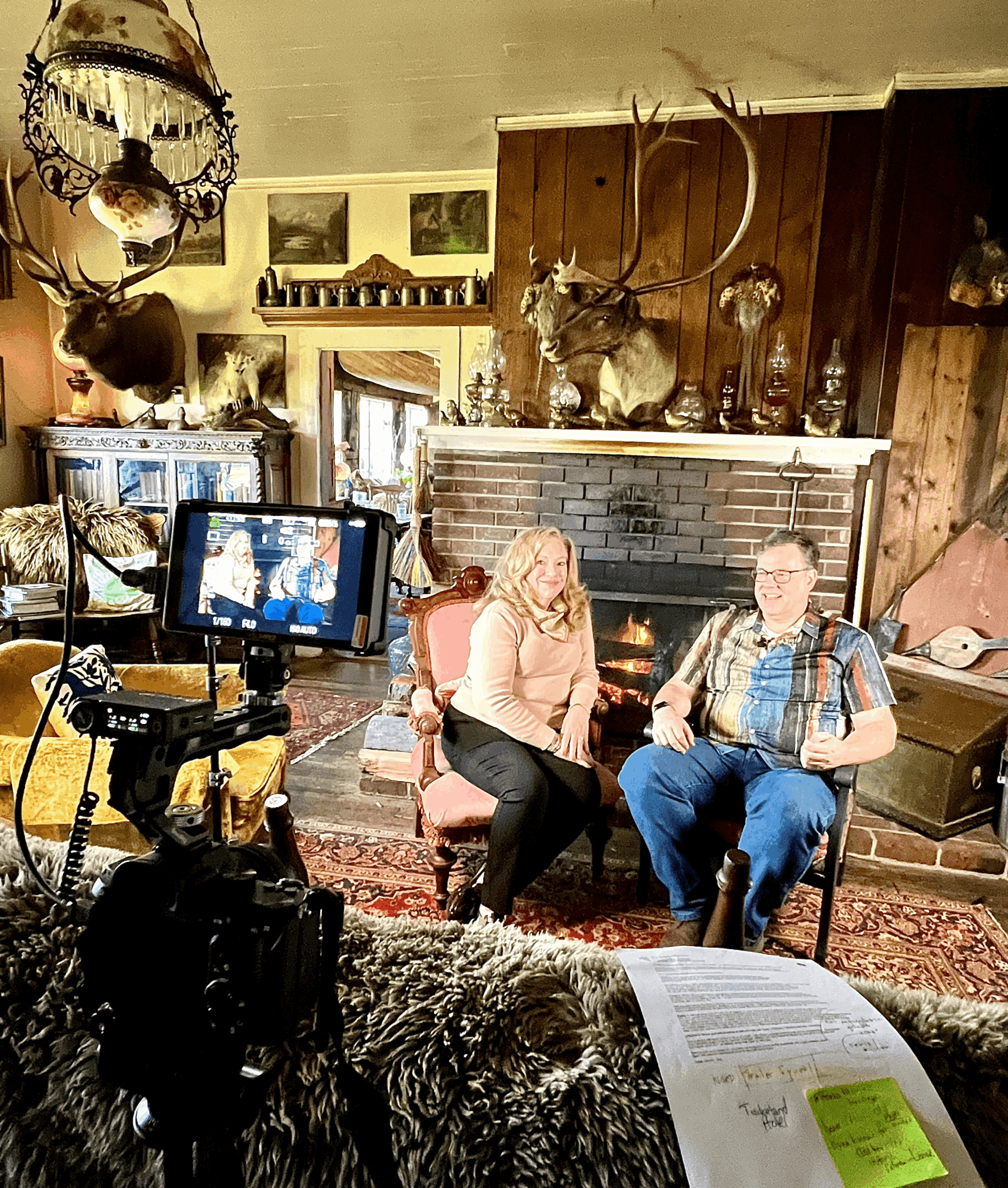
Ron, before we move on to more of these sorts of questions, can you take some time to bring our readers up to speed on you and what you do?
My work as a mild-mannered, ‘don’t rock the boat’ teacher was rarely inspirational. Seeing gaps between what school boards pretend to envision and promote based on ‘current trends’ and what I experienced in the classroom was lacking. The gulf was wide, widening and disconnected from what it means to be a teacher in America today.
Although I originally received a Bachelor and a Master’s degree in Education, it prepared me for a career with longevity, stability; something that many would crave in an era of increasing ‘gig work’ in a workforce society that looks to squeeze productivity and or eliminate the human element.
My filmography is still very much in the budding phase, despite having been producing long-form content since Covid. I’ve found my niche but my niche has yet to find me and may never find me. Through conversations with hundreds of viewers, both electronically and at travel shows, innumerable people approach me increasingly, recognizing my film endeavors. I still try to talk to all as much as I can. Increasingly, many viewers/clients recognize that they’re reaching a dead-end with financial life in the United States and opt to consider relocation to a country that provides better work-life balance.
Working from home(WFH)/remote work hasn’t entirely disappeared for many American corporate C-suite employees, although it is on a downward trend. Many clients have taken the leap of faith and working with visa processing consulates/embassies have achieved residency that allows them to work remotely in Central America and/or another country. Others have recognized the health implications of not only receiving health services inside the USA but the risk of bankruptcy, loss of home, etc., at the mere thought of a catastrophic health incidence. I’ve escorted viewers/clients on trips to Guatemala and El Salvador to experience first hand health care services for themselves. These Central American countries provide exemplar dental, cardio-health, vision, lipids (blood panel work), etc., with empathy beyond what they’re used to stateside. In effect, anything related to proactive health maintenance.
I provide authentic experiences through a variety of prisms; advice on short-term residency, health insurance, tourism, business opportunities, slower pace of life and/or genuine moments where they can disconnect mentally from life inside the U.S.A. We stay in locally ran hostels, hotels, eat at local restaurants. All of these visitors including I, are working-class Americans. It’s not unusual for clients to board a return flight with a tear or two; they’re not sad to leave, they’re sad at what they’ll return to in a nation where corporations increasingly have the upper hand. And that is something I am immensely proud of; providing exposure and a new way of thinking globally.
How’d you build such a strong reputation within your market?
I was never one to gloss-over and present myself as a happy-g0-lucky, individual. I am to my core, a high school teacher and if you want to see what society is like in the town you live in; simply walk into a public high school. So, I’ve developed a teflon coat of pragmatism, often blunt perspectives that isn’t sugar-coated.
The flip side of that is authenticity. I am transparent in my conversations and aim to listen to what my viewers/clients desire. I provide them with follow-up’s, ‘whatabout-isms’ that they may have not considered. My reputation is based on how I present the stories I tell through film and I incorporate a heavy dose of social-emotional-learning/connection; something that is peaceably evident in the countries that I film and bring visitors to experience for themselves.
Learning and unlearning are both critical parts of growth – can you share a story of a time when you had to unlearn a lesson?
My authenticity is tempered with what initially and incorrectly appears to be lack of empathy. Having spent decades as a public high school teacher, there is rarely a moment that isn’t systematic with society at large. I’ve become inured to the daily diatribes of high school and this almost appears as if I’m in a PTSD program to realign my heart and soul.
I’m reminded of a story where one young male student was a reluctant learner, beyond reproach. Heavily clothed ‘Goth’ style, black lipstick, bondage pants, headphones on, everything to tune out what he was there for, learning. Amongst students, some are forcibly sent to a school as their parents/parental units have abdicated their responsibility to be a team member with raising their child and hesitantly, bring that child into an environment in which zero learning is evident.
This young man throughout the entire 90 minute period, only to be duplicated with other classes throughout the day, was absorbed in make-up, goth, music and created a bubble. I made the mistake of capturing him one day installing make-up and provided a rather acidic response. “Keep going, you got a long ways to go.” Although I earned satire points for the day, I was immediately called into the principal’s office to extend the olive branch to the parent and child.
As a result, trauma-induced teaching is. a real concept. Increasingly, our fragmented society provides little recourse for administrative support and I’ve learned to simply not pass overt judgement, regardless of my own upbringing by a very proactive set of parents.
Contact Info:
- Website: https://RonPodmore.com
- Instagram: trvlronfw
- Linkedin: https://www.linkedin.com/in/ronpodmore/
- Youtube: @ronpodmore99
- Other: https://www.thefilmcatalogue.com/films/in-flight-we-trust-an-american-exodus