

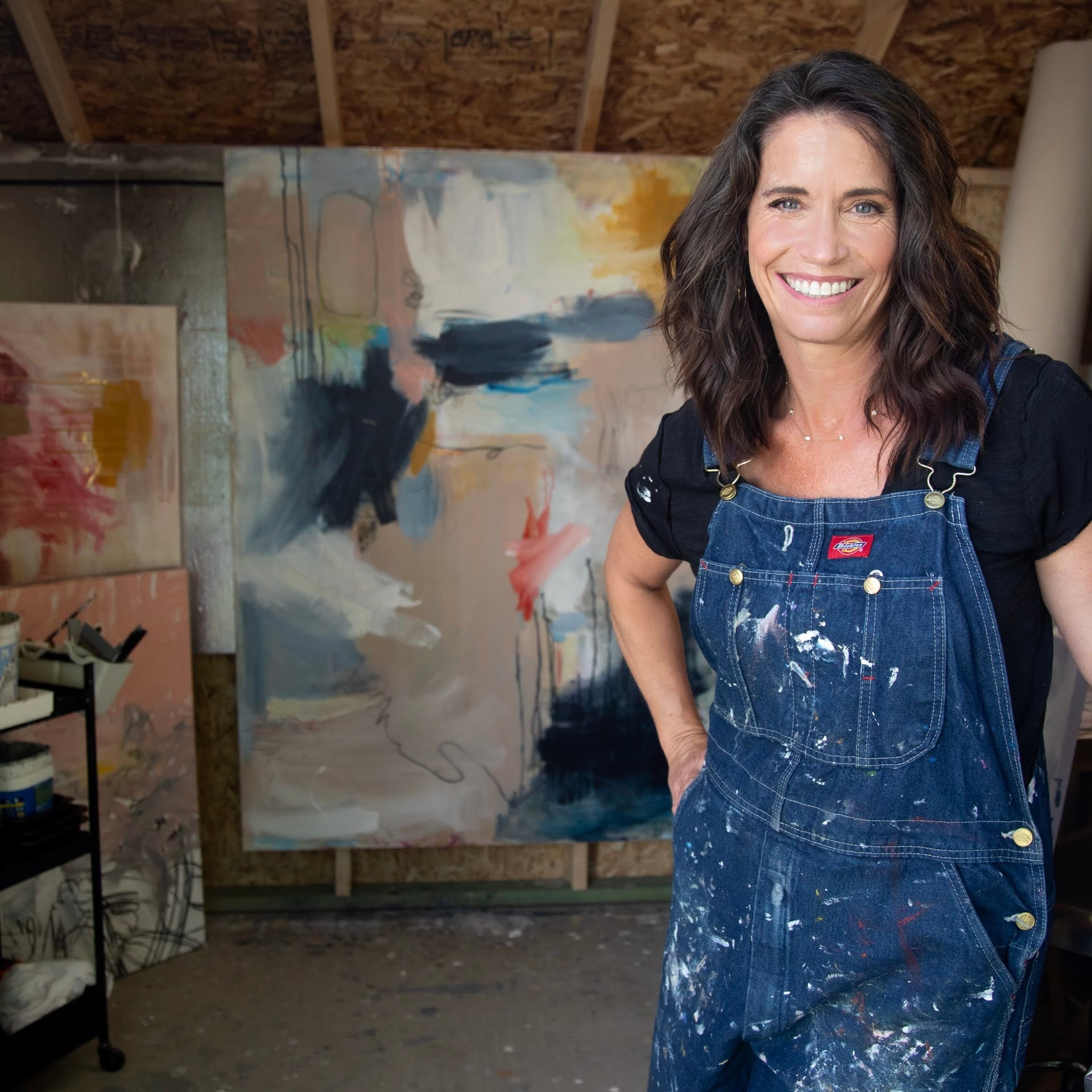

We were lucky to catch up with Robin Jack Sarner recently and have shared our conversation below.
Robin , thanks for taking the time to share your stories with us today Can you talk to us about how you learned to do what you do?
Learning to be creative is synonymous with being creative but “learning your craft” is more about being massively vulnerable about one’s current proficiency. Recently, upon harshly evaluating my own skills, I felt the need to improve the strength in my painting style but first had to accept the weaknesses and fears I harbored. I firmly believe at some point, all creatives mature enough to know they must eventually pull apart their current processes with an exorbitant amount of reflection and self criticism to improve. Within that process there is self discovery, and that in of itself is extraordinary.
“To learn to do what I do” means studying the greats that inspire my spirit by absorbing and experimenting as much art as possible, listening to inspiring or informative podcasts, and experiencing the art world as much as possible. In my studio I experiment a lot, fail a lot, succeed a lot, get angry with bad work, fall in love with strong art and I continue that process until something extraordinary appears. That is learning to do what I do.
Knowing what I know now and looking back on what I could have done to speed up my creative skills… I should have prioritized my creativity first and more often. I let boring things like domestic life and working overtime in an exempt position be obstacles to creative time. There were practical parts of life that took priority like child rearing and medical challenges, but mainly it was my own self doubt that stole my creativity. To speed up learning time for a 25 year gap meant giving up my fear of not “being good” and moving forward with courage to make consistent “good or bad” fine art.
The most essential skill sets to my success at this point is first prioritizing creative time, secondly to experiment and learn more with new tools, and thirdly, to build confidence with applying to quality art calls and exploring gallery representation. Paramount to my success though, is simply to consistently create strong abstract art, the rest will follow.
All these lessons combined are a formula for what I consider “success.” For me creative success is to have my viewers gain perspective visually and hopefully, emotionally into my experience within the painting. Every painting is a journey into unraveling emotion, giving identity to processing emotion, or simply a visual narrative of my feelings in that moment. To me, painting is an experience, not just something to look at and I wish the same for my viewer.
Robin , love having you share your insights with us. Before we ask you more questions, maybe you can take a moment to introduce yourself to our readers who might have missed our earlier conversations?
As far as I can remember, I was interested in artistic expression and eventually drawing became a way to cope with any hardship. I felt strongly that anyone had artistic ability and naturally gravitated toward visual arts and art education. I developed my traditional and representational art skills throughout high school and college where I studied art education. It wasn’t until early adulthood when I discovered mid-century modern artists and abstract expressionism. The idea of painting a feeling or emotion and having a visual narrative became deeply interesting to me.
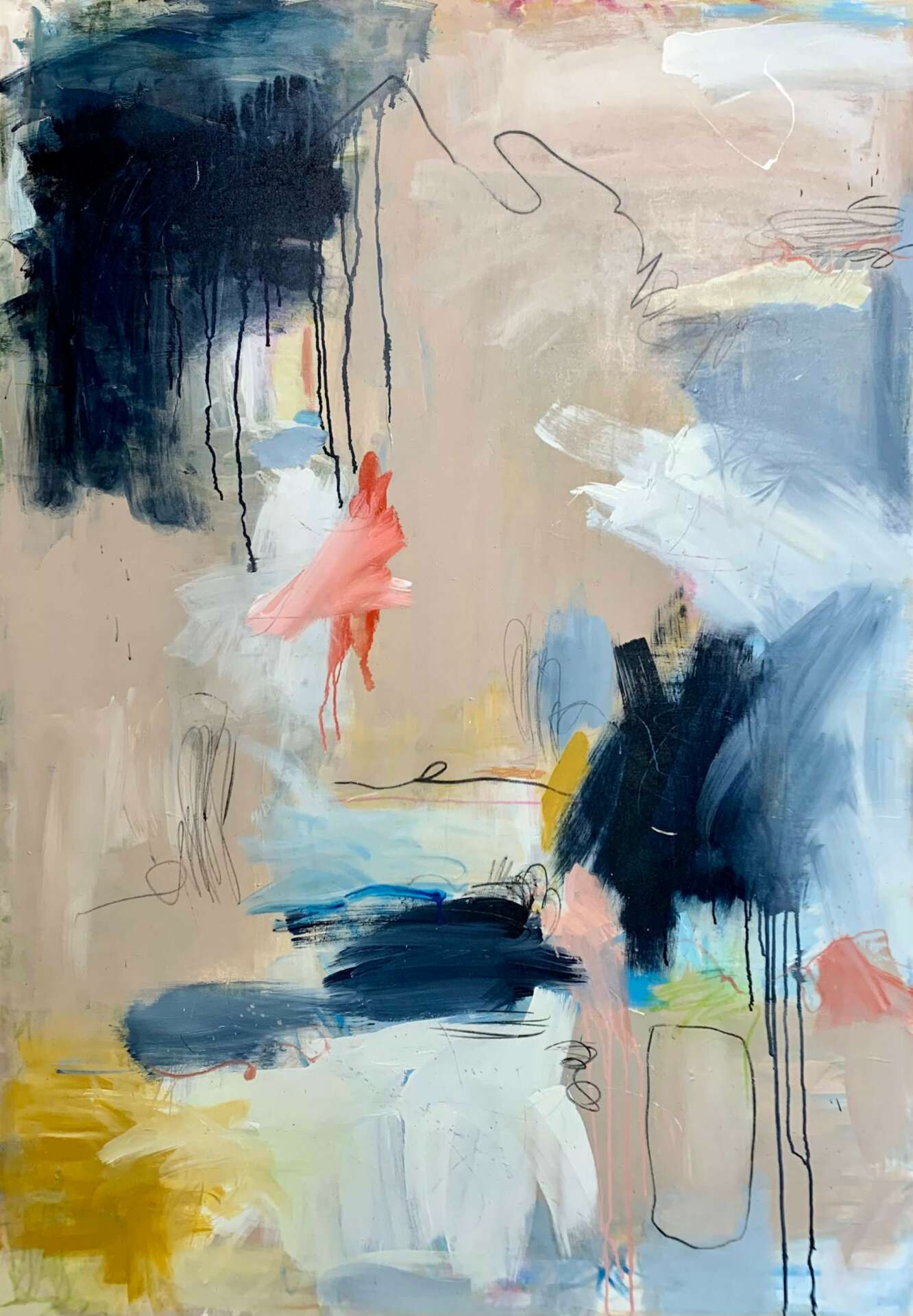
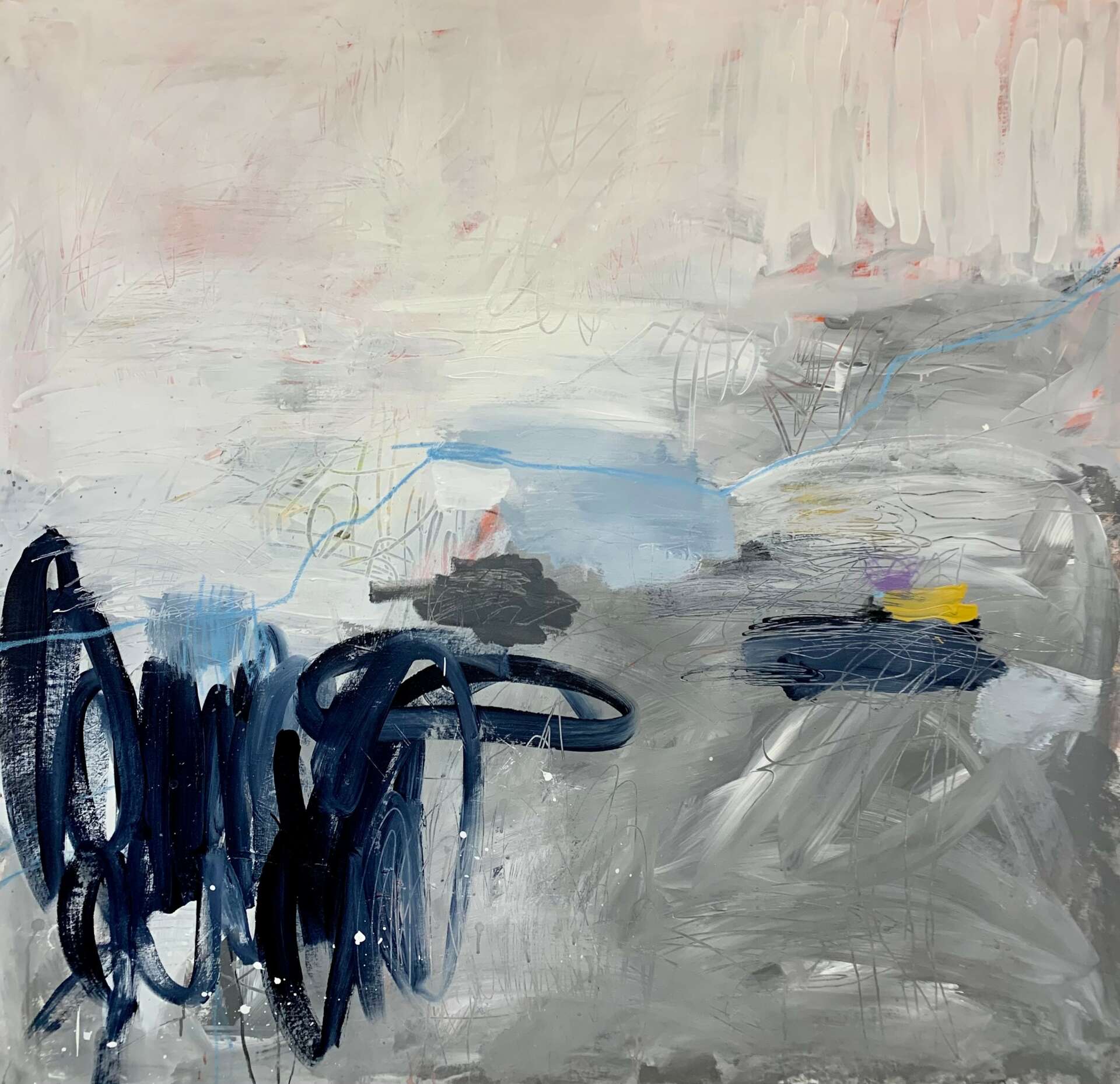
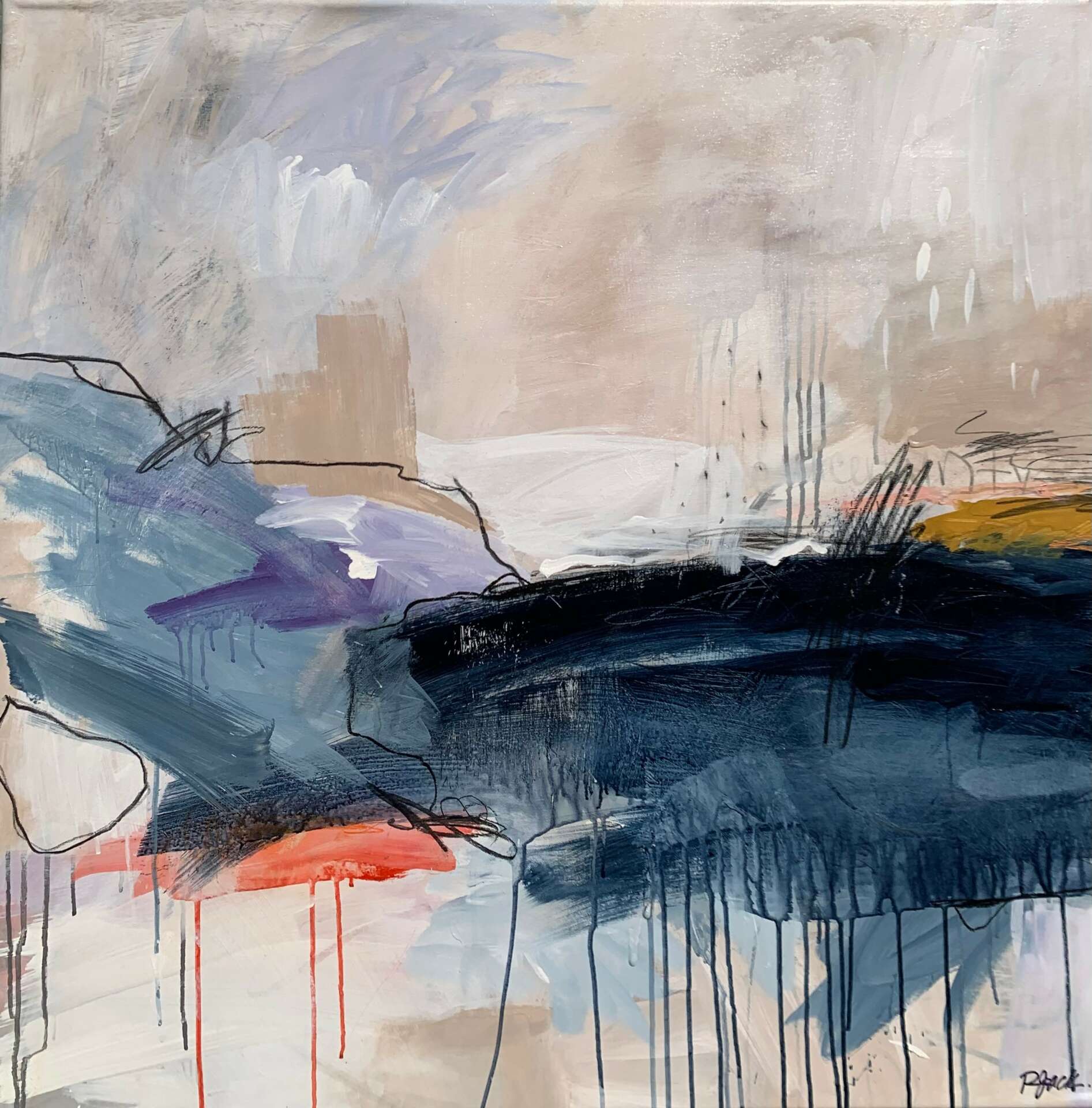
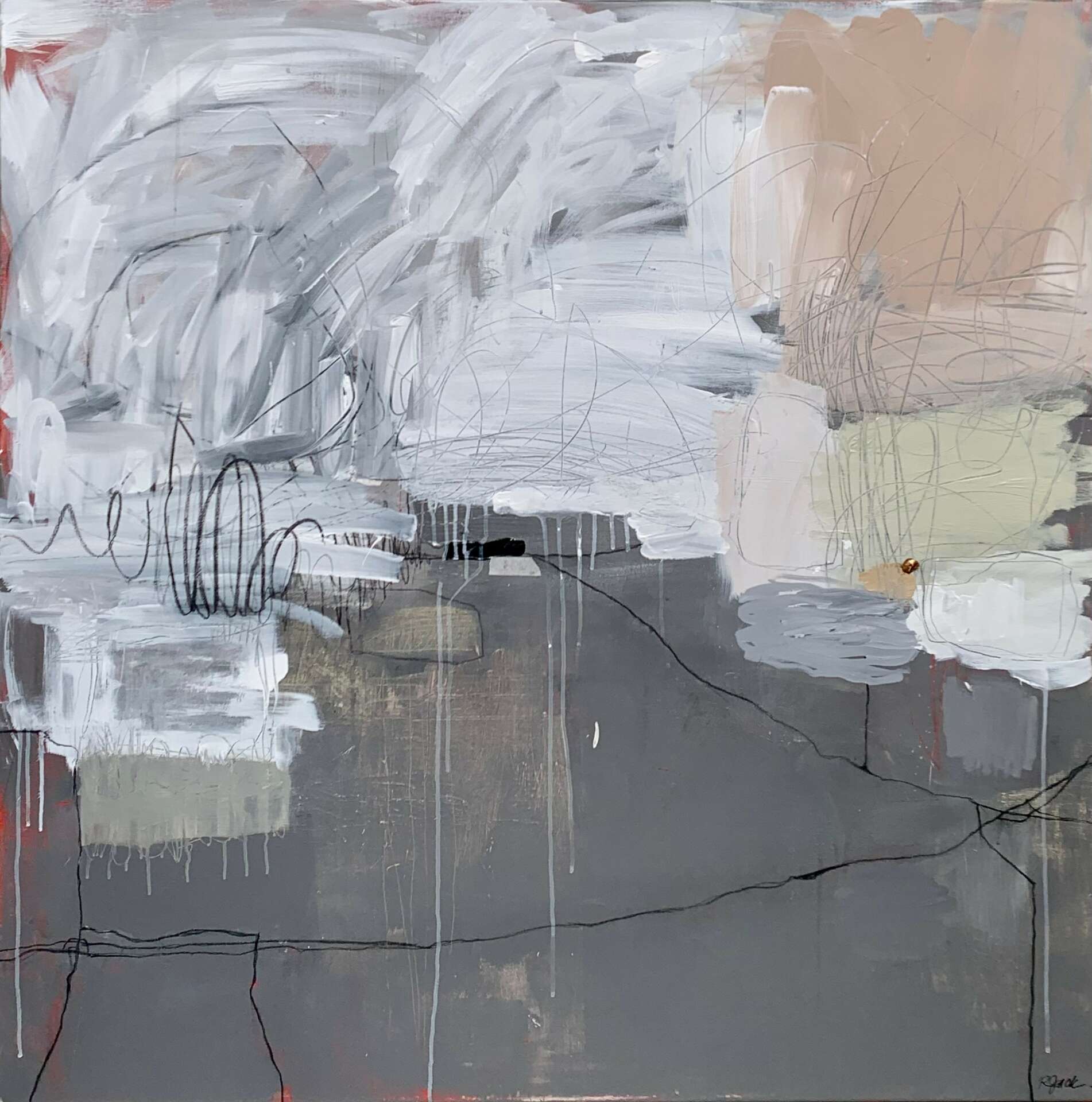
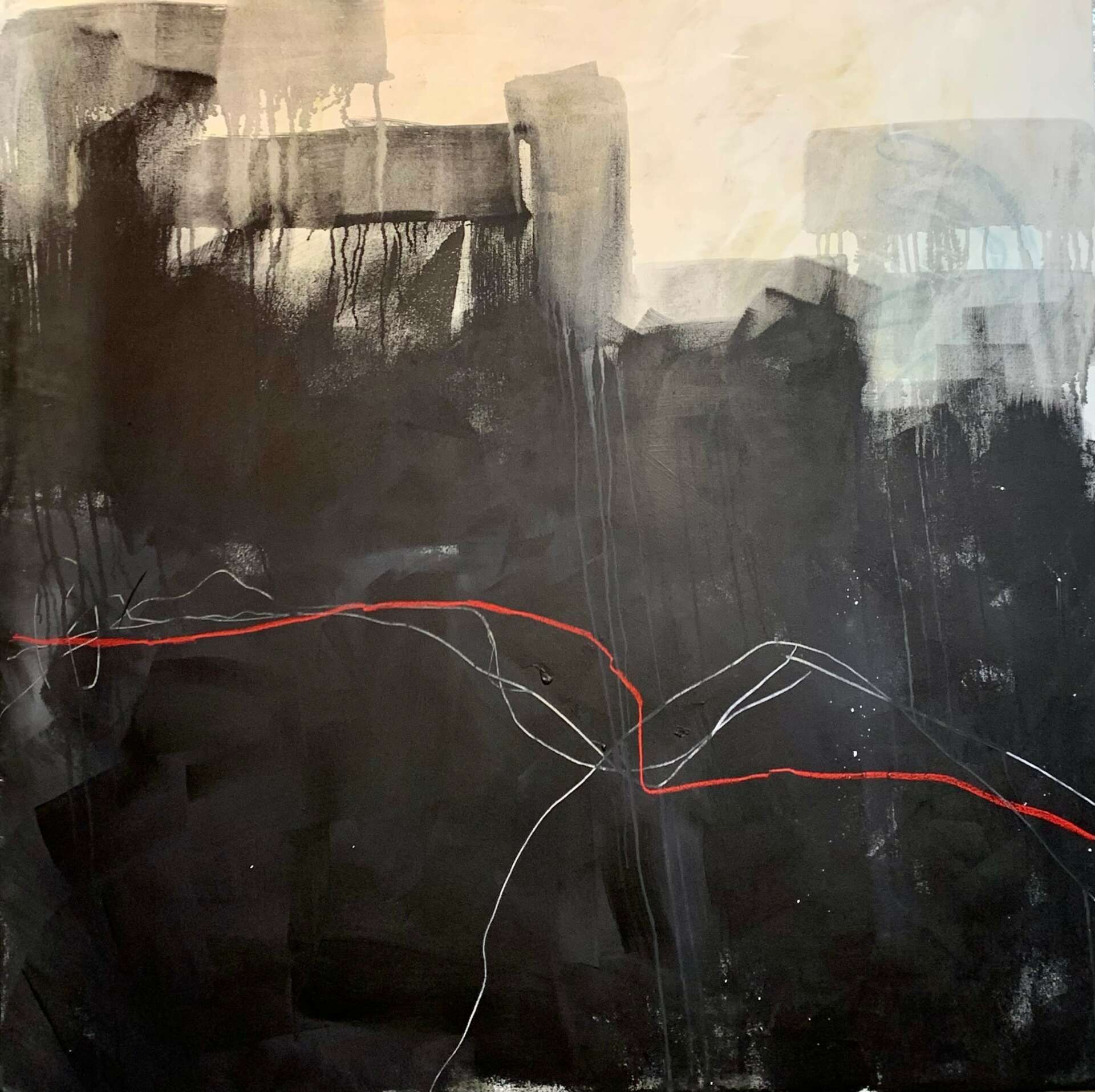
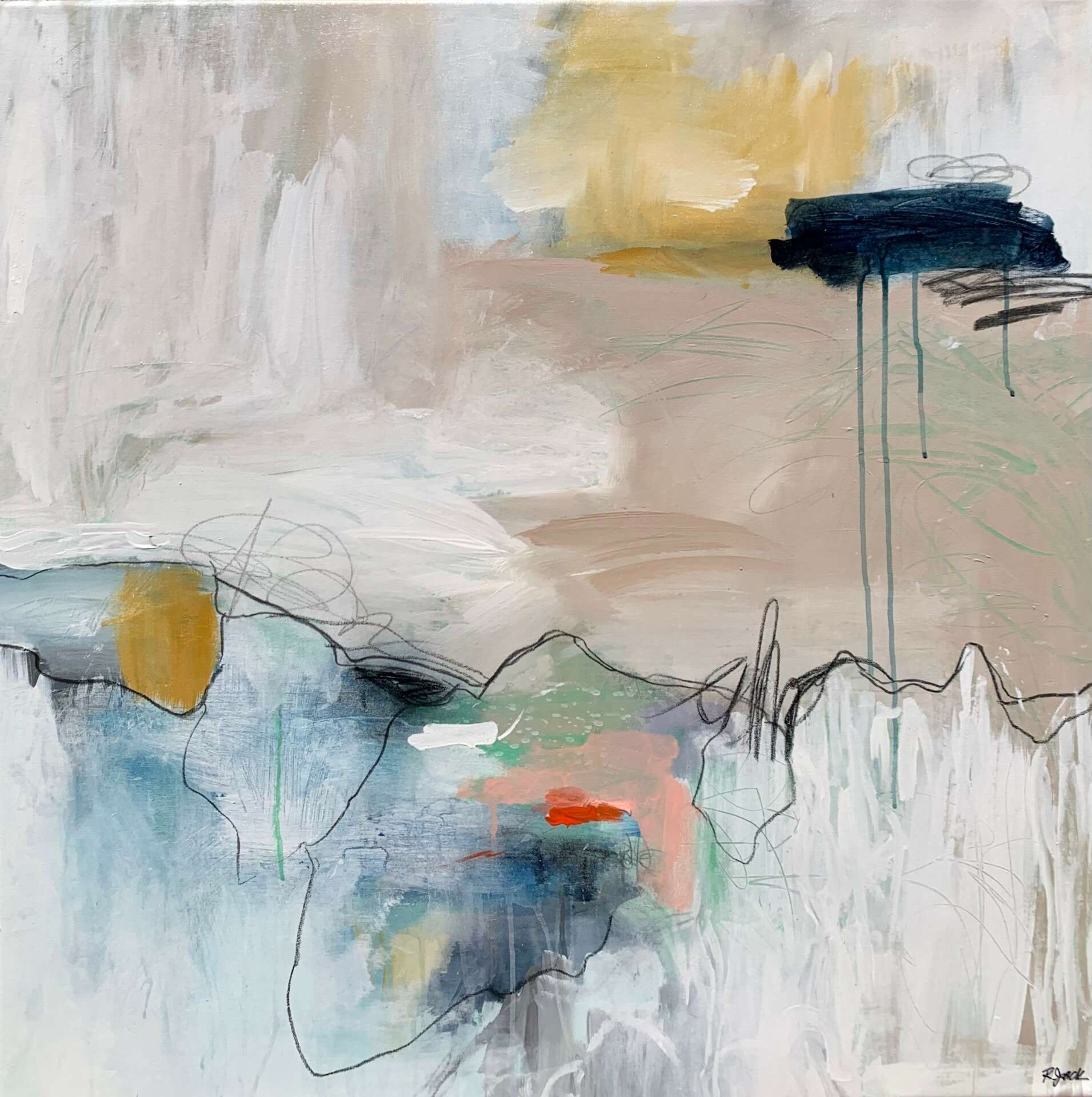
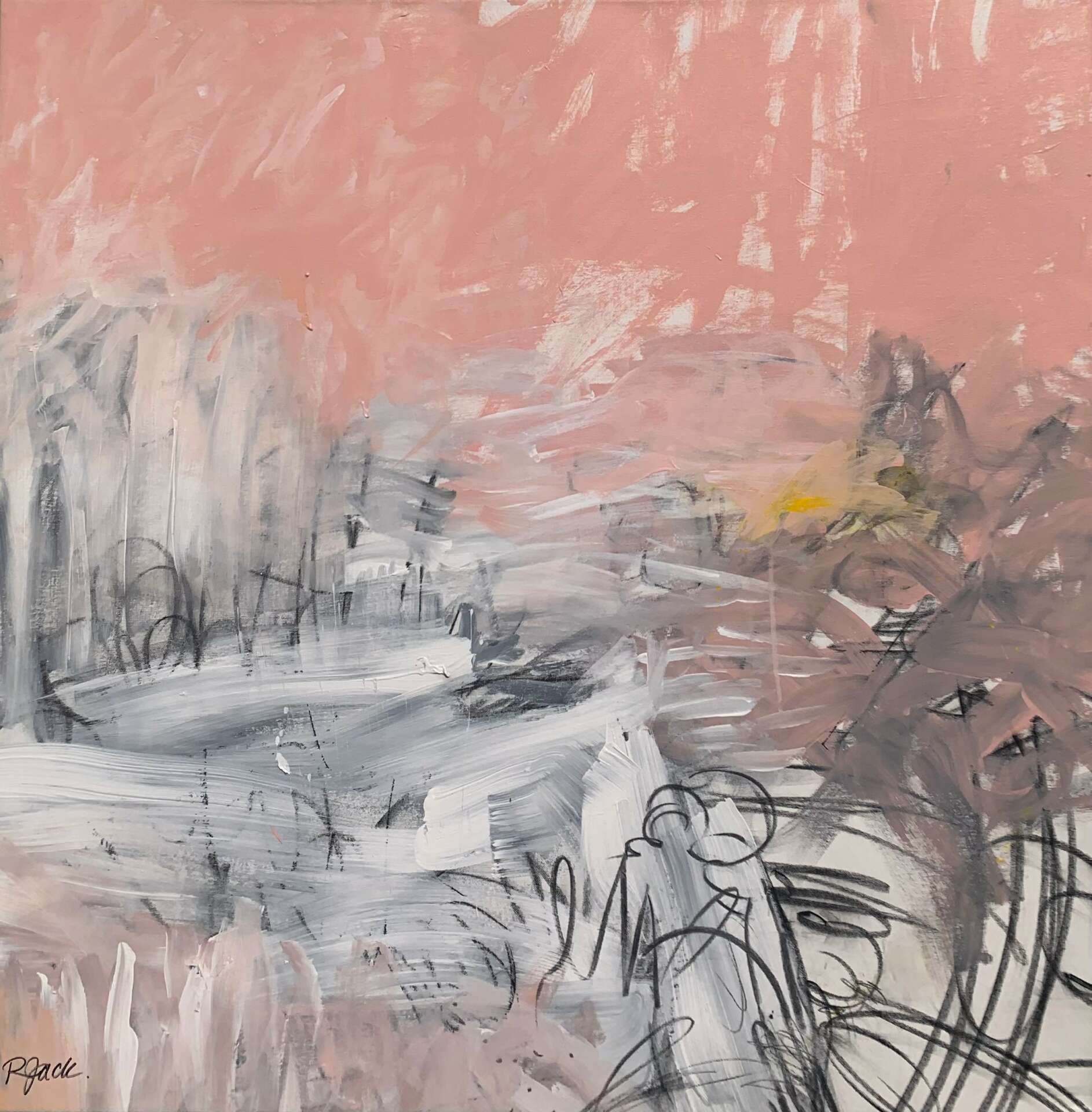
My paintings now explore the deep connection and internal alchemy between emotions and the psychology of the creation process. The intuitive color palette choices, size of the canvas and mixed media materials all have purpose and together construct a complete visual narrative of my emotions. While creating, I am authentically transmitting thoughts, emotions, and ideas, providing the viewer a window into my subconscious. Oftentimes, the viewer senses my literal untangling of emotional intelligence and the real-time identification of feelings. Having probably the lowest emotional IQ most of my life, it was through “painting-the-painting” that I began to process emotion without having the capacity to identify the feeling. It’s literally in my mid-life that I am able to be situationally aware enough to conclude and identify emotions, the good ones, the bad ones and most of all, the uncomfortable ones.
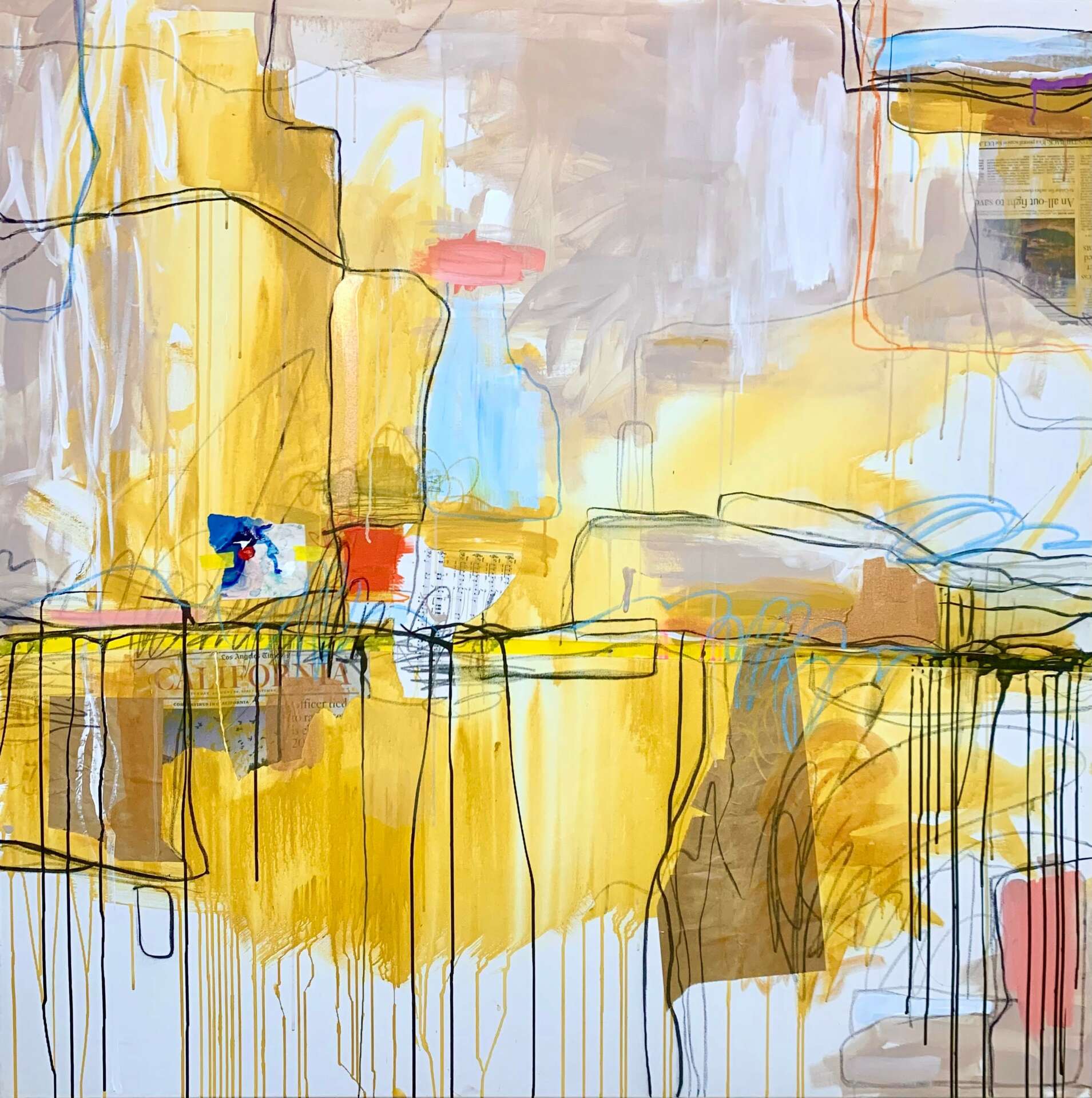
I create to literally rid energy and purge thought, but it’s compulsory to paint on large canvas in a gestural, energized way, as smaller substrates are excruciatingly claustrophobic. I liberally apply opaque and diluted paint, spread it across usually unprimed canvas letting it drip and soak into the cotton. As I add layers of paint and mixed media, I’m keenly aware of my desire to accept the element of chance in how the paint drips and interacts with the materials. I tend to grab mixed media papers almost unconsciously as I answer the painting’s composition and textural needs. I sometimes scratch into the existing layers to expose the underpainting, creating lines and texture. Lastly, mark making becomes an extension of my nervous system, the vigorous scribbles cut into but add to the harmony of the painting, accentuating the visual emotional narrative until I feel complete. At times I experiment with larger paper and cradle board, using mixed media, paint, encaustic and cold wax mediums.
What sets me apart is the scale of my work, the several combinations of mixed media, the strong but chaotic mark making, the earth tone palette and the organic but deliberately placed drips!
I am overwhelmed with joy when a viewing guest can understand and be affected by the emotional message within my work. I am most proud when a student discovers their appreciation for not only their own work but an appreciation for visual art within their communities.
My intent is to continue to teach and bring abstract art to children in schools, create a strong body of work that represents my emotional journey, and affect viewers with exploring their own depth.
For you, what’s the most rewarding aspect of being a creative?
Because art is a transmission of an idea or emotion to the viewer, to me the most rewarding aspect of being a creative is connecting human beings to themselves and one another. The great Russian writer, Leo Tolstoy explains, “art is a human activity where one man passes on to another feelings he himself has lived through and these people are infected by an experience of these feelings.”
For me personally, the effect of creating can be the most healing, exploratory, forgiving experience. The consequence of creating leaves me with completely processed emotion, the gift of self discovery and the fortune of genuine exchanges of energy between me and the Universe. It’s hard to explain and easier to see.
I’m grateful to be an artist, I have the fortune of being a conduit for creativity and the only “price to play” is the promise of self acceptance and joy.
How can we best help foster a strong, supportive environment for artists and creatives?
To support artists and art communities best, society must first continually support artistic expression in primary and secondary grades of education. More often than not, our educational priorities lie only within the basics of math, reading, writing, and science. The learning parts of our right brains need the equal stimulation of music, PE and visual art. In the unfortunate, less than efficient financial landscape of the US education system, most “extra curricular” activities are the first to be discontinued leaving large right-brained deficits and learning gaps in our primary and secondary aged students. Without exposure to the arts, there is no developing appreciation for most forms of art, sometimes less motivation for students to attend school and even worse, children remain deprived of culture. By supporting children to artfully express themselves, we support the future and sustainability of all artists and culture.
Contact Info:
- Website: www.rjackart.com
- Instagram: @rjack.art
- Facebook: https://www.facebook.com/robinjacksarnerart
- Linkedin: https://www.linkedin.com/in/robin-sarner-5a654618/
Image Credits
Margie Woods