

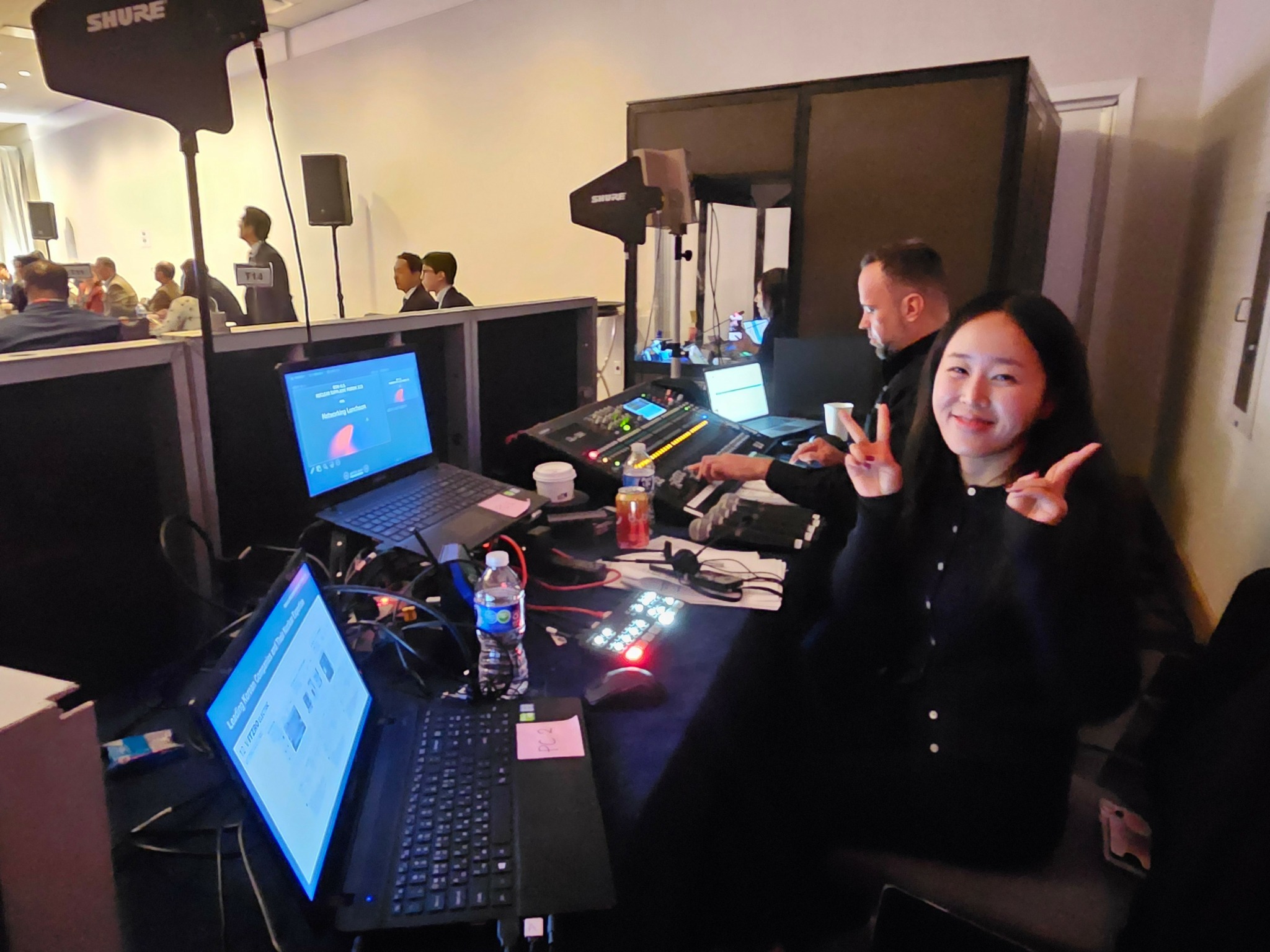

We caught up with the brilliant and insightful Robin Ahn a few weeks ago and have shared our conversation below.
Alright, Robin thanks for taking the time to share your stories and insights with us today. We’d love to hear about a project that you’ve worked on that’s meant a lot to you.
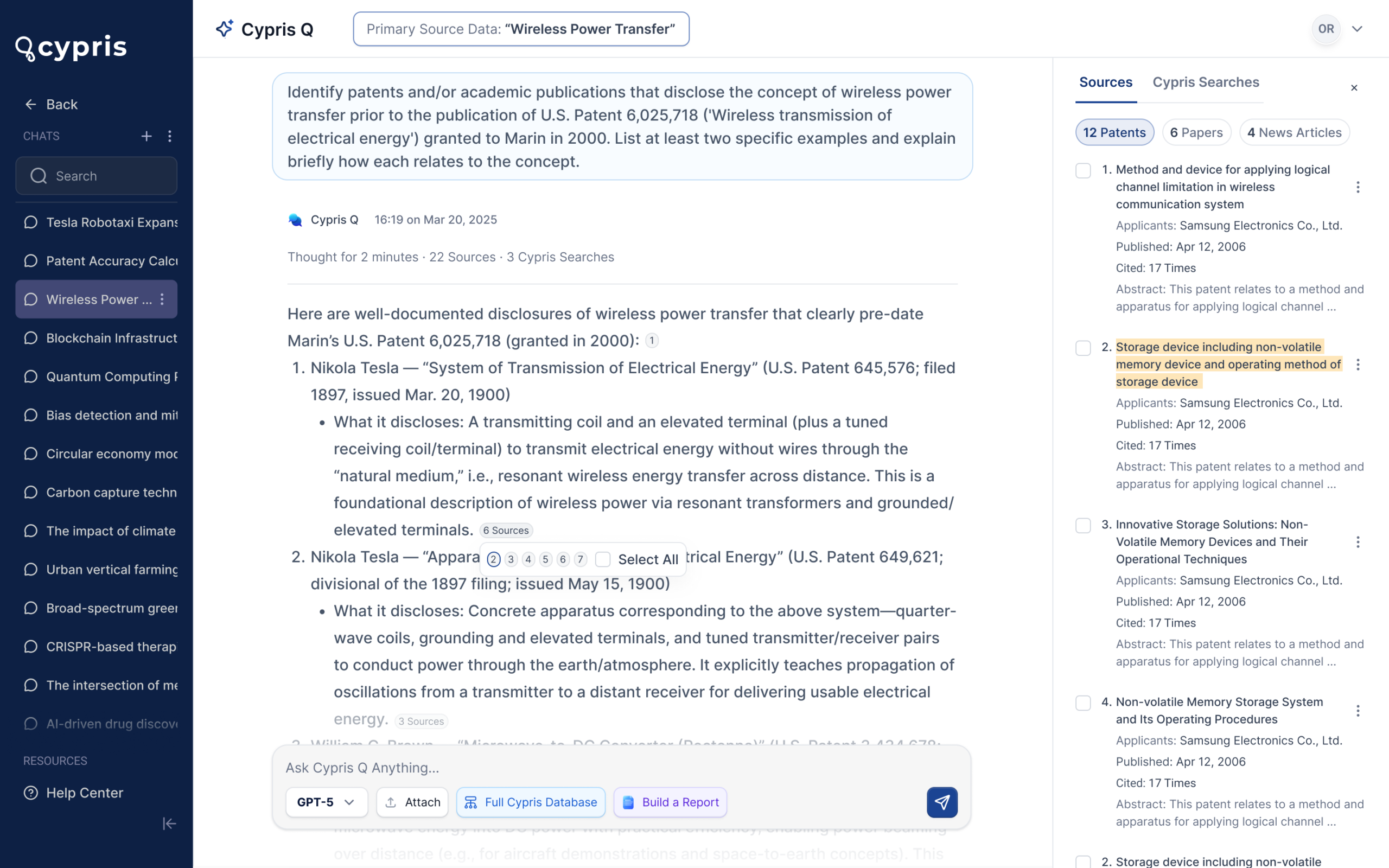
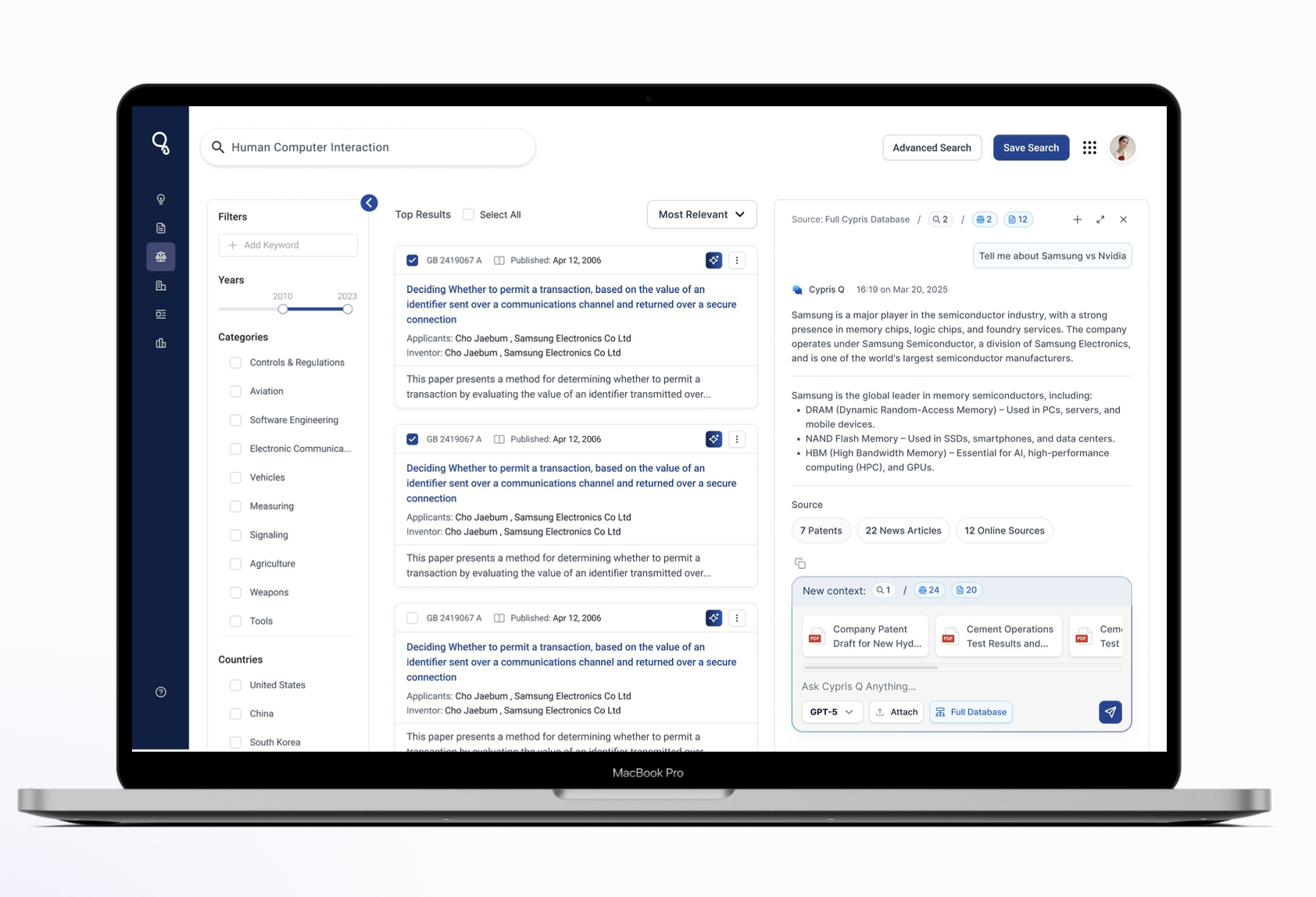
The most meaningful project I’ve worked on is building Cypris Q, our AI-powered research assistant that helps R&D teams uncover insights across patents, papers, organizations, and news.
When I joined Cypris as the first and only in-house designer, Cypris Q was still an early idea—more of a raw proof-of-concept than a usable product. We were getting strong signals from enterprise users that they loved our data but needed a faster, more intuitive way to extract insights from it. Researchers were spending hours sifting through PDFs, comparing patents, and manually summarizing long papers. We knew AI could accelerate that work, but we also knew that trust, transparency, and UX clarity were going to be the deciding factors.
We wanted to differentiate the platform with a truly useful AI experience—not just “chat with a model,” but something that understood scientific data, cited sources, and integrated directly into the R&D workflow. As the only designer, I had to build everything from scratch: the UX, the interaction model, the visual identity, the navigation, the error states, the side-by-side comparison flows, the history panel, the thinking UI, and even the long-term vision of how Q sits across the entire platform.
This project pushed me more than anything I’ve done. I spoke directly with chemists, materials scientists, data analysts, and innovation teams from companies like Halliburton, Sasol, LANL, and Mannington Mills. Their feedback shaped everything: how we present claims for patents, how we handle citations, how we show model transparency, how we manage context windows, and how Q should behave when a user asks for complex analyses.
It was also meaningful because it represented true 0→1 ownership. I was building an entirely new product experience that now lives at the heart of the platform. Every detail, from loading animations to the “Full Cypris DB” toggle to how Q should act when answering regulatory vs. literature vs. prior-art questions, came from thoughtful iteration, user interviews, engineering constraints, and cross-team collaboration.
The feedback from real users has been incredibly validating. A Research Chemist at Milliken adopted Cypris Q over their previous tool for monitoring reports sent to their broad team, telling us that Q helps remove 80-90% of noise from patent analysis and identified more patents than their legacy system—including supplementary patents that revealed a customer filing in areas they were tracking. A Technology Manager at Halliburton gave it a “10/10” for speed and professionalism, using Q to identify subject matter experts from technical documents and then monitor their research moving forward.
Perhaps most meaningfully, a manager at a National Laboratory is now using Q to automate the creation of business case reports and scorecards, combining data from patents, papers, and news—something that previously required extensive manual work. One Scientific Advisor at Halliburton said Q is now the first place they look when conducting research, with the PDF download capability being a “gamechanger” compared to other tools they’ve used. These aren’t just positive reviews, these are stories of people fundamentally changing their workflows because the tool has become dependable enough to build around.
Awesome – so before we get into the rest of our questions, can you briefly introduce yourself to our readers.
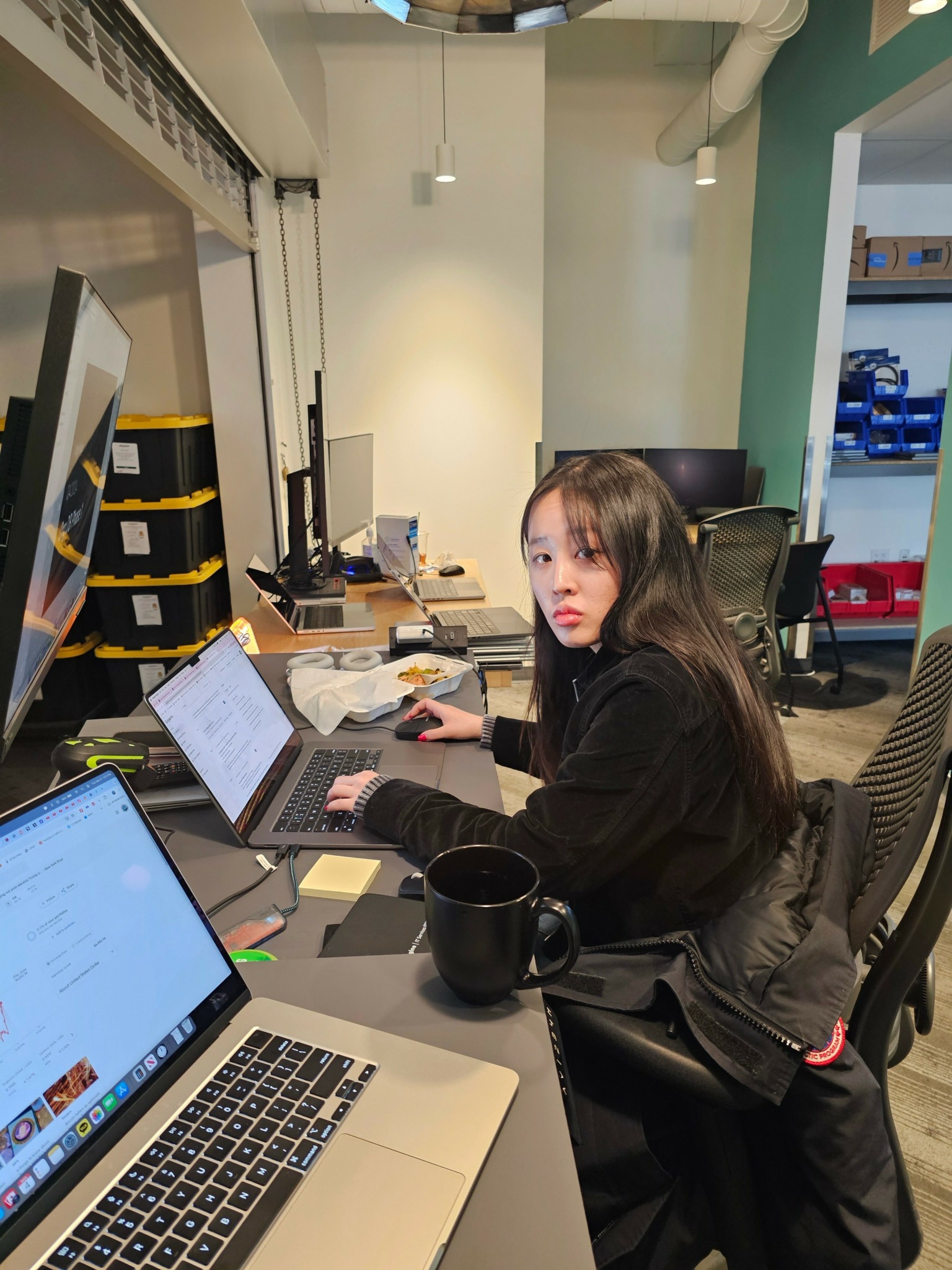
My name is Robin Ahn, and I’m a product designer who specializes in building 0→1 products—bringing things from a blank slate to a fully realized system. Today, my primary focus and most meaningful work is dedicated to designing the future of research and development at Cypris, an R&D intelligence platform.
I am the first and only in-house Product Designer at Cypris. My mission is to transform the incredibly complex, technical workflows of researchers, scientists, and innovation teams into intuitive, empowering interfaces. My ownership spans nearly every major feature across the R&D intelligence platform, including Cypris Q, our AI-powered research assistant designed to help scientists navigate vast information more efficiently. I also own Hubs like Projects/Collections for collaborative research and Your Uploads for secure document ingestion, as well as Core Intelligence Systems including the Monitoring system for automated alerts across research and patents, and the redesign of intricate sections like Patent Data (claims, families, citations, legal status, and more).
I solve the problem of information overload and complexity for the R&D community. I bridge the gap between highly technical data—patents, scientific papers, global trends—and the user’s need for clarity and action. I sit in weekly onboarding calls and office hours to hear directly from researchers, ensuring the design is grounded in reality. These continuous feedback loops and strong design processes have had a tangible impact on platform engagement: we’ve increased user sessions by 58%, increased platform events by 21%, and grew monthly active users from 25% to 51%. More recently, user sessions grew 12% in November versus October and 27% versus the three-month average, with weekly active users increasing 15% to an average of 212 in November. Cypris Q beta alone generated 169 user sessions and 1,913 total prompts in October, demonstrating the accelerating adoption of the AI-powered features I designed singlehandedly.
My work on Cypris’ Monitoring Product and Research Paper & Patent Interface redesign has earned multiple honors, including two Silver MUSE Awards for Best User Experience (Website–SaaS), three Silver Vega Awards for Best UI–Product Interfaces, UX–Product, and UX–Communication, and a Silver W3 Award for General Websites–Web Applications and Services. I was also shortlisted in Design Dispatch’s “Future Forward” Designs for Summer 2025.
Let’s talk about resilience next – do you have a story you can share with us?
One moment that really reflects my resilience happened during the multi-month effort to rethink the Cypris Q experience—including the loading UI system, dataset review logic, and the entire side panel redesign.
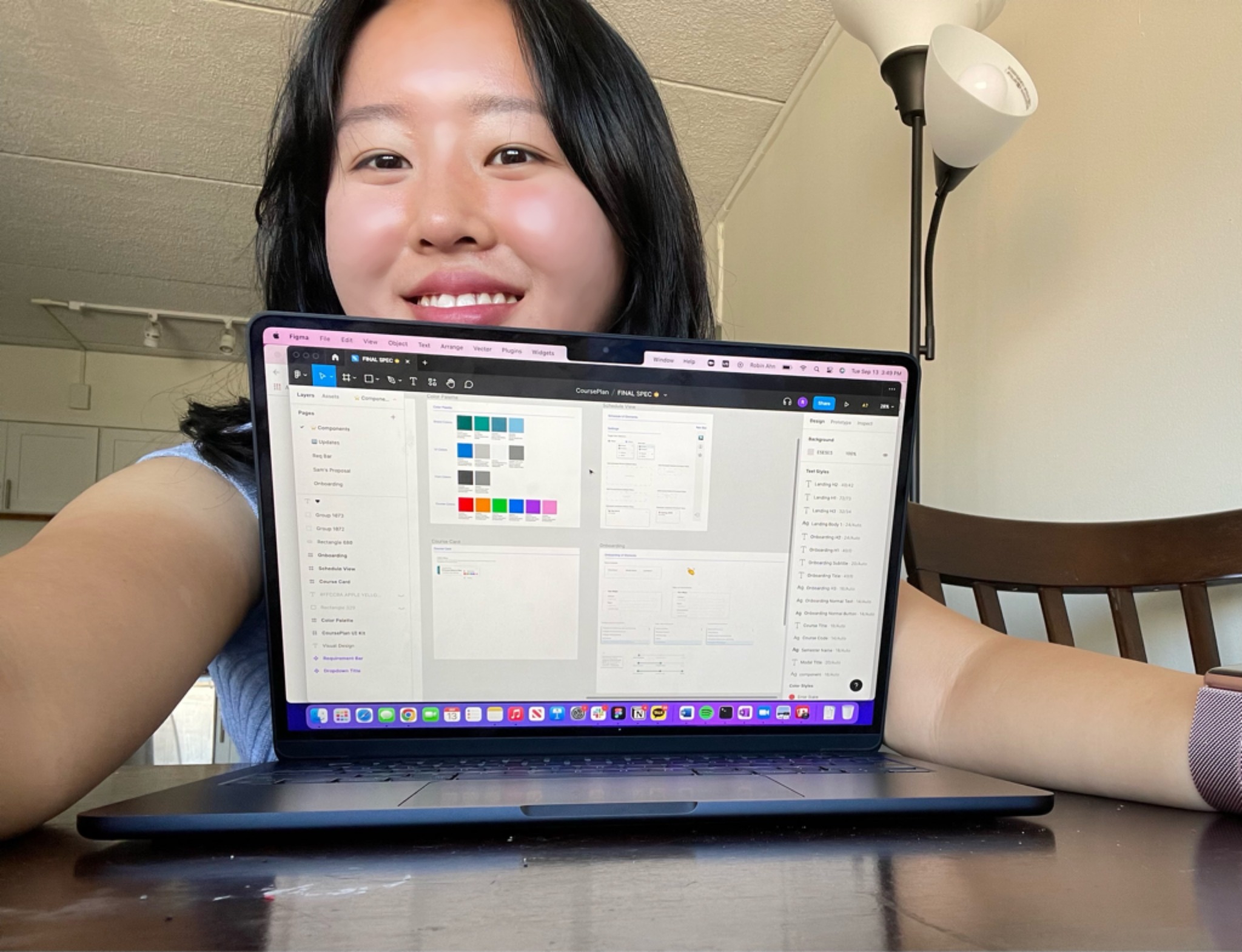
As the only designer at a fast-moving startup, I was juggling multiple high-stakes initiatives simultaneously. I was designing the new Report Builder component within Q, building a reorganized side panel to display sources cited within the chat, architecting a deeper integration of Uploaded Documents into the Q workflow that demanded a security-focused interface, and somehow also designing a User Onboarding questionnaire, all at the same time. I was responsible for design, specs, research notes, and prototypes across these disparate parts of the product, often switching contexts dozens of times a day. The cognitive load was immense, and the interconnected nature of these features meant that a decision in one area could cascade into unexpected requirements in another.
A particularly challenging part was the Loading UI overhaul. What initially sounded like a simple improvement quickly turned into a highly complex system. After benchmarking GPT-5, Claude, and Gemini, it became clear we needed a structured, model-aware loading framework involving granular chips, dataset-level search blocks, skeleton states, token/time guards, expanded chip clustering rules, click behavior that stayed consistent across Q, and decisions about in-platform vs external search visibility.
Every choice influenced another part of the system, which meant constant collaboration with both product and engineering. Our PM pushed for clarity around user-facing behaviors, while the software engineer highlighted technical constraints and sequencing that would affect what was actually feasible in the short term. It required me to rewrite sections of the spec multiple times, reorganize milestones, and continuously refine Figma prototypes so engineering could evaluate the logic end-to-end.
I also had to quickly train myself to animate natural loading flows overnight, creating multiple realistic videos that I could use during the last five minutes of user onboardings or monthly office hours to validate whether the thinking UI was logical and matched what researchers would actually expect to see. This rapid prototyping and validation cycle became essential. I needed real feedback fast, and there was no time to wait for engineering implementation before testing the interaction patterns with users.
There were moments where the scope changed overnight, or where a decision in the reports builder impacted the loading system, or where feedback revealed we needed to rethink how Q handled multi-dataset review altogether. But I learned to stay calm in the ambiguity. Instead of letting the complexity pile up, I broke decisions into structured options, packaged trade-offs clearly, and kept everyone aligned even as the work expanded.
Ultimately, that effort produced the first truly cohesive loading experience for Cypris Q—one that the team felt confident socializing internally and testing with users. What started as an overwhelming project became an opportunity to practice resilience: not just enduring pressure, but generating clarity, structure, and forward momentum for the team when everything felt complex and interconnected. To me, that’s what resilience looks like in a product design role.


What do you think is the goal or mission that drives your creative journey?
My core mission is to make powerful, complex AI feel genuinely dependable and usable for people who are doing serious, high-stakes work—scientists, R&D managers, engineers—people who don’t have time for “clever” but unreliable magic.
In my current role, I see this tension every day. Users are asking extremely complex, multi-step questions—finding specific assignees, recent patents, extracting keywords, then turning it all into tailored outreach hooks. When it works, they’re blown away and talk about how it’s “the best job they’ve seen AI do.” But when a chat silently stalls, sources don’t open, or context disappears from a previous session, their trust is shaken immediately.
Those moments are what drive me. I’m not just trying to make something look polished—I’m trying to close the gap between what the model could do and what the user can rely on.
The feedback we received during November and December 2025—exactly one year after I joined and overhauled the entire platform from the ground up—validates this approach. Nothing on the platform exists today that hasn’t been touched by my hands. An R&D Engineer at Aptar mentioned that compared to Patsnap, “Cypris Q is far less complex and better for quick use,” and he can reach positive outcomes in only three to four prompts versus the ten-plus it takes with other tools. A technologist at Lumitex said “Cypris is just so much more intuitive than Patsnap and Q isn’t even finished yet.” An R&D Professional at Milliken called it “hands down the best tool that I’ve used in this space,” praising how citations are always incredibly accurate and how the interface is “very easy to navigate and clean.” An Associate of R&D at GrafTech repeatedly emphasized that he loves how “logically everything is arranged” and specifically called out features like PDF export as “extremely helpful.” Perhaps most powerfully, a Director at Minerals Tech told his team of thirty-plus people that “if the company took this away from me I would question whether or not I want to work here.”
These aren’t just compliments about features—they’re reflections of a design philosophy that prioritizes clarity, reliability, and respect for how researchers actually work. When users say we’re “just so much more intuitive” or that our approach is “way simpler” than established competitors, it confirms that thoughtful design can be a genuine competitive advantage in complex technical domains.
If I put it in one line: My mission is to design AI tools that experts actually dare to build their workflows around—because the experience feels trustworthy, grounded in real sources, and respectful of how they work.
Contact Info:
- Website: https://robinahn.me/
- Linkedin: https://www.linkedin.com/in/robin-ahn-869b081bb/
- Other: https://techbullion.com/beyond-the-awards-how-robin-ahn-designs-to-educate-not-just-impress/https://www.artisanglobal.online/article/b00eadc8-c9a1-4e1c-ba16-3152f4470757
Image Credits
I have the credits