

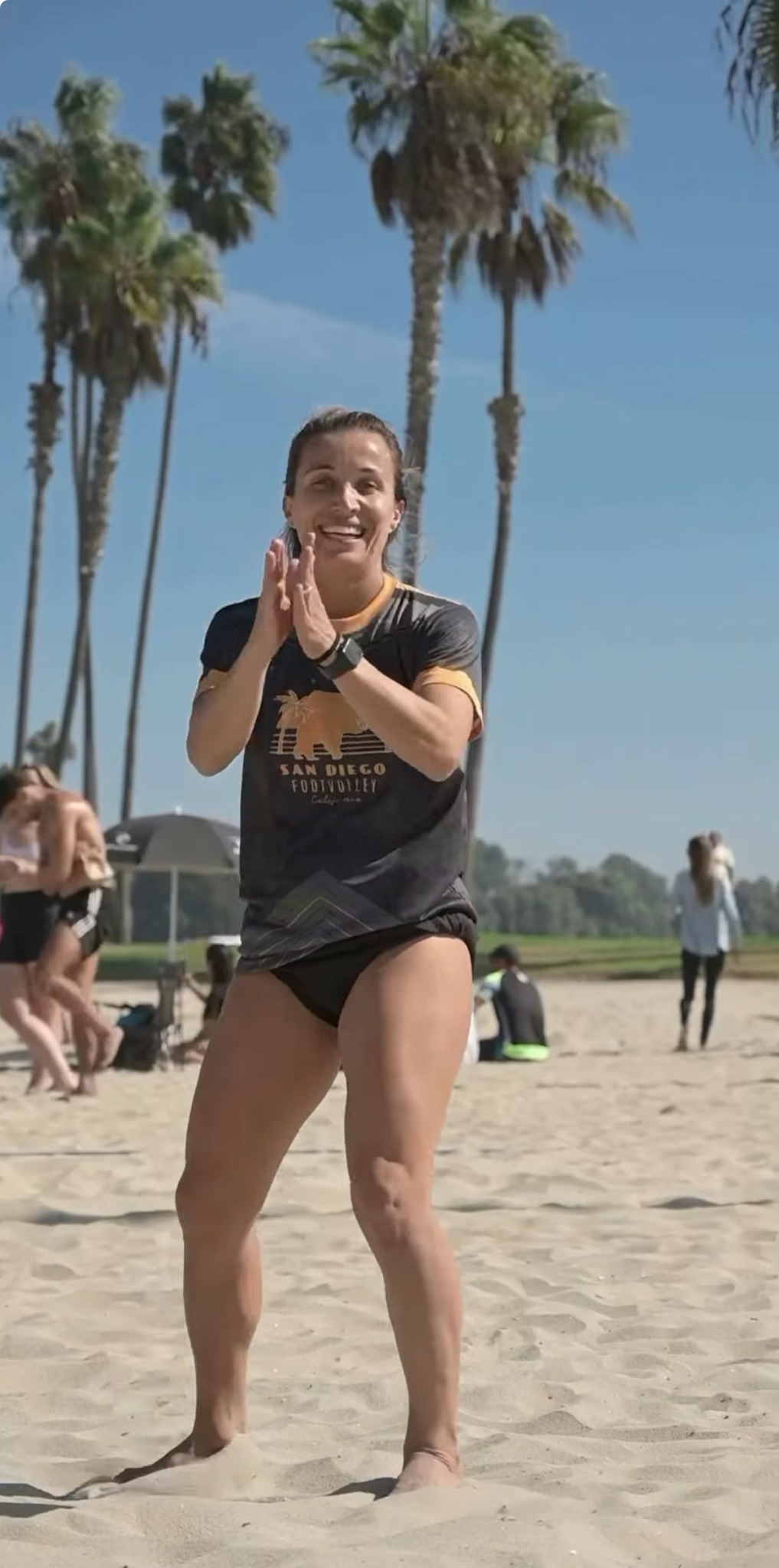

We were lucky to catch up with Roberta Goulart recently and have shared our conversation below.
Roberta, thanks for taking the time to share your stories with us today Crazy stuff happening is almost as certain as death and taxes – it’s technically “unexpected” but something unexpected happening is to be expected and so can you share a crazy story with our readers
In 2022, when I started playing footvolley, I realized that, much like soccer, the sport has its own unspoken codes and conduct. Simply entering the sport isn’t enough; you have to respect these unwritten rules. In other words, if you’re not good enough or don’t meet the unspoken standards, you’re excluded from certain groups or “cliques” scattered around the city.
I used to play with a group of friends, and we had a WhatsApp chat where we’d organize games every morning. But one day, I suddenly stopped getting invited to play, and I found out that a parallel WhatsApp group had been created without me. I never imagined something like this would happen to me—but it did. It felt like a knife to the heart.
At first, it was a hard blow. I felt inadequate and believed I was the worst player in the group. I spent some time trying to understand why this had happened. Eventually, I realized that this was somewhat “normal” in the footvolley world, where people tend to form groups based on their technical level. That’s when it hit me: What if I created a community where EVERYONE was welcome, regardless of their skill level?
Why not build a platform where all footvolley enthusiasts could connect and have the opportunity to play? And that’s how the idea for San Diego Footvolley was born.

Awesome – so before we get into the rest of our questions, can you briefly introduce yourself to our readers.
Hi, I’m Roberta Goulart, also known as Beta, and I’m the founder of San Diego Footvolley. My journey into this sport and community-building stems from a mix of experiences and a pivotal moment that inspired action. I’ve learned that while building a community can be challenging, the moments of shared joy and connection make it all worthwhile.
At its core, San Diego Footvolley is more than just a sport—it’s an excuse to gather on the beach. It’s a tool for building a community of like-minded individuals who share a passion for sports, the beach, a healthy lifestyle, and an appreciation for nature and outdoor activities. Footvolley brings the vibe, but it’s the shared values and connections that give it life.
Our mission is to connect people, provide spaces for fun and leisure, and put San Diego on the global footvolley map. We aim to become a hub for footvolley enthusiasts, offering local leagues, free lessons, and public nets for anyone to play. Beyond the sand, we host cultural and social experiences, from live music events to happy hours at local restaurants, creating opportunities for people to connect.
For the Brazilian community in particular, we’ve brought a piece of home to San Diego—transforming it into a typical late afternoon on a Brazilian beach. For locals and visitors alike, we provide a way to disconnect from the digital world and live in the moment, forging deep connections both within themselves and with others.
What sets San Diego Footvolley apart is our commitment to inclusivity. We adapt our tournaments and events to ensure everyone, regardless of skill level, feels welcome and respected. The focus isn’t just on competition—it’s on creating unforgettable memories and meaningful connections.
I’m incredibly proud of the impact we’ve made. I often receive messages from people who share how San Diego Footvolley changed their lives, whether by introducing them to a new community or by giving them a sense of belonging. Some have even said it was the best tournament they’ve ever played in the U.S., or that it brought them a slice of Brazil they’d been missing.
Personally, I believe in the power of teamwork and shared values to create something extraordinary. I’m committed to providing a welcoming environment where everyone can feel at home. Outside of footvolley, I’ve been living in San Diego for 17 years, working as a project manager in the audiovisual industry. I’m also a proud stepmother to Mel and Thor, partner to Yara for over a decade, and a new aunt to baby Ayla.
My ultimate vision is to grow San Diego Footvolley into a large-scale project that serves the local community, creating jobs, connecting people, and making a positive impact. I hope that when people experience what we’ve built, they leave thinking, “I need to bring [someone] here—they’d absolutely love it!”

Can you share a story from your journey that illustrates your resilience?
Resilience has been the heartbeat of my journey with San Diego Footvolley. Over the past twelve months, it feels like every step forward has come with its own unique set of challenges, but each one has shaped me and deepened my love for what I’m building.
When I first started, I didn’t have the funds to invest in this dream. I had to make one of the hardest decisions of my life—selling my fully paid-off car. I bought a truck on installment payments, using the money from the sale to invest in the project and the truck to transport our equipment. It wasn’t just a financial decision; it was an emotional leap of faith in what San Diego Footvolley could become.
There was also the time when we ordered our team uniforms, only to receive the wrong ones just days before an event. I was devastated. Panic set in as we scrambled to find a new supplier, but we made it work. We got the correct uniforms just one day before the event. It felt like a miracle—and a reminder that even under pressure, solutions are always within reach if you don’t give up.
And then, there was the city’s letter. A park ranger attended one of our early events and classified my small, budding community as a “highly organized business.” They prohibited me from hosting any future events until I applied for a completely different type of license. For nearly four months, I worked tirelessly with lawyers and city officials, navigating permits and bureaucratic hurdles I had never anticipated. I lost sleep, shed tears, and even questioned if it was worth it—but eventually, we got the green light to continue.
Resilience also means waking up before sunrise to set up everything on the beach. I often need to start working before 6 a.m., and there have been countless times when there weren’t enough people to help. I’ve had to rely on strangers on the beach just to get everything ready in time. And the day doesn’t end there—it’s usually a 12-hour marathon. I’m one of the first to arrive and always the last to leave. After packing everything up, I head home to unload the truck, clean all the gear, and prepare it for the next event. It’s exhausting, physically and emotionally. You have to love this deeply and have incredible resilience to keep doing it—especially when you’re not making any money and are still investing your own funds into the project.
Even now, resilience is part of my daily life. I spend about two hours every single day organizing and managing San Diego Footvolley, pouring my heart into something I don’t earn a penny from. Despite this, I’ve heard people say, “You must be making so much money from this!” Those comments sting. But I’ve learned to let them roll off my back because I know the truth: I’m not building this for profit. I’m building it for the joy of creating something bigger than myself—a community where everyone belongs.
These moments of resilience have been tough, but they’ve also been beautiful. They’ve taught me to stay grounded, keep fighting, and never lose sight of why I started. For every challenge, there’s been an equally powerful reward—seeing strangers become friends, witnessing joy on people’s faces as they play on the sand, and realizing that this isn’t just about footvolley. It’s about connection, laughter, and belonging.

Any advice for managing a team?
Managing a team and maintaining high morale begins with respect and empathy. I believe that for any team to thrive, it’s essential to honor each individual’s unique strengths, perspectives, and contributions. This means taking the time to truly listen, understanding where people are coming from, and creating an environment where everyone feels valued and heard.
Empathy is the foundation of good leadership. Putting yourself in someone else’s shoes and viewing challenges through their lens helps you connect on a deeper level and build trust. Open communication is equally important—it’s about fostering honest conversations where ideas, feedback, and even disagreements are met with mutual respect.
Delegation is another key factor. A great team isn’t about one person doing it all—it’s about empowering others, recognizing their talents, and trusting them with responsibilities. When people feel ownership over their work, their engagement and morale naturally rise.
As a leader, integrity is non-negotiable. Leading by example, with unwavering morals and fairness, earns you the respect and admiration of your team. People don’t just follow instructions—they follow a leader they can trust, someone who inspires them to bring their best selves to the table.
Finally, creating an uplifting environment matters. Celebrate wins, big or small, and make space for joy. A team that feels appreciated and supported is a team that stays motivated, even through challenges. At the end of the day, leadership is less about managing tasks and more about connecting with people—building relationships, fostering trust, and inspiring a shared sense of purpose.
Contact Info:
- Website: https://www.sandiegofootvolley.com
- Instagram: https://www.instagram.com/sandiegofootvolley


