

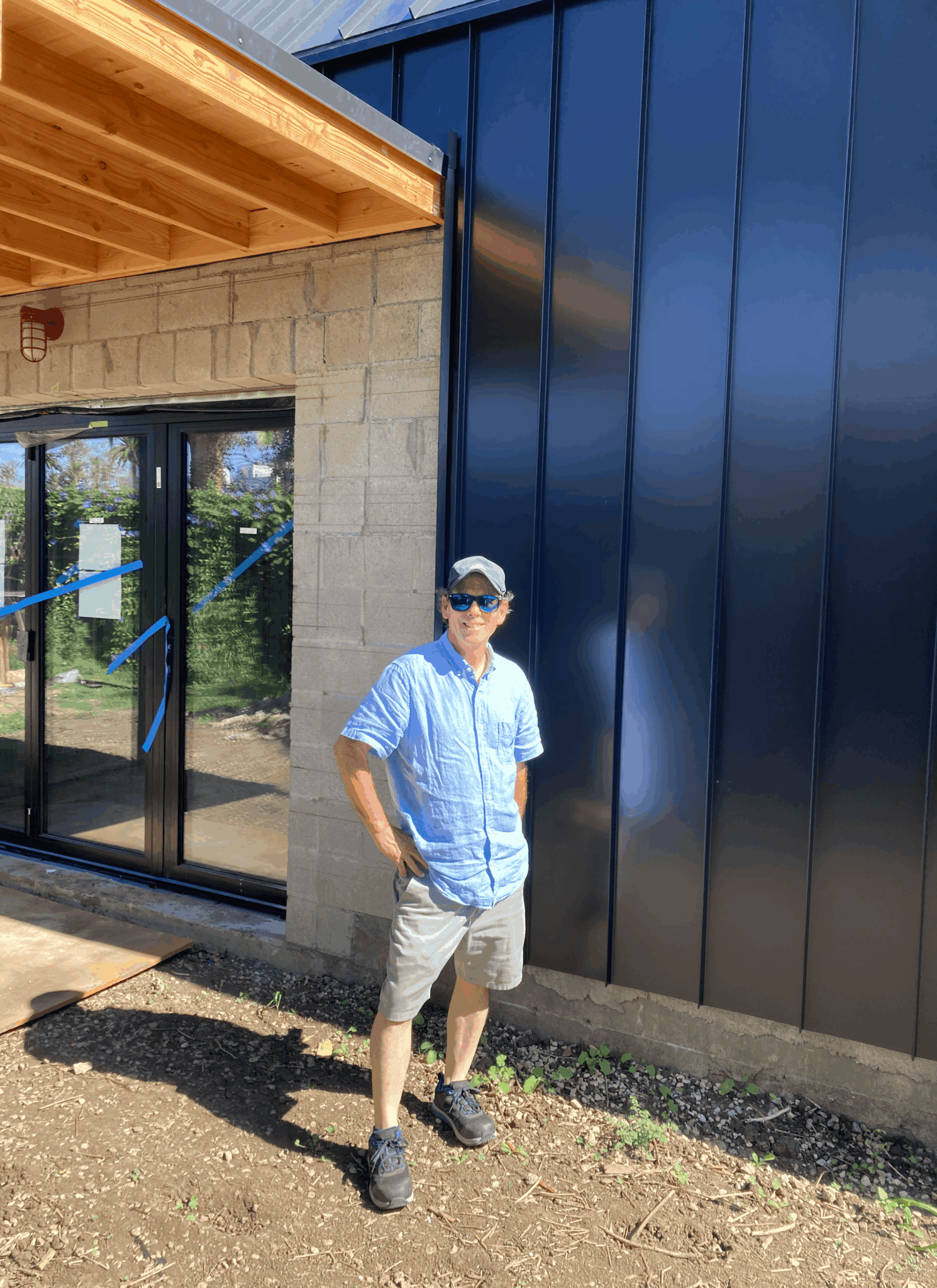

We recently connected with Robert Sawyer and have shared our conversation below.
Robert, thanks for taking the time to share your stories with us today So let’s jump to your mission – what’s the backstory behind how you developed the mission that drives your brand?
During the midst of the carnage of a shipwreck in 100′ waves I made a promise to God to do the very best work in whichever field I was needed most. Music, Architecture, Engineering, or Construction work. Didn’t matter. My family and I were spared that day and the ensuing weeks adrift. What followed has been a remarkable story of volunteerism, gratitude, and sheer perseverance.
Robert, before we move on to more of these sorts of questions, can you take some time to bring our readers up to speed on you and what you do?
My mother was sure that I’d be a successful musician, having fielded record deals from my early teens forward. I’d entertained the family at home events and even begun traveling to Atlantic City to play concerts from our family home in Camp Hill, Pennsylvania. But I’d also designed and helped with the construction of a home at the age of 11.
Sitting on the side of a hill in Camp Hill, I saw a vision for a turret-style home. I sketched it up and added as much detail as I could. I was sure that the design was solid. It made sense to me. The sketchbook layed in my bedside table where it sat for about a year. Until one day, there was a pickup truck and a couple of guys walking the site.
I approached the right guy, thankfully, as he said they were not sure what they were going to build. They purchased the land but inspiration was eluding them. Kismet. Asking if I could bring my sketches over he laughed and said “Sure, kid, what do we have to lose?” As he winked to his partner, I jumped back onto my bicycle and retrieved my sketches.
Not only did they build my design, they asked me to help them build it. And, on one cold November Pennsylvania morning, I got my first taste of real construction sawdust methodologies. I was hooked. Construction became as much a part of the design process to me as engineering would later be.
After an extreme tug-of-war about my future, I am so lucky that my mom won the battle. I fell in love with physics, statics, soils and mechanics. Basically, everything that was mathematical about a building. My professors at Wake were beyond amazing. Of course, the pitchers of beer at the Brewery were well received. I found something that unlocked a key to being a good architect. (Not the beer.)
My first year at Tech, I met my mentor Mr. Donnie Holmes, a Professional Engineer who happened to walk into the drafting class. There were 6-8 students working, no professor, and so he was just walking around looking at work up on the walls. He started asking people who had drawn the section he stopped at. I told him it was mine and Kristen’s. He was saying he liked the pen style, very exacting. It was what he was looking for.
I did my first real job interview after driving through a complete downpour in my mom’s car which had no windshield at the time. I arrived completely soaking wet from head to toe. Donnie said “Anybody who keeps going in those conditions has got to be worth hiring.” And so, I got the position as his assistant designing and drawing the engineering for the largest project in the history of the State, Runway 5L-23R at RDU.
There, I learned more about tolerances, gradients, drainage, compound curves, tangential intersections, lighting, and grading. It was an immersive period. What we drew there took over 7 years to build! Even today, some 46 years later, the pilot of my flights home will announce that the architect of the Airport is on board. It’s horrendously embarrassing, but I am very proud of it, too.
I believe that we do make our own luck and when opportunity comes knocking, usually in the form of something negative, like driving through a thunderstorm, you have to take it. Better yet, you have to recognize it first.
Let’s talk about resilience next – do you have a story you can share with us?
I woke up around 3-4 am and all I saw was a candle that I had left burning on the nightstand jump 8′ high and then land and go out. After the second wave, my visitors from Germany started screaming from the living room. The building had collapsed and they were trapped. The Northridge earthquake was particularly hard on the Venice, CA community where I had purchased a home just a year before.
Shortly after the earthquake, my home was red-tagged. I did not have insurance nor the means to rebuild. The home that I loved, in the community I felt I belonged, was gone. A choice had to be made. Stay in California, or leave. The easiest thing to do would have been to pack my remaining belongings and go home. I stayed.
Venice Heart, a charity started by Lisa Bonet had just opened its doors. They had taken in something like 34 locals. Their mission was to help everyone. While I began donating my time to help others in need, I found that community which had been missing since the earthquake. Slowly those pieces began falling into place. My design practice still had no clients however, and life on the edge seemed to be the norm amongst all of us creatives who lived and breathed the arts on a shoestring.
I found a small sailboat and got a live aboard permit, practiced best practices for managing life on a boat that you couldn’t even stand up in. I sewed a canvas cover with eisenglass sides. Every day the hatch would be opened and I would draw right there in the marina Del Rey. Eventually a passerby shouted Hey Man, youre living the life of Riley! The perspective of just surviving was shattered. They were right. But, still times were hard, and my focus had to change.
Scaling down to the barest of minimums included sailing out of the harbor because I couldn’t afford gas to motor, fishing as a daily routine, scrubbing the bottom of my own boat, buying and selling neighbors boats as needed. I did so much to float my own vision of architecture, and my practice took 6 solid years, and still the struggle continued. Finally, when my daughter Anais was born, a transition, and a choice, to move ashore made sense.
I named my boat Persistence.
Can you open up about a time when you had a really close call with the business?
Sadly, in 2006, my wife and I separated. What followed was a 4 year period of loss, rapid decompression, and decay. What was a flourishing business had to be shuttered completely due to a lack of capitol. My dreams were crushed. But, in 2008, something even worse happened, the recession. One of my clients who was 86 years old at the time told me: “Bob, this is worse than the Great Depression, at least back then prices for everything like groceries came down.”
On the floor of my living room laid the bills from a burgeoning business on the verge of collapse. They covered the entire floor and as I sat there looking I realized not a single one could be paid. My phone did not ring a single time for new business in architecture for 6 long years! Pivoting was my only option. With a little one at home I was an instant Single Dad.
I did everything that could be done. On Christmas Eve, while driving to a clients house I got pulled over on the 405 N. The officer walks up to the car and bursts out laughing. I said, “What’s the matter?” He said, “Sir, could you please explain to me why you’re driving up the 405 with a sheet of drywall above your head?” All I could say was that I had to carry it to my clients house and it didn’t fit any other way. He looked at my daughter and I and said. “You, sir, are one hell of a good Dad. Good day to you and Merry Christmas.”
That was it. That was the turning point. I passed the test. My daughter witnessed it all. Now, she has become a mini-me I like to think. Keeping the torch alive not only for business but for ethics. Diversity, Inclusion, Empathy, strategic thinking. It’s all relative. Not only to our individual situation, but to how that situation related to others.
Contact Info:
- Website: www.rsarch2.com www.rsarch.org
- Youtube: @robertsawyermusicLA
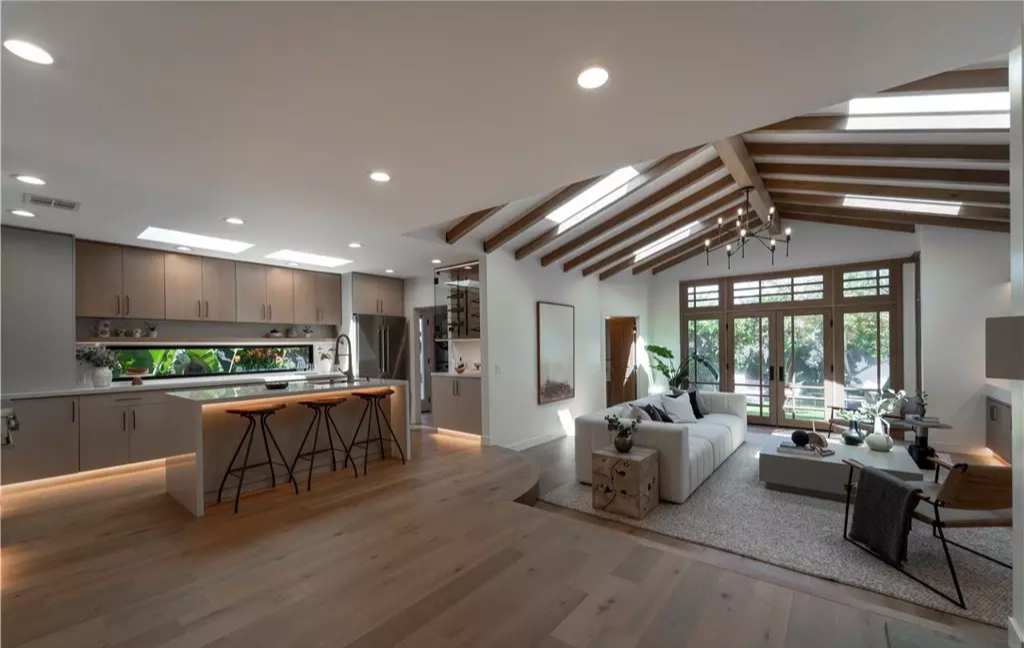
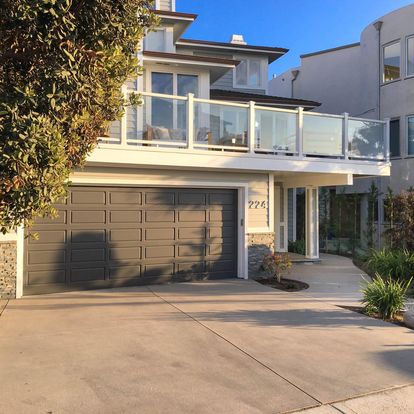
Image Credits
All photos copyright Robert Sawyer Architect