


We’re excited to introduce you to the always interesting and insightful Reza Monahan. We hope you’ll enjoy our conversation with Reza below.
Reza, appreciate you joining us today. What’s been the most meaningful project you’ve worked on?
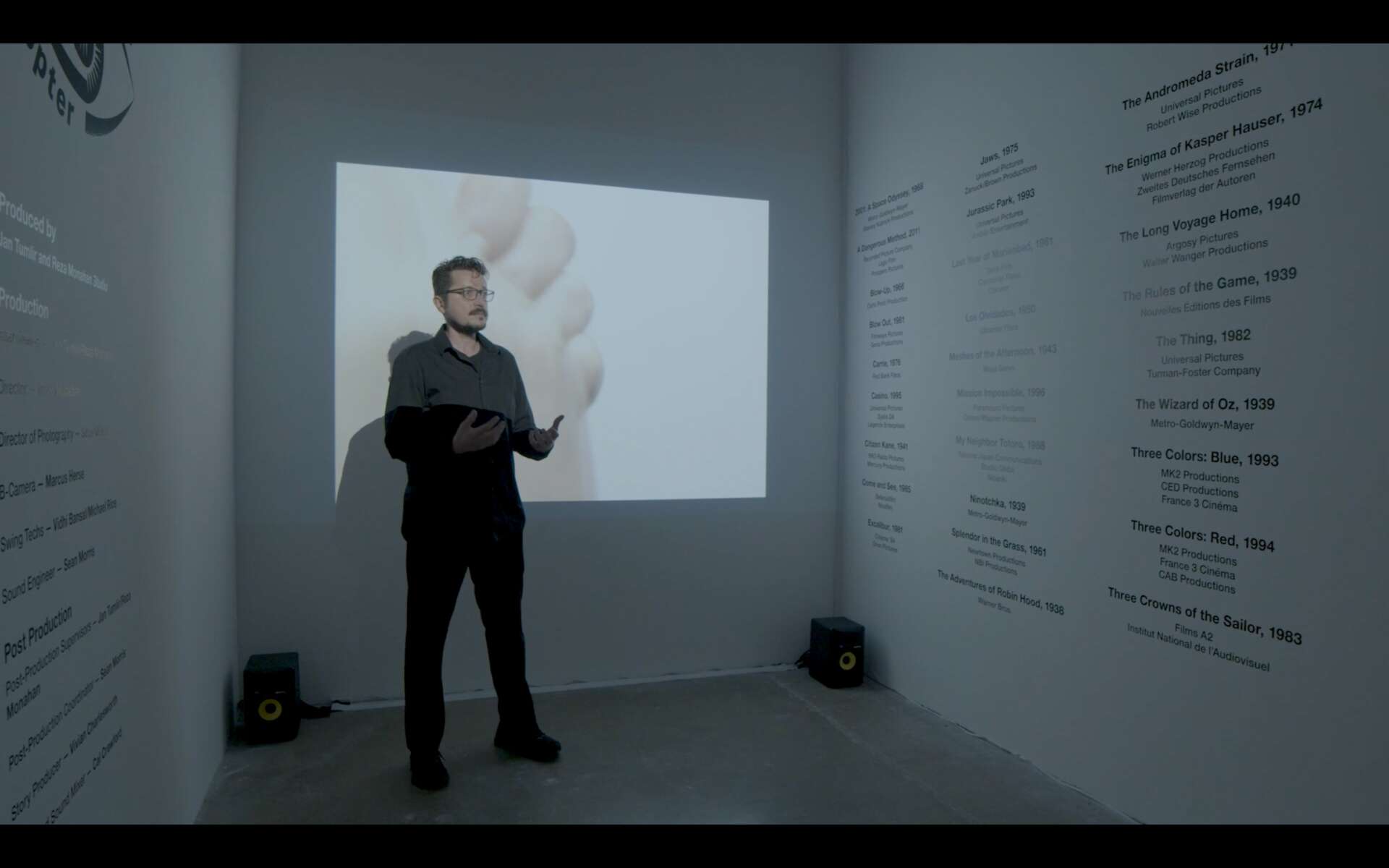
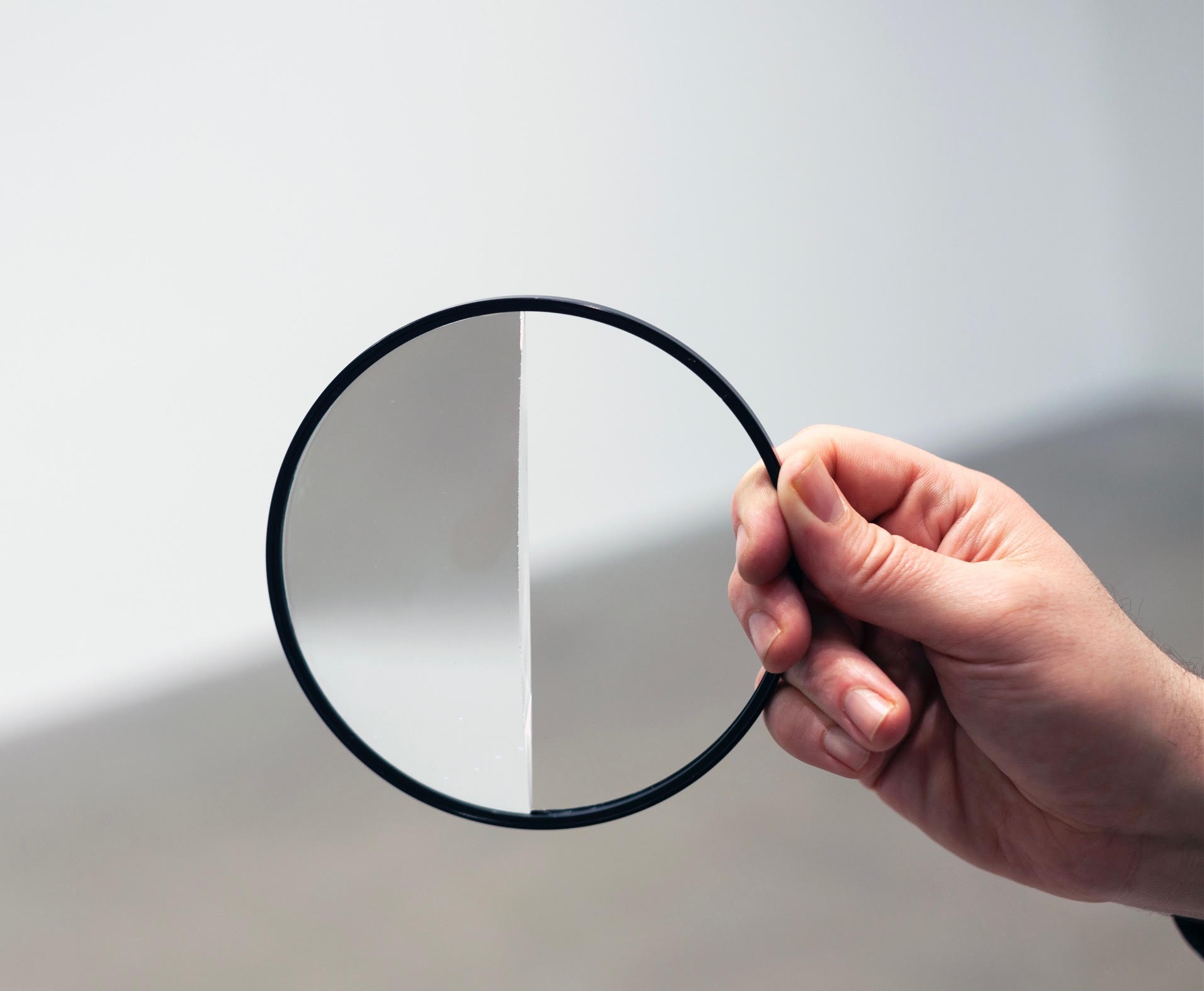
A recent meaningful project is an exhibition I co-curated (with art theorist Jan Tumlir and artist/curator, Marcus Herse) and featured work in, titled – “Split Diopter.” The cinematic device known as split diopter might be described as the camera’s equivalent of bifocal glasses, a supplementary half-lens applied over an existing one, so that one side of the view is trained on what is close and the other on what is farther away. In the uncannily sharp image—at once deep and shallow—that appears onscreen, a seam can sometimes be detected, running right down the middle.
In analog photography, depth of field is gained through constricted apertures and long exposure times, but moving images, if they are not to devolve into a blur, must be shot at higher speeds. The split diopter was conceived as an efficient means to get around this built-in restriction of focal range. We have chosen to construct our exhibition around this by now somewhat antiquated artifact of the entertainment industry because its operations are readily understandable, which is something that cannot be said for any apparatus of visualization at the present stage of development. The cause (diopter) is legible within the effect (dioptic), a condition that might allow one to approach the question of resolution, so central to our current economy of imaging, from “behind,” so to speak.
Today, we are routinely assailed with images in which the point of view of an observing subject—inherently selective, discriminating and exclusive—is overridden by auto-correcting cameras that effectively see for us and past us. Once the image becomes data driven, no detail can escape its compass: maximal definition is distributed evenly across the entirety of its surface area. At the extreme, the technical extension of vision comes up against an absolute flattening of the visual, an outcome that is now largely taken for granted. Certainly, the split diopter was inclined in this general direction from the first moment, while also falling quite wide of the mark. In retrospect, its various “deficiencies” may be seized for purposes of analysis and speculation. They remain behind as evidence of what has been submerged beneath a field rendered wholly visible.
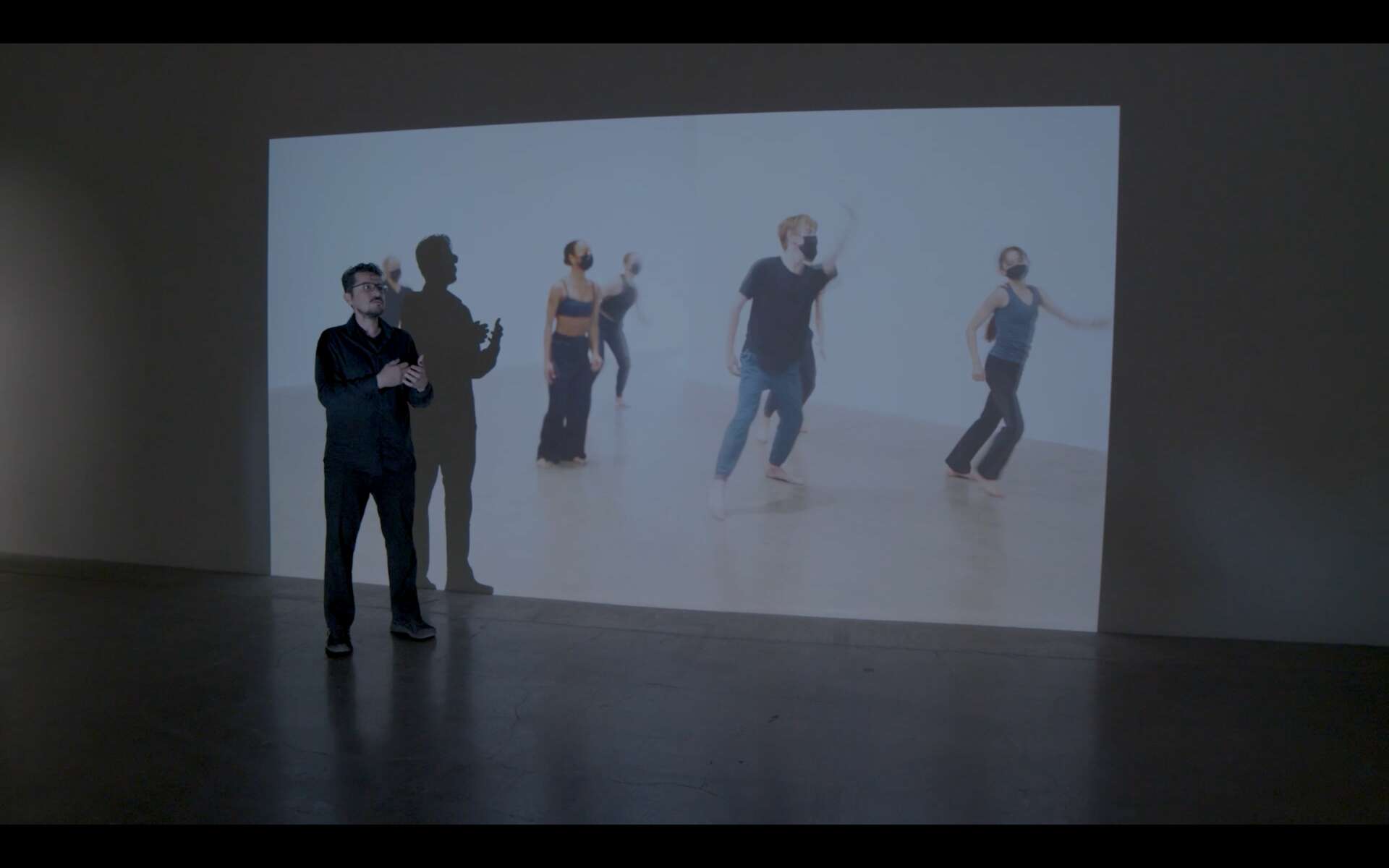
This exhibition was developed out of a series of conversations concerning the relation between fine art and cinema, as well as the impact of technical optics on creative practices. The machine for producing the “waking dream” of film is here dismantled into parts that can be identified as: still frame, action sequence, prop, soundtrack, poster, etc. These parts have been dispersed across an array of singular and discrete artworks within a space of distanced contemplation (an art gallery), where they can only be met with a certain lucidity. We hope that viewers will reflect on these works in much the same way as we have: as objects in the room right along with ourselves, and simultaneously as hinges to other rooms in other dimensions where we also could be, and in fact often are.
Great, appreciate you sharing that with us. Before we ask you to share more of your insights, can you take a moment to introduce yourself and how you got to where you are today to our readers.
I’m an artist and filmmaker who holds an MFA in Interdisciplinary Art from Art Center College of Design and a BFA in Experimental Film and New Genres from San Francisco Art Institute. My studio blends questions of language and cinema within time-and-space-based projects to unfold ideas surrounding kinesthetics, design and phenomenology. Having produced several hundred short documentaries on art, architecture, and related fields, my media and filmmaking practice has taken me to cities throughout North America, partnering with institutions and journals such as NASA/JPL, LACMA, Storefront for Art and Architecture, Mike Kelley Foundation, SculptureCenter, Dezeen and many others. My work for SCI-Arc Channel has been supported by grants provided by the Getty Foundation and the National Endowment for the Arts. My installation art and speculative films have exhibited in galleries and venues across the globe including, UNTITLED Art Fair, Miami, ICALA, LAGE EGAL Gallery, Berlin, OR Gallery, Vancouver, Anthology Film Archives, NYC, Karma International, Zurich, Monte Vista Projects, Los Angeles, and MiM Gallery, Los Angeles. Most recently I installed a sound installation titled “Insideoutmosphere” as part of Soundpedro in San Pedro, CA.
For you, what’s the most rewarding aspect of being a creative?
The most rewarding aspect about being an artist and a filmmaker is having the opportunity to perpetually look at things in a new light. To never be bogged down by a limited understanding of reality or perception. I also love the opportunity my work gives me to shut out the world in my studio while conversely providing an avenue for research and production through travel.
What do you think is the goal or mission that drives your creative journey?
The goal is to blend questions of language and cinema within time-and-space-based projects to unfold ideas surrounding rhythm, light and design. This is done to produce contemporary art works and films that underscore the curvilinear, oblique, volumetric and active qualities of mediums in high-contrast heat for one another. In turn, I attempt to express what I like to call “Meta-Kinesthetics,” placing myself within traditions of the Haptic, a philosophical state of being 20th century French philosopher, Maurice Merleau-Ponty equates to “felt phenomenology.”
Contact Info:
- Website: www.rezamonahanstudio.com
- Instagram: @superlowrez
- Youtube: www.youtube.com/@rezamonahanstudio
- IMDB: https://www.imdb.com/name/nm1425563/?ref_=ext_shr_lnk
- Vimeo: https://vimeo.com/rezamonahan